
19-04-2026 21:23
Steve ClementsBonjour, I found this anamorphic fungus on old pl
19-04-2026 20:46
Steve Clements1 mm diameter approx spherical conidiophores on pl
12-04-2026 17:56
 Hardware Tony
Found on dead stems in February earlier this year
17-04-2026 19:16
 Enrique Rubio
Hi to everybodyI would appreciate any assistance r
14-04-2026 05:32
Ethan CrensonHi all, A few weeks back a friend pointed out som
17-04-2026 15:14
 Bruno Coué
Bonjour.Récoltes du 16/04/2026, sur feuilles mort
12-04-2026 15:52
Gernot FriebesHi,I'm looking for help with this anamorph collect
14-04-2026 21:52
Gernot FriebesHi,found on dead leaves of Carex elata. Conidia: 4
16-04-2026 22:09
Buckwheat PeteHello, I'd like to ask about this older specimen:
15-04-2026 19:33
Fátima Durán ManzanequeHi!! I need help, I found this Ascomycete but I d
? on beech leaves
Ralph Vandiest,
20-09-2013 21:31
 Hello,
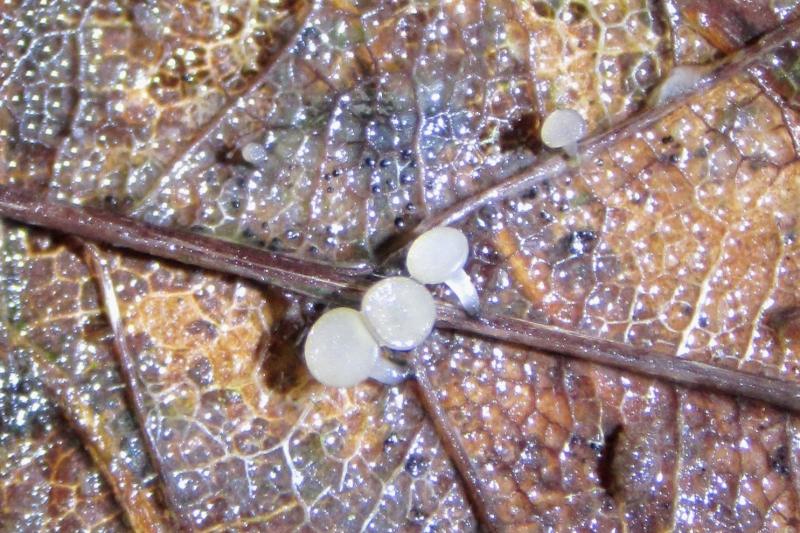
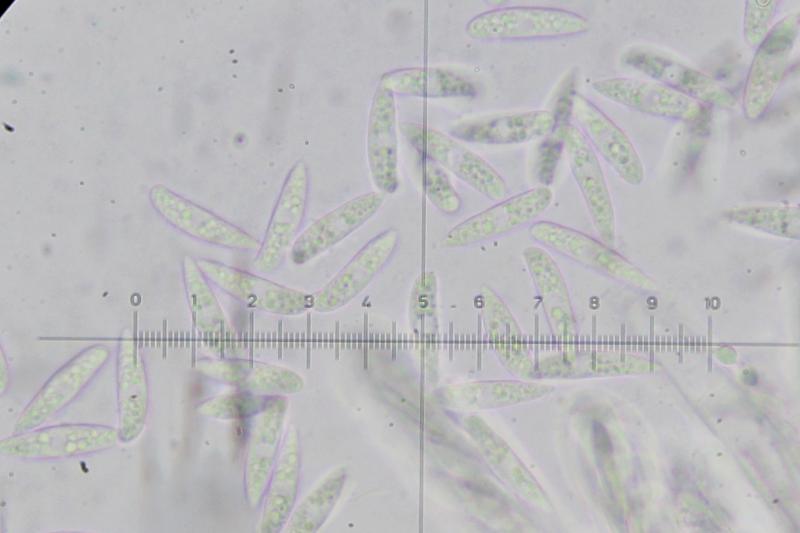
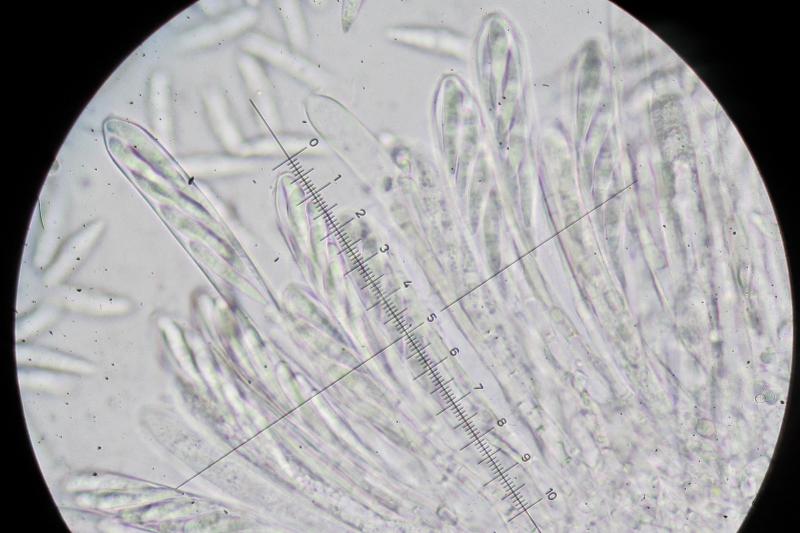
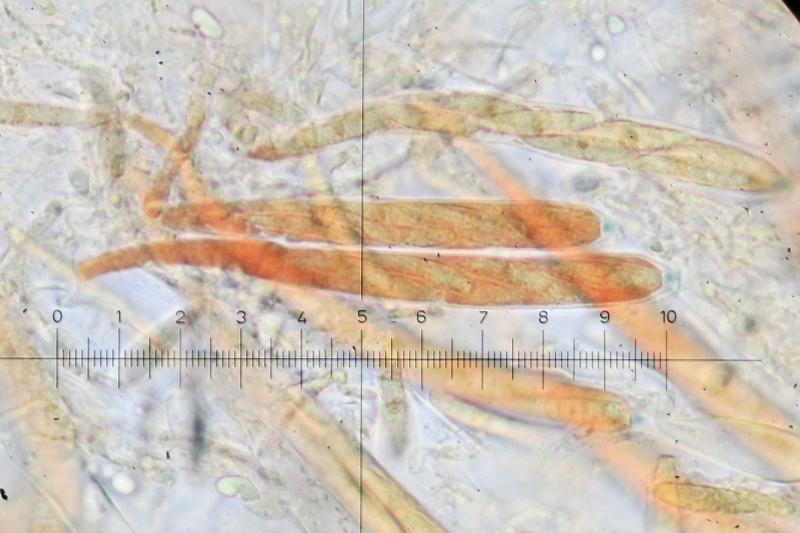
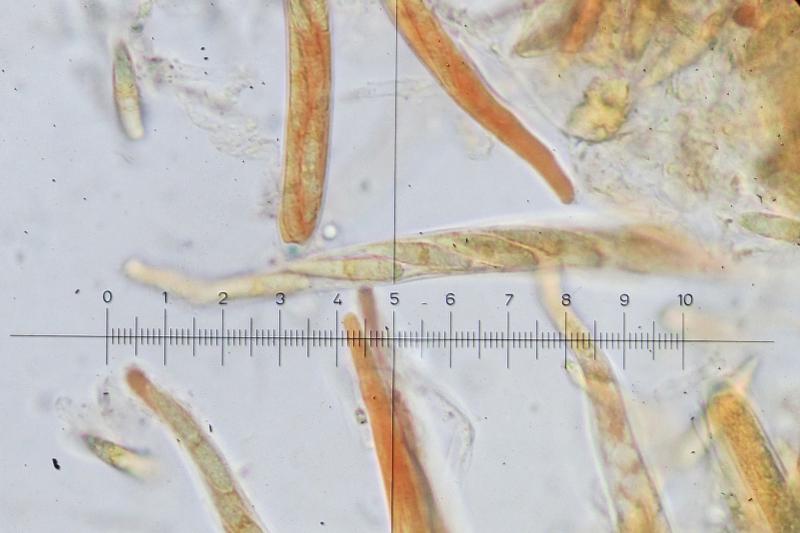
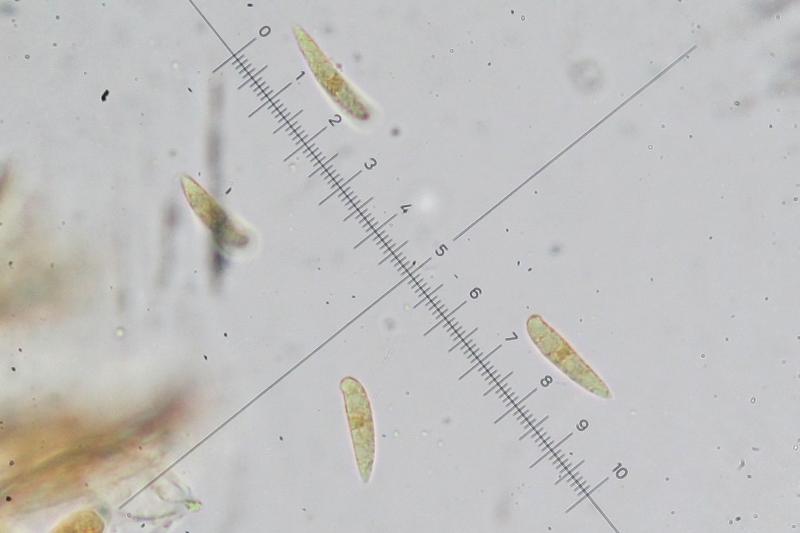
I found these little white species on beech leaves. They measure around 1/1,2mm. Spores 20/23x5µm, J+. Asci 87/107x9/10µm. Can anybody tell me what this is?
regards,
Ralph
Michel Hairaud,
20-09-2013 21:44

Re : ? on beech leaves
Hi Ralph,
I would suggest to compare your fungus to Hymenoscyphus caudatus though I never found it on Beech leaves
Amitiés
Michel
I would suggest to compare your fungus to Hymenoscyphus caudatus though I never found it on Beech leaves
Amitiés
Michel
Björn Wergen,
20-09-2013 23:26

Re : ? on beech leaves
Hi,
this cannot be H. caudatus, because this species has spores with a central depression and are not so scutuloid as shown on the photos.
In my opinion H. caudatus should have spores which are formed in a transition from typically "caudatus-shaped" to the "scutula-shape", which is also shown on several Baral drawings.
regards,
björn
this cannot be H. caudatus, because this species has spores with a central depression and are not so scutuloid as shown on the photos.
In my opinion H. caudatus should have spores which are formed in a transition from typically "caudatus-shaped" to the "scutula-shape", which is also shown on several Baral drawings.
regards,
björn
Michel Hairaud,
21-09-2013 00:27
Re : ? on beech leaves
Ok Björn,
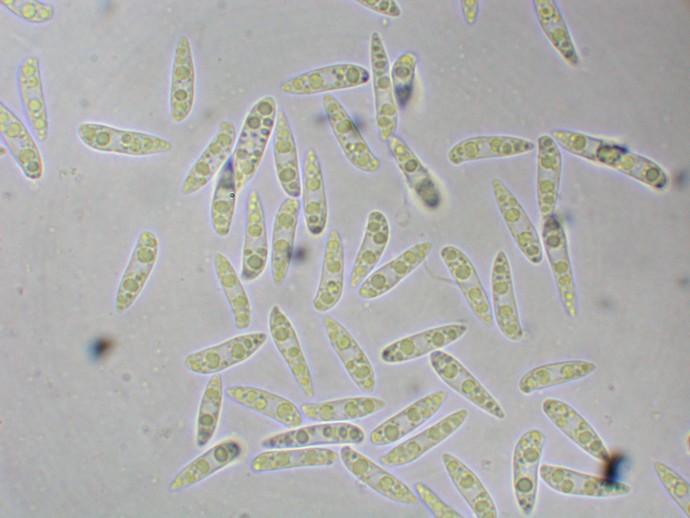
So do you think H. fageolus would be a better proposal. I have here a picture of a collection I called H. fageolus , on Fagus leaf. Spores look more scutuloid, even if some may presnt also some kind of central depression.
I suppose, Ralph that you noticed paraphyses with VBs , what about croziers ?
Michel
So do you think H. fageolus would be a better proposal. I have here a picture of a collection I called H. fageolus , on Fagus leaf. Spores look more scutuloid, even if some may presnt also some kind of central depression.
I suppose, Ralph that you noticed paraphyses with VBs , what about croziers ?
Michel
Hans-Otto Baral,
21-09-2013 09:23

Re : ? on beech leaves
Hi
I am not sure how variable H. caudatus is. My impression is that it is polyphagous and although it frequently occurs on Populus/Salix, Acer, and Betulaceae, I have also some records on Fagus and Fraxinus.
On Fagus leaves is HB 8350a, and on Fagus cupules 7588c (see Cubby). But Björn is right, also here the spores are not prominently scutuloid, and show a very slight central constriction.
The constriction is also seen on Michel's photo of fageolus (the valid name is apparently the American albopunctus), which shows big oil drops which are untypical of typical H. caudatus (in my sense). On Ralph's photo a constriction can hardly be seen indeed.
H. fageolus has smaller spores than H. caudatus, though sometimes up to 18. But 20-23 I think is impossible.
Important is also to be sure about the absence of croziers. Rarely I saw collections with croziers. In your case the ascus bases look more like simple-septate.
Zotto
I am not sure how variable H. caudatus is. My impression is that it is polyphagous and although it frequently occurs on Populus/Salix, Acer, and Betulaceae, I have also some records on Fagus and Fraxinus.
On Fagus leaves is HB 8350a, and on Fagus cupules 7588c (see Cubby). But Björn is right, also here the spores are not prominently scutuloid, and show a very slight central constriction.
The constriction is also seen on Michel's photo of fageolus (the valid name is apparently the American albopunctus), which shows big oil drops which are untypical of typical H. caudatus (in my sense). On Ralph's photo a constriction can hardly be seen indeed.
H. fageolus has smaller spores than H. caudatus, though sometimes up to 18. But 20-23 I think is impossible.
Important is also to be sure about the absence of croziers. Rarely I saw collections with croziers. In your case the ascus bases look more like simple-septate.
Zotto
Ralph Vandiest,
21-09-2013 16:11
Re : ? on beech leaves
Hello all,
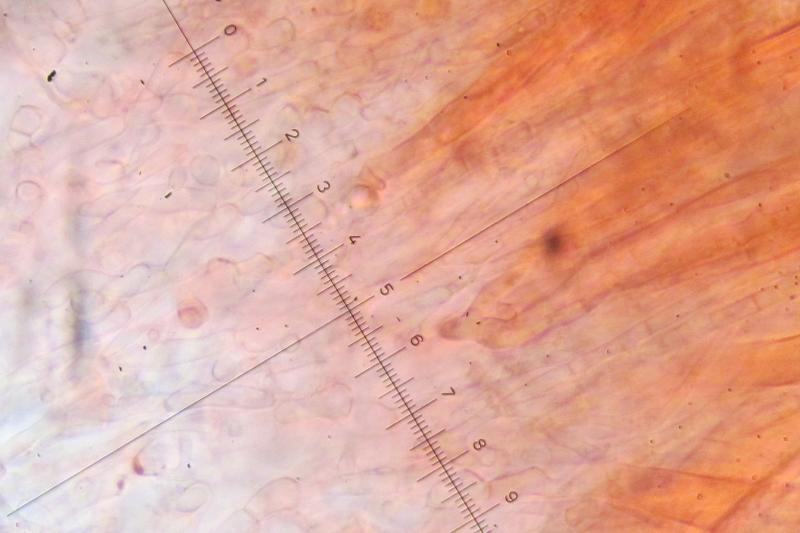
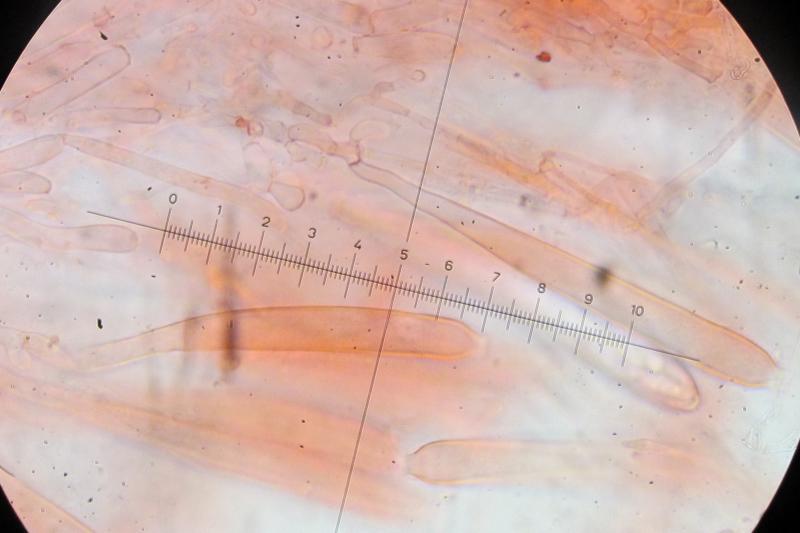
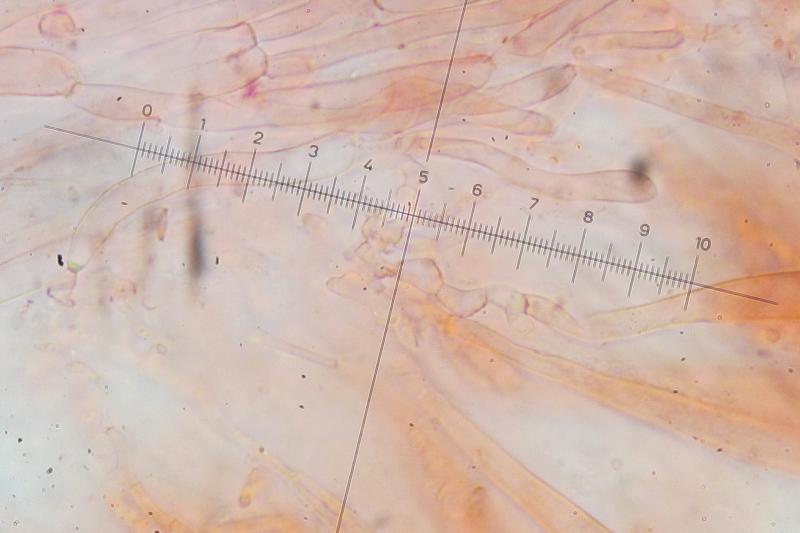
I ooked agian today and concerning the spores I see no central depression. Today I found spores varrying between 18 & 23µm. About 'croiziers', all these ascos are quite new for me so judging is difficult. Therfore I took some more picture. Hope this helps.
Regards,
Ralph
I ooked agian today and concerning the spores I see no central depression. Today I found spores varrying between 18 & 23µm. About 'croiziers', all these ascos are quite new for me so judging is difficult. Therfore I took some more picture. Hope this helps.
Regards,
Ralph
Hans-Otto Baral,
21-09-2013 17:00
Re : ? on beech leaves
Wonderful and clear: no croziers.
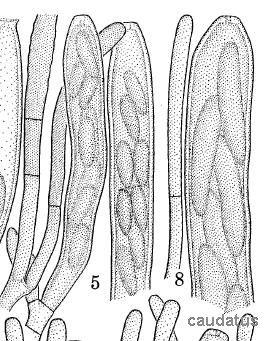
White (1943) found the asci of the type of H. caudatus to be without. Regrettably his illustration lacks a remark in the legend. The spores in his drawing do not look scutuloid. On the left species the lack of croziers is illustrated (for caudatus this is only mentioned in the text)
Zotto
White (1943) found the asci of the type of H. caudatus to be without. Regrettably his illustration lacks a remark in the legend. The spores in his drawing do not look scutuloid. On the left species the lack of croziers is illustrated (for caudatus this is only mentioned in the text)
Zotto
Michel Hairaud,
21-09-2013 22:03
Re : ? on beech leaves
Merci Zotto for your attention and detailed answer
Michel
Michel
Ralph Vandiest,
22-09-2013 13:50
Re : ? on beech leaves
hello,
thank you all for very usefull the information.
regards
Ralph
thank you all for very usefull the information.
regards
Ralph