
02-05-2026 12:42
Alain BRISSARDBonjour à tousJeuidi 30 avril dernier on m'a remi
02-05-2026 13:06
Pauline. PennaBonjour Please can someone help me with this id
01-05-2026 22:45
 Thierry Blondelle
Bonjour à tous, Une récolte sur bouse séchée d
28-04-2026 20:07
 Lothar Krieglsteiner
... on twig in the air at standing Ceratonia siliq
14-04-2026 05:32
Ethan CrensonHi all, A few weeks back a friend pointed out som
28-04-2026 20:33
Vitus SchäfftleinHello, I found Trochila ilicina on Ilex aquifoliu

30-04-2026 10:28
Rot BojanHello, by appearance I would say that I am dealing
27-04-2026 18:48
Tony MoverleyCollected 23rd April 2026, Norfolk, EnglandSwarms
27-04-2026 20:52
Lothar Krieglsteiner
Found on hanging tiwg of Olea europaea in dried-ou
I have mentioned earlier this species, but now it is with vital description. It fits well with description in Sherwood (1980,Taxonomic studies in the Phacidiales: the genus Coccomyces (Rhytismataceae).
It is described in this publication based on collection from Magadan Region (Far East, Russia), and reported there to be the species with unknown describution. Probably since the time of the work there were another registrations (?).
It was most common species in my quantitative study of Andromeda leaves fungal community (West Siberia). Its fruiting is in autumn (before middle-september there were under-developed black spots - well distinguished immature structures).
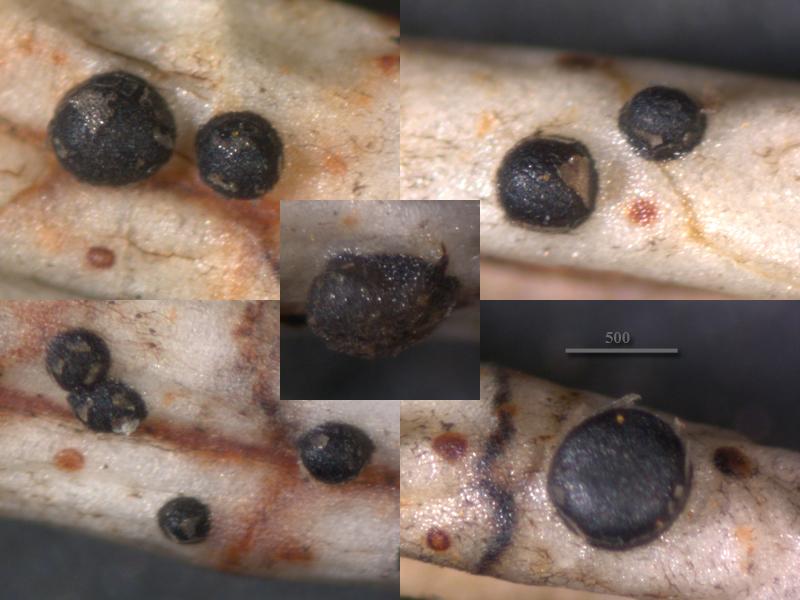
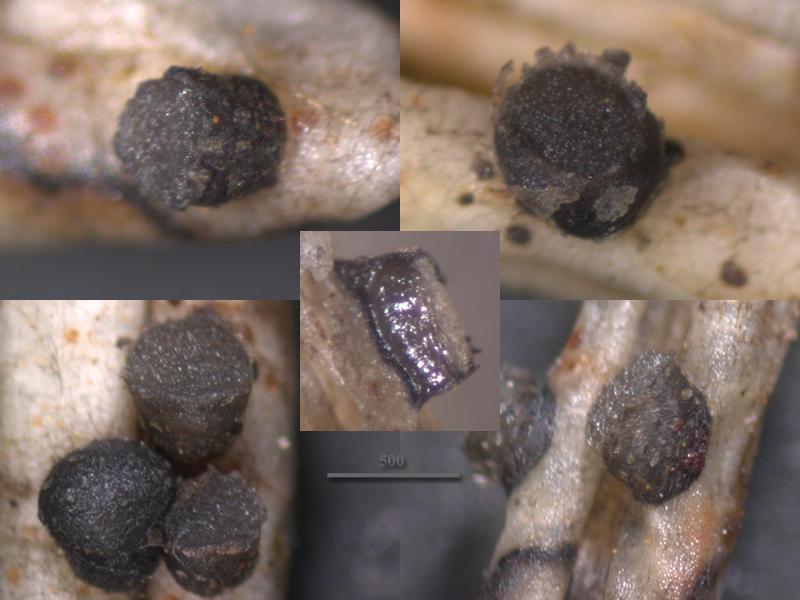
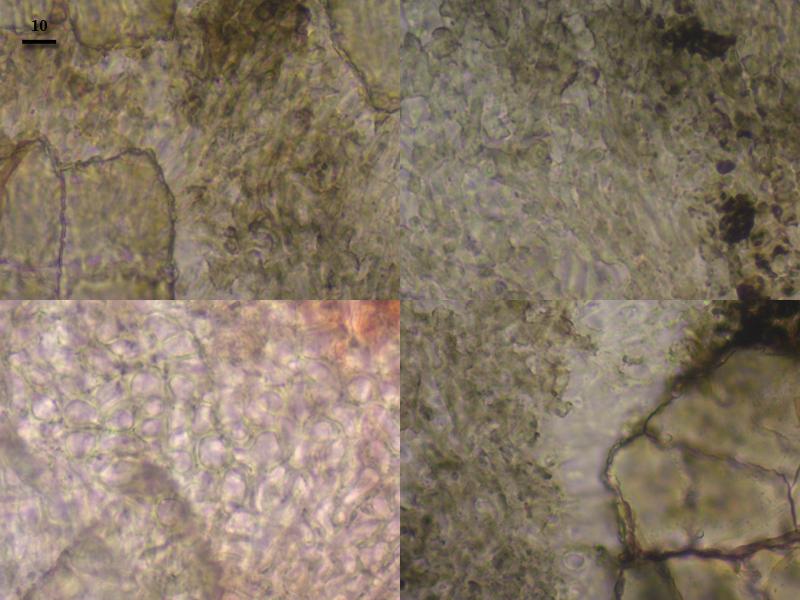
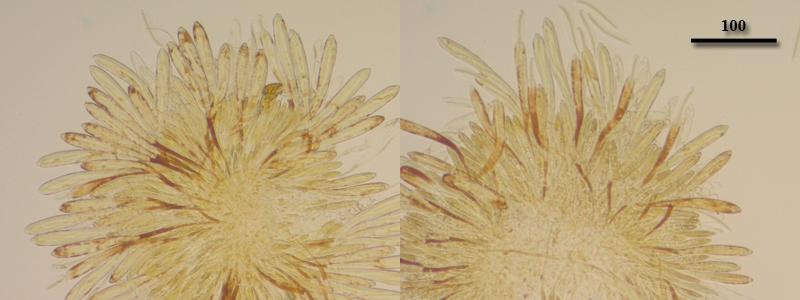
Hysterothecia pustulate when young, then hymenium exposes with teeth and overall shape becoming turbinate, outer surface blackish, hymenium gray, 550–900 mk broad, up to 500 mk high; scattered at both leaf surfaces.
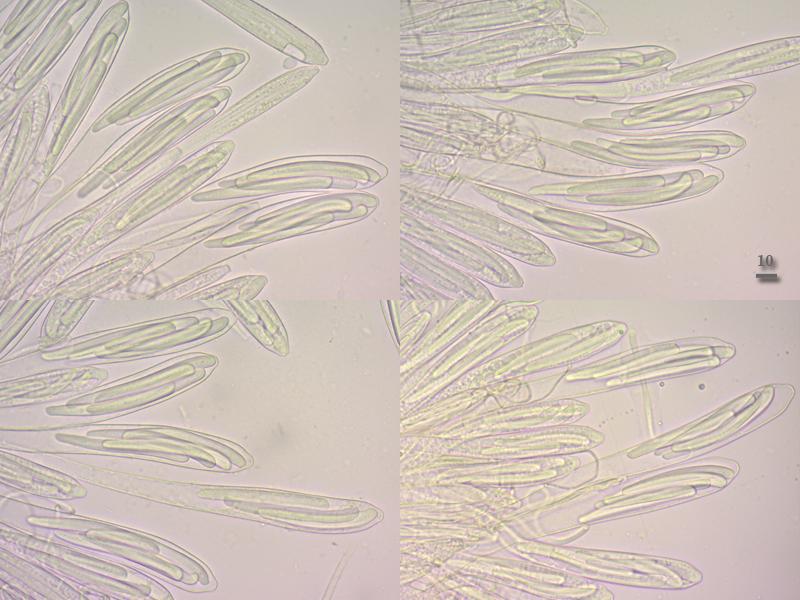
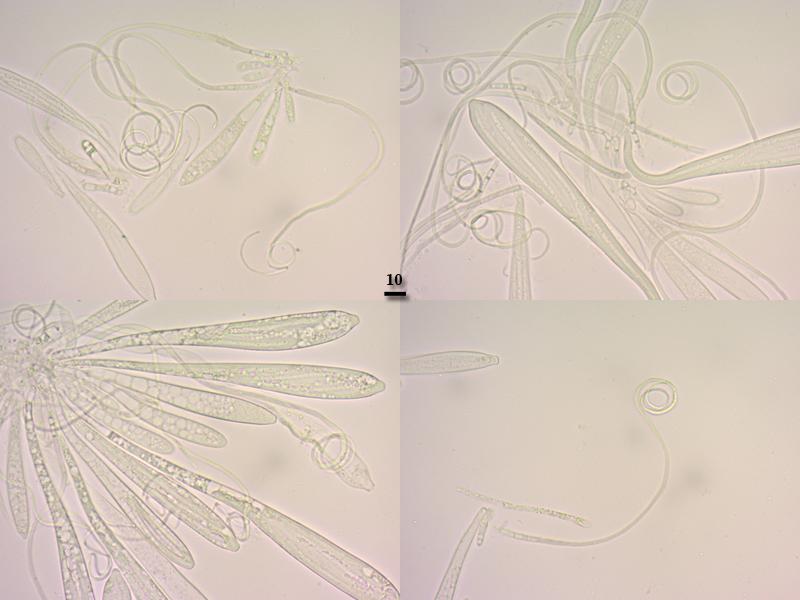
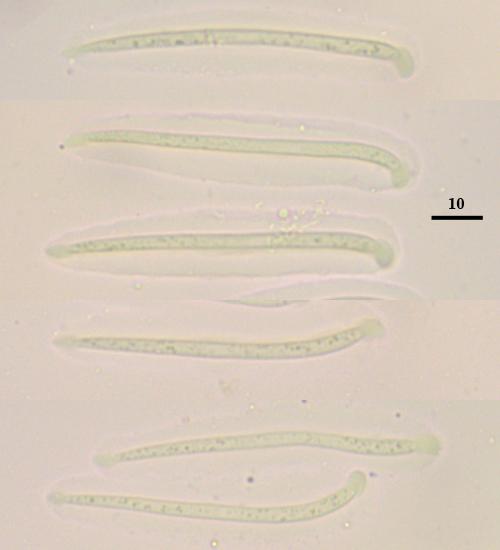
Asci 180–238 (n=5) long, 15–18.5 (n=18) broad in upper part, with long stalk, tip with protruding wart, J negative; paraphyses filiform, some larger at base (2.4 mk), 1.2 at upper part, where strongly circinate; spores filiform, slightly tapering below, with two clear gelatinous appendages (hemicircular at upper part and attenuated below), with strong sheath, some tiny oils inside, 60 (54–65) x 3 (2.7–3.3) (with sheath about 13 mk broad) (n=24, length measured without gelatinous appendages).?

Zotto
