
06-05-2026 17:23
Thomas Læssøehttps://svampe.databasen.org/observations/10594257
06-05-2026 11:25
 Castillo Joseba
Me mandan el material seco de Galicia (España) re
28-04-2026 20:07
 Lothar Krieglsteiner
... on twig in the air at standing Ceratonia siliq
05-05-2026 22:40
Gernot FriebesHi,I believe this is a Plagiostoma growing on a Sa
04-05-2026 18:13
 Stephen Martin Mifsud
ID request for what seems to be a true aquatic fun
04-05-2026 16:39
Stephen Martin Mifsud
ID request: This specimen was collected in Malta o
28-07-2011 18:31
 Alex Akulov
Dear FriendsToday I made the pdf file of Velenovsk
04-05-2026 09:50
Castillo Joseba
Me mandan el material seco de Galicia,(España) re
02-05-2026 12:42
Alain BRISSARDBonjour à tousJeuidi 30 avril dernier on m'a remi
 I found this Otidea in Mexico under oaks.
http://mushroomobserver.org/images/960/280048.jpg
http://mushroomobserver.org/images/960/308999.jpg
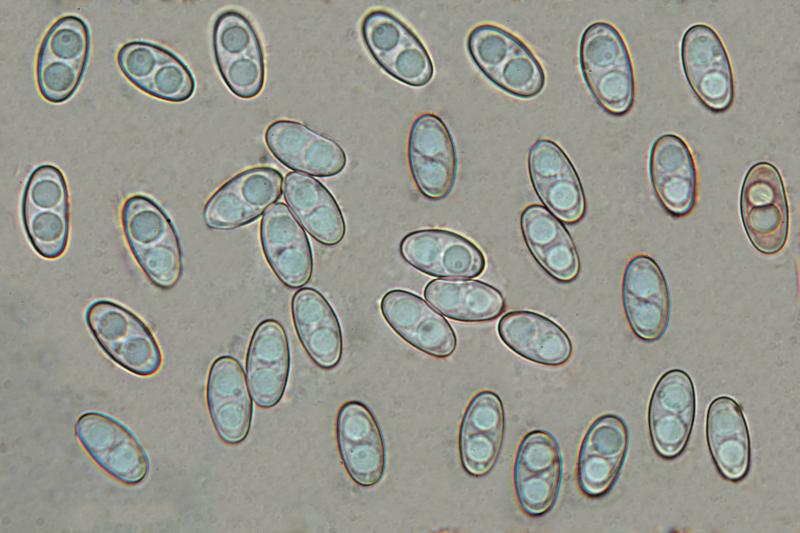
Spores 2/3rds with 2 oil droplet and 1/3rd with one. Spore measurements:
10.2 [11 ; 11.4] 12.2 × 5.3 [5.7 ; 5.9] 6.3 µm
Q = 1.8 [1.9 ; 2] 2.1 ; N = 30 ; C = 95%
Me = 11.2 × 5.8 µm ; Qe = 1.9
Rarely (approx 1%) of the spores are up to 8 µm wide.
Asci with blunt tips. Paraphyses curly.
A video of spore release:
http://www.youtube.com/watch?v=HT_0UU7UgI0
More photos and micrographs:
http://mushroomobserver.org/115972
Any help with identification would be greatly appreciated.
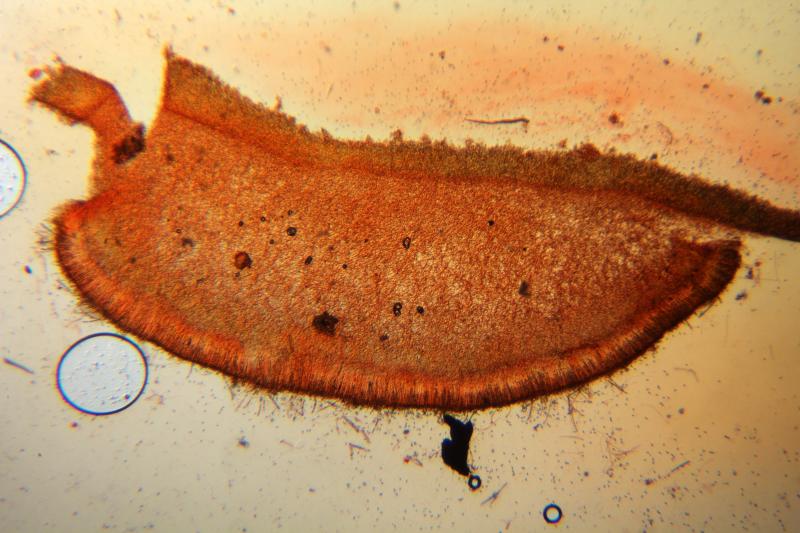
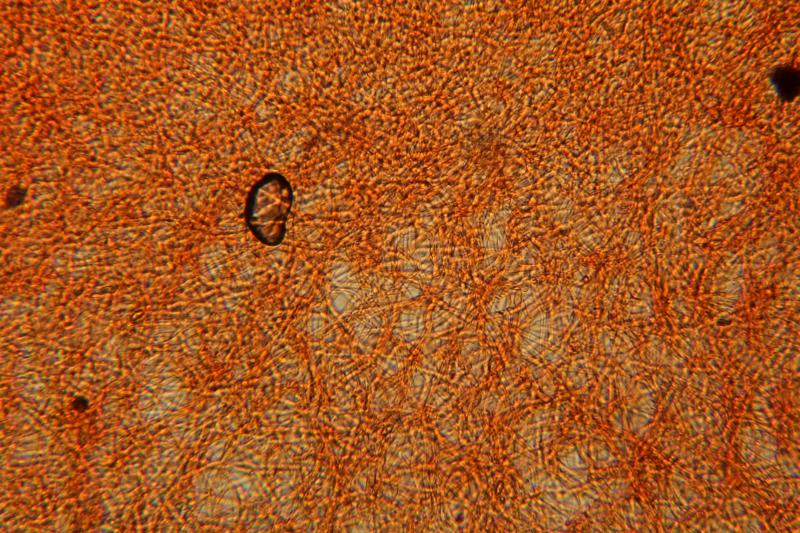
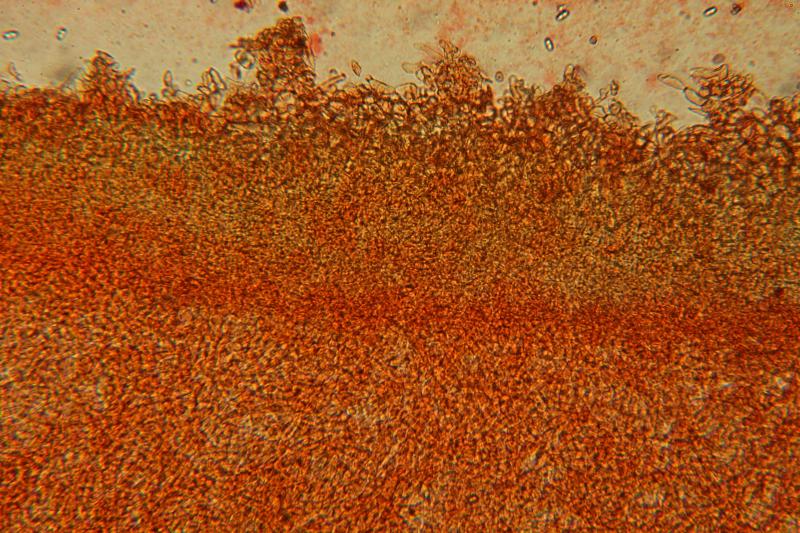
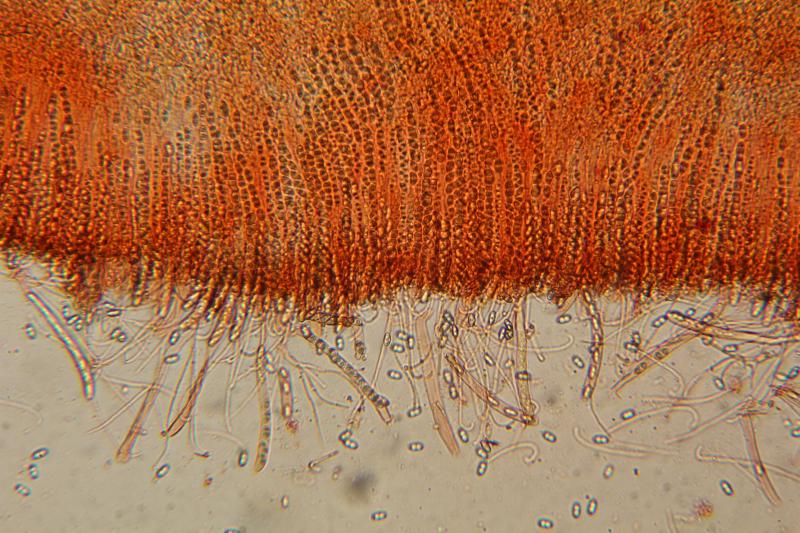
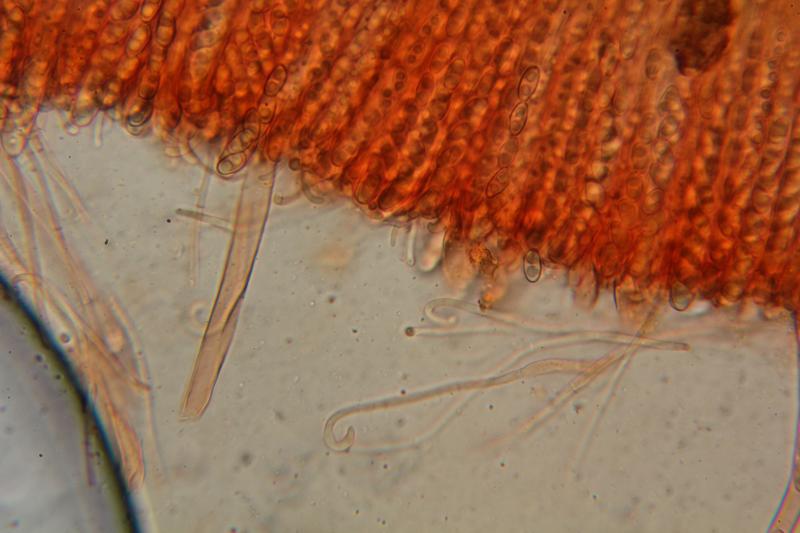
Hi Alan,
Thank you for this nice post! From what I can see in the photos, it looks very much like an undescribed species of Otidea close to O. formicarum, from which it differs clearly in the longer spores with higher length/width ratio, among other things. The apothecia with upper horizontal margin, dark brown colour, and especially, the spore size are very characteristic. I have seen only two herbarium specimens from Mexico, but never got to see good photos of living material. That is why your material is very interesting if I am in the right path.
Are the photos "pileipellis x 100" and "pileipellis x 400" taken in water?
Was not there any conifer tree in the collection site? The two collections I studied were made under Abies and Pinus.
If possible, I would be interested in studying the material to confirm the find. Many thanks in advance. ?
Cheers,
Ibai.
I can have the collection mailed to you, let me know where to send it.
Thanks for the help!

Ibai, I do not recognize the Otidea close to formicarum that we discuss.
Maybe a new taxon...
Hi Alan and Nicolas,
I agree that it resembles O. bufonia macroscopically. In fact, I thought it was O. bufonia at the first glance too! Besides having larger fusoid spores, O. bufonia should have dark brown crystals on the surface of the outer excipulum that partly convert into reddish particles in Melzer. The ecology would be OK, but it appears to occur only in Europe, so far. The crystals on the outer excipulum in the O. formicarum group are yellowish brown to yellow and convert into heterogeneous amber drops in Melzer. Yes Nicolas, very likely new...
I would need to check the material to be sure, though. Alan, I will send my address privately. Thank you!
Cheers,
Ibai.
Ibai.