
11-05-2026 12:32
 Bernard CLESSE
Pourriez-vous m'aider à identifier cette héloti
13-05-2026 15:26
 François Freléchoux
Bonjour,Voici une récolte faite il y a quelques j
12-05-2026 15:41
 Nicolas VAN VOOREN
Dear Ascolovers, especially interested in Pezizale
13-05-2026 12:05
 Thierry Blondelle
Bonjour à tous,J'aimerais avoir confirmation de c
10-05-2026 23:17
 Andreas Gminder
Hello,today we found in a moist steep decidous for
28-04-2026 20:07
 Lothar Krieglsteiner
... on twig in the air at standing Ceratonia siliq
27-04-2026 20:52
Lothar Krieglsteiner
Found on hanging tiwg of Olea europaea in dried-ou
11-05-2026 20:22
Lothar Krieglsteiner
on attached twig of standing Ficus caricaquite uns
29-04-2026 10:44
Lothar Krieglsteiner
growing at moist, drying-out soil at the side of a
Geoglossum sp?
Godorova Olga,
09-02-2013 12:59
 Hallo, dear friends.
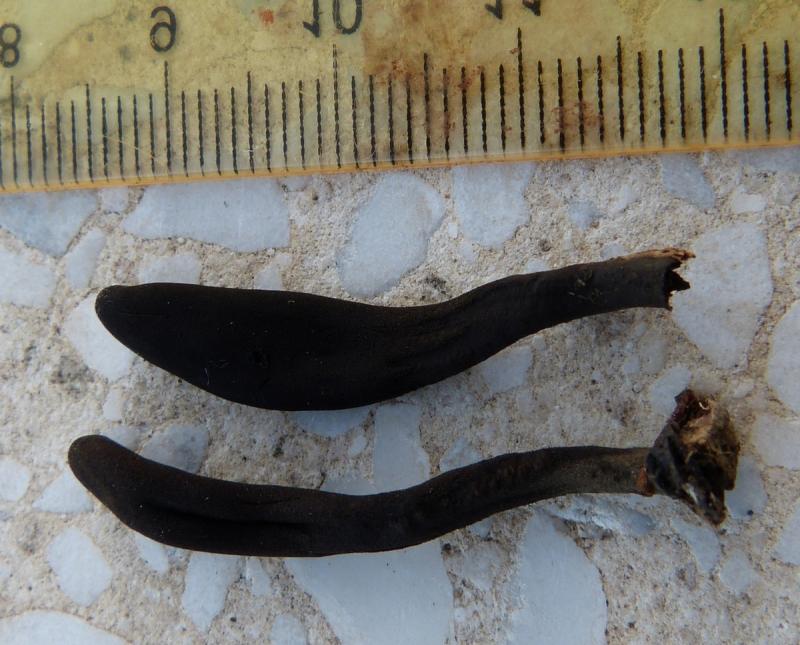
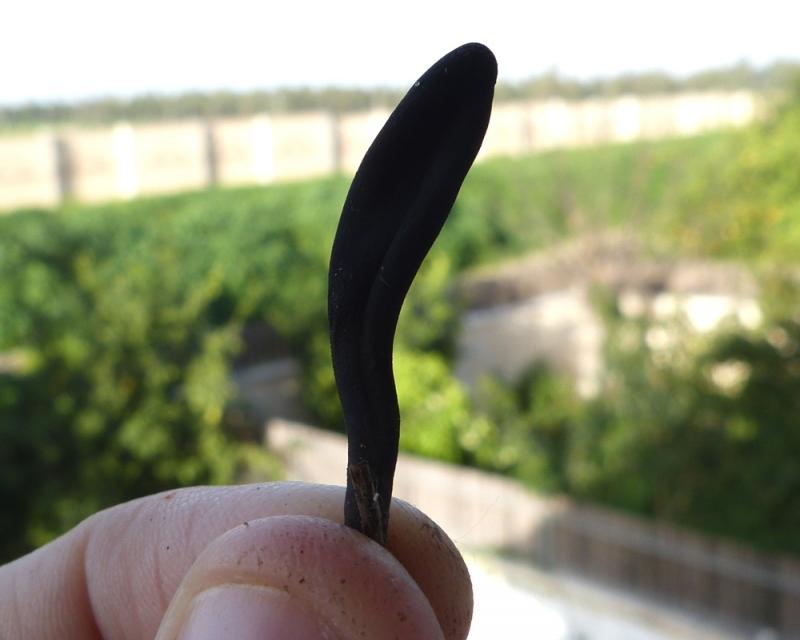
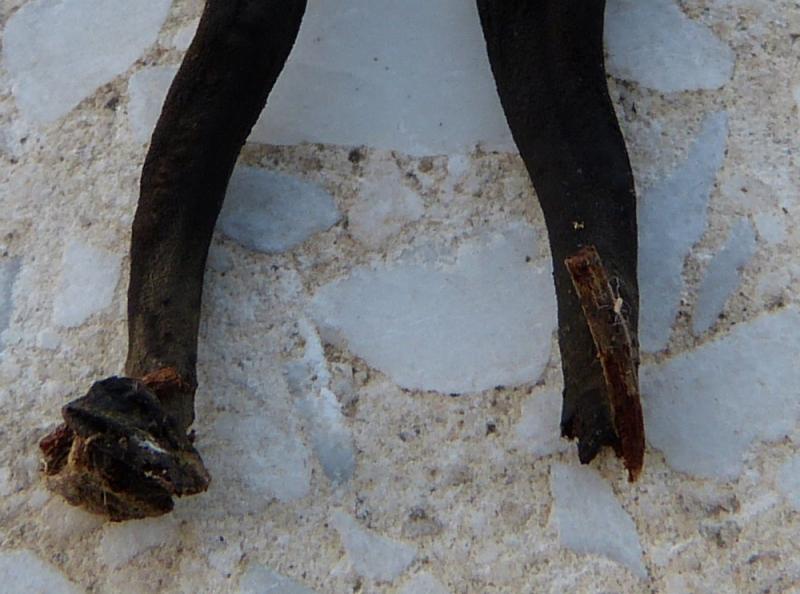
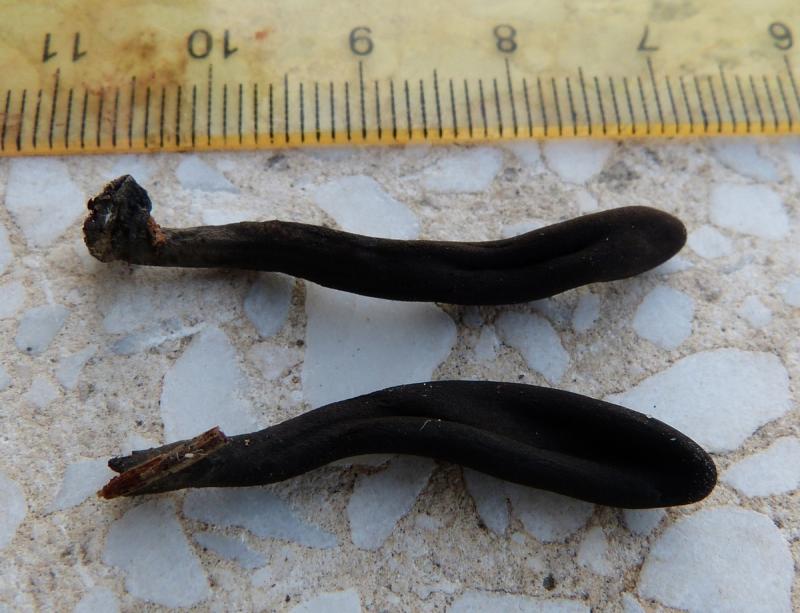
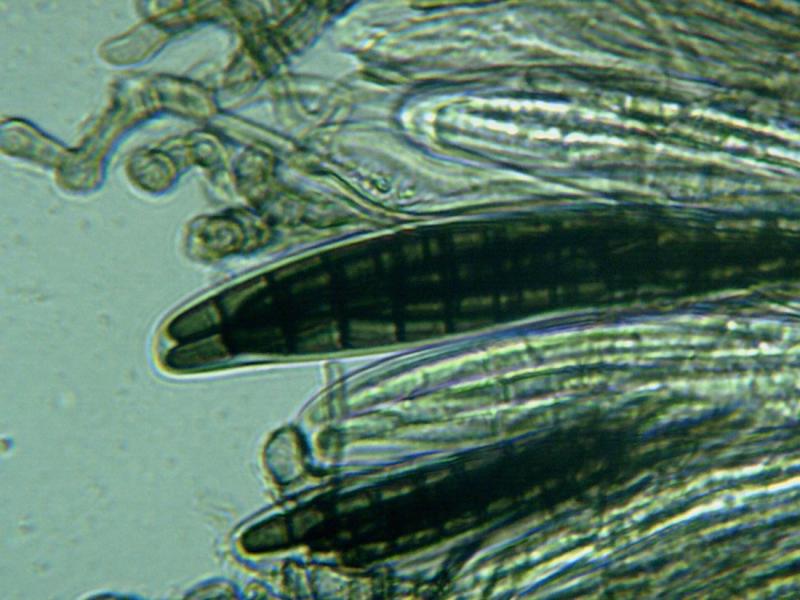
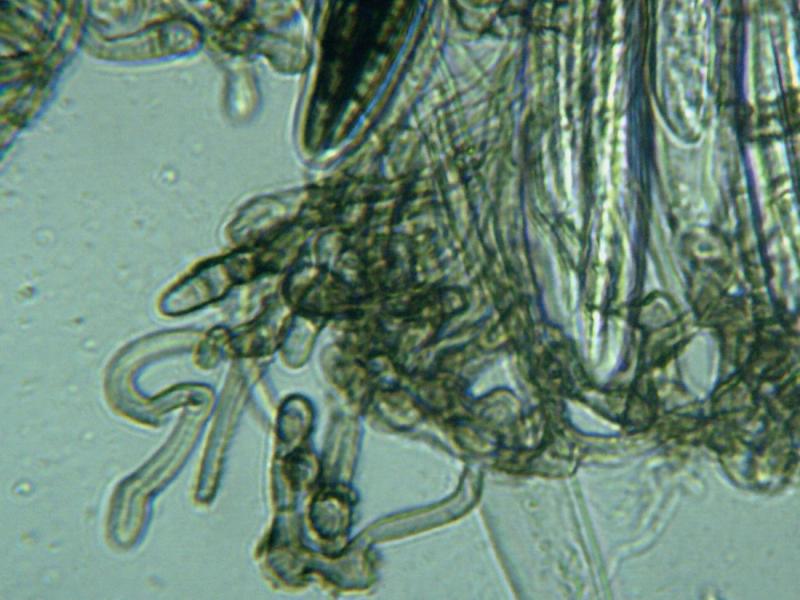
My name is Olga and I'm an amateur mycologist from Israel. Yesterday I found in a Pine forest an interesting ascomycete, that seems to be some Geoglossum species. The mushrooms grew on the ground together with Helvella leucomelaena, which is quite common in our Pine forests in Spring. The size of the fruiting bodies was about 3-3,5 cm high, 0,2-0,5 cm wide, the surface is matted, a bit rough, the color is dark brown-black, the stem area is brighter, brown-grey.
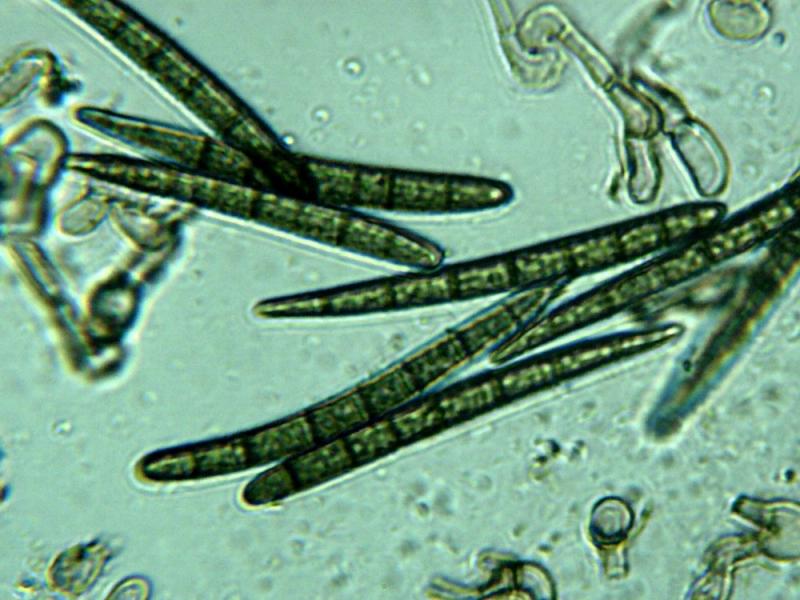
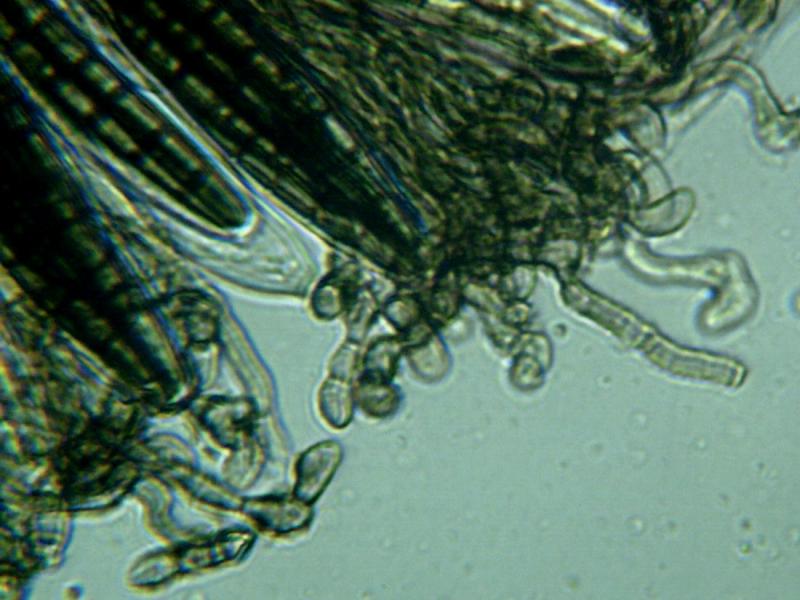
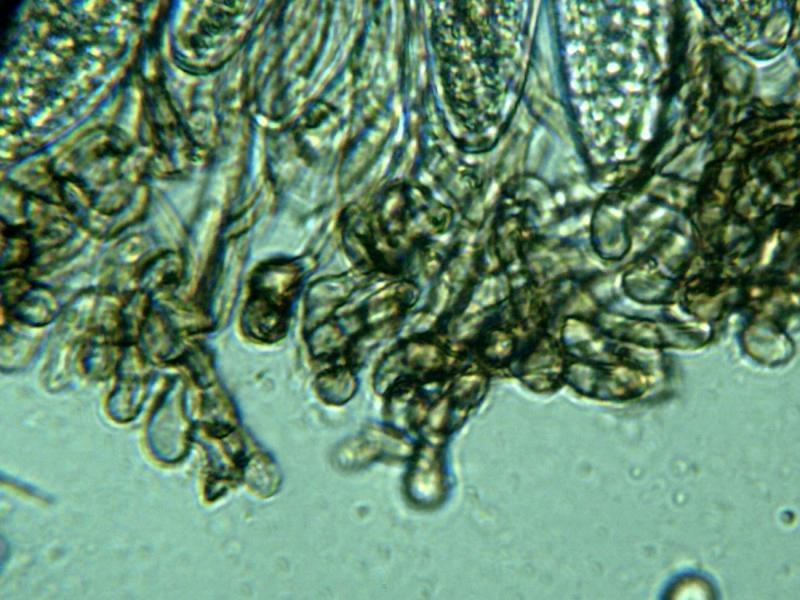
The spores 7-septated, long and narrow, about 90-102*7-8 µ, the asci 8-spored, as I could see, about 200-250*25-30 µ. The paraphyses look a bit strange to me, because their form is very irregular and I don't know, how to describe it exactly.
I looked for some information in the internet and found a description, that could fit, in a book "Mushrooms of Northeastern North America": "Spores 50-105*7-9, mostly 7-septate, upper cells of paraphyses enlarged and rounded to obvoid." - it is a descriprion of Geoglossum glabrum. But I am still not sure about the definition.
I'll be glad for your help.
Have a good day
Olga
PS: I searched other topics related to Geoglossum here on this Forum, and I think, that the microscopy of this species (which was identified as Geoglossum ccookenianum) looks similar: http://www.ascofrance.com/search_forum/9944
but in my case the spores are bigger in size.
DirkW,
09-02-2013 13:29

Re : Geoglossum sp?
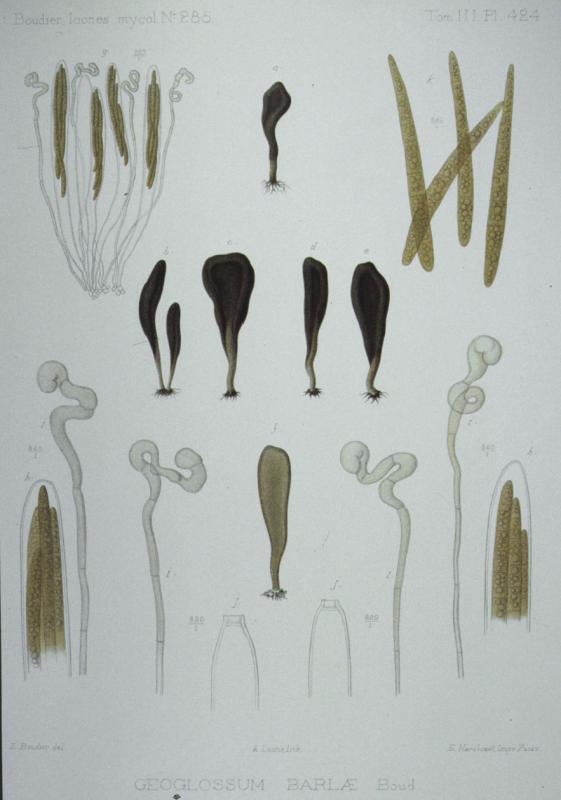
hi olga, i think your collection fits well to what good old boudier has describes under g. barlae (see pic). umbratile is very similar and perhaps conspecific. the paraphyses of cookeianum are moniliform, but more straight.
best to israel
dirk
best to israel
dirk
Godorova Olga,
09-02-2013 13:59
Re : Geoglossum sp?
Thank you very much, Dirk! Yes, the paraphyses form on the picture is similar to what I have. I'll try to find more information about this species.
Olga
Olga