
01-05-2026 22:45
 Thierry Blondelle
Bonjour à tous, Une récolte sur bouse séchée d
28-04-2026 20:07
 Lothar Krieglsteiner
... on twig in the air at standing Ceratonia siliq
14-04-2026 05:32
Ethan CrensonHi all, A few weeks back a friend pointed out som
28-04-2026 20:33
Vitus SchäfftleinHello, I found Trochila ilicina on Ilex aquifoliu

30-04-2026 10:28
Rot BojanHello, by appearance I would say that I am dealing
27-04-2026 18:48
Tony MoverleyCollected 23rd April 2026, Norfolk, EnglandSwarms
27-04-2026 20:52
Lothar Krieglsteiner
Found on hanging tiwg of Olea europaea in dried-ou
28-04-2026 22:51
 Bernard CLESSE
Bonsoir à toutes et tous,Pourriez-vous m'aider à
29-04-2026 08:01
Lothar Krieglsteiner
... on twig attached to small tree of Citrus auran
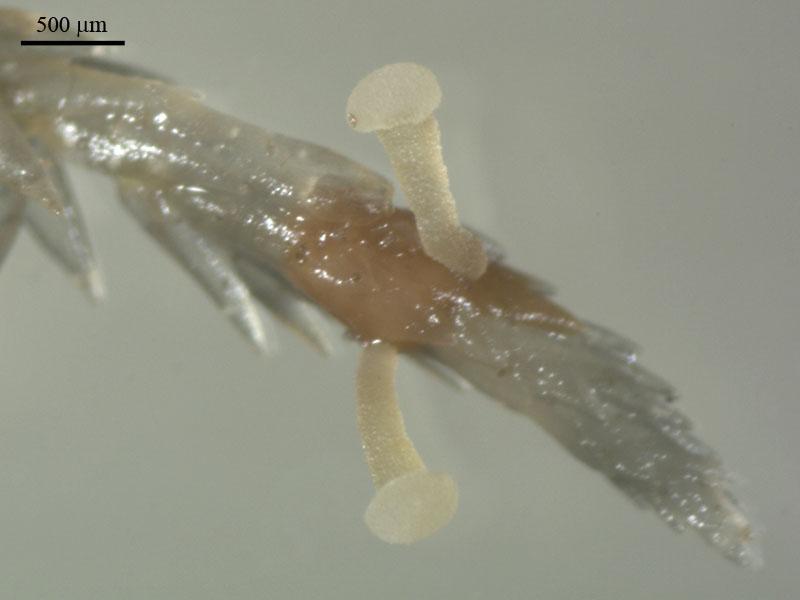
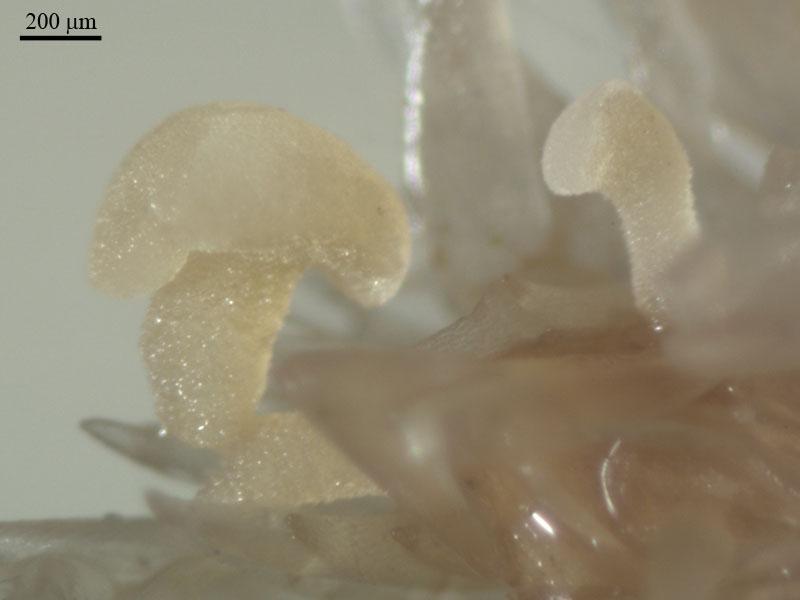
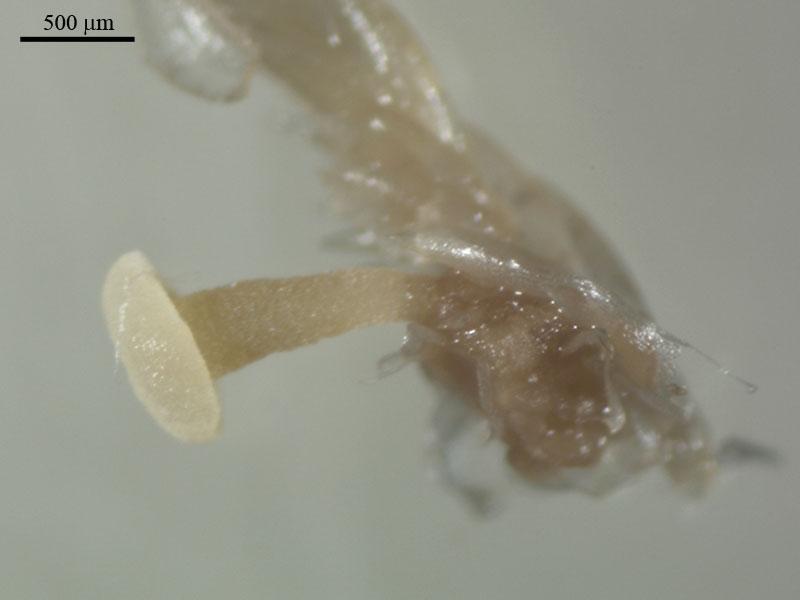
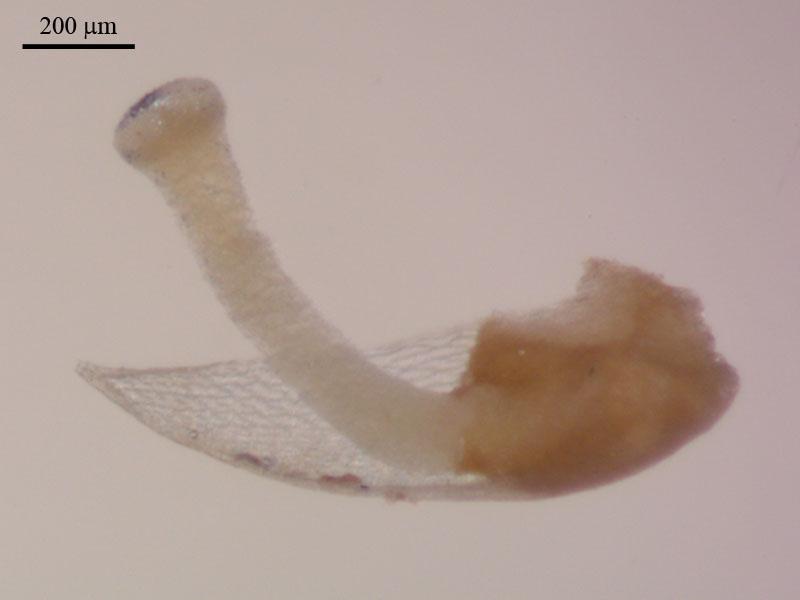
From Sphagnum angustifolium, in bog, 30.08.2012, N61,052761° E69,455910°.
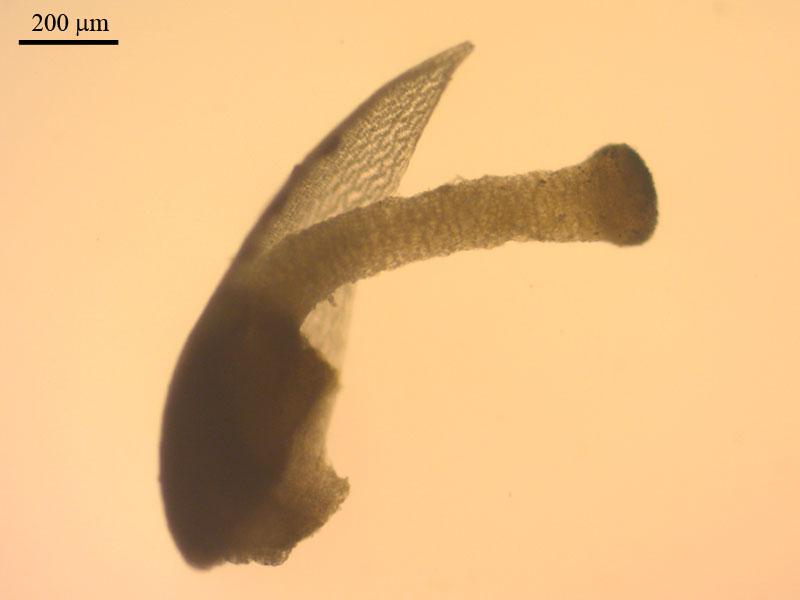
Apothecia turbinate, with long stipe, hymenium convex, edge bent down to the stipe when mature, up to 2 mm high, 0,8 mm diam in disc, stipe and receptacle surfaces minutely granulate, stipe arise from light-brown sclerotia, which placed between leaves, sclerotium ellipsoid, 0,5 x 0,3 mm; pale ochraceous, hymenium surface lighter, whitish, sclerotium light brown.
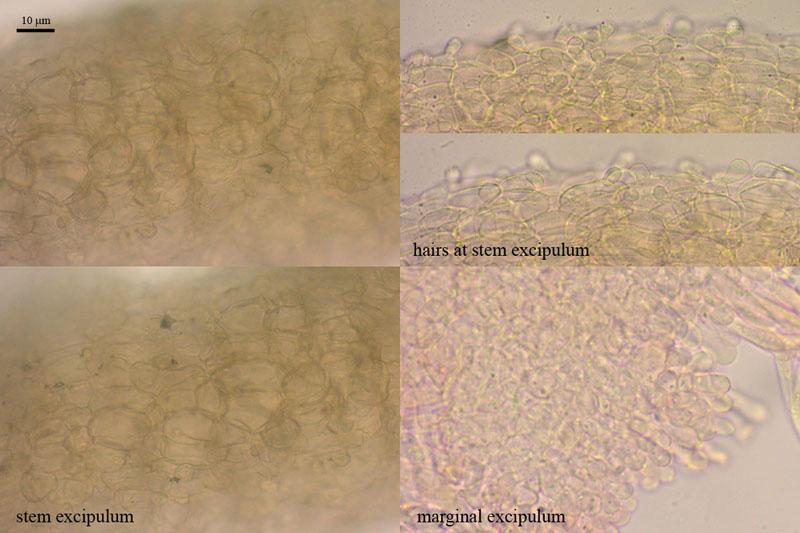
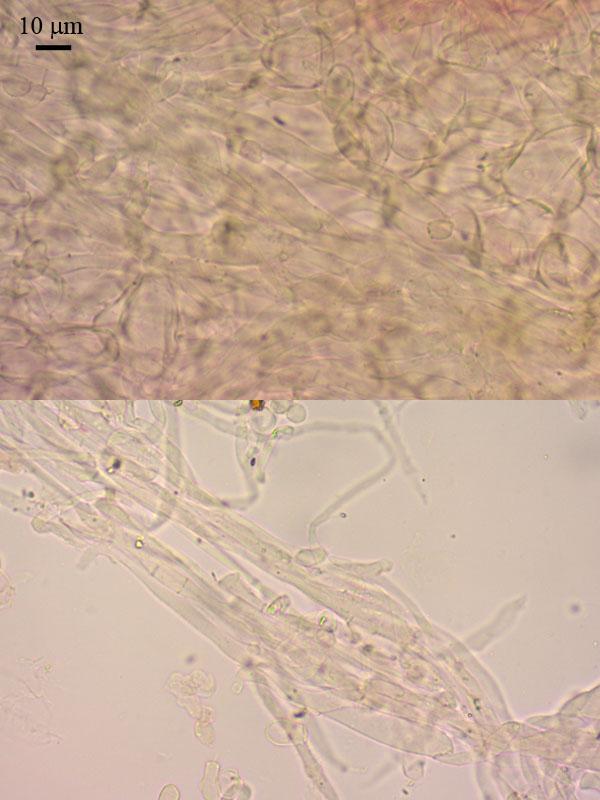
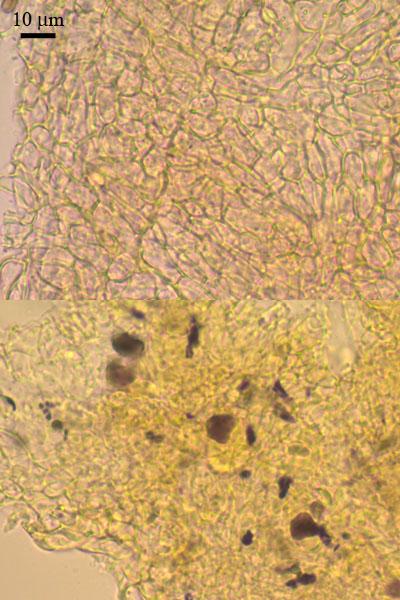
Ectal excipulum from textura angularis, cell walls dextrinoid and in some parts of tissue amyloid reaction; cells large, ellipsoid, thin-walled, near 30 x 5, from the outer walls of large cells arise rough clavate 2-4 celled hairs (30 x 8) which create granulate structure of stem (warts dissolve in KOH and hairs become smooth), cells become smaller to the edge of receptacle, edge covered with the same clavate hairs (10 x 5); medullary excipulum from bunch of "vascular" hyphae 5-15 mk broad, cells about 60 mk long or septation may be absent for long distance; sclerotial excipulum from isodiametric thick-walled cells, inner tissue reacts with MLZ (strong violet in some areas); asci clavate, clamped, with weak amyloid pore, 62 (57-70) x 6,4 (5,5-7); paraphyses vary strongly in width, from 2 to 7 mk, enlarged from base to the tip, branched several parts, cenral part often wider then side branches, and many segmented (side branches less segmented), mean length 90 mk; spores acerose, 6 in ascus, 20,2 (16,1-28) x 1,9 (1,7-2,1) (Q=10,5; N=16).?
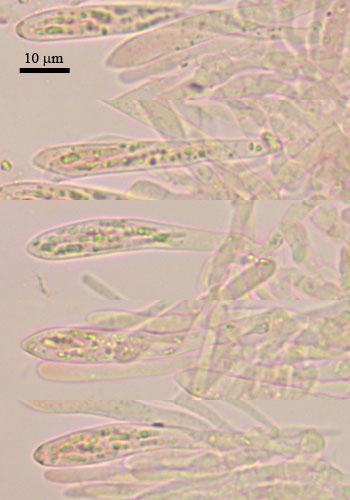
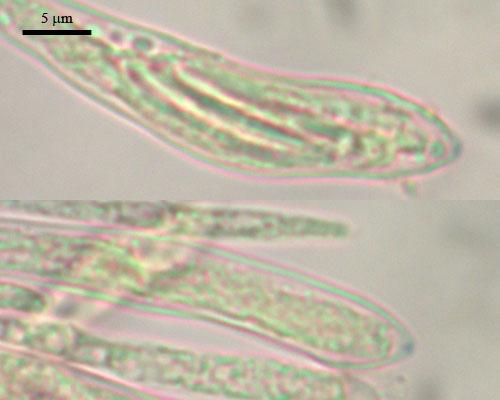
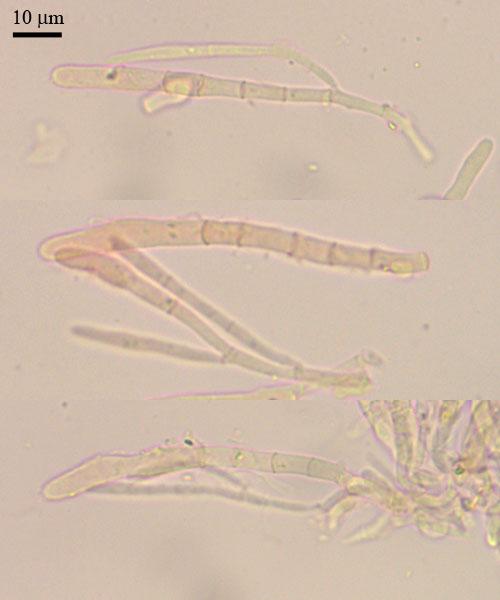
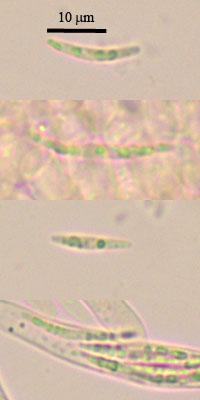

From your scale I find the spores 14-25 x 1.7-2 µm.
In my database I find on Sphagnum only Helotium vasaense, but spores are there 10-18 x 2-4.5 µm.
Your fungus reminds me a little of "Moellerodiscus" advenulus on conifer needles, which has ellipsoid spores and belongs perhaps better close to Antinoa/Calycina.
Zotto

I understand you tested the asci in MLZ. Did you try Lugol (simple iodine) as well? I would be interested to see this reaction. The best observed with oil immersion.
Regards,
Martin
there are pictures in lugol (pharmacy solution: J + KJ + glycerol) after KOH pretreatment. It look the same way, i think.
I have remeasured spores from mature specimen: 20,2 (16,1-28) x 1,9 (1,7-2,1) (Q=10,5; N=16).
actually i was looking at undeveloped apothecium, but the next one was mature and all structures more clear; hairs, asci and paraphyses some longer too (corrected in the descripiton). All raw pictures will be here: http://www.flickr.com/photos/bog-fun/sets/72157631534110252/
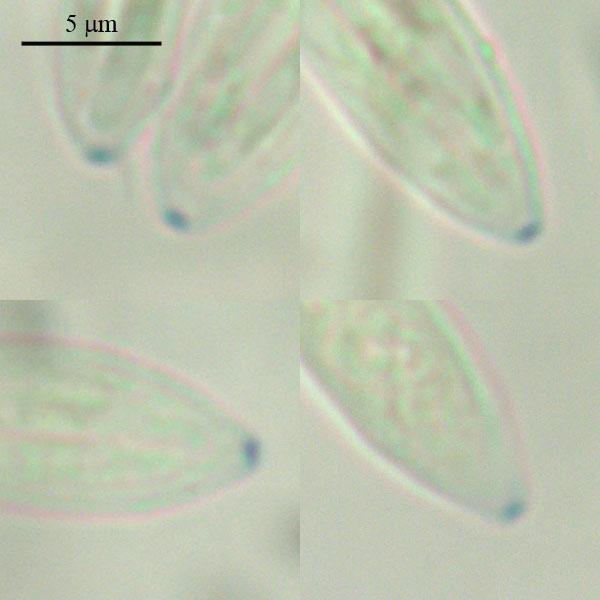
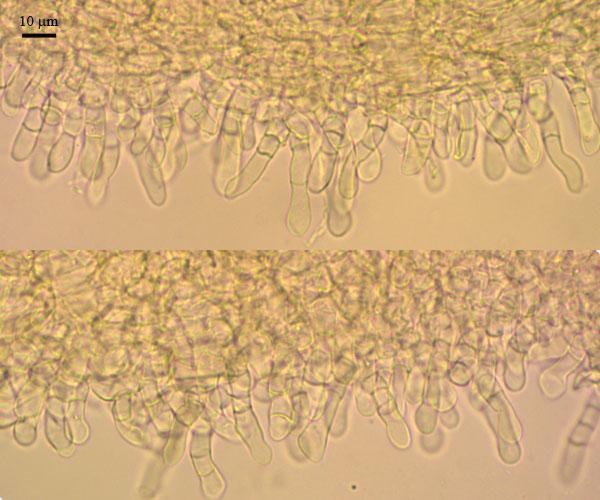
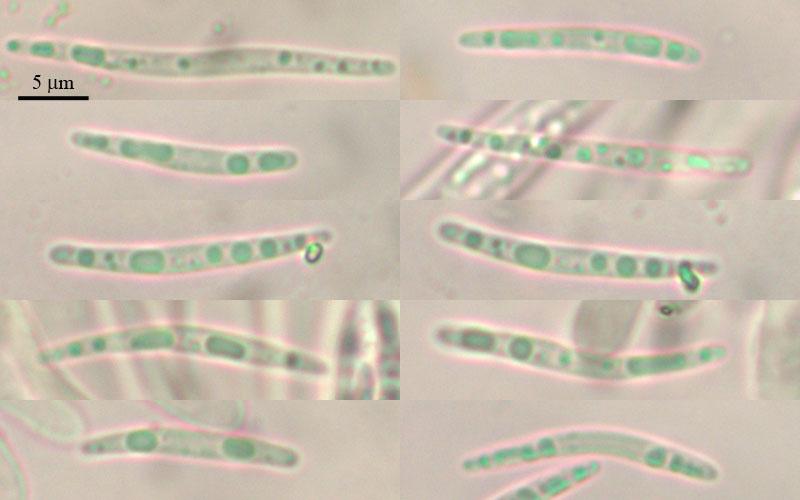
what I wanted to exclude is a possible hemiamyloid reaction (red) which is only visible without KOH pretreatment.
Regards,
Martin

I attach an image to show what Martin says. It is very well explained here:
http://www.gbif-mycology.de/HostedSites/Baral/IodineReaction.htm
With only IKI you can get a red reaction, but if you pretreat with KOH you will only get a blue reaction. Because in some species you only get the red when directly placed in IKI, then it has taxonomical relevance. Red reaction is termed by Zotto as hemiamyloid and if blue then euamyloid. But if you apply first KOH you can only say it is amyloid when you get the blue reaction (and never will get the red!))
Cheers,
Raúl
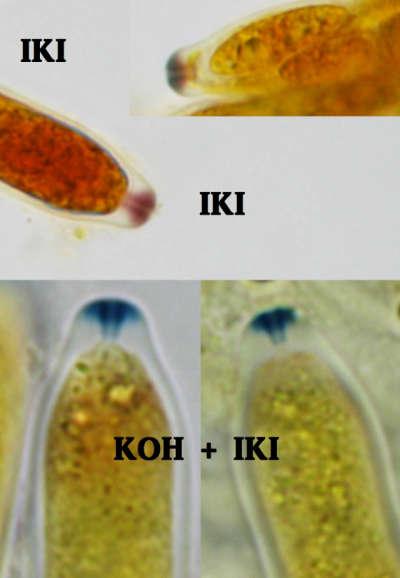
have not learned it at first)
Now i checked in water - lugol, and it is euamyloid.
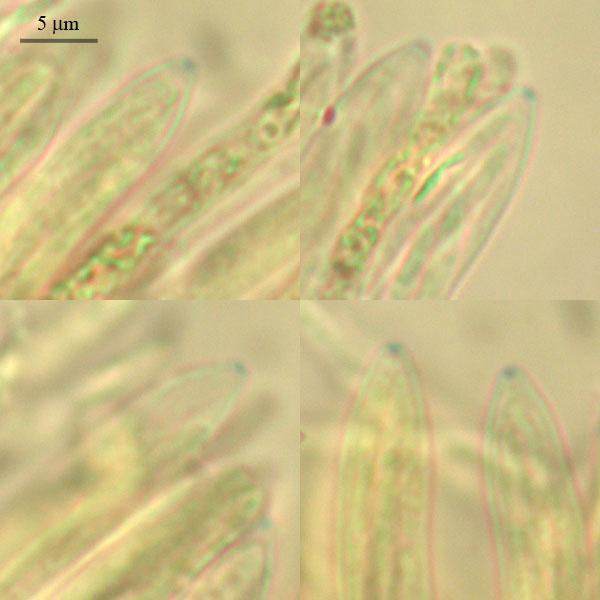
Be aware that iodine is quite volatile and it has to be added again if your IKI loses strength. Best way to be sure is to check the colour of your IKI, it has to be quite reddish-brown. That will give a red-brown colour to all the preparation. And because this is not seen in your image, maybe your IKI has a low iodine concentration? Around 0,5 % concentration is enough, but because it is usually applied on the edge of a water preparation, I suggest more or less 1% (as Zotto shows in an image in the previous link).
Raúl