
01-05-2026 22:45
 Thierry Blondelle
Bonjour à tous, Une récolte sur bouse séchée d
28-04-2026 20:07
 Lothar Krieglsteiner
... on twig in the air at standing Ceratonia siliq
14-04-2026 05:32
Ethan CrensonHi all, A few weeks back a friend pointed out som
28-04-2026 20:33
Vitus SchäfftleinHello, I found Trochila ilicina on Ilex aquifoliu

30-04-2026 10:28
Rot BojanHello, by appearance I would say that I am dealing
27-04-2026 18:48
Tony MoverleyCollected 23rd April 2026, Norfolk, EnglandSwarms
27-04-2026 20:52
Lothar Krieglsteiner
Found on hanging tiwg of Olea europaea in dried-ou
28-04-2026 22:51
 Bernard CLESSE
Bonsoir à toutes et tous,Pourriez-vous m'aider à
29-04-2026 08:01
Lothar Krieglsteiner
... on twig attached to small tree of Citrus auran
 Bonjour à tous,
Voici un indéterminé restant de l'an dernier.
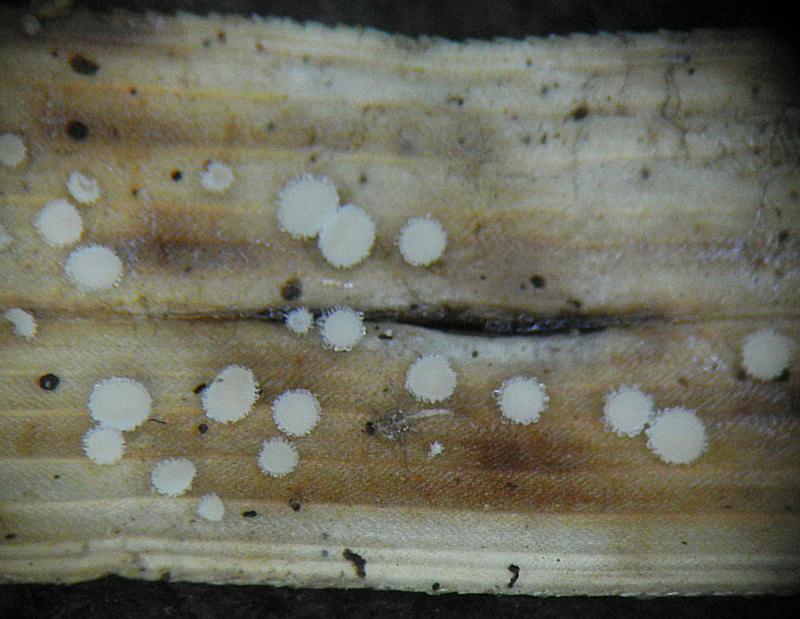
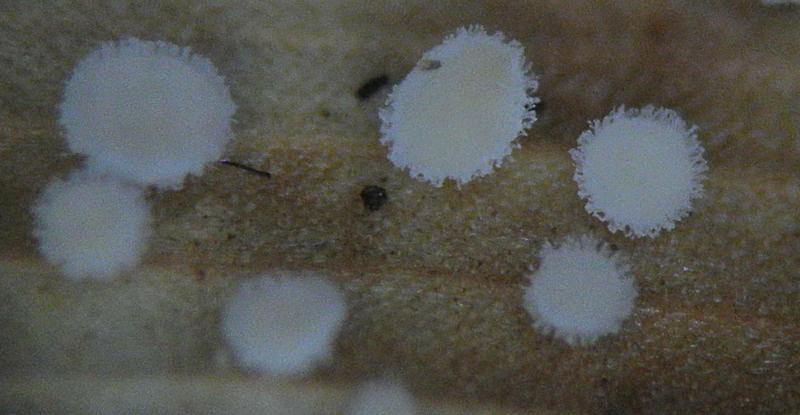
Lachnum S/ feuille de Carex paniculata. RND Anciennes Troufferies de Libin, Ardenne belge, 29.11.12.
Apothécies en groupes, ~ 2/3 mm, blanches, devenant d'un jaune très pâle. Pseudostipe très court.
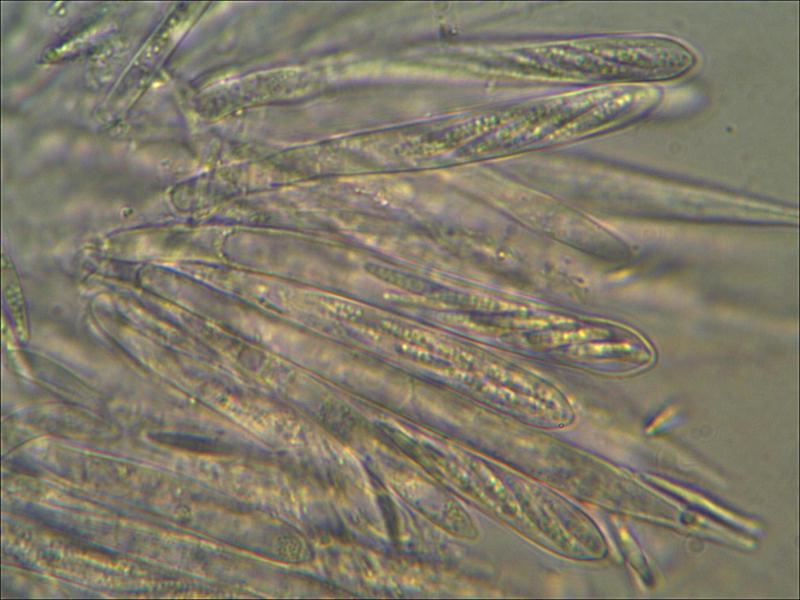
Asques 8-sp., bisériés, IKI BB, 55.5-69 x 6-7 µ. Crochets non vus, sans doute absents.
Paraphyses lancéolées, septées, lisses, dépassant nettement les asques, 88-93 x 4-7 µ par exemple.
Spores allongées, fusiformes à subcylindriques, fortement guttulées, (10.5) 11.5-19 x 2-2.2 (2.5) µ.
Poils hyalins, cylindriques, parfois légèrement clavés au sommet, un peu verruqueux, x3.5-4.5, peut-être un peu plus.
Pas d'idée.?
Amitiés - LUC
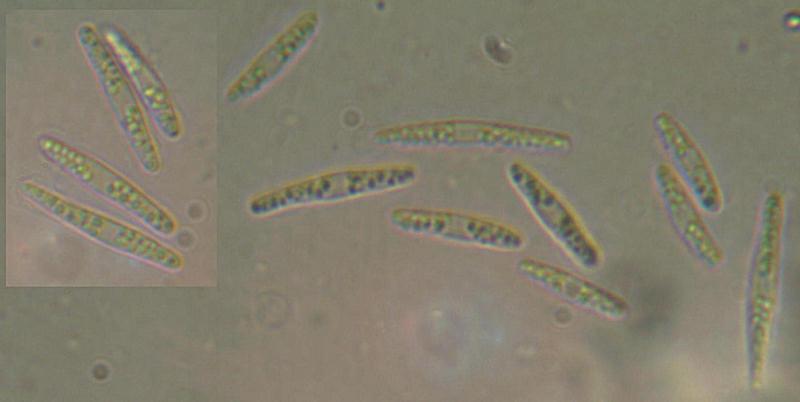
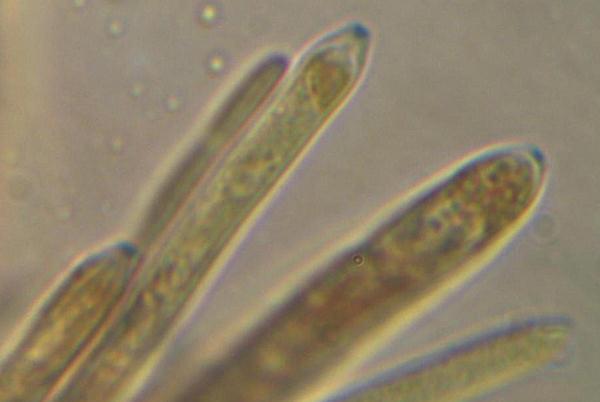
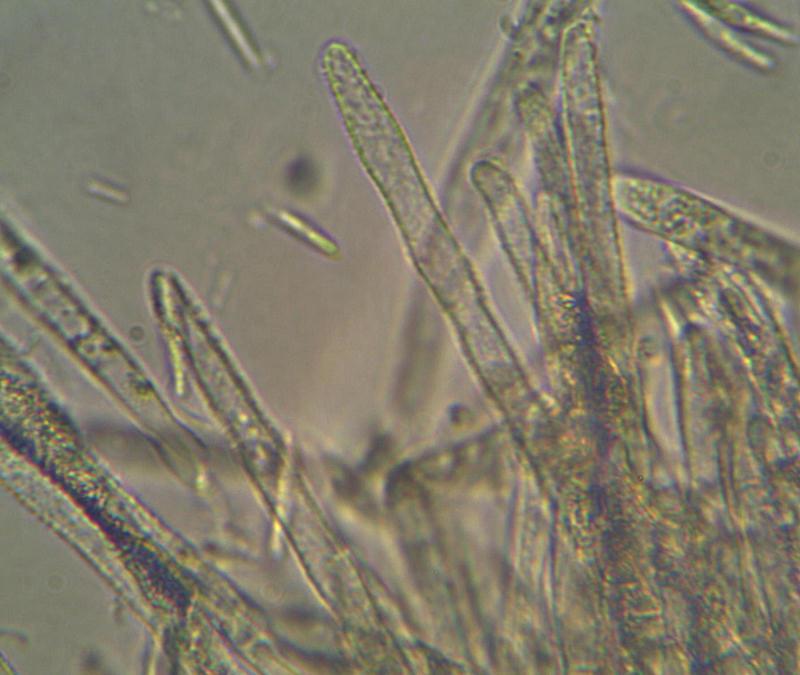

I think it is L. juncinum. The spores are a bit narrow (I know 2.5-2.7 µm). A problem is that the paraphyses and hairs should be multiguttulate when alive. Your hairs seem dead but the paraphysis is alive and empty. Do you still have fresh apos to control another?
L. juncinum turns reddish with age because of these VBs, yours not?
This is a very rarely reported species.
Zotto
Nope, the sample has faded, alas. I got it late in the season, after already a cold night and cold wind, that could explain.
I still had no red tint, only pale yellow. The sample looked still very fresh when I found the apothecia's.
I looked at the photo's, all was in that state.
Hopefully, that's a bog I know well and where I can return. Does this species grow during Spring also? If so, I'll probably have the opportunity to make other sampling campaigns on the site for more lists in that nature reserve.
Cheers - LUC.
and yes, I have it here from April to July.
Zotto
Cheers - LUC.