27-04-2026 20:52
 Lothar Krieglsteiner
Found on hanging tiwg of Olea europaea in dried-ou
28-04-2026 22:51
 Bernard CLESSE
Bonsoir à toutes et tous,Pourriez-vous m'aider à
29-04-2026 08:01
Lothar Krieglsteiner
... on twig attached to small tree of Citrus auran
29-04-2026 10:44
Lothar Krieglsteiner
growing at moist, drying-out soil at the side of a
28-04-2026 20:33
Vitus SchäfftleinHello, I found Trochila ilicina on Ilex aquifoliu

28-04-2026 21:50
 Pablo Sandoval
Hola a todos,Espero se encuentren bien. Hace mucho
27-04-2026 18:05
Lothar Krieglsteiner
... still attached at standing tree. The green con
28-04-2026 20:07
Lothar Krieglsteiner
... on twig in the air at standing Ceratonia siliq
27-04-2026 18:48
Tony MoverleyCollected 23rd April 2026, Norfolk, EnglandSwarms
Pale Nectria on Fagus
Martin Bemmann,
29-11-2010 00:14
 Hi all,
I know, Nectriaceae are very difficult (and that is more or less all I know about N. ;-) ). But these Nectrias maybe have some features that may allow someone of you to determin them:
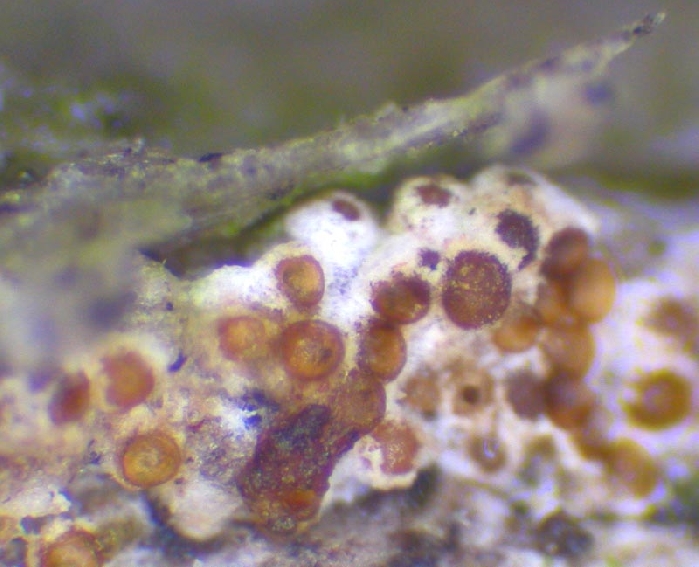
I found them on a sturdy fragment (ca. 12-15 cm dm) of a Fagus trunk with whiterot, partly decorticated. Other fungi were Orbilia delicatula/leucostigma and Rhizodiscina lignyota.
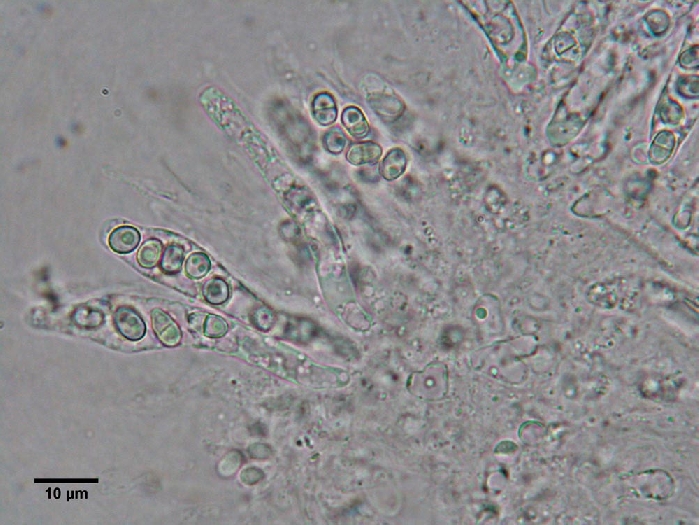
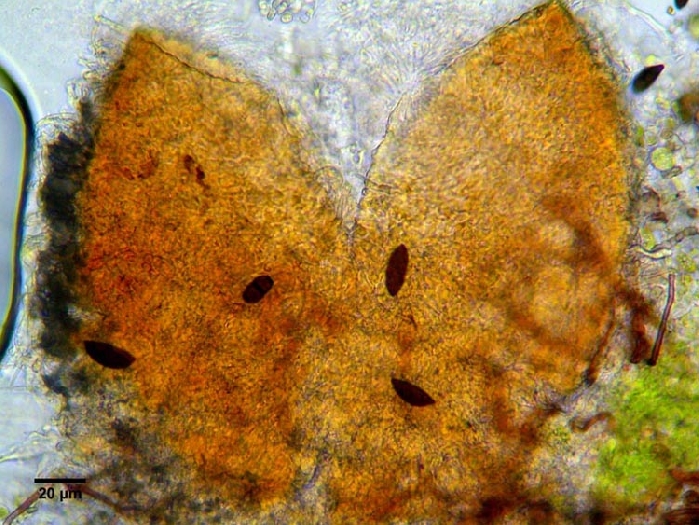
The tiny (0,2 mm dm.) perithecia are embedded in a white subiculum. Colour is pale orange, older specimen are broken or collapsed. The ascus wall seems to be very thin, since it was almost unvisible to me. Spores are one to mostly two celled with a sometimes asymmetrically shape (5,3-6,5 x 3,1-4,1 µm). Paraphyses are filiform with small oildrops.
Any comments appreciated!
I will try to keep the specimens allive for further investigation.
Best regards,
Martin
PS: reminds me to nougat de Montelimar...
Martin Bemmann,
29-11-2010 00:15
Re:Pale Nectria on Fagus
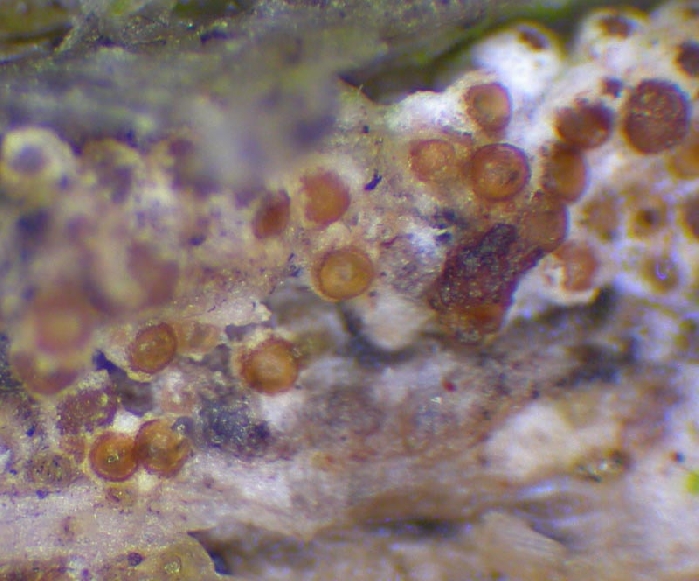
another view:
Martin Bemmann,
29-11-2010 00:18
Re:Pale Nectria on Fagus
a perithecium:
Martin Bemmann,
29-11-2010 00:20
Re:Pale Nectria on Fagus
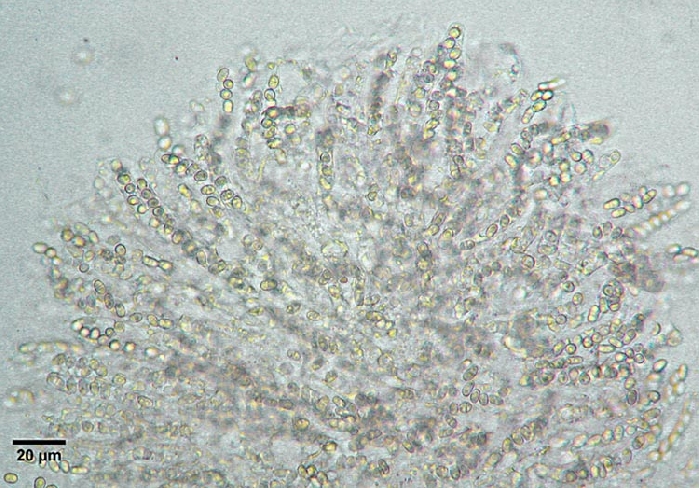
its content:
Martin Bemmann,
29-11-2010 00:21
Re:Pale Nectria on Fagus
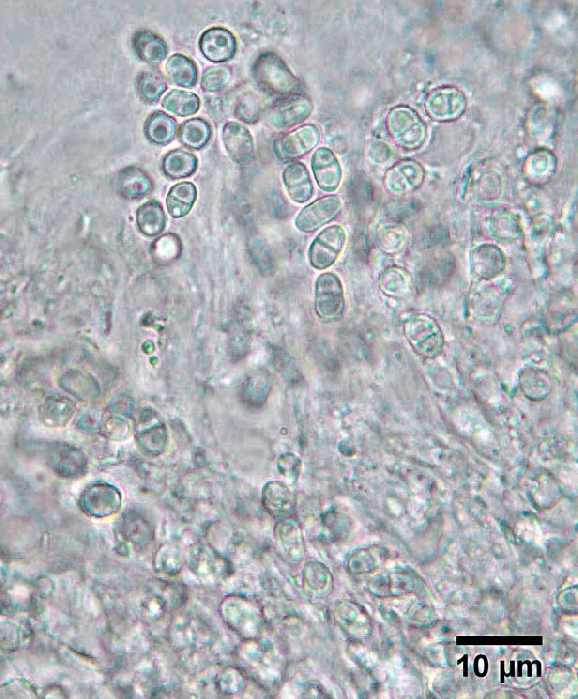
Asci and spores:
Martin Bemmann,
29-11-2010 00:22
Re:Pale Nectria on Fagus
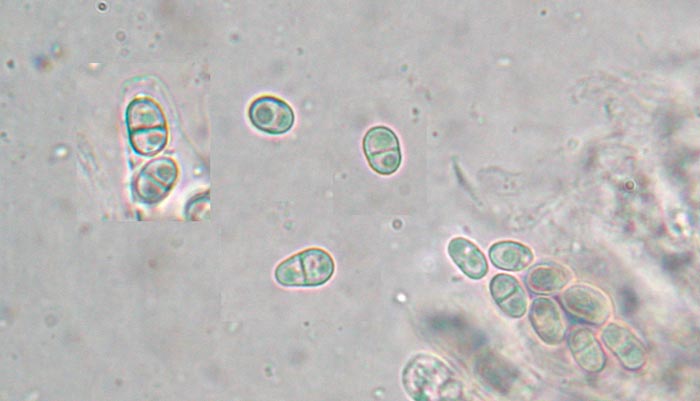
some more spores:
Martin Bemmann,
29-11-2010 00:22
Re:Pale Nectria on Fagus
and paraphyses in IKI:

Christian Lechat,
29-11-2010 06:48

Re:Pale Nectria on Fagus
Hi Martin,
maybe your fungus is a Nectriopsis, it would be necessary to test the reaction in KOH.
Besides, I would like to know if the hyphae covering ascomatal wall are spinulose or smooth.
Finaly, could you make a vertical section through the ascomatal wall?
Best wishes
Christian
maybe your fungus is a Nectriopsis, it would be necessary to test the reaction in KOH.
Besides, I would like to know if the hyphae covering ascomatal wall are spinulose or smooth.
Finaly, could you make a vertical section through the ascomatal wall?
Best wishes
Christian
Martin Bemmann,
29-11-2010 22:50
Re:Pale Nectria on Fagus
Hi Christian,
thank you for your interest!
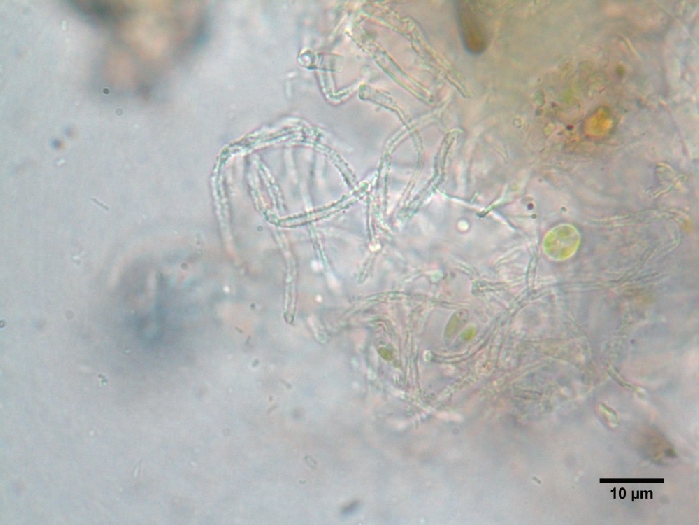
As for your question to the surface of the hyphae, they are not smooth but warty spinulose.
What do you expect, what should I observe, in KOH at what magnification? A change of colour of the perithecium?
Well a section of these very tiny fungi will be a real challenge, but I will try...
Cheers,
Martin
thank you for your interest!
As for your question to the surface of the hyphae, they are not smooth but warty spinulose.
What do you expect, what should I observe, in KOH at what magnification? A change of colour of the perithecium?
Well a section of these very tiny fungi will be a real challenge, but I will try...
Cheers,
Martin
Martin Bemmann,
30-11-2010 00:11
Re:Pale Nectria on Fagus
Hi again,
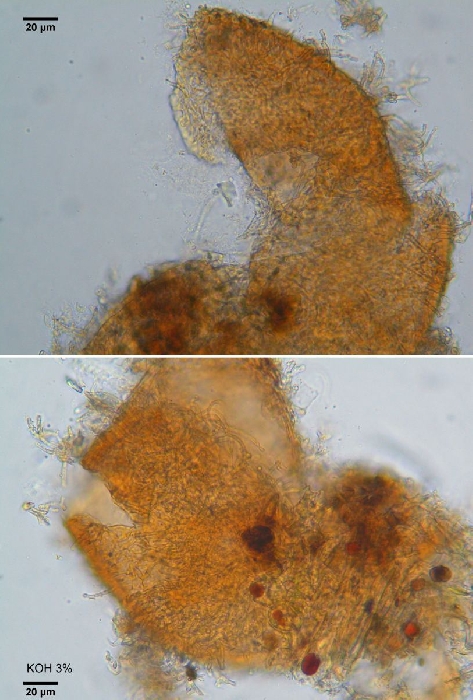
this is a comparision of colour in water and KOH 3%. No major change...
this is a comparision of colour in water and KOH 3%. No major change...
Martin Bemmann,
30-11-2010 00:38
Re:Pale Nectria on Fagus
A last time for today:
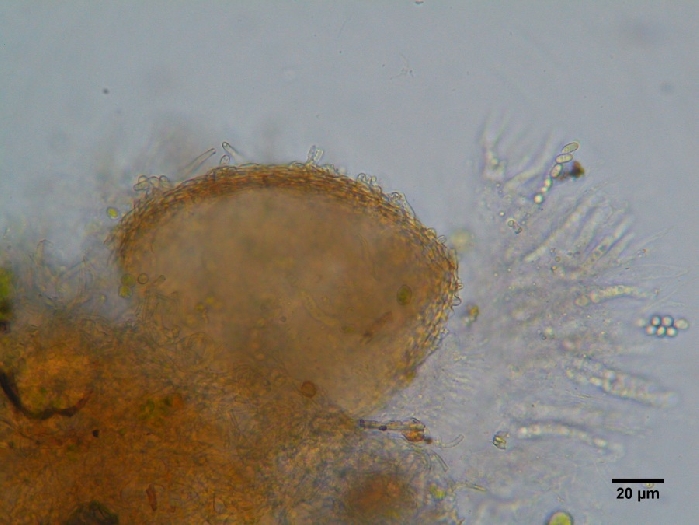
I embedded some specimen in PEG and tried to make some random sections. Well I succeeded halfways ... Here is the ascomatal wall to your evaluation.
Best regards,
Martin
I embedded some specimen in PEG and tried to make some random sections. Well I succeeded halfways ... Here is the ascomatal wall to your evaluation.
Best regards,
Martin
Christian Lechat,
30-11-2010 06:48
Re:Pale Nectria on Fagus
Hi Martin,
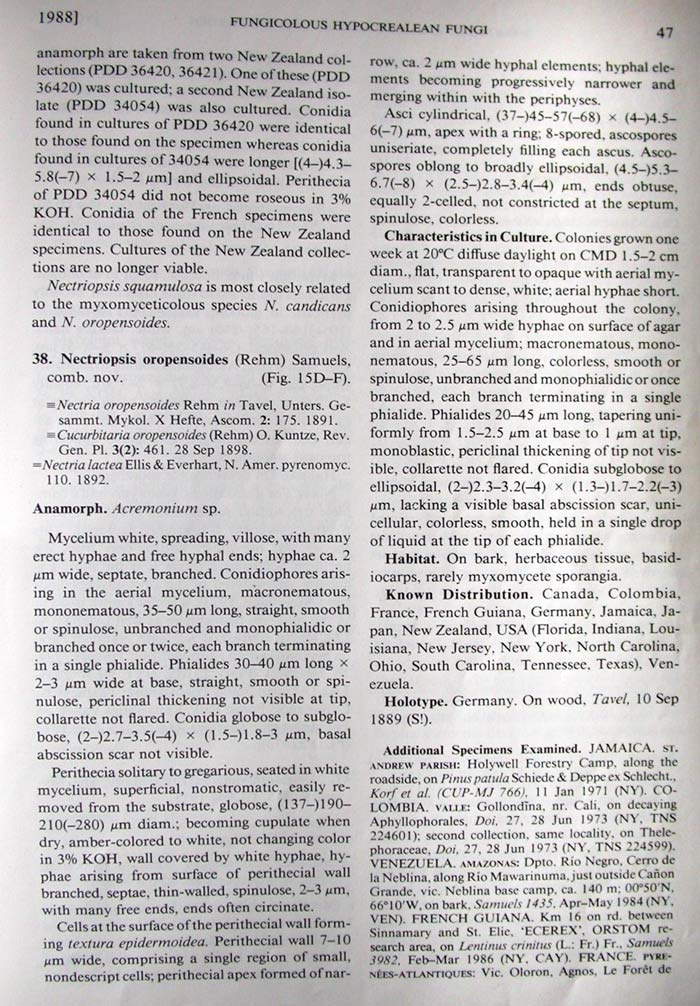
according to the characters that you provide, such not changing color in KOH, ascospores size and subiculum composed of spinulose hyphal elements, I think it could be Nectriopsis oropensoides (Rehm) Samuels. You should look for in this genus to confirm possibly this hypothesis.
best whishes
Christian
according to the characters that you provide, such not changing color in KOH, ascospores size and subiculum composed of spinulose hyphal elements, I think it could be Nectriopsis oropensoides (Rehm) Samuels. You should look for in this genus to confirm possibly this hypothesis.
best whishes
Christian
Martin Bemmann,
30-11-2010 10:05
Re:Pale Nectria on Fagus
Dear Christian,
thank you very much. I don't have access to Gary Samuels description 1988. But I found the "Key to Tropical Species of Nectria-like Fungi" (Samuels/Rossman/Schroers 2002) where it is keyed:
4. Perithecial hairs cylindrical, hyphal; ascospores 5.5-7 x 2.5-3.5 µm................Nectriopsis oropensoides (Rehm) Samuels (Samuels, 1988a)
Could it be that the "paraphyses" I showed above are such perithecial hairs? Or where do I have to search them?
Regards,
Martin
thank you very much. I don't have access to Gary Samuels description 1988. But I found the "Key to Tropical Species of Nectria-like Fungi" (Samuels/Rossman/Schroers 2002) where it is keyed:
4. Perithecial hairs cylindrical, hyphal; ascospores 5.5-7 x 2.5-3.5 µm................Nectriopsis oropensoides (Rehm) Samuels (Samuels, 1988a)
Could it be that the "paraphyses" I showed above are such perithecial hairs? Or where do I have to search them?
Regards,
Martin
Christian Lechat,
30-11-2010 12:50
 13615.jpg
Martin Bemmann,
30-11-2010 13:09
Re:Pale Nectria on Fagus
Thank you very much!
The description fits well to the features I could observe. I saw as well the entry in the AscoFrance-database. The spores of this collection look more cylindrical then those in mine. But this evening I will make a new slide in CB to document the verrucous surface of the spores which is only faintly visible in my water mount.
Best regards,
Martin
The description fits well to the features I could observe. I saw as well the entry in the AscoFrance-database. The spores of this collection look more cylindrical then those in mine. But this evening I will make a new slide in CB to document the verrucous surface of the spores which is only faintly visible in my water mount.
Best regards,
Martin
Alex Akulov,
30-11-2010 21:43

Re:Pale Nectria on Fagus
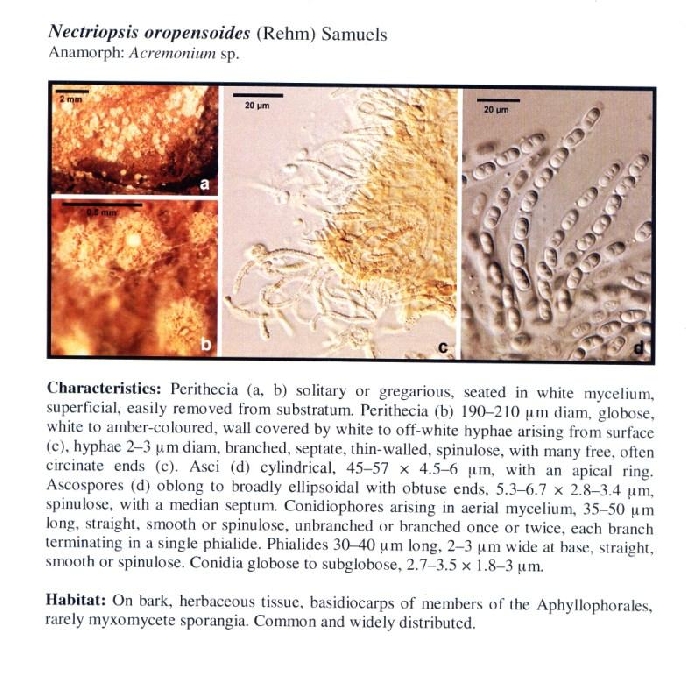
Let me to send you the description and illustrations of Nectriopsis oropensoides from Samuels, 1997 (Identification workshop on the Hypocreales. Sugadaira Montane Research Centre, Mycological Society of Japan)
Martin Bemmann,
30-11-2010 23:58
Re:Pale Nectria on Fagus
Thank you Alex for this !
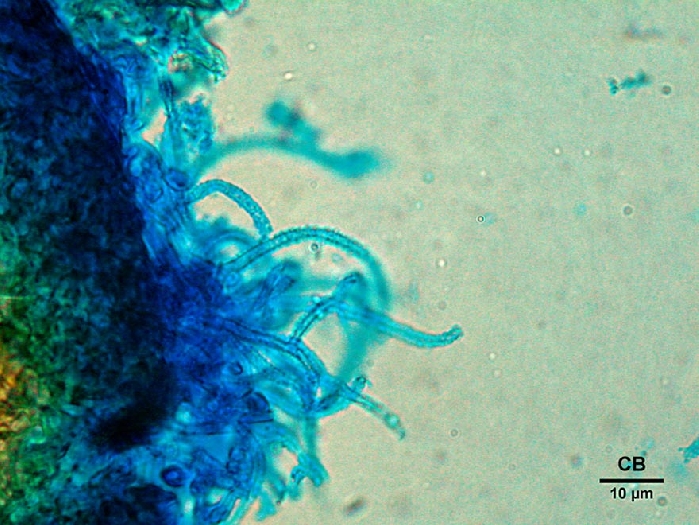
I tried to document the spore surface but in vain. Only empty ascomata today. At least I could shoot a picture of the subiculum hyphae in CB...
Best regards,
Martin
I tried to document the spore surface but in vain. Only empty ascomata today. At least I could shoot a picture of the subiculum hyphae in CB...
Best regards,
Martin
Martin Bemmann,
02-12-2010 00:17
Re:Pale Nectria on Fagus
Hi again,
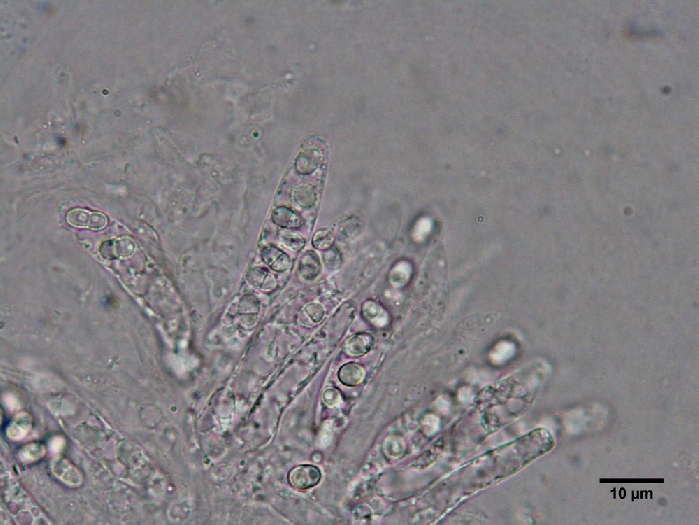
I did not manage to receive CB pictures of the spore surface again. But I think, one can imagine the roughness of the spore surface even in the water mount.
Best regards,
Martin
I did not manage to receive CB pictures of the spore surface again. But I think, one can imagine the roughness of the spore surface even in the water mount.
Best regards,
Martin
Martin Bemmann,
02-12-2010 00:17
Re:Pale Nectria on Fagus
another: