
28-04-2026 20:07
 Lothar Krieglsteiner
... on twig in the air at standing Ceratonia siliq
14-04-2026 05:32
Ethan CrensonHi all, A few weeks back a friend pointed out som
28-04-2026 20:33
Vitus SchäfftleinHello, I found Trochila ilicina on Ilex aquifoliu

30-04-2026 10:28
Rot BojanHello, by appearance I would say that I am dealing
27-04-2026 18:48
Tony MoverleyCollected 23rd April 2026, Norfolk, EnglandSwarms
27-04-2026 20:52
Lothar Krieglsteiner
Found on hanging tiwg of Olea europaea in dried-ou
28-04-2026 22:51
 Bernard CLESSE
Bonsoir à toutes et tous,Pourriez-vous m'aider à
29-04-2026 08:01
Lothar Krieglsteiner
... on twig attached to small tree of Citrus auran
29-04-2026 10:44
Lothar Krieglsteiner
growing at moist, drying-out soil at the side of a
On hornbeam in the Caucasus (Georgia)
Alex Akulov,
30-05-2010 20:40
 Dear friends
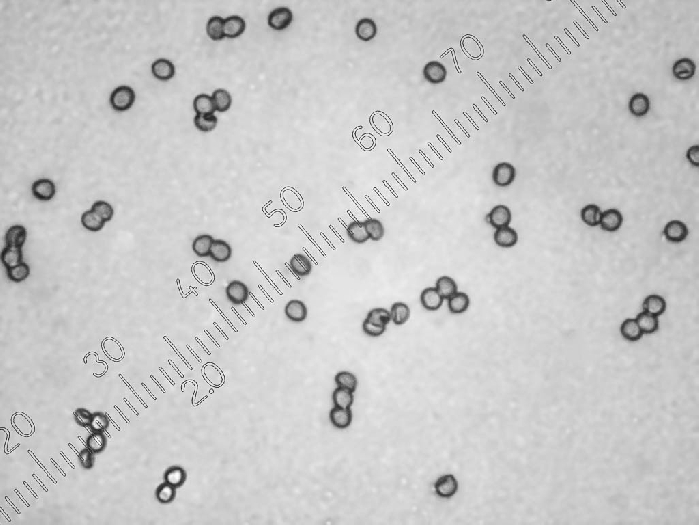
Today my colleagues from Russia have sent photos of a mysterious fungus found on the branches of hornbeam in the Caucasus. Photos put me in a deadlock state. My first thought was that it was representative of the Basidiomycota (Ramaria, Clavulina…), but spores are pushing the idea that it is representative of the Anamorphic Ascomycota (Clavicepitales, Xylariales, ???).
Please tell your assumptions, whatever it might be.
Thank you before,
Alex.
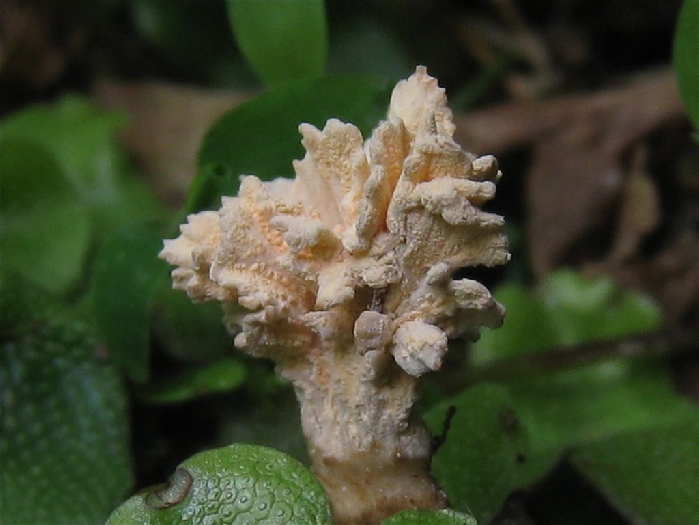
Alex Akulov,
30-05-2010 20:46
Re:On hornbeam in the Caucasus (Georgia)
more photo
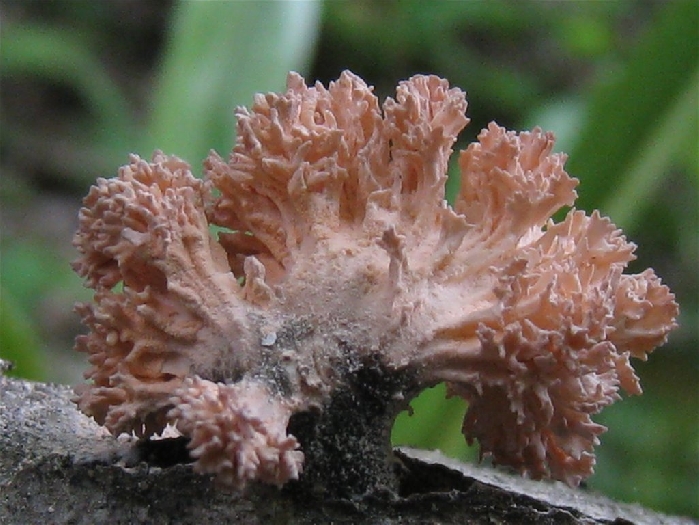
Alex Akulov,
30-05-2010 20:47
Re:On hornbeam in the Caucasus (Georgia)
more photo
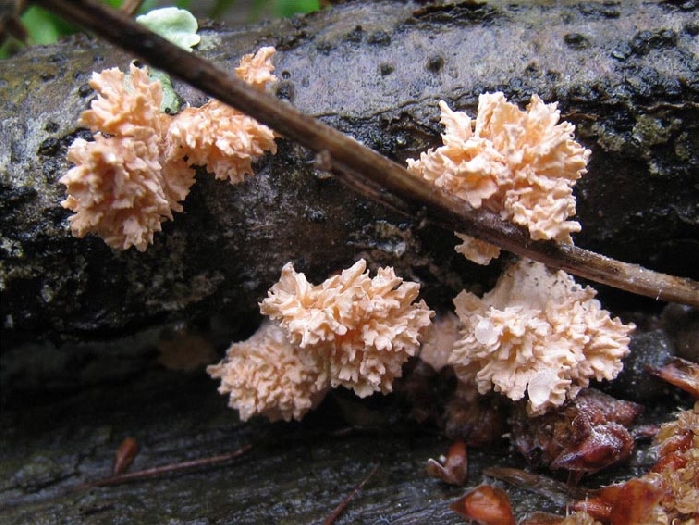
Alex Akulov,
30-05-2010 20:47
Re:On hornbeam in the Caucasus (Georgia)
more photo
Jacky Launoy,
30-05-2010 21:03
Re:On hornbeam in the Caucasus (Georgia)
It seems to be Paecilomyces farinosus (Holm ex Gray) Brown & Smith
Christian Lechat,
30-05-2010 21:08

Re:On hornbeam in the Caucasus (Georgia)
Hi, Alex,
I think that is an asexual state of Xylaria
Christian
I think that is an asexual state of Xylaria
Christian
Renée Lebeuf,
30-05-2010 22:06
Re:On hornbeam in the Caucasus (Georgia)
This looks to me like Xylocoremium flabelliforme (Schw.: Fr.) J.D. Rogers. The description I have says it is the asexual reproductive stage of Xylaria cubensis. It was found last year in Quebec.
Renée Lebeuf
Renée Lebeuf
Jacques Fournier,
30-05-2010 22:11

Re:On hornbeam in the Caucasus (Georgia)
Hi Alex,
indeed it looks like a Xylocoremium state of a Xylaria of the X. cubensis group. Typically, the conidiophores are arranged in tight palisades anf yield ellipsoid conidia 4-6 x 2-3 µm, unlike the globose conidia on the photo. You should make a squash mount of a piece of a branch in a drop of KOH to see the conidiophores.
Tell your colleagues to keep an eye on branches in the collection site, the teleomorph occurs separately from the anamorph, some weeks later.
Otherwise I have no idea.
Cheers,
Jacques
indeed it looks like a Xylocoremium state of a Xylaria of the X. cubensis group. Typically, the conidiophores are arranged in tight palisades anf yield ellipsoid conidia 4-6 x 2-3 µm, unlike the globose conidia on the photo. You should make a squash mount of a piece of a branch in a drop of KOH to see the conidiophores.
Tell your colleagues to keep an eye on branches in the collection site, the teleomorph occurs separately from the anamorph, some weeks later.
Otherwise I have no idea.
Cheers,
Jacques
Alex Akulov,
30-05-2010 22:37
Re:On hornbeam in the Caucasus (Georgia)
Thank you all for your help!
Alex
Alex