
28-02-2026 14:43
 Alain GARDIENNET
A new refrence desired :Svanidze, T.V. (1984) Novy
01-03-2026 18:46
 Robin Isaksson
Hi! This species i se from time to time in the

27-02-2026 17:51
 Michel Hairaud
Bonjour, Quelqu'un peut il me donner un conseil p
27-02-2026 16:17
 Mathias Hass
Hi, Found this on Betula, rather fresh fallen twi
01-03-2026 18:02
 Francois Guay
I found this mystery Helotiales on an incubated le
01-03-2026 14:10
 Antonio Couceiro
Hola, me gustaria conocer opiniones sobre este tem
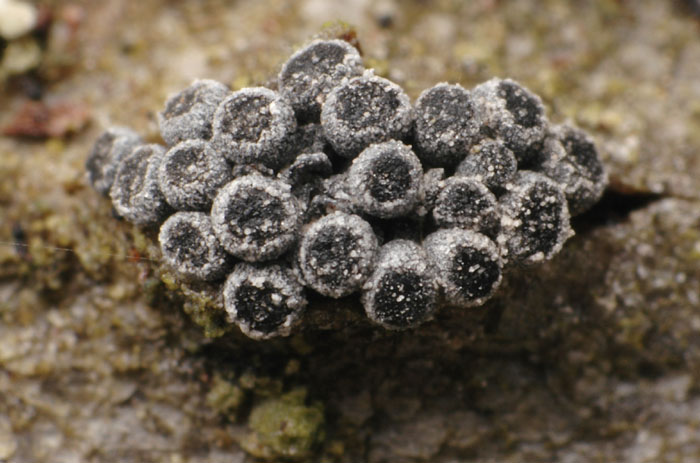
Clusters of small fungi on bark of Alnus
Dmitry Gavryushin,
21-12-2006 18:36
Dmitry Gavryushin,
21-12-2006 18:37
Re:Clusters of small fungi on bark of Alnus
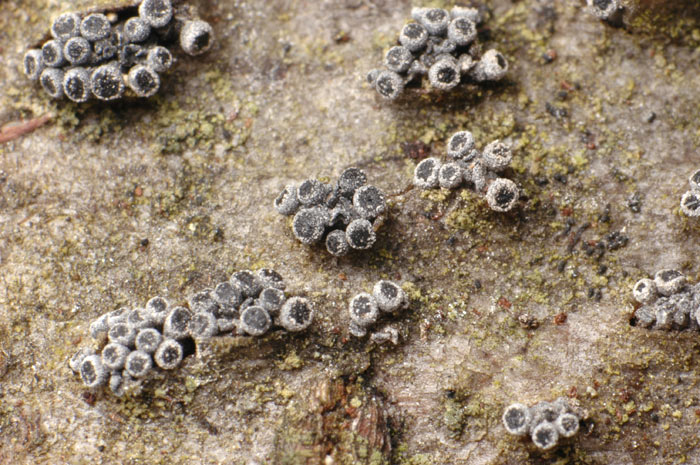
A more general view.
Dmitry Gavryushin,
21-12-2006 18:38
Re:Clusters of small fungi on bark of Alnus
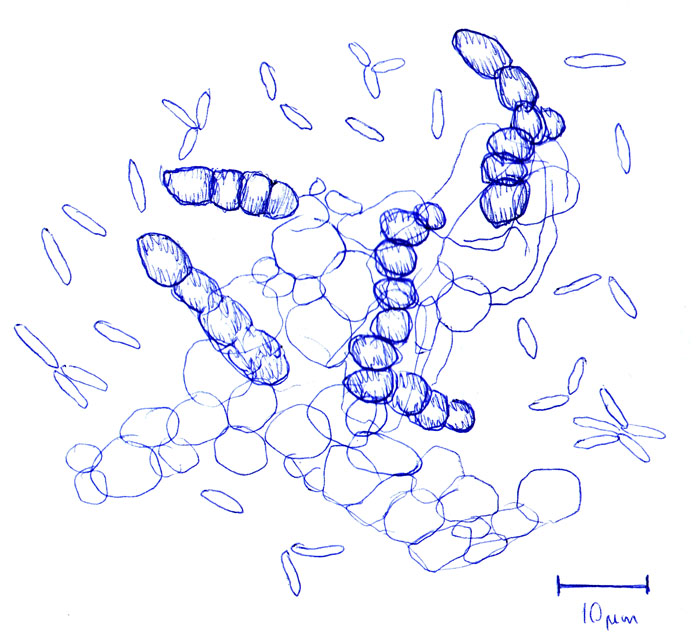
What I saw in the microscope (1).
Dmitry Gavryushin,
21-12-2006 18:38
Re:Clusters of small fungi on bark of Alnus
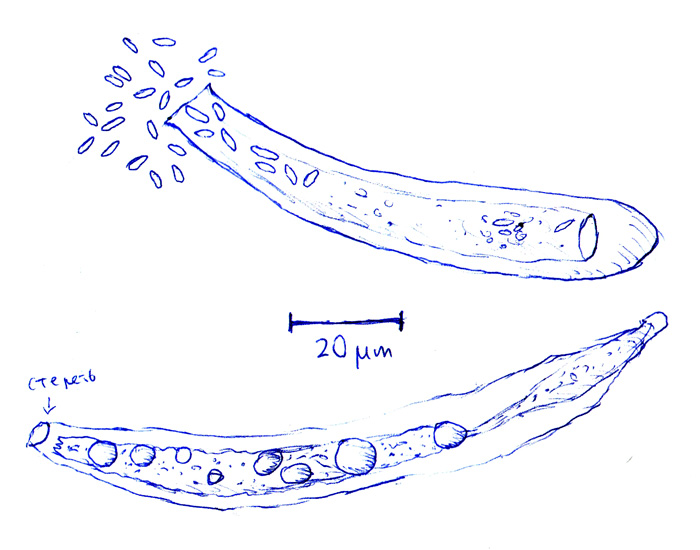
What I saw in the microscope (2).
Jacques Trimbach,
21-12-2006 21:15
Re:Clusters of small fungi on bark of Alnus
cf. Tympanis alnea
Dmitry Gavryushin,
21-12-2006 21:33
Re:Clusters of small fungi on bark of Alnus
Many thanks Jacques, I think you are quite right. I have also found out that it occurs on Duschekia fruticosa (Betulaceae) in Taimyr Peninsula (Checklist of fungi and lichenicolous fungi of the Russian Arctic, http://www.binran.ru/infsys/ra_fun/ ).
Hans-Otto Baral,
21-12-2006 22:42

Re:Clusters of small fungi on bark of Alnus
Yes that´s a Tympanis. In the case you find living asci (in a section) then you see that the conidia are aggregated in 8 roundish balls in the upper half of the ascus, and so they are ejected. But when you kill the asci then this peculiar arrangement is completely distorted and the conidia fill the whole ascus.
Zotto
Zotto
Dmitry Gavryushin,
22-12-2006 08:40
Re:Clusters of small fungi on bark of Alnus
Thanks a lot for your comment Zotto. It's said in Nordic Macromycetes that there's another sp. on Alnus, T. hysterioides, but I think it would be difficult to say whether it's T. alnea or T. hysterioides.
Hans-Otto Baral,
22-12-2006 22:18
Re:Clusters of small fungi on bark of Alnus
Tympanis is a very difficult genus. The best paper I know is that from Ouelette & Pirozynski. To identify species it is necessary to study the ascospores from which the conidia emerge (septation, germ tubes), which are rather difficult to see within the premature asci - when asci are dead then only by staining.