
12-04-2026 17:56
 Hardware Tony
Found on dead stems in February earlier this year
12-04-2026 15:52
Gernot FriebesHi,I'm looking for help with this anamorph collect
12-04-2026 12:22
 William Slosse
In a dune grassland in Oostduinkerke (Belgium), on
11-04-2026 15:45
 Zuzana Sochorová (Egertová)
Please, could anyone send me this paper?Moyne G.,
11-04-2026 13:34
Artem PtukhaHello, I am seeking assistance with the identific

11-04-2026 10:19
 Michel Hairaud
Chers amis d'Ascofrance , voici une très bonne no
11-04-2026 10:10
Michel Hairaud
Dear Ascofrance members, here is some very good ne
10-04-2026 23:22
Gernot FriebesHi,ascospores are 1- to 3-septate, approximately
10-04-2026 15:51
William Slosse
Hello everyone, On 08/04/26, I found a growth sit
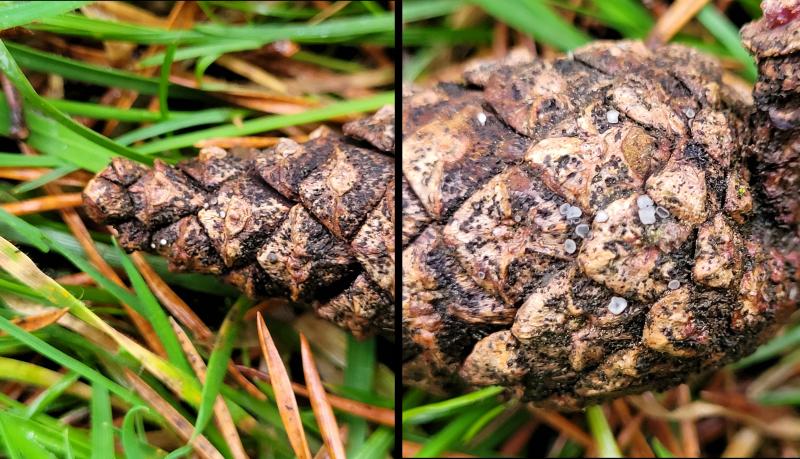
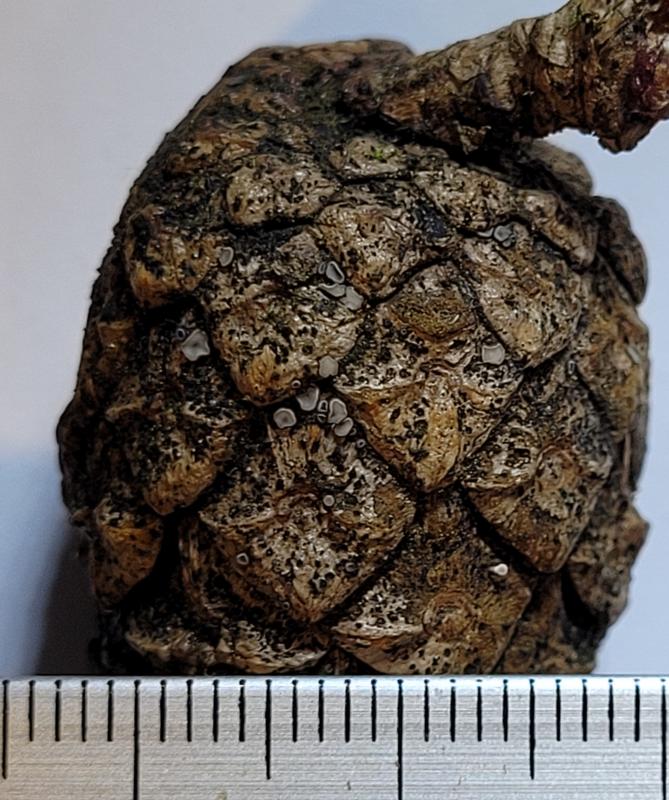
Possible Mollisia atlantica on a cone of Pinus sylvestris
B Shelbourne,
15-11-2024 20:08
 • Macro and habitat seem mollisiod.
• Mollisia suggested by excipulum and paraphyses.
• I struggled with Ingo's key but ended up around 58. M. scopiformis cf. (ellipsoid spored).
• Micro seems similar to M. atlantica.
Habitat: On a Pinus sylvestris cone, often close to the edges of the scales, under several large trees, on a hill, 208 m alt., Old Lodge nature reserve, Ashdown Forest, High Weald, southern England, early-November.
Apothecia: Diameter < ~1.25 mm, cupulate to discoid-pulvinate, dark grey with a lighter margin and eventually all light grey, often undulating or lobate, gregarious to 4+ caespitose.
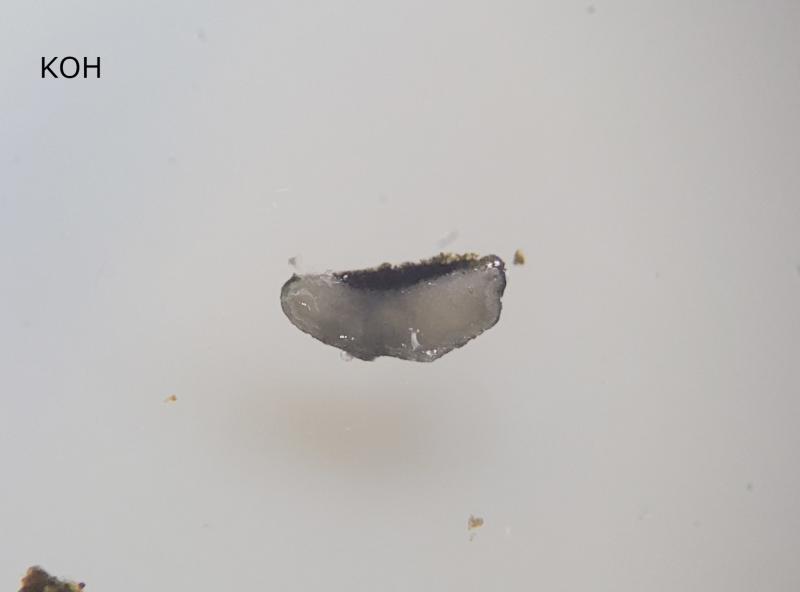
Macro: Initially dark grey and globose-urceolate, receptacle with more pruinose appearance, olive coloured, gradually lightening on the flanks towards the margin, margin soon becoming whitish, remaining raised above the disc, disc becoming whitish with maturity, smooth and more gelatinous appearance, becoming plane, possibly with a localised blackish subiculum, no yellow reaction in KOH.
Asci: Turgid ~65-70 x 7.5-8.5 um, croziers, rings bb, 2-3-seriate.
Spores: Ellipsoid to slightly clavate, 1-septate in the asci, often homopolar but sometimes basal cell more elongated, OCI 0 but very lowly refractive, many spores dying quickly, becoming smaller and appear empty.
Free living spores in water: (8.6) 9.1-11.0 (11.7) × 2.4-3.0 (3.3) µm, Q = (3.1) 3.4 - 4.0 (4.5), N = 25, mean = 10.0 × 2.7 µm, Q mean = 3.7.
Paraphyses: Cylindrical, gradually widening towards the apex, ~3 um wide, filled with large cylindrical VBs, apparently few septa, apical cell appears ~2x longer than cell below.
Medullary: Shallow, hyaline-yellowish, text. porrecta.
Ectal: Text. globosa-angularis, brownish becoming olive in KOH, blackish at the surface, at the base with brown exudate and irregular hyphae.
Marginal cells: At the margin ~30-40 x 5 um, shorter and brown at the upper flanks, at the margin hyaline, with refractive VBs in the apical 2-3 cells, apical cell subglobose or more narrow and slightly asymmetric.
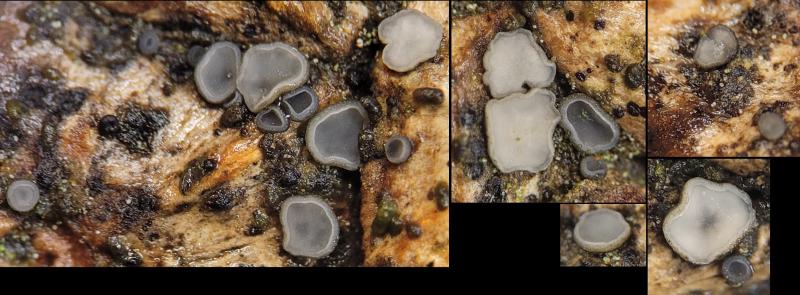
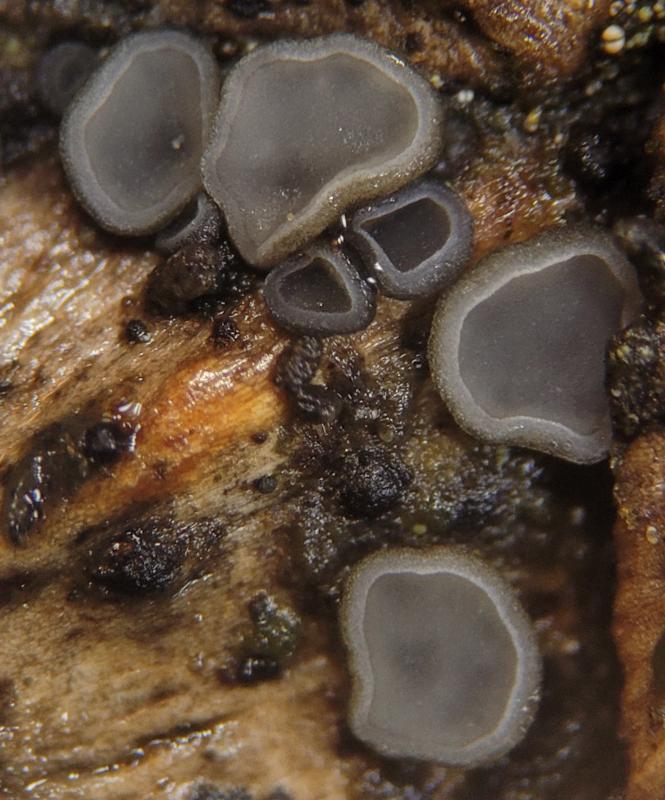
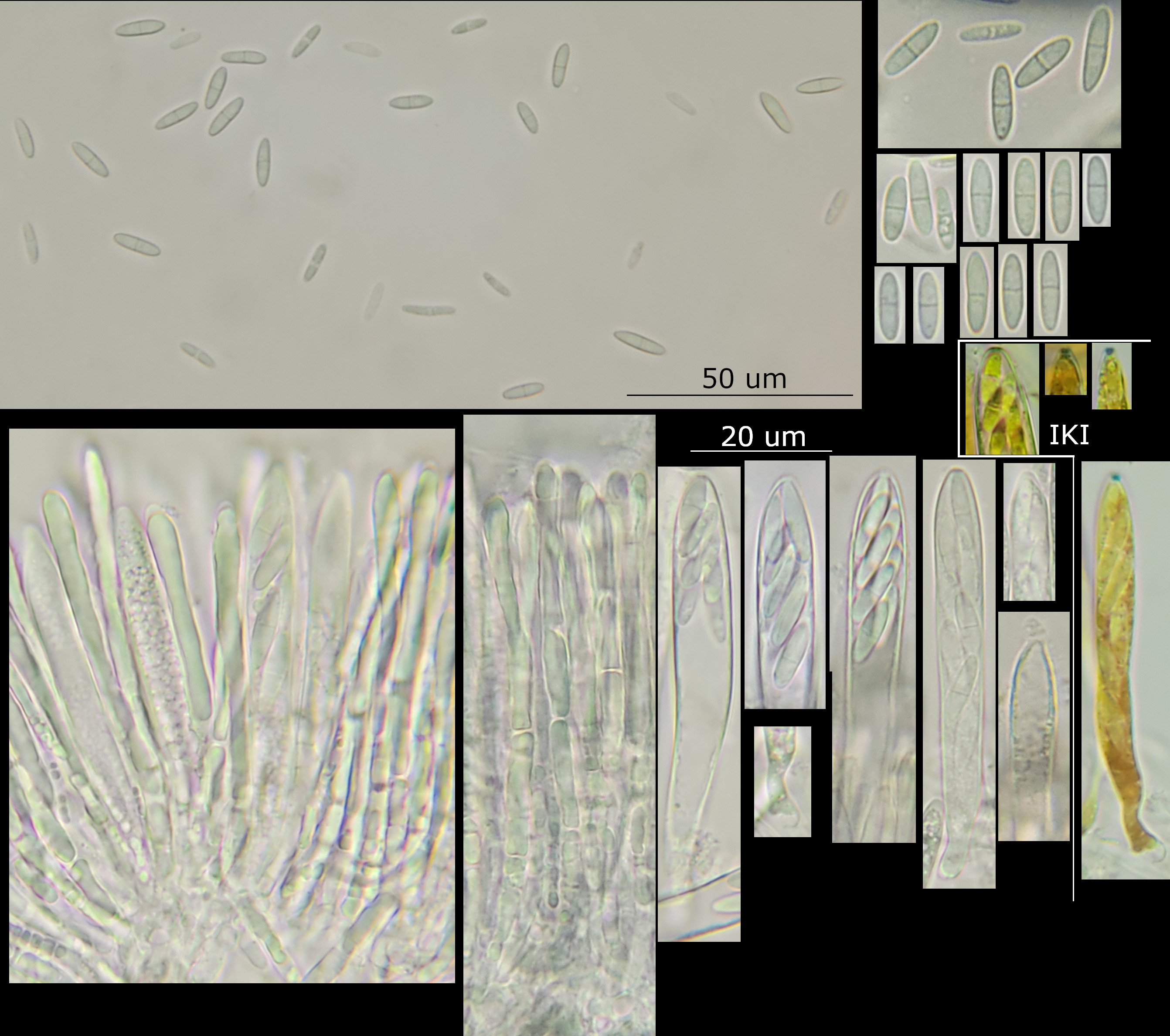 Hymenium-0030.jpeg
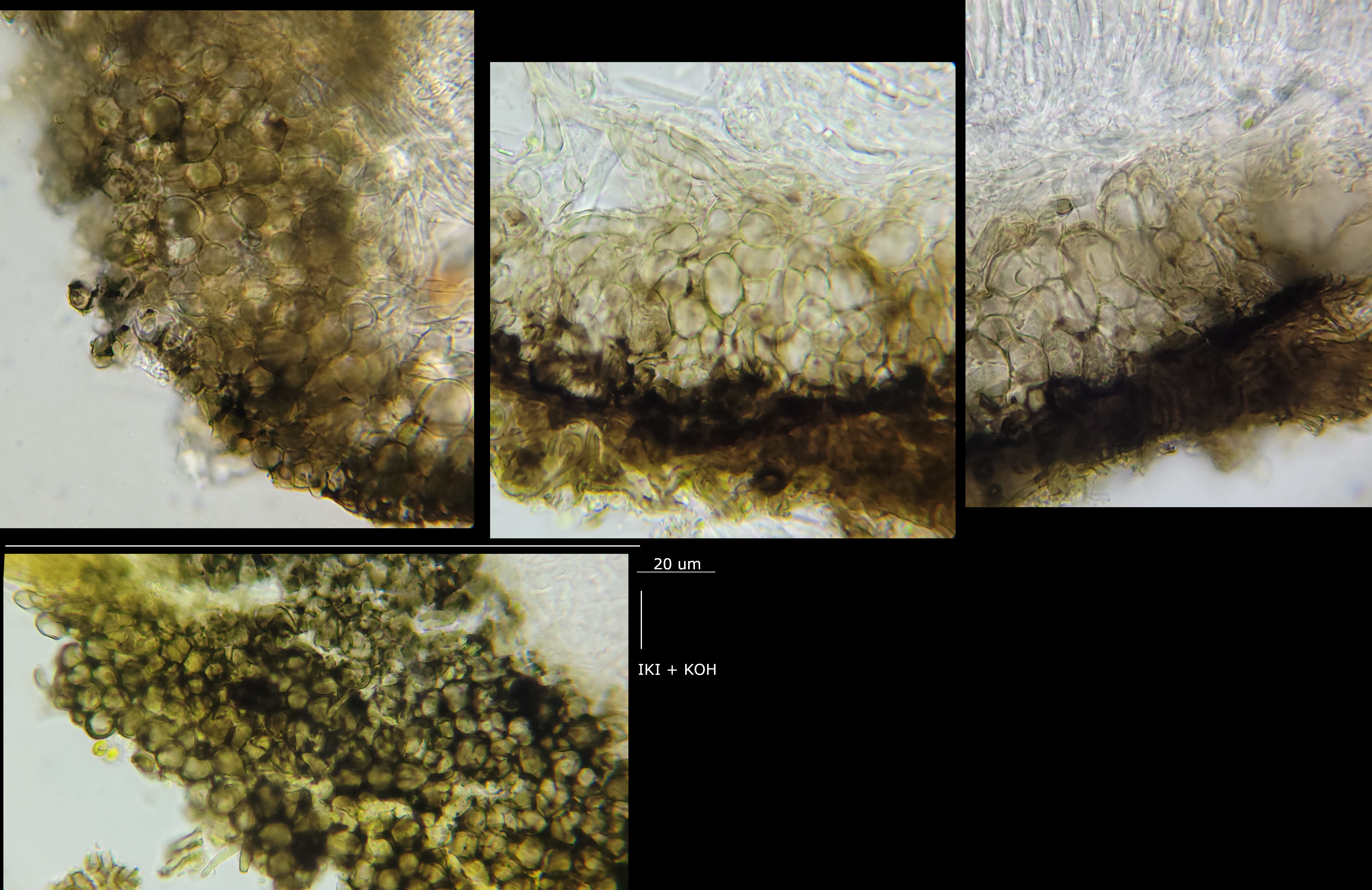 Excipulum-0022.jpeg
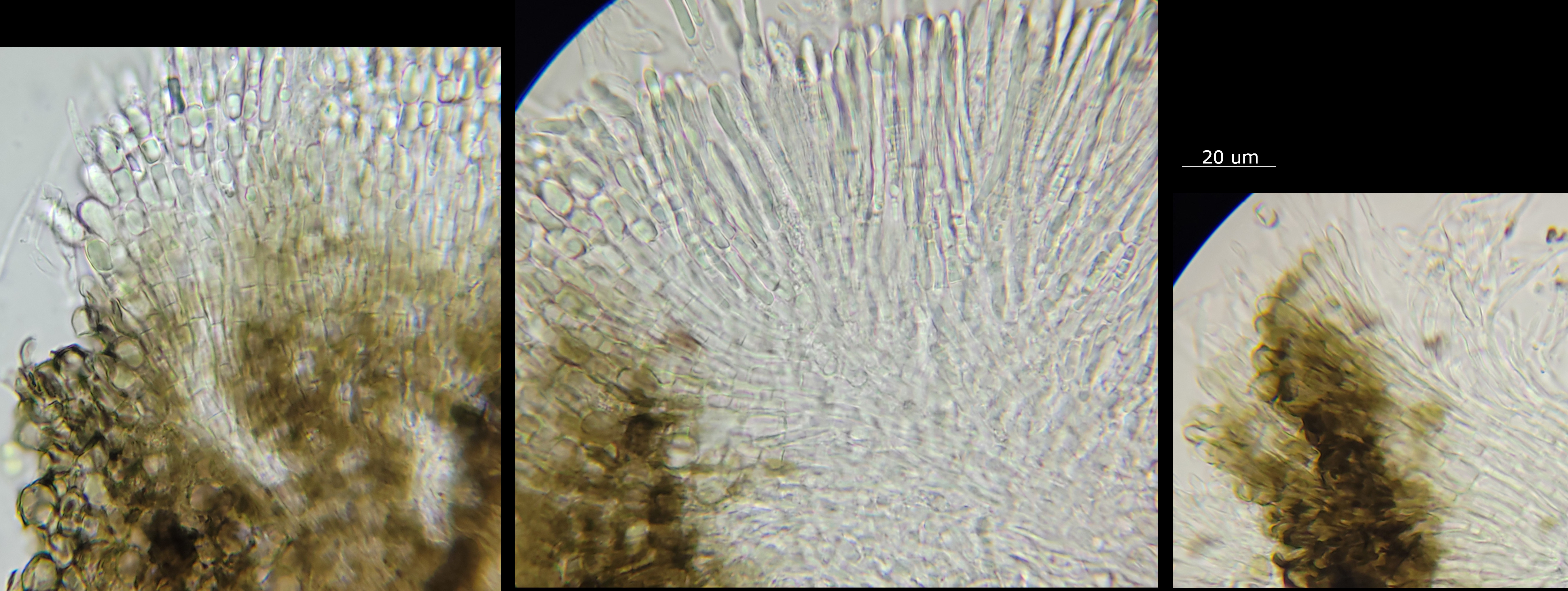 Margin-0002.jpeg
Hans-Otto Baral,
15-11-2024 21:01

Re : Possible Mollisia atlantica on a cone of Pinus sylvestris
Surely it is. My impression was that it is frequent in the atlantic area. But why it seems undescribed I do not understand.
Please tell me the date of collection, also for T. sulphurea.
Michel Hairaud,
16-11-2024 11:01
Re : Possible Mollisia atlantica on a cone of Pinus sylvestris
Hi,
I agree, this species is fairly common in the Atlantic area, at least in Center West of France , on all kinds of substrates , includinc dead wood, conifers cones, Ruscus dead stems...
Amitiés. Michel
I agree, this species is fairly common in the Atlantic area, at least in Center West of France , on all kinds of substrates , includinc dead wood, conifers cones, Ruscus dead stems...
Amitiés. Michel
B Shelbourne,
16-11-2024 12:49
Re : Possible Mollisia atlantica on a cone of Pinus sylvestris
Thank you both. The micro seems broadly similar to M. cinerea s.l. and M. amenticola, but the frequency of septate spores and septation within living asci was noticeable.
I see from a comment on this forum that Andreas Gminder was planning to publish this species several years ago.
T. sulphurea: 06/11/24
M. atlantica: 08/11/24
Hans-Otto Baral,
16-11-2024 17:06
Re : Possible Mollisia atlantica on a cone of Pinus sylvestris
Thanks! In my area I was unable to find a Mollisia with septate spores inside the living asci. But in atlantic or mediterranean areas such species exist, although in a low number.