
05-04-2026 22:46
 Lothar Krieglsteiner
on wood of Ceratonia, Algarve, 3.4.2026.The color
15-05-2026 13:33
Sylvie Le GoffBonjour à tousJe serais très reconnaissante enve
16-03-2011 14:31
roman vargas albertoHi. I would like some opinion about this Peziza
14-05-2026 05:36
Ethan CrensonHi all, I haven't paid much attention to Lachnu
10-05-2026 23:17
 Andreas Gminder
Hello,today we found in a moist steep decidous for
11-05-2026 12:32
 Bernard CLESSE
Pourriez-vous m'aider à identifier cette héloti
13-05-2026 15:26
 François Freléchoux
Bonjour,Voici une récolte faite il y a quelques j
12-05-2026 15:41
 Nicolas VAN VOOREN
Dear Ascolovers, especially interested in Pezizale
13-05-2026 12:05
 Thierry Blondelle
Bonjour à tous,J'aimerais avoir confirmation de c
28-04-2026 20:07
Lothar Krieglsteiner
... on twig in the air at standing Ceratonia siliq
After several microscopic examinations, I found a saucer-shaped, shiny, pitch-black fruiting body among the leftover debris. It looked like a piece of black plastic. Apparently all parts (spore, asci, paraphyses, excipulum) were coated with a black pigment. Even the smell was very special, it reminded me of dark chocolate, five years after its expiry date!
I could not remember where I had found it, and the dish seemed damaged and not really fresh. Paraphyses and asci seemed to be sticking together.
Could this be Trichophaea abundans (the black form)?
Any help is appriciated,
François Bartholomeeusen
FRB: diameter +/- 20 mm
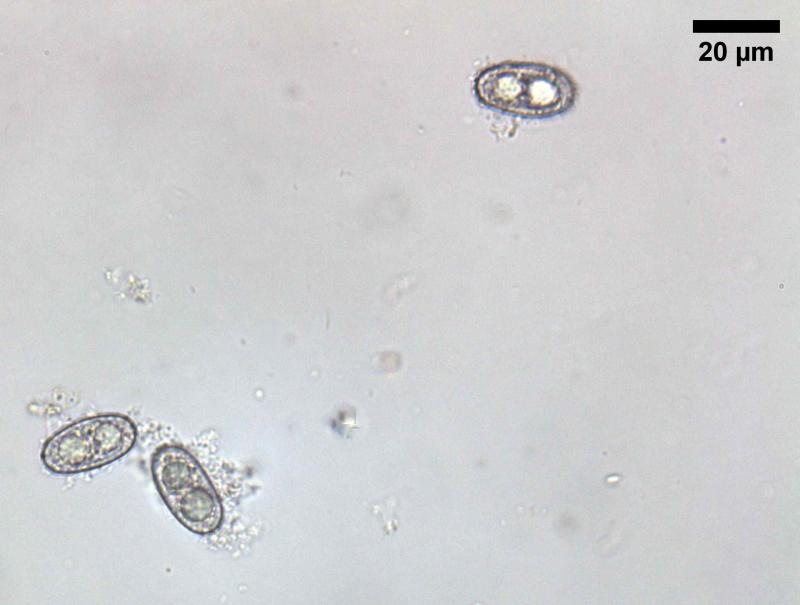
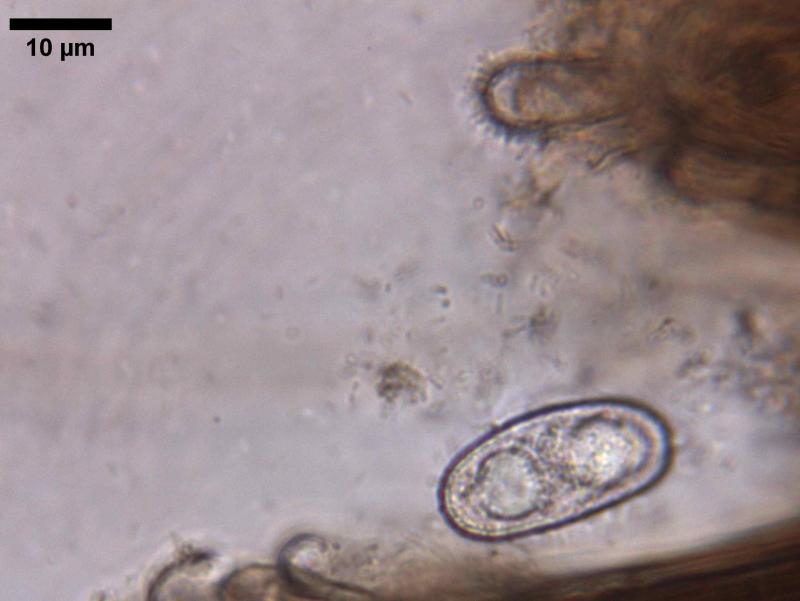
Spores: (19.2) 20.7-23.4 (23.6)×(10.8) 11-12.3 (13.1) µm; Me = 22.1 × 11.7 µm; Qe = 1.9;
Asci: 250 x 18 µm;
Paraphyses: filiform, sometimes branches at the top;
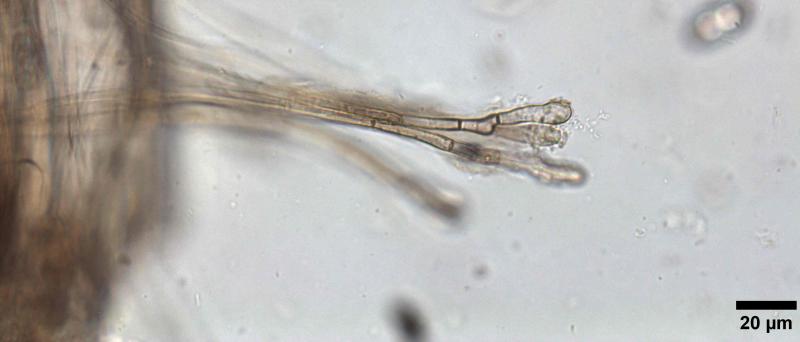
Hairs at the margin: 370 x 16 µm; excipular hairs: 150 x15 µm;
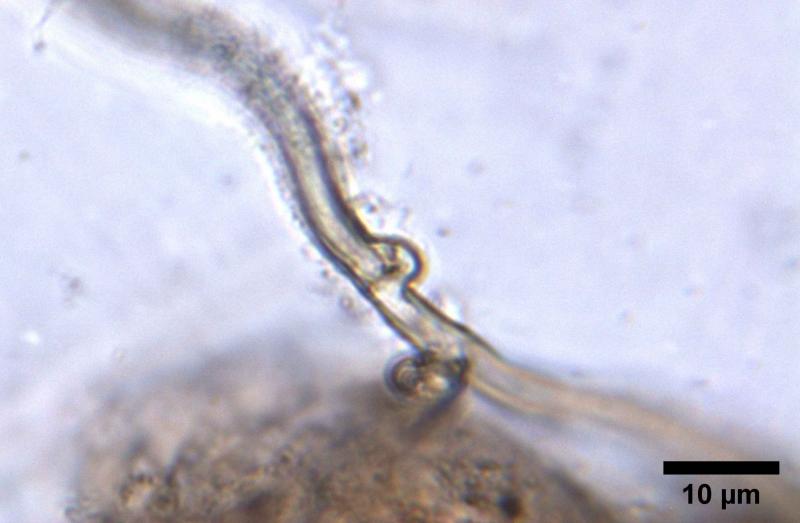
Anchor hyfen: with croziers
IKI: no reaction
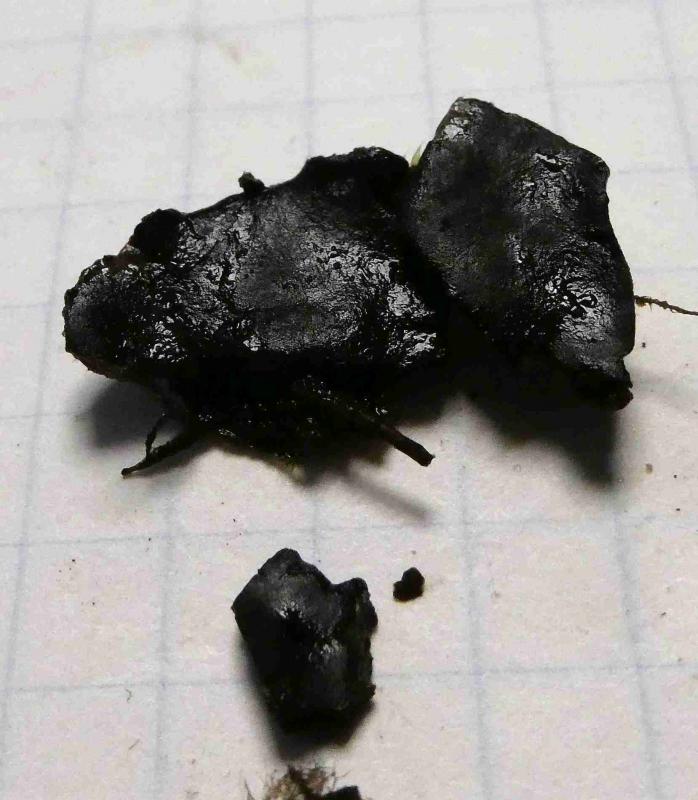
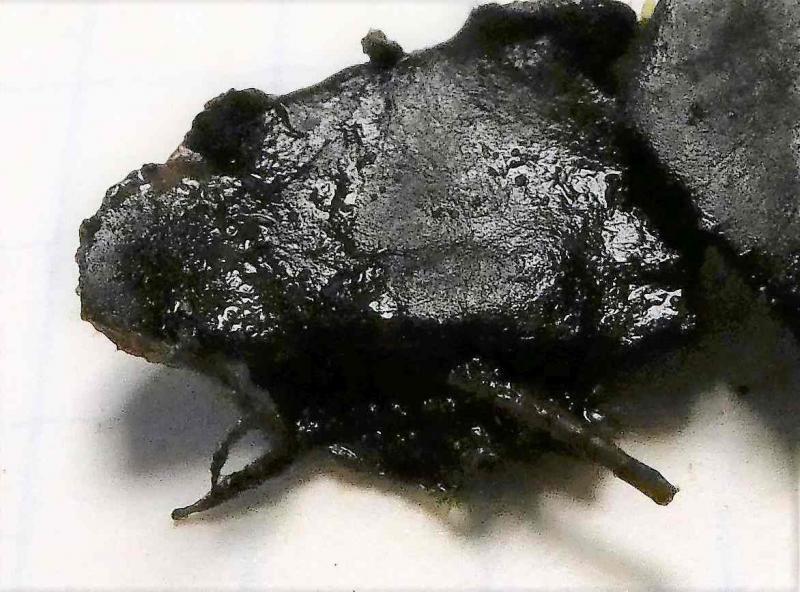
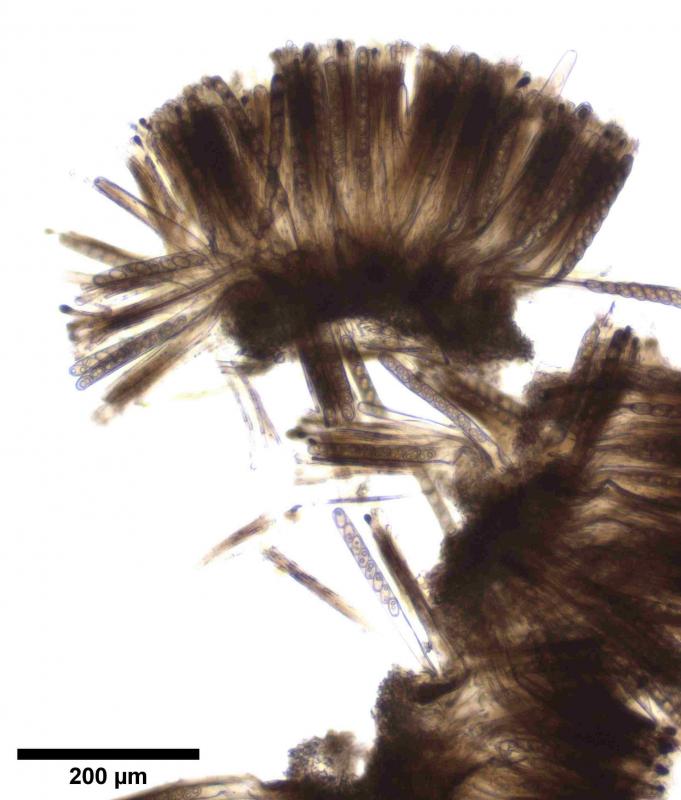
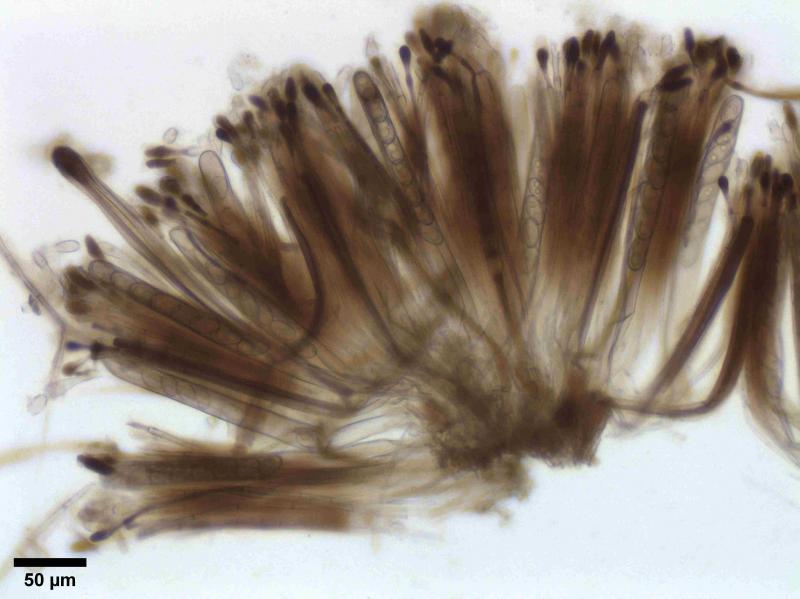
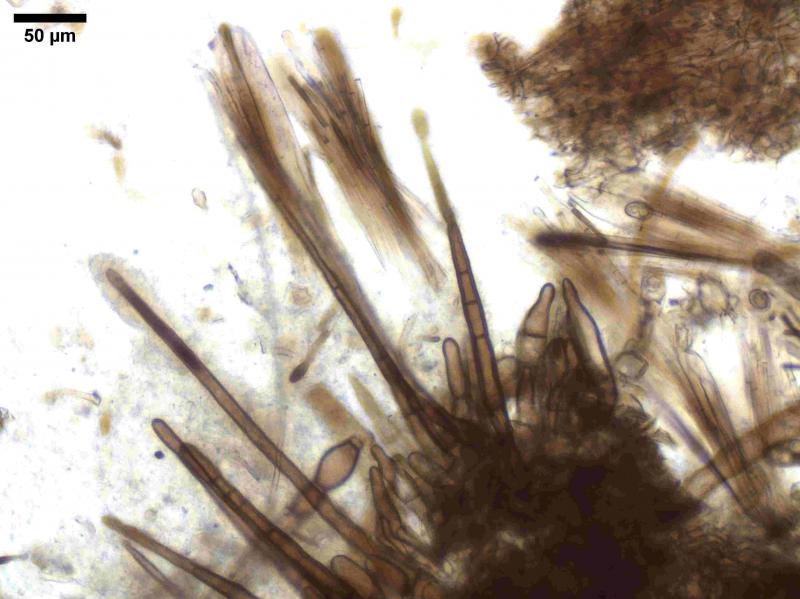
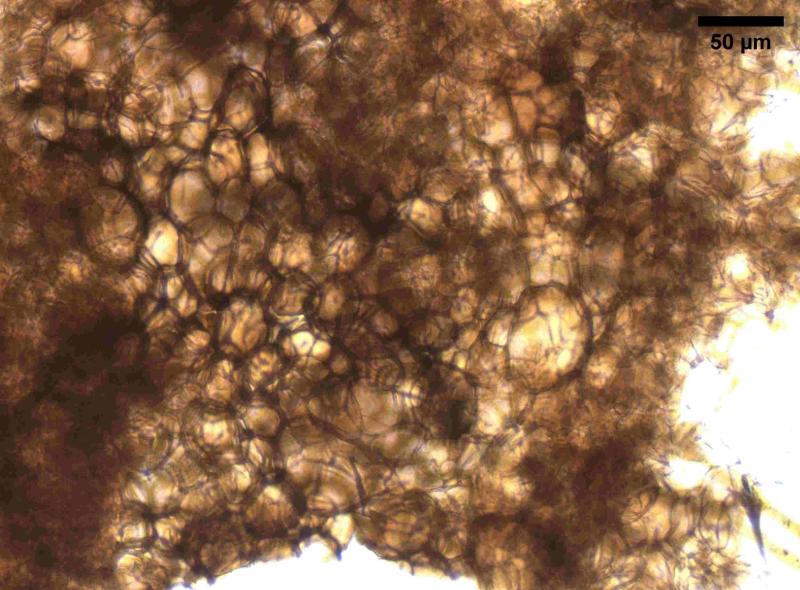
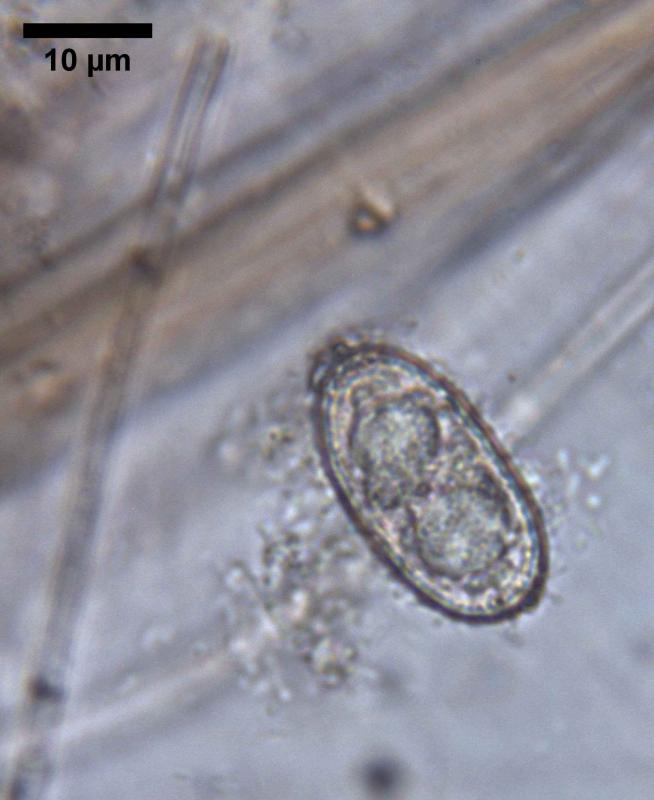
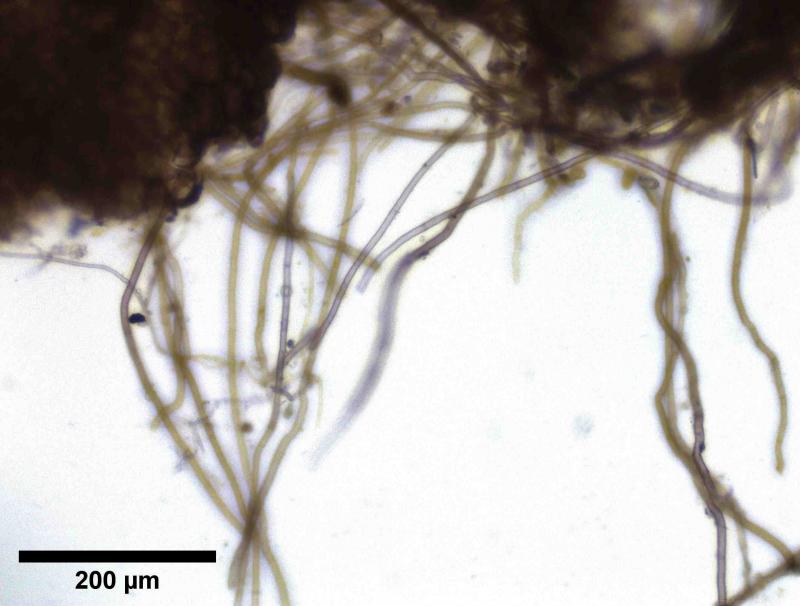
That's the problem, that day we explored boggy meadows with peat moss and Sphagnum. Also the banks of a lake with clay deposits. It was in Flanders, so at sea level and normally very sandy soil with deciduous and pine trees. Here and there was also burned ground with charred wood. But as I only found the fruiting body at home, in the rubbish from previous investigations, I don't know where on which substrate it was attached. We also found: Peziza vesiculosa, Humaria hemisphaerica, Hygrocybe miniata, Geastrum lageniforme, Geoglossum umbratile.
Hopefully this can help?
Greetings
Kind regards,
François