
12-04-2026 17:56
 Hardware Tony
Found on dead stems in February earlier this year
12-04-2026 15:52
Gernot FriebesHi,I'm looking for help with this anamorph collect
12-04-2026 12:22
 William Slosse
In a dune grassland in Oostduinkerke (Belgium), on
11-04-2026 15:45
 Zuzana Sochorová (Egertová)
Please, could anyone send me this paper?Moyne G.,
11-04-2026 13:34
Artem PtukhaHello, I am seeking assistance with the identific

11-04-2026 10:19
 Michel Hairaud
Chers amis d'Ascofrance , voici une très bonne no
11-04-2026 10:10
Michel Hairaud
Dear Ascofrance members, here is some very good ne
10-04-2026 23:22
Gernot FriebesHi,ascospores are 1- to 3-septate, approximately
10-04-2026 15:51
William Slosse
Hello everyone, On 08/04/26, I found a growth sit
In the mean time I'd be happy for ideas on what it could be.
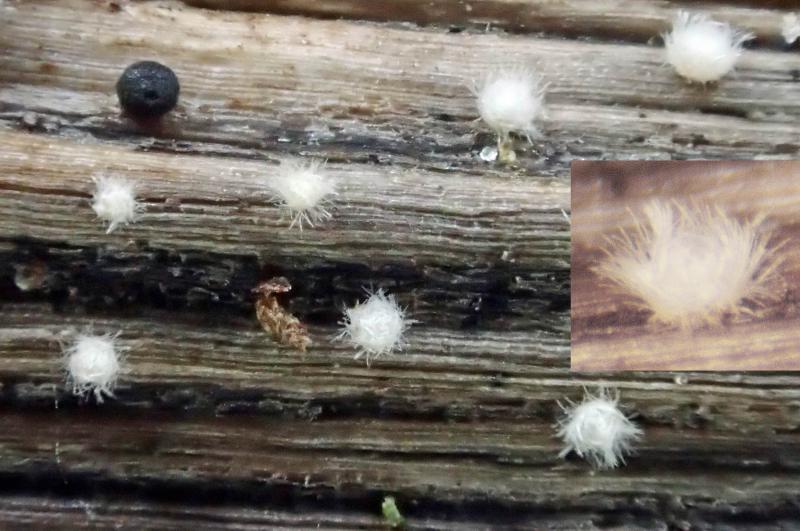
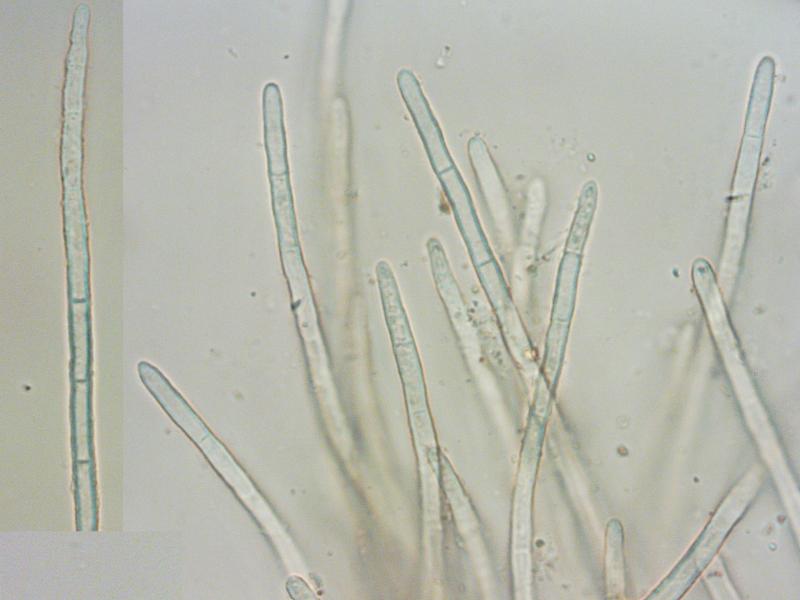
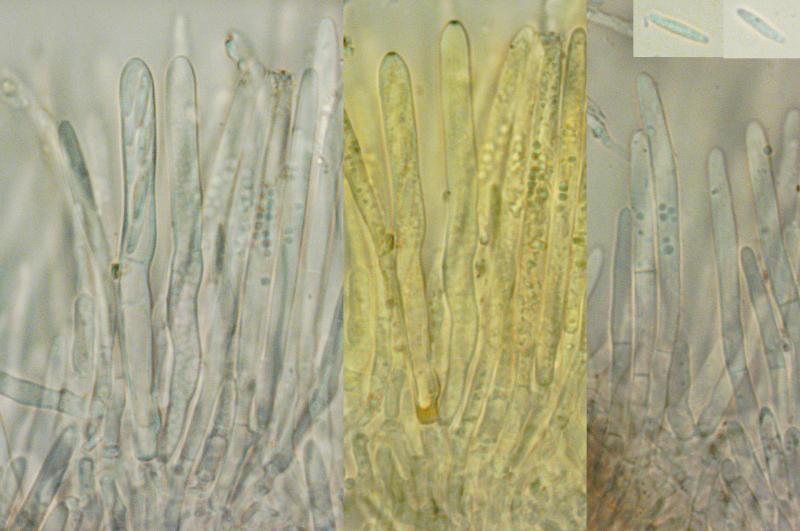

However, on the same culm there is now also another species with more yellowish hairs even if not as bright yellow as the one I have interpreted to be T. limonipilosa. The spores are 10.4 - 15.0 × 1.9 - 2.3 µm, with virtually no visible spore content. IKI faintly bluish, no croziers. Would this be T. sulphureopilosa?
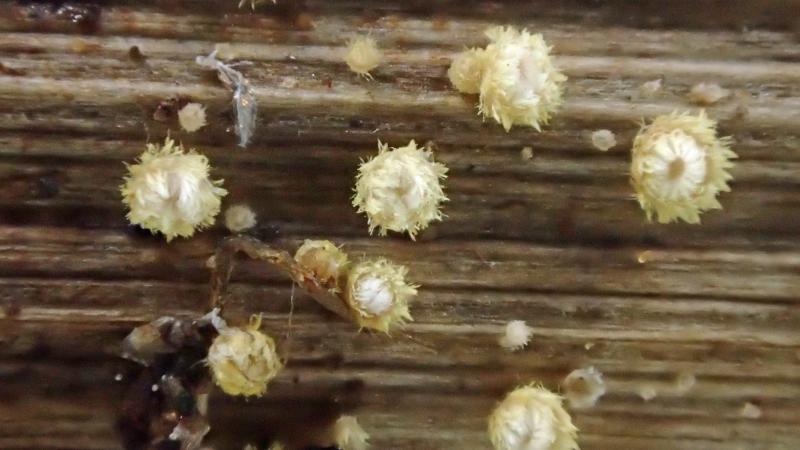
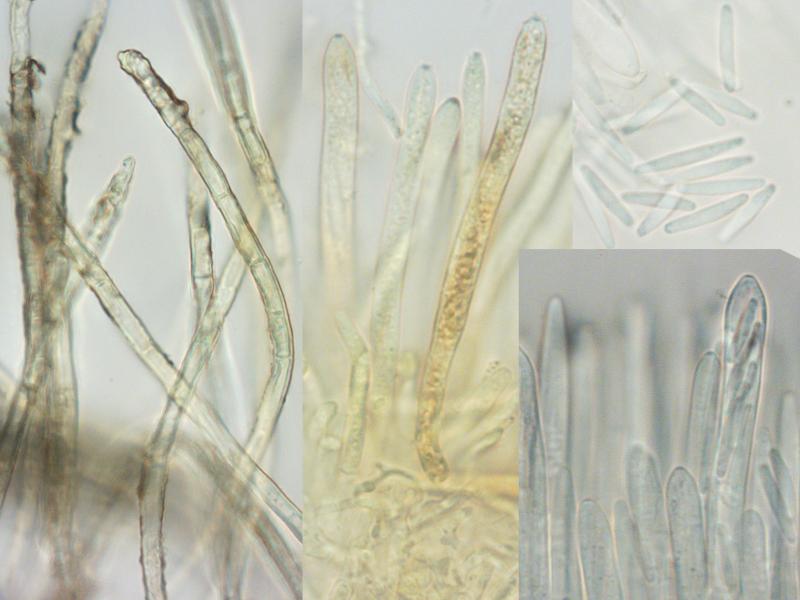
These two species are very often found together.
If these are two separate species? As far as I know, work on them has not yet been completed. Zotto knows much more on this subject.
I am wondering, however, a blue reaction to iodine?
Such occurs after pre-treatment of asci in KOH.
Are you sure she was blue?
greetings
Mirek
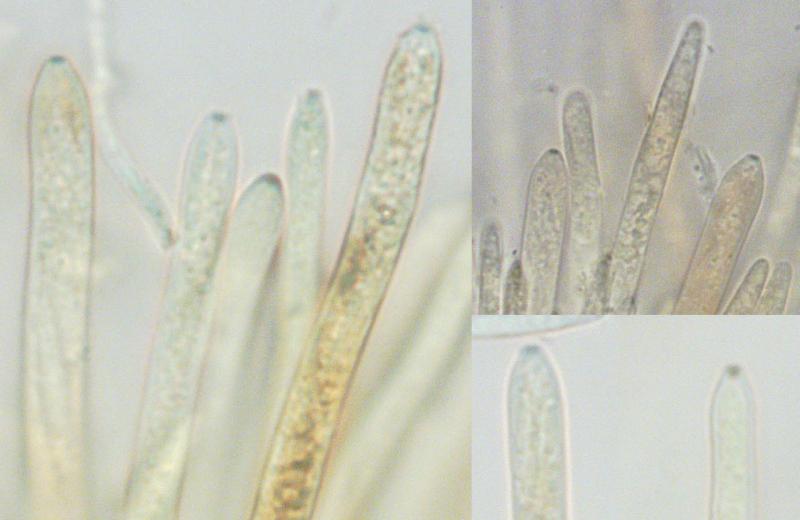
Porus Reaction T. mollissima and T. sulphureopilosa should be red.
Maybe this species is more complex than we think?
Or maybe you have a different genre?
So do you think Stefan used IKI in a low concentration?
Using after Lugol, KOH with low concentration, I also obtained a blue reaction.
How I will find fresh ascomata, I will check more closely.
Thank you Zotto.