
12-04-2026 17:56
 Hardware Tony
Found on dead stems in February earlier this year
12-04-2026 15:52
Gernot FriebesHi,I'm looking for help with this anamorph collect
12-04-2026 12:22
 William Slosse
In a dune grassland in Oostduinkerke (Belgium), on
11-04-2026 15:45
 Zuzana Sochorová (Egertová)
Please, could anyone send me this paper?Moyne G.,
11-04-2026 13:34
Artem PtukhaHello, I am seeking assistance with the identific

11-04-2026 10:19
 Michel Hairaud
Chers amis d'Ascofrance , voici une très bonne no
11-04-2026 10:10
Michel Hairaud
Dear Ascofrance members, here is some very good ne
10-04-2026 23:22
Gernot FriebesHi,ascospores are 1- to 3-septate, approximately
10-04-2026 15:51
William Slosse
Hello everyone, On 08/04/26, I found a growth sit
On Pinus cone
Zuzana Sochorová (Egertová),
12-10-2020 18:54
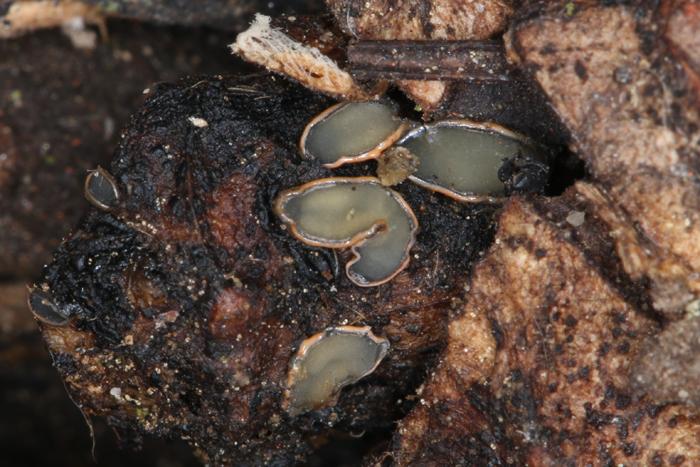
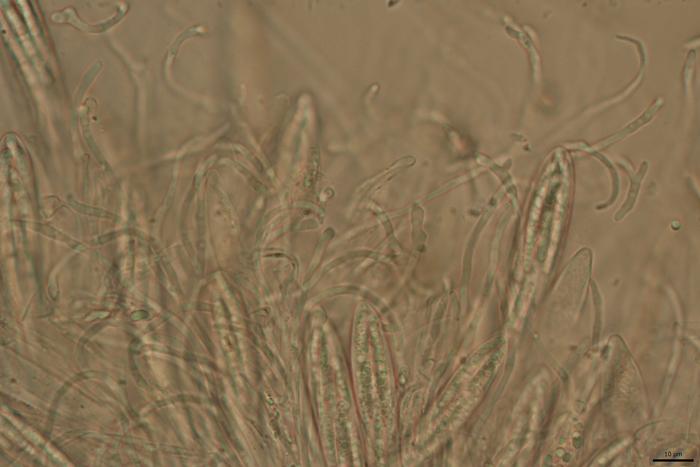
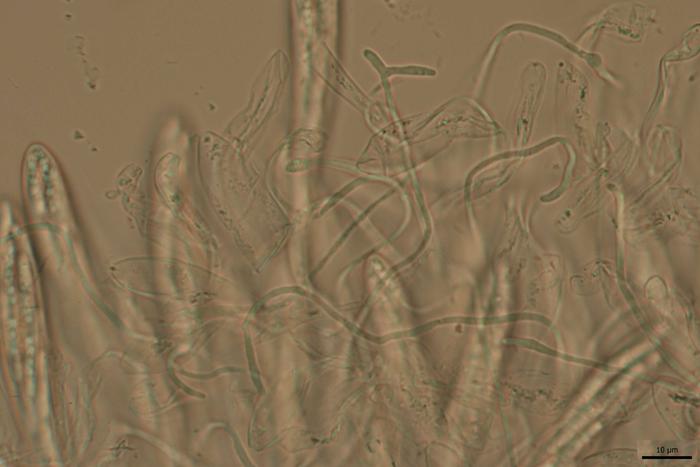
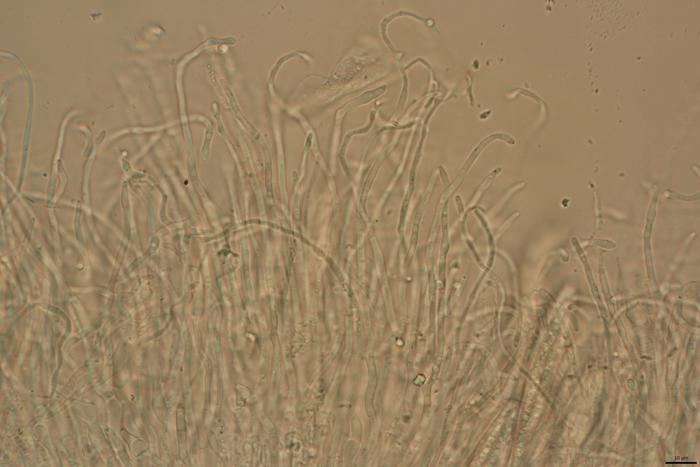
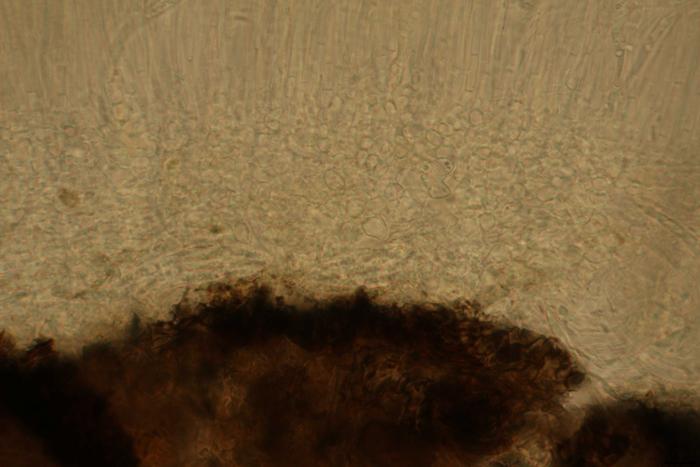
Hello,I have here some Rhytismatales on a cone of Pinus sylvestries, collected in Moravia.
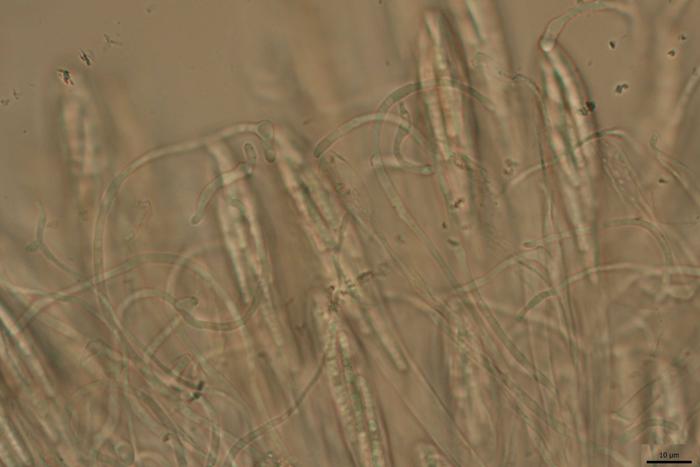
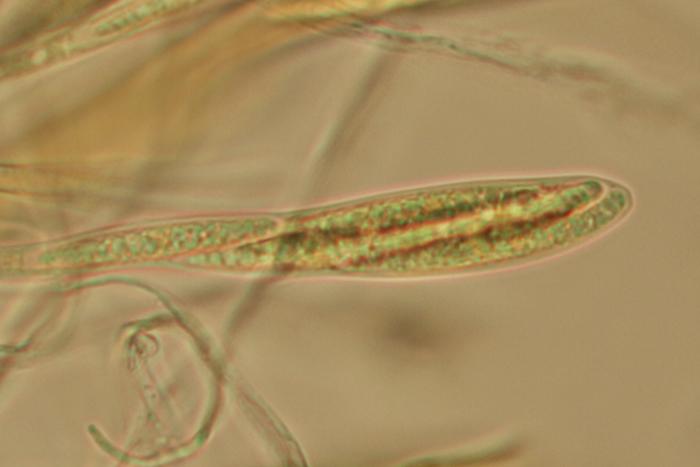
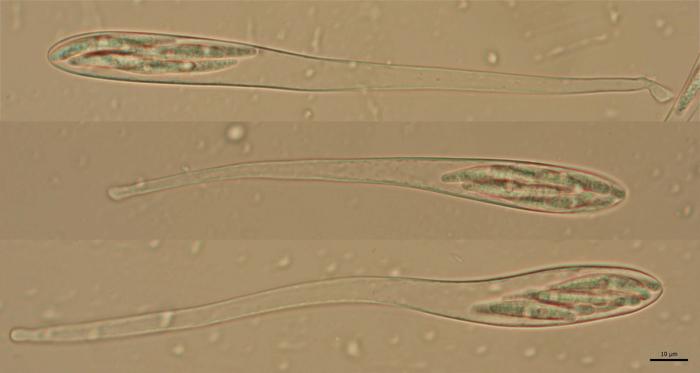
Asci 137-228 x 10.5-15.3 micrometers, 8-spored, IKI-, H-, with a very thin lower part, pars sporifera 53-62 micrometers.
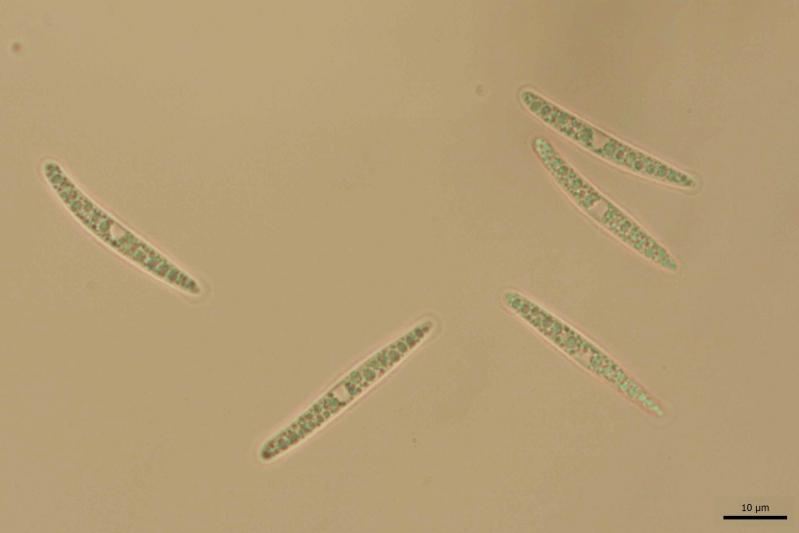
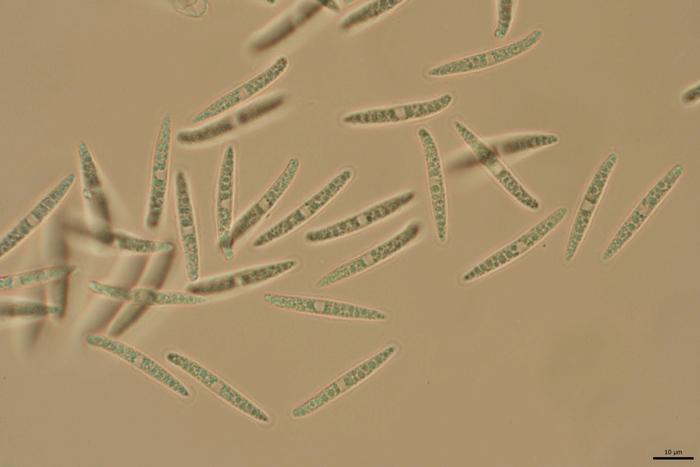
Ascospores 28.2-34.1 x 3.1-4.3 micrometers, Me = 30.6 x 3.6 micro, Q = 6.7-10.1, Qm = 8.5, hyaline, aseptate, multiguttulate, enveloped in a sheath, with an empty area in the middle /nucleus/.
Paraphyses hyaline, without VBs, septate, richly branched, very variously shaped, at apex 1.1-5 micrometers.
Excipulum consisting of textura angularis, cells hyaline, 3.8-8.5 x 3.2-7.3 micrometers.
Using the key to Rhytismatales on conifers by D. Minter, I arrived to Lophodermium, but ascospores of all the species are much longer than in my find. Searching in the genus Colpoma is so far unsuccessful as well.
Advice will be welcome.
Thank you, Zuzana
Zuzana Sochorová (Egertová),
12-10-2020 18:56
Re : On Pinus cone
A few more photos.
Lothar Krieglsteiner,
12-10-2020 19:13

Re : On Pinus cone
Hello Zuzana,
I do not know - but perhaps Colpoma crispum could be a hint?
Best regards, Lothar
I do not know - but perhaps Colpoma crispum could be a hint?
Best regards, Lothar
Zuzana Sochorová (Egertová),
12-10-2020 19:34
Re : On Pinus cone
Hello Lothar,
thank you, but according to the key in the paper below, C. crispum should have unbranched paraphyses.
https://www.researchgate.net/publication/322596065_Colpoma_guadueticola_sp_nov_in_a_guadual_forest_from_Quindio_Department_Colombia
The content of ascospores seems to be different as well:
https://www.nahuby.sk/obrazok_detail.php?obrazok_id=676185
Z.
thank you, but according to the key in the paper below, C. crispum should have unbranched paraphyses.
https://www.researchgate.net/publication/322596065_Colpoma_guadueticola_sp_nov_in_a_guadual_forest_from_Quindio_Department_Colombia
The content of ascospores seems to be different as well:
https://www.nahuby.sk/obrazok_detail.php?obrazok_id=676185
Z.
Viktorie Halasu,
15-10-2020 01:12

Re : On Pinus cone
Hello both,
just an idea - there is a Hypoderma conigenum, see description in Massee: https://www.biodiversitylibrary.org/page/38267717#page/45/mode/1up
It had a rather complicated taxonomical history (https://onlinelibrary.wiley.com/doi/abs/10.2307/1221727 ). Currently it is known under its anamorph name Sirococcus conigenus which is an important pathogen and I haven't find any recent description of the teleomorph.
If you ever find copy of von Höhnel's paper "Über Hysterium conigenum Fr." in Mitteilungen aus dem Botanischen Laboratorium der Technischen Hochschule in Wien, I would be interested too.
But maybe I'm wrong, Rhytismatales are terra incognita for me.
Viktorie
just an idea - there is a Hypoderma conigenum, see description in Massee: https://www.biodiversitylibrary.org/page/38267717#page/45/mode/1up
It had a rather complicated taxonomical history (https://onlinelibrary.wiley.com/doi/abs/10.2307/1221727 ). Currently it is known under its anamorph name Sirococcus conigenus which is an important pathogen and I haven't find any recent description of the teleomorph.
If you ever find copy of von Höhnel's paper "Über Hysterium conigenum Fr." in Mitteilungen aus dem Botanischen Laboratorium der Technischen Hochschule in Wien, I would be interested too.
But maybe I'm wrong, Rhytismatales are terra incognita for me.
Viktorie
Zuzana Sochorová (Egertová),
15-10-2020 09:01
Re : On Pinus cone
Hi Tori,
thank you for an interesting idea. The host is OK. Nevertheless, the ascospore size given by Massee is smaller (could be caused by wrong calibration/intraspecific variability/observation of dead material - but it seems he observed a fresh material as he states the spores are multiguttulate). Furthermore, he states the species is confined to the upper, exposed scales - my fungi are often hidden among the scales (to make the photo shown here, I had to remove a few scales), they grow rather on the side which was in contact with soil...
In the last weeks I feel I should let sequenced every second find... Unfortunately Michal expects a strongly reduced budget for the next year (because of the financial situation of the Czech state due to the corona restrictions) so I will not be allowed to sequence so much.
Z.
thank you for an interesting idea. The host is OK. Nevertheless, the ascospore size given by Massee is smaller (could be caused by wrong calibration/intraspecific variability/observation of dead material - but it seems he observed a fresh material as he states the spores are multiguttulate). Furthermore, he states the species is confined to the upper, exposed scales - my fungi are often hidden among the scales (to make the photo shown here, I had to remove a few scales), they grow rather on the side which was in contact with soil...
In the last weeks I feel I should let sequenced every second find... Unfortunately Michal expects a strongly reduced budget for the next year (because of the financial situation of the Czech state due to the corona restrictions) so I will not be allowed to sequence so much.
Z.