
12-06-2026 14:50
 François Freléchoux
Bonjour, Voici la brève description d'une Mollis
10-06-2026 21:16
François Freléchoux
Bonsoir,Le dernier du jour, en attendant votre avi
11-06-2026 19:01
 William Slosse
Hello all,In an attempt to make a culture of a sus
11-06-2026 19:03
 Nicolas VAN VOOREN
Chers membres d'Ascofrance,Le site sera placé en

09-06-2026 18:32
Camille MertensSur morceau de roseau immergé 0,5 - 0,7 mm de dia
10-06-2026 12:54
Steve ClementsBonjour encore, Pouvez-vous m'aider, s'il vous pl
10-06-2026 21:07
François Freléchoux
Toutes les tiges de gentianes jaunes de l'an passÃ
10-06-2026 13:41
François Freléchoux
Bonjour à nouveau, Voici une trouvaille d'hier.
White Calycina on Pterospartum
Enrique Rubio,
30-09-2019 20:09
 Growing on a thiny branch of Pterospartum tridentatum (Genista tridentata). Minute white turbinate apothecia 125-375 microns in diam. with fineley downy margins. Hymenium reddening with the age. Asci arising from croziers, apical pore of the Calycina-type, IKI bb. Excipulum of a dense textura oblita with longitudinaly oriented narrow hyphae with obtuse end cells plenty of refractive VBs.
Do you have some idea?
Thanks again.
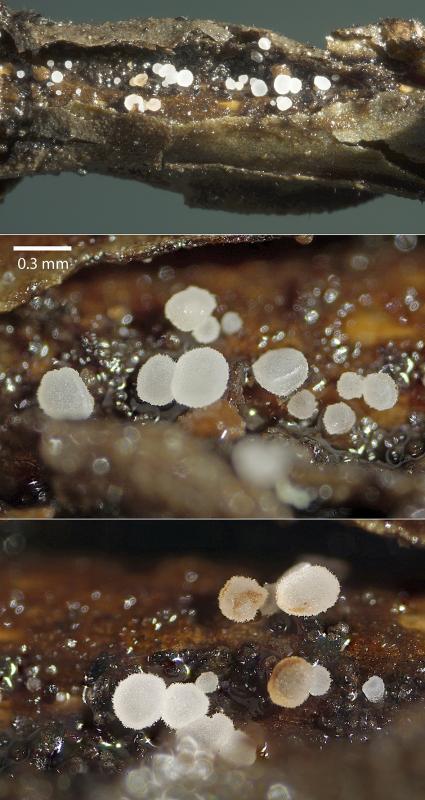
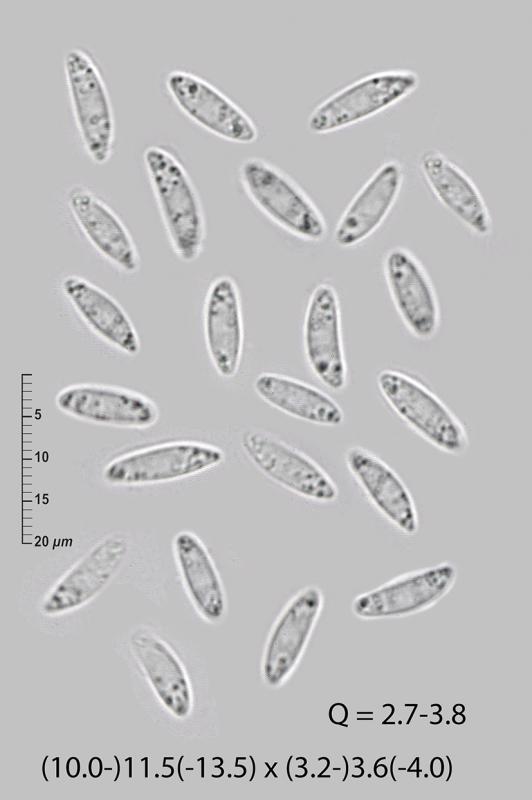
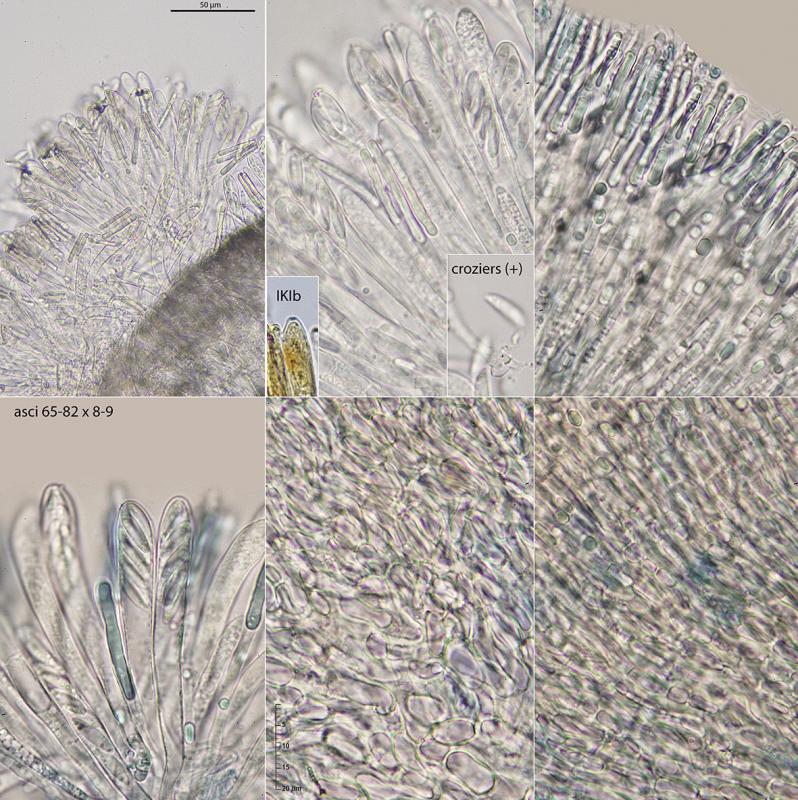
Hans-Otto Baral,
30-09-2019 22:52

Re : White Calycina on Pterospartum
Looks a bit like C. populina, but I am not sure.
Zotto
Zotto
Enrique Rubio,
01-10-2019 00:40
Re : White Calycina on Pterospartum
Hi Zotto
The morphological characters are quite similar, and in fact I had thought of this possibility. But I was distanced from it by the fact of growing in lignified substrate and not in leaves. However, I have a possible collection of Calycina populina on Fagus cupules.
Thank you again
The morphological characters are quite similar, and in fact I had thought of this possibility. But I was distanced from it by the fact of growing in lignified substrate and not in leaves. However, I have a possible collection of Calycina populina on Fagus cupules.
Thank you again
Hans-Otto Baral,
01-10-2019 07:43
Re : White Calycina on Pterospartum
I was thinking that Pterospartum with its small size and winng-like stems is a bit leaf-like. And indeed in my home forest occurred the leaf-inhabiting H. caudatus and H. syringaecolor on Fagus cupules.
Enrique Rubio,
01-10-2019 08:36
Re : White Calycina on Pterospartum
Yes, it is possible that you are right, although in this case the fruitbodys were born in lignified zones and not in the peculiar modified stems of the plant.