08-06-2026 10:16
 Spooren Marco
I don`t have a clou about this fungus,it is not in
08-06-2026 17:00
François BartholomeeusenGood day everyone, On June 5 2026, I collected de
07-06-2026 15:10
 William Slosse
Hello everyone,On 05-06-26, I found following asco
05-06-2026 11:02
Thomas Læssøehttps://svampe.databasen.org/observations/10596691
07-06-2026 12:09
 François Freléchoux
Bonjour, Voici une brève description de ce qui m
07-06-2026 12:43
Steve ClementsBojour. This was a strange find on a stick on my
12-07-2015 00:05
 Nedim Jukic
This one from the same locality as the previous on
06-06-2026 17:44
Steve ClementsBonjour, This disco was on planed wood 3 x 1.5 cm
14-08-2016 23:15
 Alex Akulov
Dear friendsCan you help me to find the descriptio
Bluish Otidea
Enrique Rubio,
16-09-2019 21:28
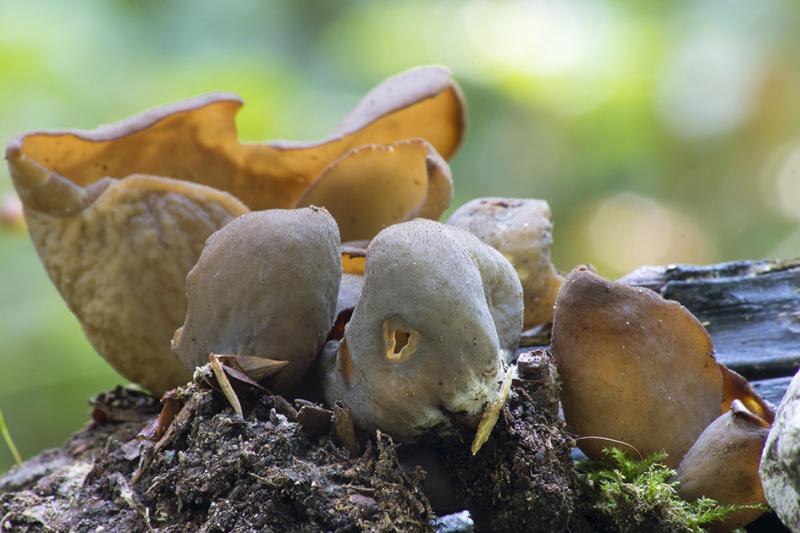
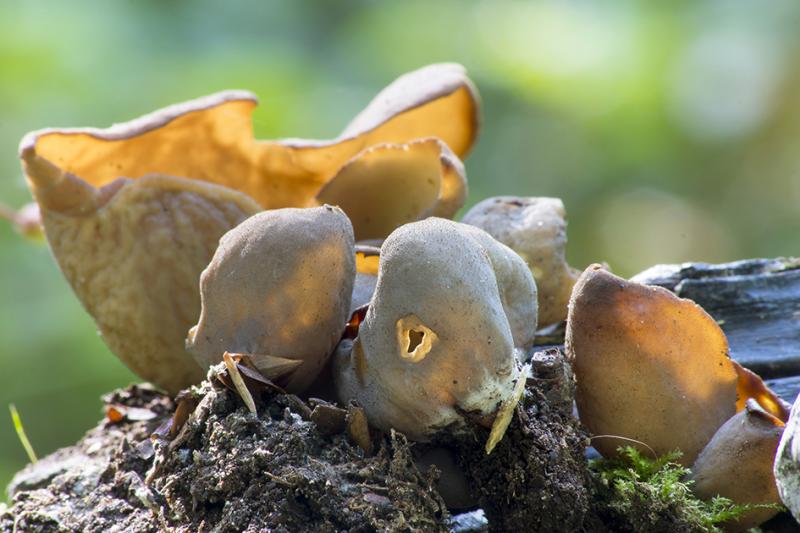
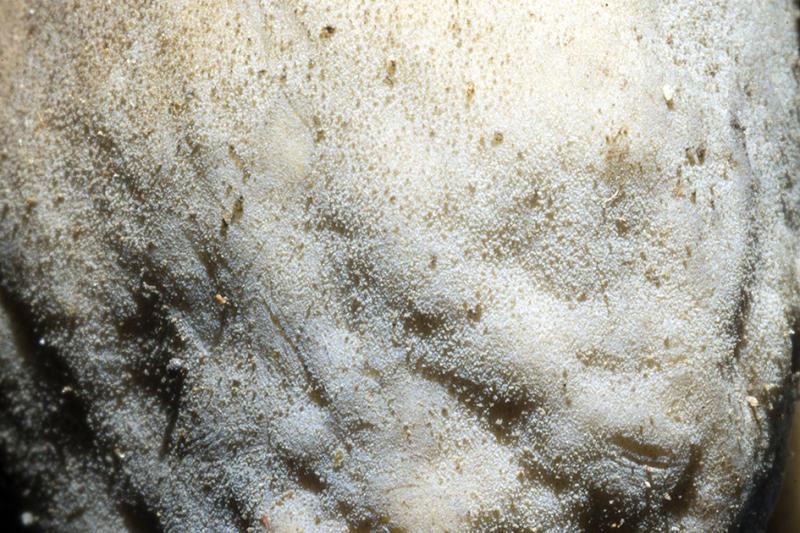
 This Otidea grew at 1000 m in a forest with Corylus avellana and Fagus sylvatica on calcareous soil. The pruinose young excipulum has persistent lilaceous hues.
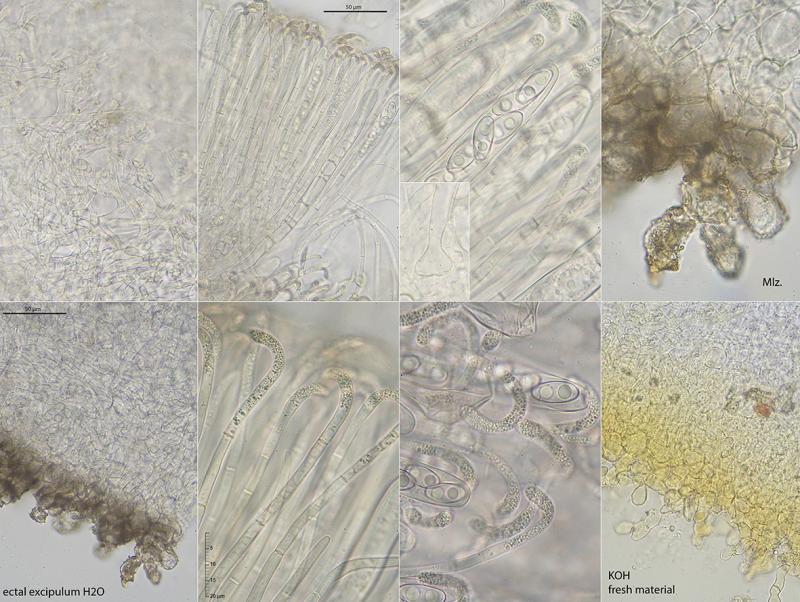
Excipulum not reddish in Melzer's reactive, bright yellow in KOH (fresh material). Neither crystal-like aggregates among the hyphae of the medullary excipulum, nor striate exudates on these cells. This species is relatively common in Asturias (north of Spain) on calcareous soils of forest without conifers.
I think that the strongly yellow reaction in KOH of the fresh ectal excipulum, and the rest of the characters I have described separate it from O. caeruleopruinosa, O. bufonia and Otidea mirabilis.
What do you think?