
12-04-2026 17:56
 Hardware Tony
Found on dead stems in February earlier this year
12-04-2026 15:52
Gernot FriebesHi,I'm looking for help with this anamorph collect
12-04-2026 12:22
 William Slosse
In a dune grassland in Oostduinkerke (Belgium), on
11-04-2026 15:45
 Zuzana Sochorová (Egertová)
Please, could anyone send me this paper?Moyne G.,
11-04-2026 13:34
Artem PtukhaHello, I am seeking assistance with the identific

11-04-2026 10:19
 Michel Hairaud
Chers amis d'Ascofrance , voici une très bonne no
11-04-2026 10:10
Michel Hairaud
Dear Ascofrance members, here is some very good ne
10-04-2026 23:22
Gernot FriebesHi,ascospores are 1- to 3-septate, approximately
10-04-2026 15:51
William Slosse
Hello everyone, On 08/04/26, I found a growth sit
 Bonjour,
 Je vous envoie des photos de cet ascomycète, recolté au début de ce mois sur une branche morte de Pinus sylvestris, au Berguedà (Catalunya).
Apothèces 0,2-0,5 cm de diamètre. Asques 36,6-40,9 x 4,1-5,5 micromètres.
Spores allantoides 5,8-6,8 x 1,3-1,8 micromètres.
Merci à l'avance pour votre aide.
Andrés Valverde Valera
El Prat de Llobregat
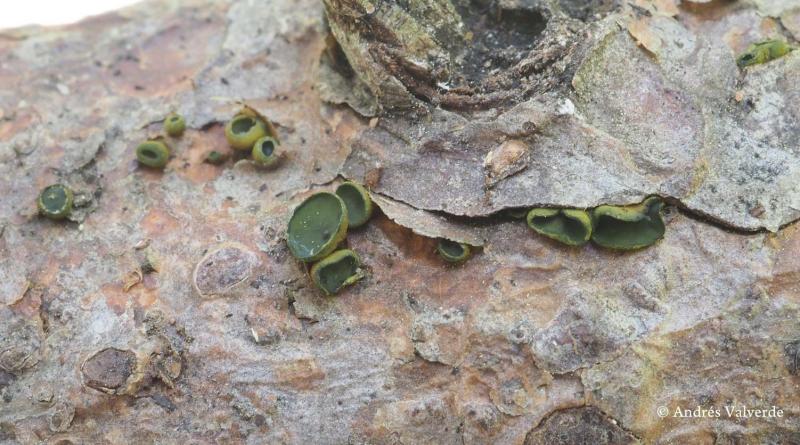
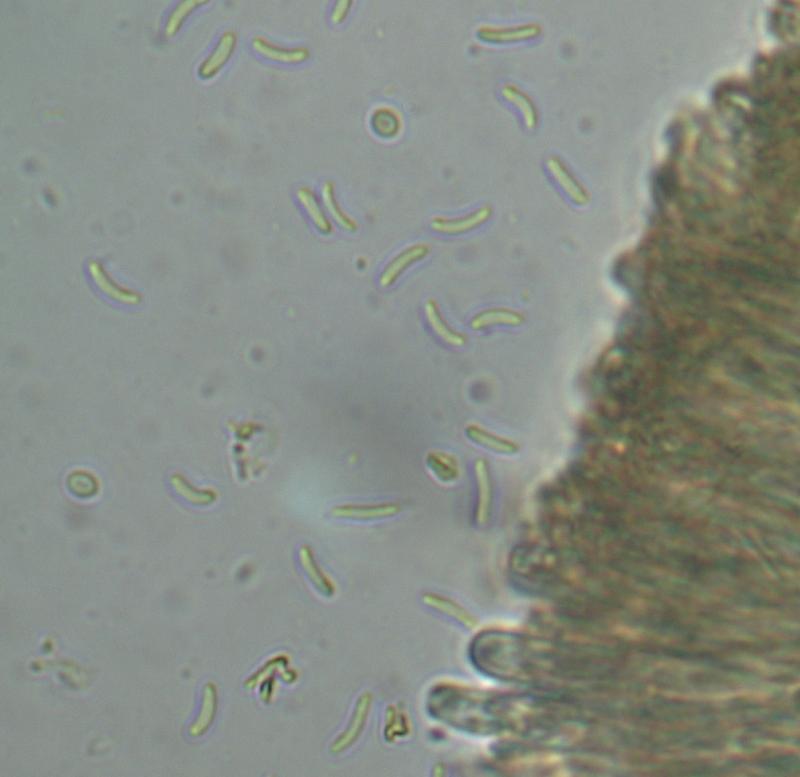
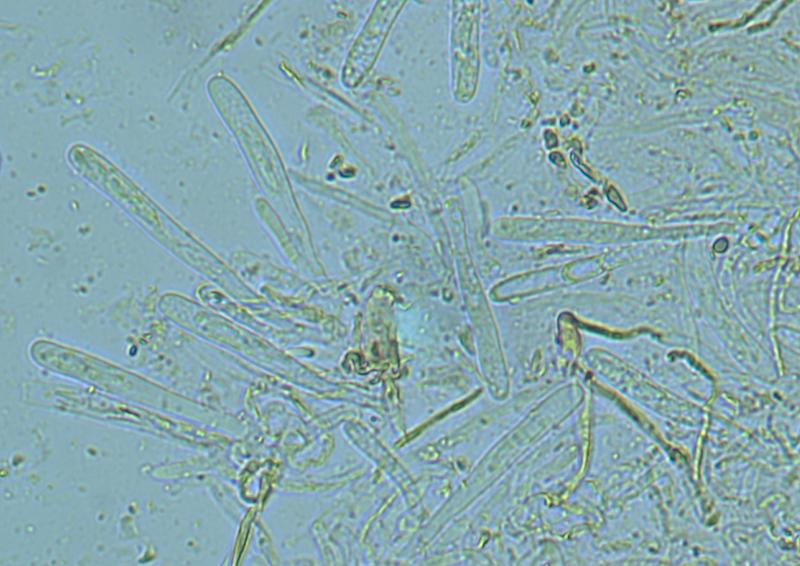

Not clear to me. You should check if KOH provokes extrusion of a yellow or red pigment. The asci are inamyloid?
Perhaps Ionomidotis? But on conifer?
Zotto

Bonjour Andrés,
C'est vrai que ça ressemble beaucoup à Ionomidotis fulvotingens, que j'ai eu la chance de voir une fois,( paroi de l'ascome devient brun rougeâtre dans KOH ) qui vient effectivement préférentiellement sur feuillus (populus etc)...
Bon courage en attendant.
Eric
Je crois qu'il peut bien être Ionomidotis fulvotingens, comme vous m'avez proposé.
J'ai pu constater le pigment rouge avec le KOH. Extraordinaire!
Asci inamiloid.
Je vous envoie des photos de ça.
C'est curieux parce qu'on se trouvait dans une forêt mixte de Fagus sylvatica et Pinus sylvestris, mais cet ascomycète grandissait sur une branche de Pinus sylvestris, avec toute sécurité.
Amicalement,
Andrés Valverde Valera
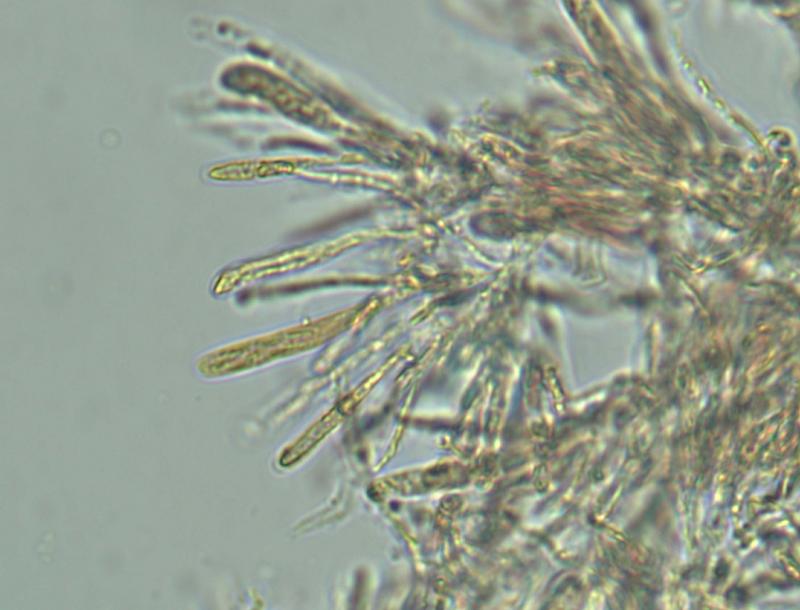
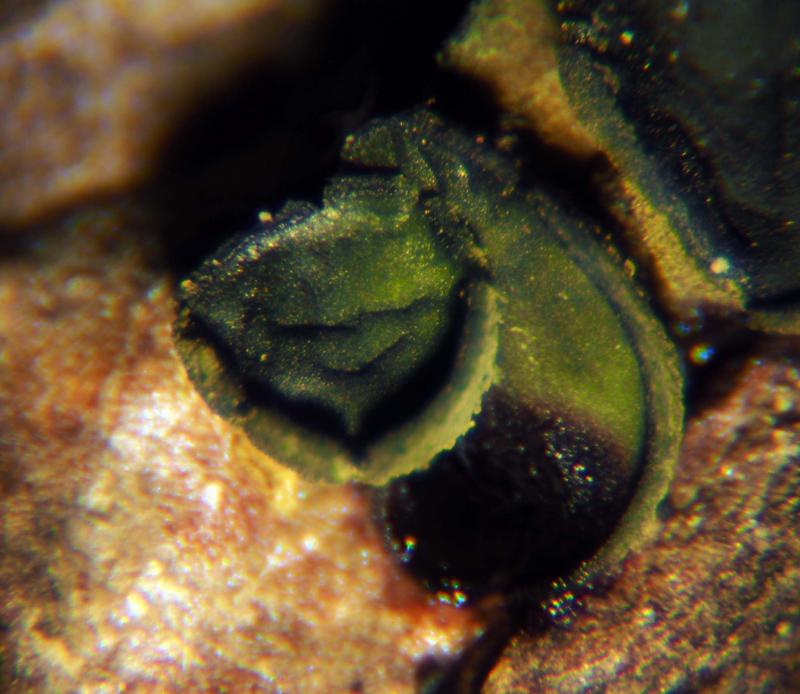
I. fulvotingens is an aggregate, and I think I never heard of a sample on conifer.
Do you know any key for this genre?
I. fulvotingens s.l. differs in colour and in the presence/absence of an ascus apical thickening, but different names do not exist. I had the feelng that yours lacks the apical thickening.