12-06-2026 14:50
 François Freléchoux
Bonjour, Voici la brève description d'une Mollis
10-06-2026 21:16
François Freléchoux
Bonsoir,Le dernier du jour, en attendant votre avi
11-06-2026 19:01
 William Slosse
Hello all,In an attempt to make a culture of a sus
11-06-2026 19:03
 Nicolas VAN VOOREN
Chers membres d'Ascofrance,Le site sera placé en

09-06-2026 18:32
Camille MertensSur morceau de roseau immergé 0,5 - 0,7 mm de dia
10-06-2026 12:54
Steve ClementsBonjour encore, Pouvez-vous m'aider, s'il vous pl
10-06-2026 21:07
François Freléchoux
Toutes les tiges de gentianes jaunes de l'an passÃ
10-06-2026 13:41
François Freléchoux
Bonjour à nouveau, Voici une trouvaille d'hier.
 Hello,
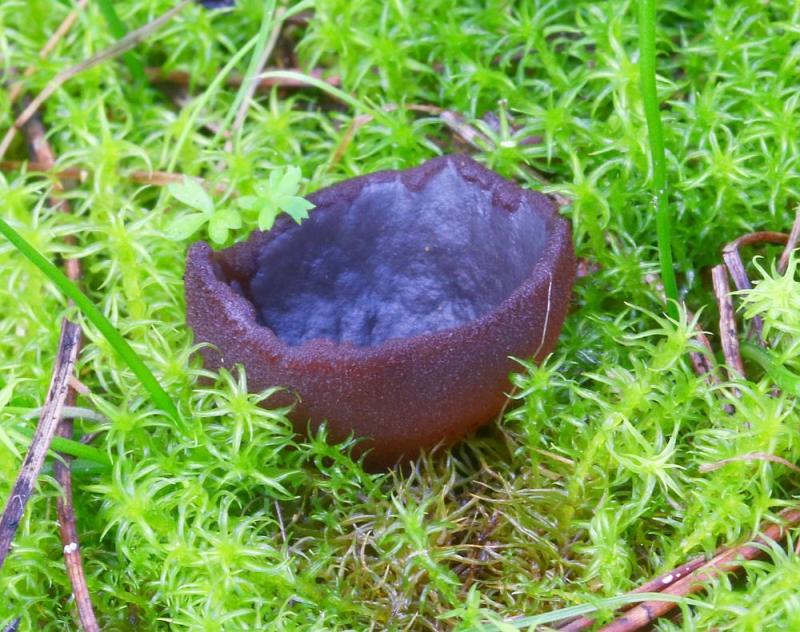
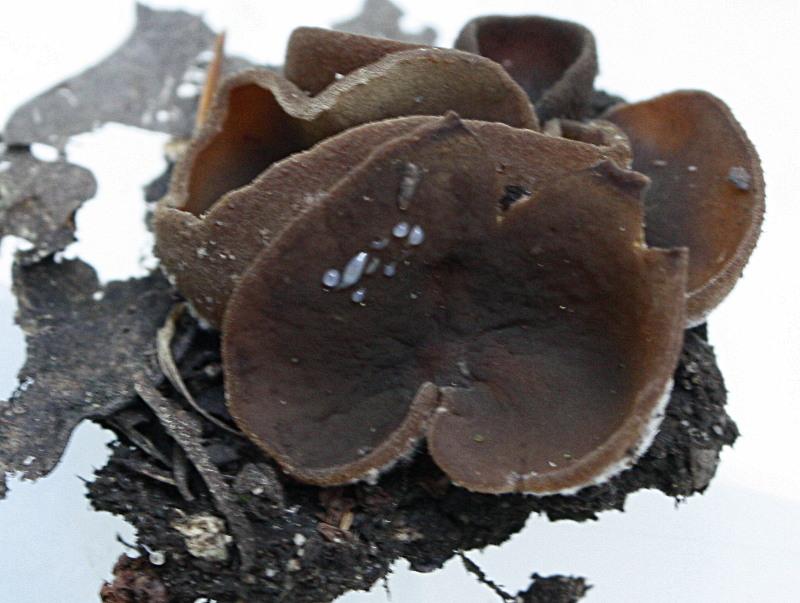
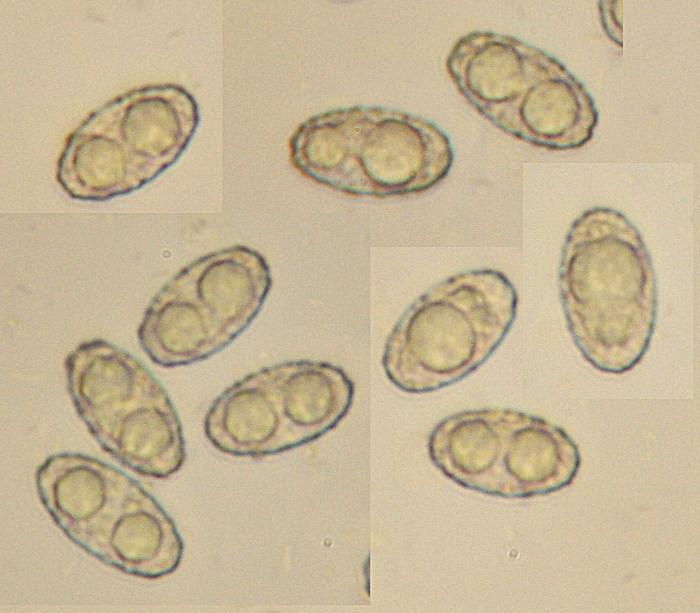
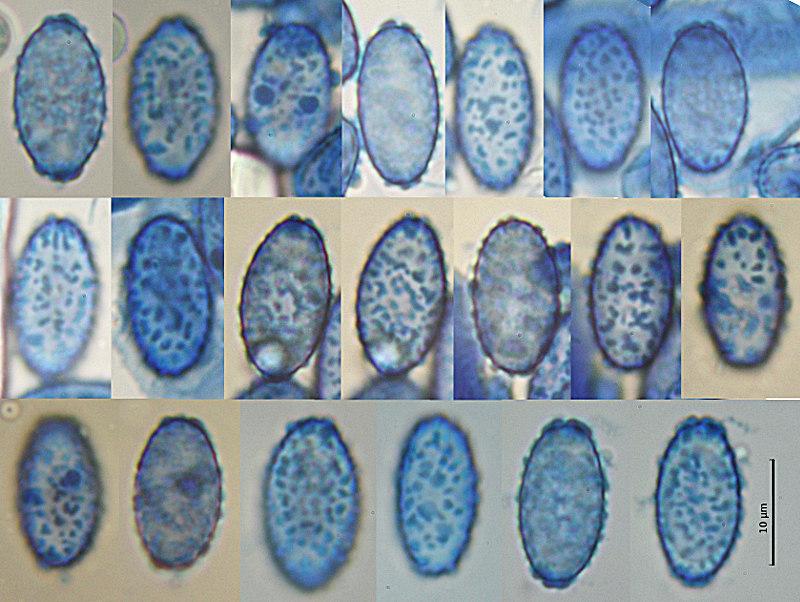
I found this Peziza 10 days ago, in a mixed forest. Because of the blueish milk I arrived in keys to P. badiofusca, but the spores are a bit narrower and often have 2 LBs instead of one. E. Rubio has also a collection (ERD-6339) with about a half of the spores biguttulate, in my find it was maybe even more. Furthermore, it should be an autumn species.
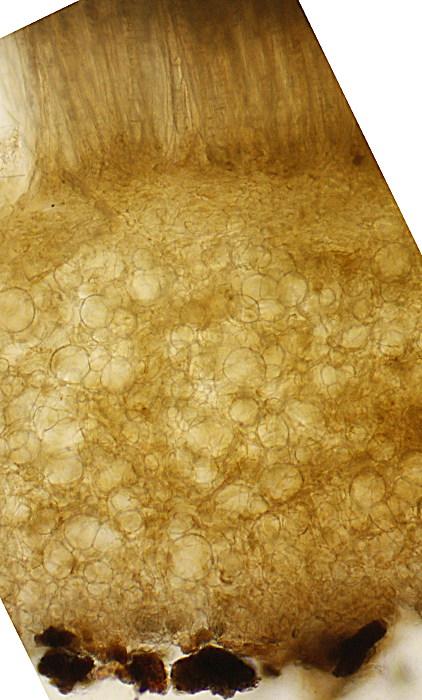
Excipulum not differentiated, globulose cells mixed with narrow hyphae throughout.
Paraphyses straight, only a little enlarged. I didn't see the distinct brown pigment sticking on paraphyses, only little amount of light yellow-brown one. But the apothecia were under thick trees, probably didn't see direct sunlight, so it might be similar situation like with P. limnaea.
Asci pleurorhynhous.
Spores from sporeprint, in LACB: 13,6-15,3 × 7,4-8,1 (8,4) um, Q = 1,7-1,9-2.
Is it still within the variability of P. badiofusca, or is it another species? I didn't find much descriptions of this species - is it so rare or just overlooked (or maybe confused with P. saccardoana and atrospora)?
Thank you in advance.
Viktorie


I dont know if you concluded something about yr finding...
Regards
Stephen
I haven't give it a thought since that year, too many newer collections from other groups. I noted someone (perhaps Nicolas) mentioned a collection of "P. badia" from St.-Aubin-le-Vertueux (in Boudier's herbarium) illustrated by Le Gal 1937, which has larger spores, 16-17.25 × 9-10, but with similar ornamentation. I still have the specimen and can send it to anyone interested. I don't have much experience with Pezizas and frankly not so much time for them either. There's also a recent collection of a small pinkish white Peziza from sandy soil, tentatively labelled as albinotic P. phlebospora but I would need more time and comparative material to be sure of that.
Viktorie