

10-06-2026 12:54
Steve ClementsBonjour encore, Pouvez-vous m'aider, s'il vous pl
09-06-2026 18:32
Camille MertensSur morceau de roseau immergé 0,5 - 0,7 mm de dia
10-06-2026 21:16
 François Freléchoux
Bonsoir,Le dernier du jour, en attendant votre avi
10-06-2026 21:07
François Freléchoux
Toutes les tiges de gentianes jaunes de l'an passÃ
10-06-2026 13:41
François Freléchoux
Bonjour à nouveau, Voici une trouvaille d'hier.
10-06-2026 11:53
Steve ClementsBonjour, This disco is abundant on dead stems of
10-06-2026 10:45
François Freléchoux
Bonjour à nouveau, Encore une détermination qui
08-06-2026 10:16
 Spooren Marco
I don`t have a clou about this fungus,it is not in
10-06-2026 09:24
François Freléchoux
Bonjour, J'imagine que cette détermination ne do
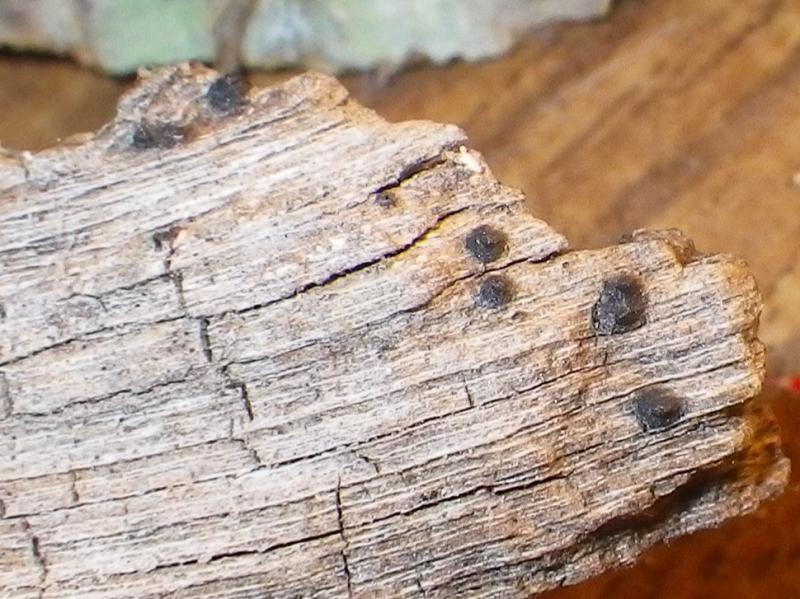
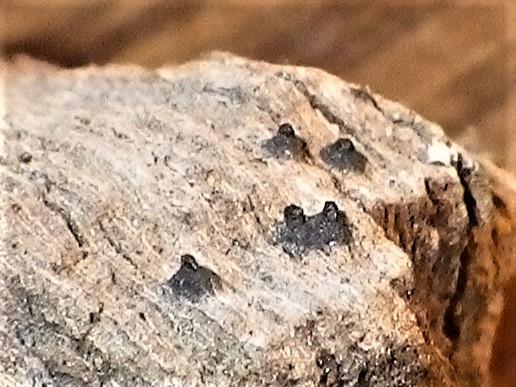
On Populus outer bark
Elsa Sousa,
04-07-2017 23:15
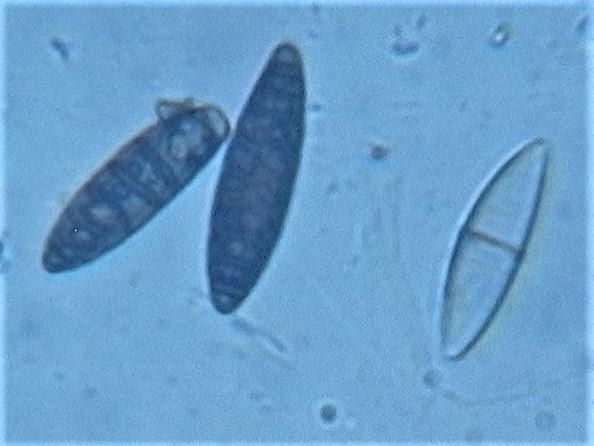
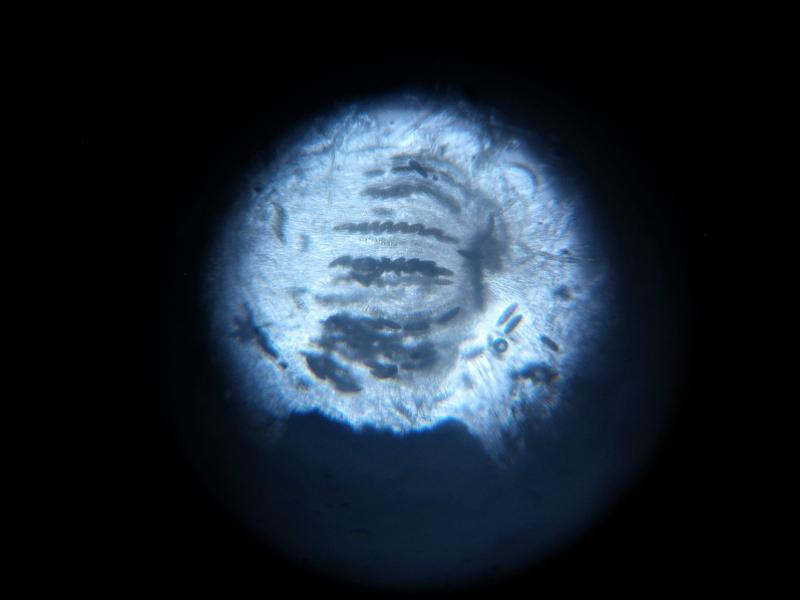
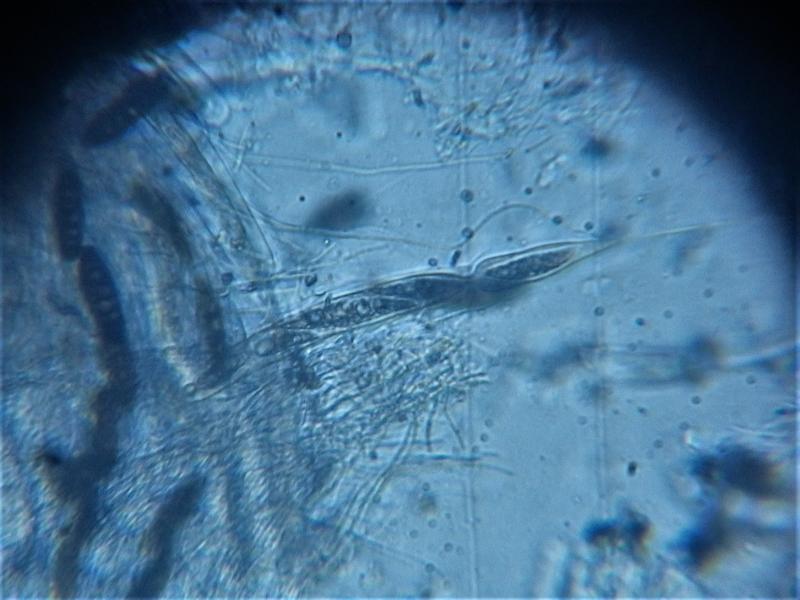
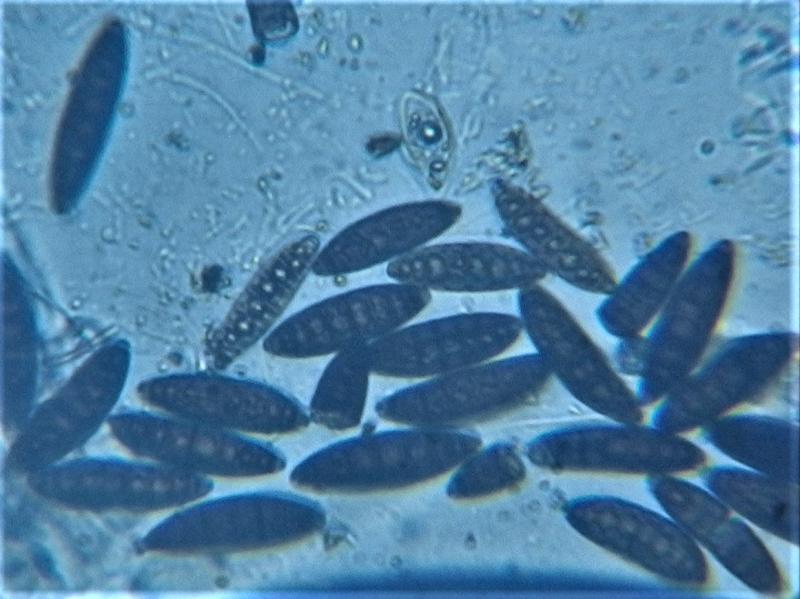
Spores:
(57.1) 58.4 - 67 (72.9) × (14.9) 15.9 - 20.4 (21.2) µm
Q = (2.9) 3.2 - 3.9 (4.4) ; N = 16
Me = 63.6 × 17.8 µm ; Qe = 3.6
multiseptate and guttulate.
I would appreciate any help.
Thank you very much.
Regards,
Elsa
Gernot Friebes,
04-07-2017 23:18
Re : On Populus outer bark
Hi Elsa,
I would look around Navicella.
Best wishes,
Gernot
I would look around Navicella.
Best wishes,
Gernot
Elsa Sousa,
04-07-2017 23:46
Re : On Populus outer bark
Thank you Gernot, I don't find any description or keys for Navicella. Spores are very close to Navicella pileata (the only one I find something about), but I don't know if it could be this one, could it be?
Elsa
Elsa
Klaus Siepe,
07-07-2017 10:32
Re : On Populus outer bark
Hi Elsa, the only key I know is in M.E.Barr's "North American flora. Series II". But key is a great word for two species. There seems to be another species, N. xinjiangenis, described by Yuan & Zhao (1994) from China. It seems to be close to N. pileata and N. elegans, but has narrower and longer asci [(95-)150-265(-300) x (16)-20-30(-40) in N. pileata vs. 287-355 x 14,3-17,5 µm and narrower ascospores: 47,5-62,5 x 10-12,5 µm, 5-7 (mostly 7) septate.
Regards,
Klaus
Regards,
Klaus
 Navicella-"Key"
Elsa Sousa,
08-07-2017 20:19
Re : On Populus outer bark
Thank you Klaus for your explanation and keys. With this I think that I can call it N. Pileata at least for now.