
04-10-2023 17:18
Louis DENYBonjour forumAu Ballon d'Alsace, altitude 1 100m,
04-10-2023 18:43
 Marc Detollenaere
Dear Forum,On the bark of Fagus I found some brigh


28-09-2023 22:11
Nihad OmerovicHello,Looking for opinions on this Rutstroemia; I


29-09-2023 17:29
SERGE DEFAYSBonjour,Quelqu'un pourrait-il me dire si Dentrosti
28-09-2023 16:36
Louis DENYBonjour forumTourbière de la Grande Pile. Haute S

On Thursday, during a seminar, we found a nice lichens with rosy-pink-lilac-brown apothecia in moist stage, in dry stage more ochraceous - on the bark of a living tree, likely Fraxinus, in Germany, Baden-Württemberg, Schwäbischer Wald near Gschwend-Schönberg, Osterbachtal.
I compared pictures and found Mycobilimbia sphaeroides very similar. Under the microscope I found spores of the right shape and form, but most of them are only 1-septate and not 3-5-septate as indicated in Wirth, for instance.
Is it M. sphaeroides anyway or does somebody have a better suggestion?
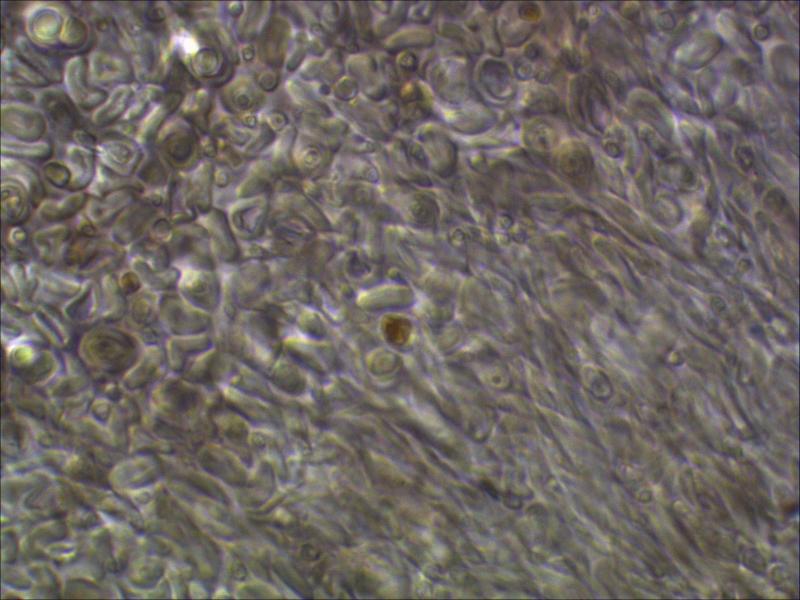
The paraphyses are guttulate in living stage, as are the spores. The asci seem to be fissitunicate and stain strongly blue with IKI. The first 4 micro-fotos are in water, the next two in IKI, the last two in KOH.
Regards from Lothar
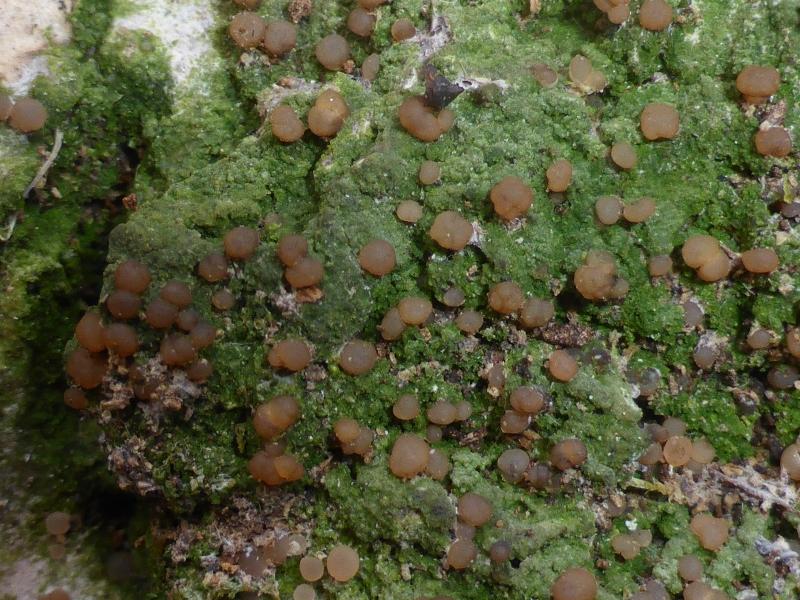
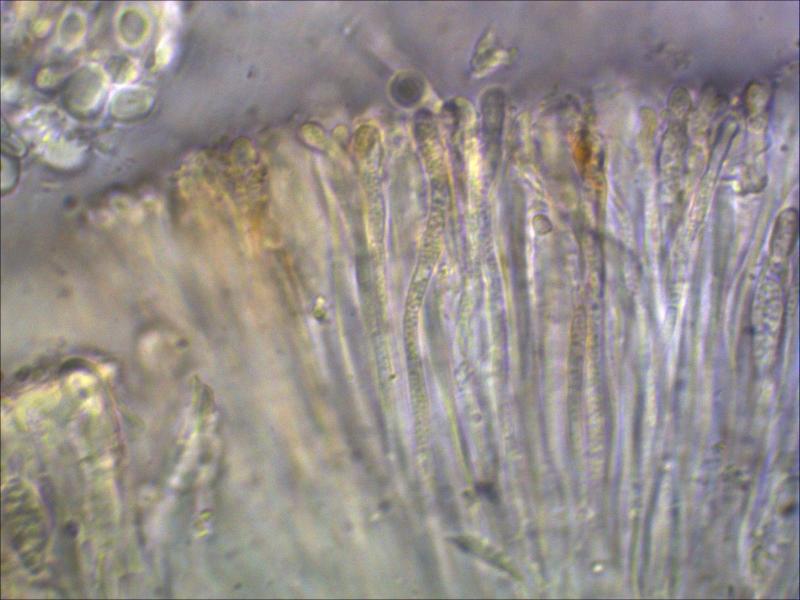
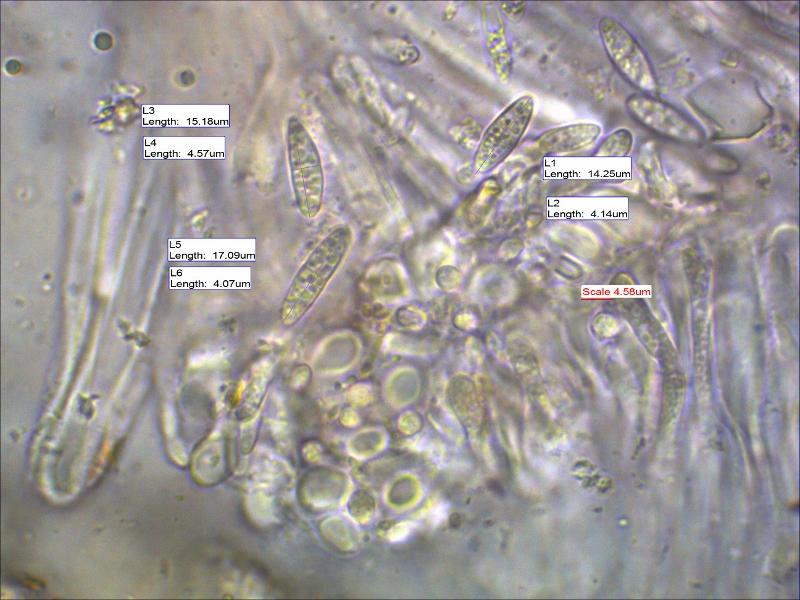
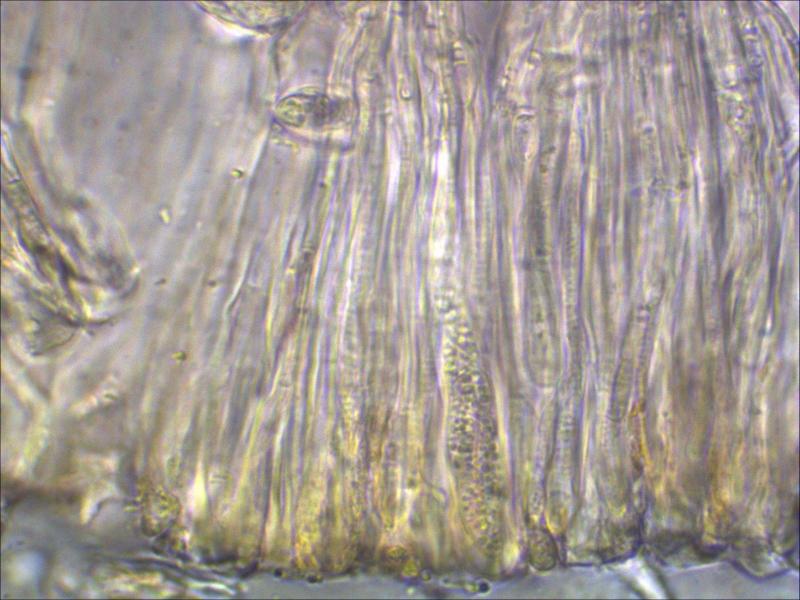
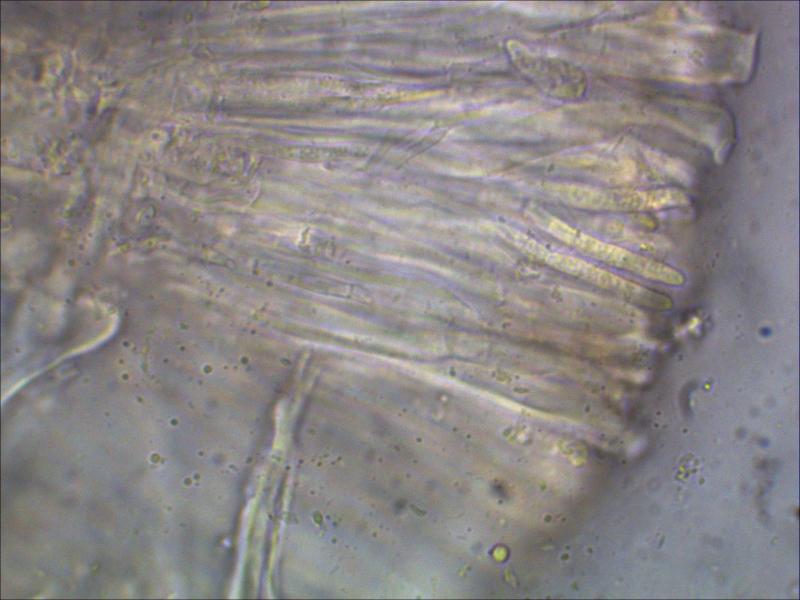
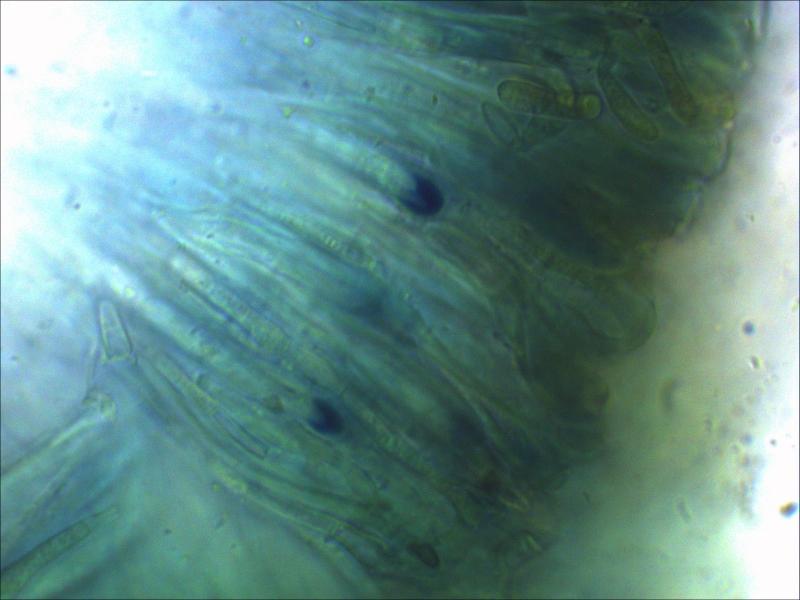
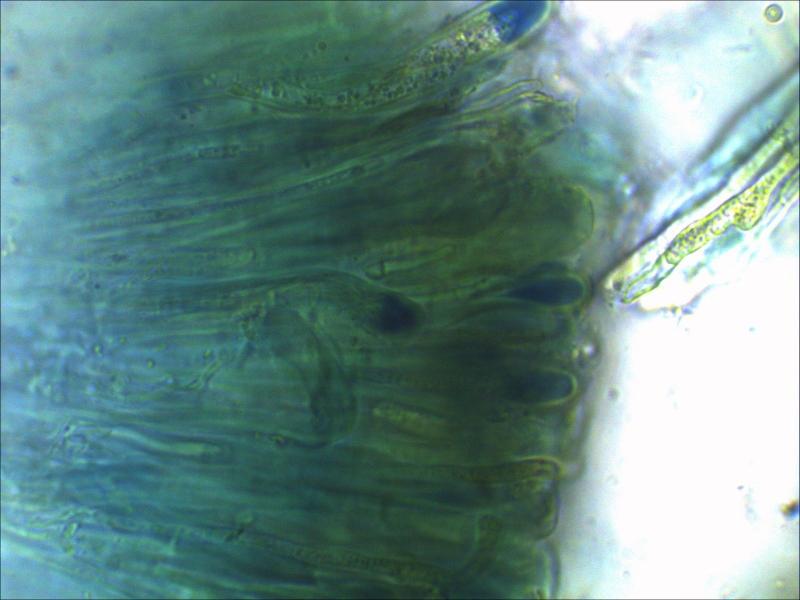
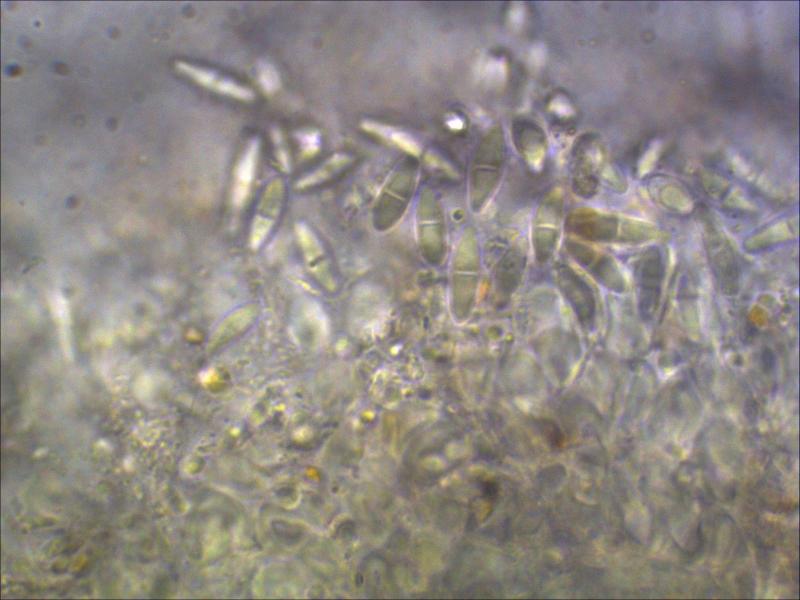
Mycobilimbia pilularis fits quite well, since the macro coincides with your description and the spores are predominantly 1-septate, fusiform-ellipsoid, with dimensions (9.5-)11.5-13.9(-17) x (3.0)4.2-4.3(-5)um. In addition, it uses to grow on Fraxinus and Quercus (maybe others).
Have a look at
http://www.irishlichens.ie/pages-lichen/l-356.html
Best regards,
zaca
Hi Zaca,
thank you very much for your rapid answer!
In Wirth (1995 - "Die Flechten Baden-Württembergs") M. pilularis (Körber) Hepp is included as a synonym in M. sphaeroides (Dickson).
In Wirth (1980 - "Flechtenflora" - UTB Ulmer) a "pilularis" is not included, and Bacidia sphaeroides (Dickson) Zahlbr. is keyed out (page 131) with "sp. 4(-6)-celled, 12-25/4-7"
I do not have further literature on this topic.
So what?
Best regards from Lothar
I just looked in Index of Fungi
Biatora sphaeroides = Mycobilimbia pilularis
Hi Zaca,
where do you take the information about predominantly 1-septate spores? I do not find this on "Irishlichens". Am I only blind? ...
Thanks and best regards, Lothar
The Lichens of Great Britain and Ireland, Smith et al., 2009, BLS;
where Bacidia sphaeroides does not appear. I'm not very familiar with these species, so I can not say anything valuable.
Good luck,
zaca
Hi Zaca,
thank you very much anyway.
I jus found another book in my library :-):
Dobson, F.S. (2011, 6th edition): Lichens. An illustrated guid to the British and Irish species.
So - there I find (on page 281): Mycobilimbia pilularis (= Biatora sphaeroides). And the text: "Spores 1-septate (with a few older spores 3-septate)."
I can find my specimen within this :-)
So I think the determination can be kept - but still I do not know what name is to be used ...
Best regards from Lothar
Best regards, Lothar