
23-05-2026 18:57
Sylvie Le GoffBonjour à tousRécolté sur une branchette de Sal
22-05-2026 14:44
 Lothar Krieglsteiner
in unripe condition citrine yellow, then soon fadi
23-05-2026 11:44
 Charles Grapinet
Hello, I am having trouble identifying this copro
22-05-2026 21:35
Steve ClementsBonjour, I expected this find on old wood on our
22-05-2026 18:12
Lothar Krieglsteiner
... in moist chamber from Portugal.As the fungus s
22-05-2026 20:08
Ethan CrensonHello all, Yesterday in NYC I was visiting an e
11-01-2022 16:36
 Jason Karakehian
Hi does anyone have a digital copy of Raitviir A (
20-05-2026 17:47
Margot en Geert VullingsWe found this Mollisia on dead Juncus stems mown l
22-05-2026 14:47
Gernot FriebesHi,superficial ascomata collected on bark of a liv
This also grew in the National Park of Eifel, on a decorticated Picea log. No asci were found, so it should be an anamorph. Most remarkable is the strongly yellow reaction of the contents with KOH.
Who can provide me with a name or an idea?
Best regards from Lothar
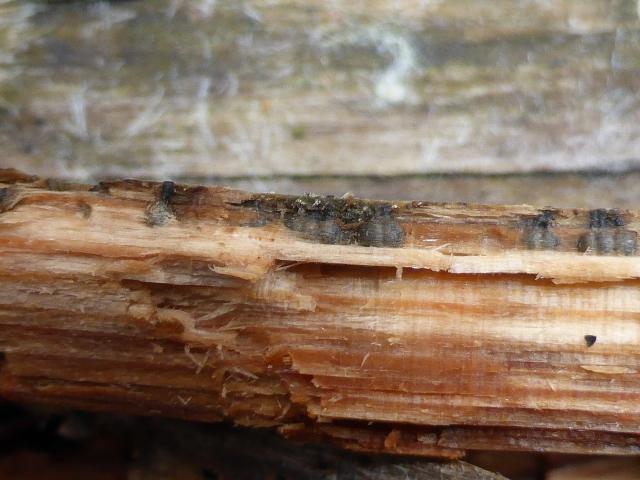
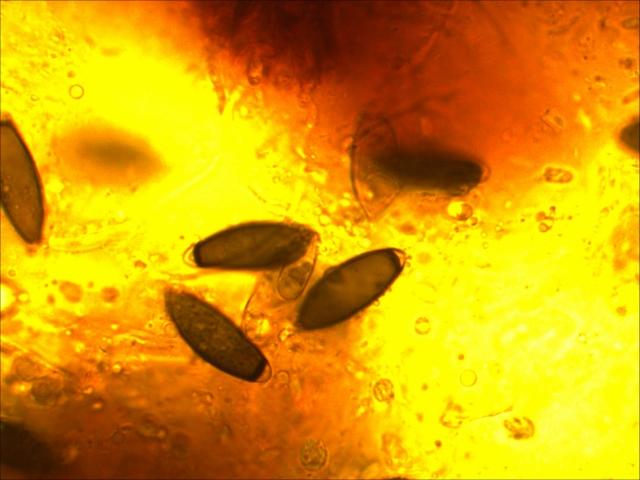
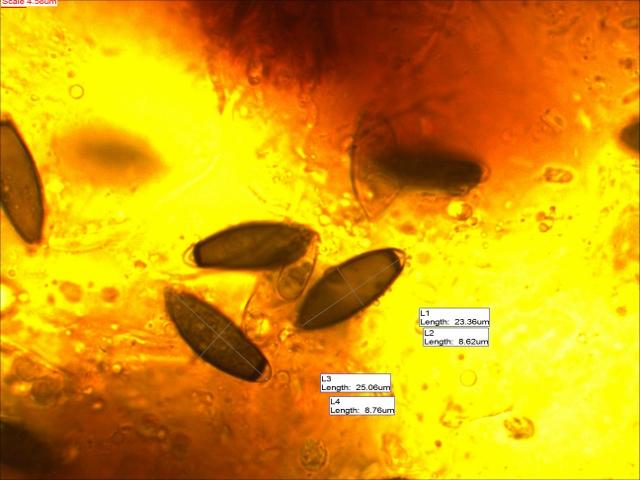
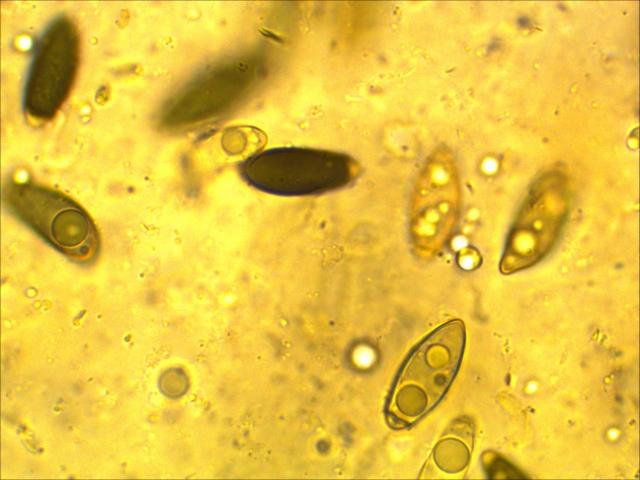

ascomatal configuration and spore morphology are suggestive of Endoxyla or Apiorhynchotoma. If so, the spores should be apically porate and asci provided with an inamyloid apical apparatus.
Endoxyla mallochii is a possible name for your fungus, check Untereiner et al. 2013, Mycologia 105.
Cheers,
Jacques
Hello Jacques,
thank you very much for your opinion!
In the first try I did not see any asci. So - possibly this is because of the specimen being a littler bit old. I am looking forward to find the time to do another inverstigation to check if your suggestion is right. I will report then ...
Best regards from Lothar
Hi together,
I just looked to download the paper of Untereiner from
http://www.cybertruffle.org.uk/cyberliber/ - but Mycologia is there only op to issue 100.
Can somebody provide me with the paper?
Best regards from Lothar
it can be downloaded here: https://www.researchgate.net/publication/235441594_Molecular_phylogeny_of_Boliniales_Sordariomycetes_with_an_assessment_of_the_systematics_of_Apiorhynchostoma_Endoxyla_and_Pseudovalsaria
Best wishes,
Gernot
... thank you very much, Gernot!
Best regards from Lothar
Hi Jacques,
now I have found the time to prepare two further perithecia and can answer to your questions. First: I still did not find any well-preserved asci, only few collapsed ones - the collection seems to be overmature. But there was nothing to observe with IKI. And what was very clear: the spores are distinctly porate at their dark cells. So - I think your suggestion is verified. The rest is fitting perfectly - and the substrate also. What I did not find is a hint about the yellow reaction in KOH. But maybe the authors did not test this.
Thanks again and best regards from Lothar