
10-06-2026 21:16
 François Freléchoux
Bonsoir,Le dernier du jour, en attendant votre avi
11-06-2026 19:01
 William Slosse
Hello all,In an attempt to make a culture of a sus
11-06-2026 19:03
 Nicolas VAN VOOREN
Chers membres d'Ascofrance,Le site sera placé en

09-06-2026 18:32
Camille MertensSur morceau de roseau immergé 0,5 - 0,7 mm de dia
10-06-2026 12:54
Steve ClementsBonjour encore, Pouvez-vous m'aider, s'il vous pl
10-06-2026 21:07
François Freléchoux
Toutes les tiges de gentianes jaunes de l'an passÃ
10-06-2026 13:41
François Freléchoux
Bonjour à nouveau, Voici une trouvaille d'hier.
10-06-2026 11:53
Steve ClementsBonjour, This disco is abundant on dead stems of
 Hi to everybody
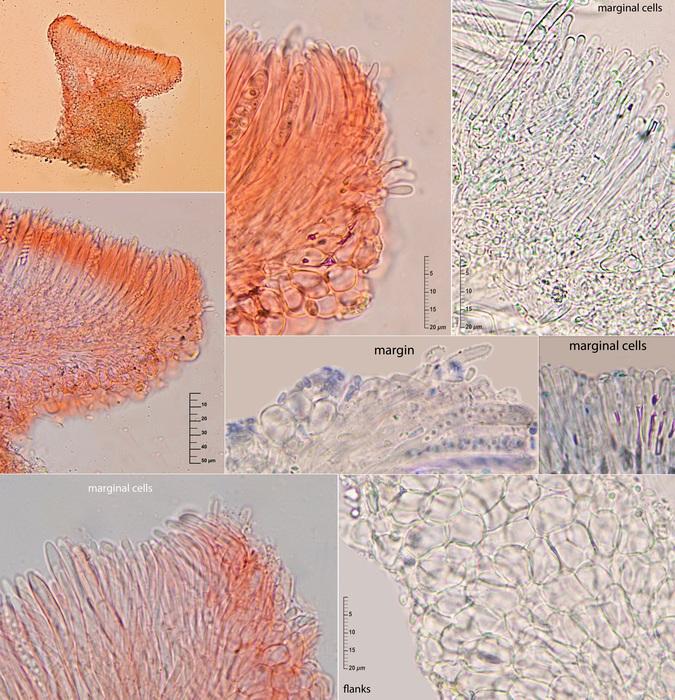
These very densely, gregarious apothecia were growing on the hymenium of a very decayed resupinate, poroid fungus on wood of Fagus sylvatica at 1000 m of altitude. The apothecia are white, shortly stipitate by a stout, broad, cylindrical pseudostipe. The white hymenium is briefly cupulate, later aplanate or only slightly convex, 200-500 microns in diameter. Excipulum downy, as the margin.
The inconspicuous marginal cells are cylindrical or slightly clavate, smooth or finelly incrustate, but not verrucose as in Cistella species. Ectal excipulum of hyaline, roundish, angular to prismatical cells with no inclusions or VBs. Paraphyses optically empty, with no VBs.
Asci 8-spored, IKI b or rb, with croziers.
I think it could be near to Calycina guttulifera from Zotto's folder.
What do you think?
Thanks again
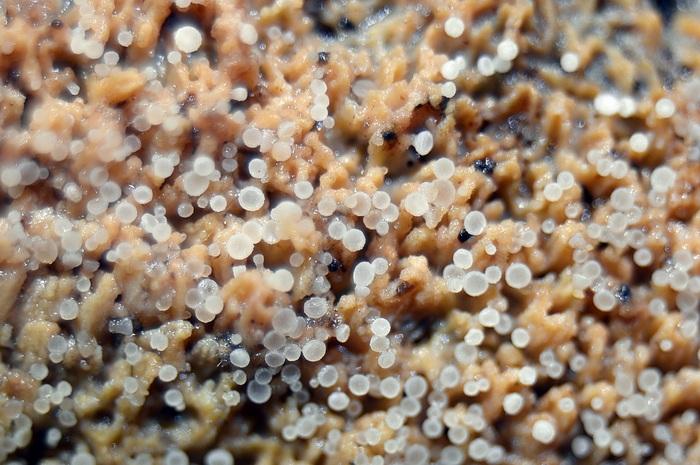
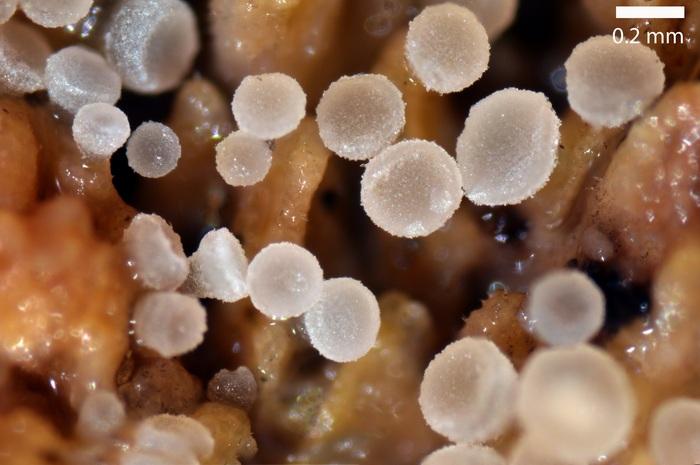
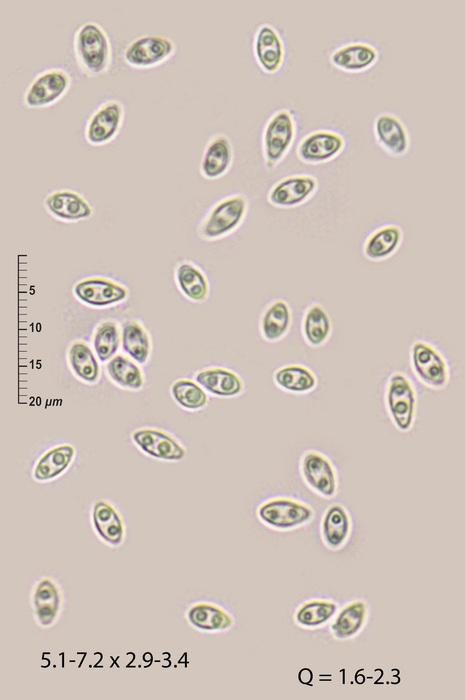
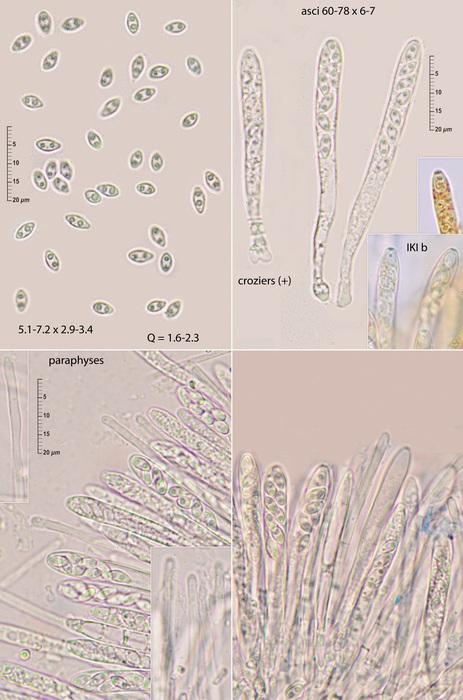

Maybe yours fits best the find by Patrice Tanchaud from 10.IX.2015 in lacking VBs and a blue apical ring. my 6787 was IKI purely red.
From 6787 we have a sequence (ITS and LSU). It clusters in Leptodontidium near L. trabinellum, but these fungi have VBs.
Zotto
yes, near this find : http://www.mycocharentes.fr/pdf1/413%201948%202%20.pdf
Patrice
Bonsoir Patrice
Oui. Je pense que ton champi est le même, qui as les cellules marginales avec un petit épaississement apicale.