
12-06-2026 14:50
 François Freléchoux
Bonjour, Voici la brève description d'une Mollis
10-06-2026 21:16
François Freléchoux
Bonsoir,Le dernier du jour, en attendant votre avi
11-06-2026 19:01
 William Slosse
Hello all,In an attempt to make a culture of a sus
11-06-2026 19:03
 Nicolas VAN VOOREN
Chers membres d'Ascofrance,Le site sera placé en

09-06-2026 18:32
Camille MertensSur morceau de roseau immergé 0,5 - 0,7 mm de dia
10-06-2026 12:54
Steve ClementsBonjour encore, Pouvez-vous m'aider, s'il vous pl
10-06-2026 21:07
François Freléchoux
Toutes les tiges de gentianes jaunes de l'an passÃ
10-06-2026 13:41
François Freléchoux
Bonjour à nouveau, Voici une trouvaille d'hier.

Hi to all
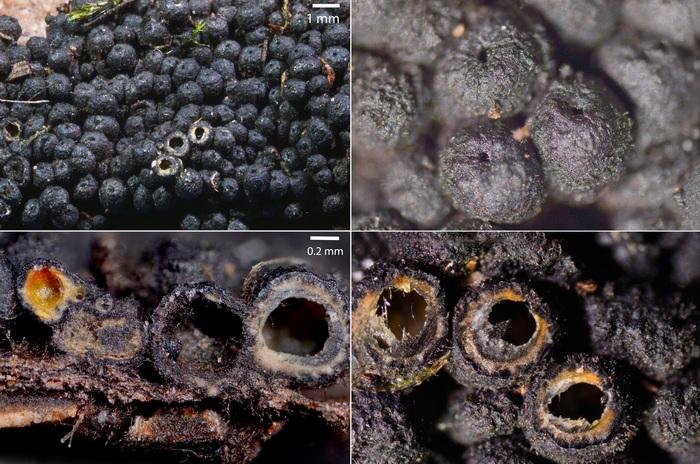
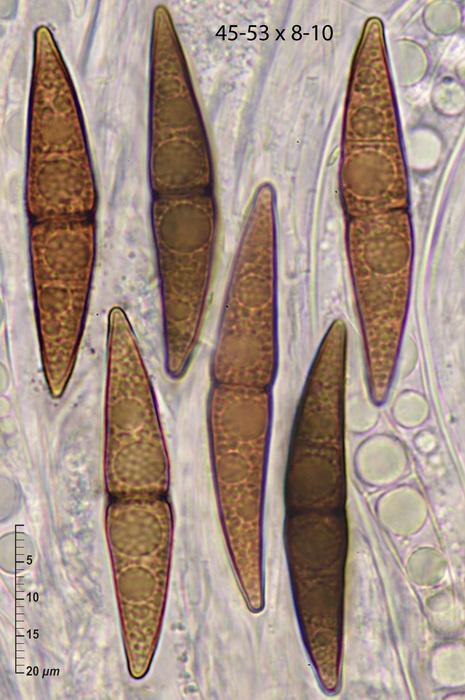
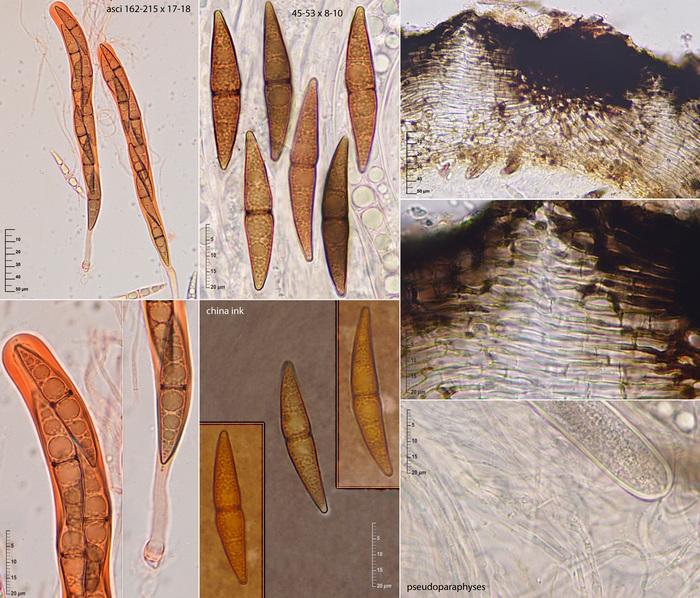
I need your help again with this fungus growing on wet wood of Erica arborea at 1400 m of altitude. The superficial, sessile, gregarious, roundish, rough, papillate, ostiolate,pseudothecia are 0.4-0.8 microns in diam. and they grew on a sparse subiculum of brownish hyphae. Their walls are carbonaceous and the inner wall of the young stromata have ochraceous or reddish pigments that don't exist around the ostiole as in B. schiedermayeriana. The 8-spored asc are bitunicate and shortly stipitate. Pseudoparaphyses trabeculate. Mature ascospores are brownish, 1 septate (or with 2 more secondary septa), no appendages, no sheath.
I think this fungus could belongs to the genus Byssosphaeria and maybe this is B. salebrosa. What do you think?
Many thanks again

I agree. Macroscopically and microscopically.
It could be the first european record !
Again an incredible fungus found by you.
Alain