

30-04-2026 10:28
Rot BojanHello, by appearance I would say that I am dealing
27-04-2026 18:48
Tony MoverleyCollected 23rd April 2026, Norfolk, EnglandSwarms
14-04-2026 05:32
Ethan CrensonHi all, A few weeks back a friend pointed out som
27-04-2026 20:52
 Lothar Krieglsteiner
Found on hanging tiwg of Olea europaea in dried-ou
28-04-2026 22:51
 Bernard CLESSE
Bonsoir à toutes et tous,Pourriez-vous m'aider à
29-04-2026 08:01
Lothar Krieglsteiner
... on twig attached to small tree of Citrus auran
29-04-2026 10:44
Lothar Krieglsteiner
growing at moist, drying-out soil at the side of a
28-04-2026 20:33
Vitus SchäfftleinHello, I found Trochila ilicina on Ilex aquifoliu


Hi to all
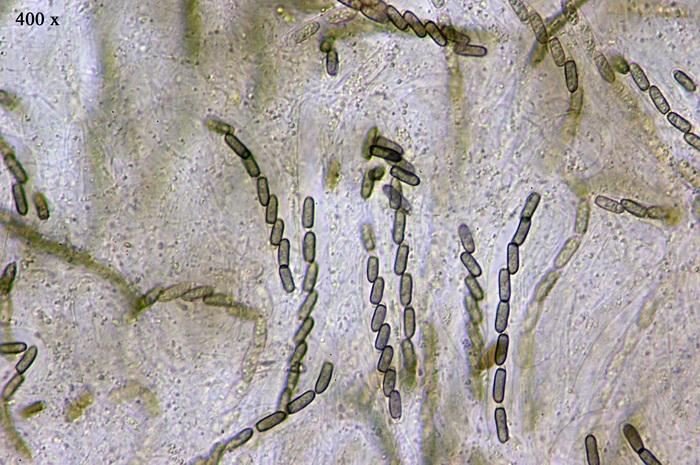
My friend F.J. Balda sent me this fungus growing on very wet, semirotten, wood of Pinus sylvestris that makes groups of inmersed and blackish perithecia 0.5-0.6 mm high inside + or - developped blackish stromata. Only the blackish and roundish papilla erumpent.
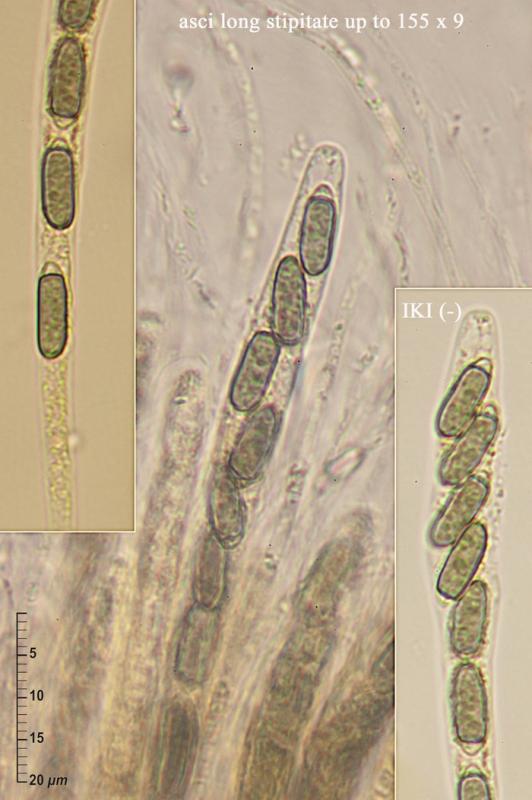
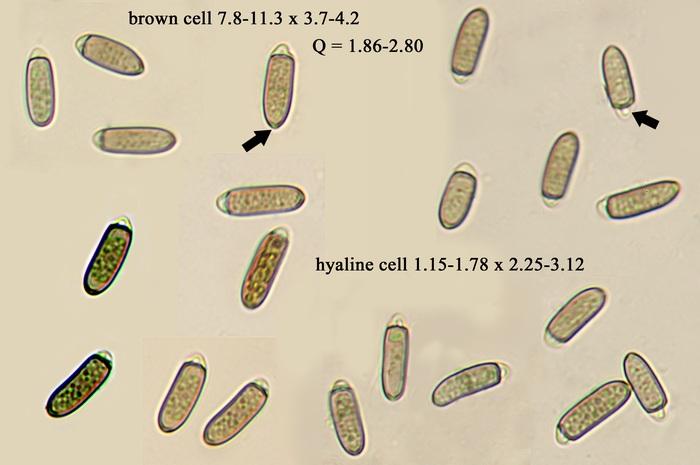
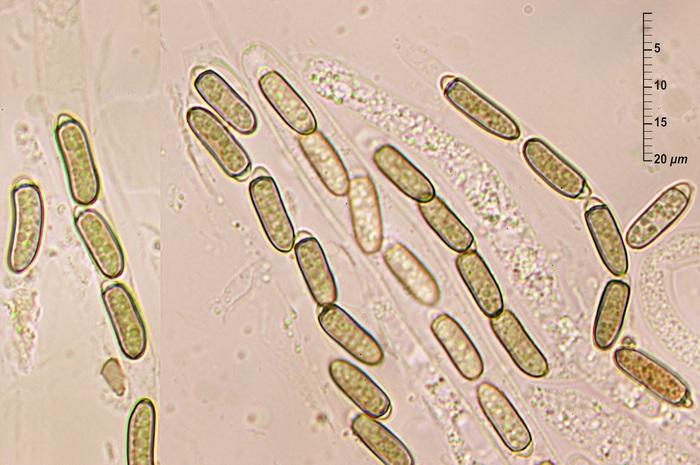
Asci long-stipitate up to 155 x 9 micr., with a refractive, small, IKI negative apical apparatus. The greenish-brown mature ascospores have a non-septate dark cell with an apical pore and an small hyaline cell under the wich we can to observe a very small hyaline papilla (?).
If this fungus belongs to Endoxyla only E. xanthostroma is close, but the lack of yellowish tissues and the hyaline papilla of the ascospores don't fit with this species.
Any idea?
Thanks again
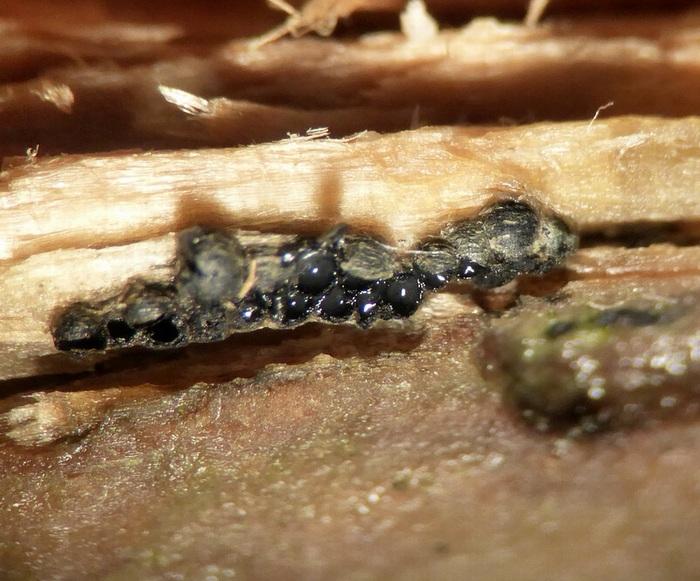
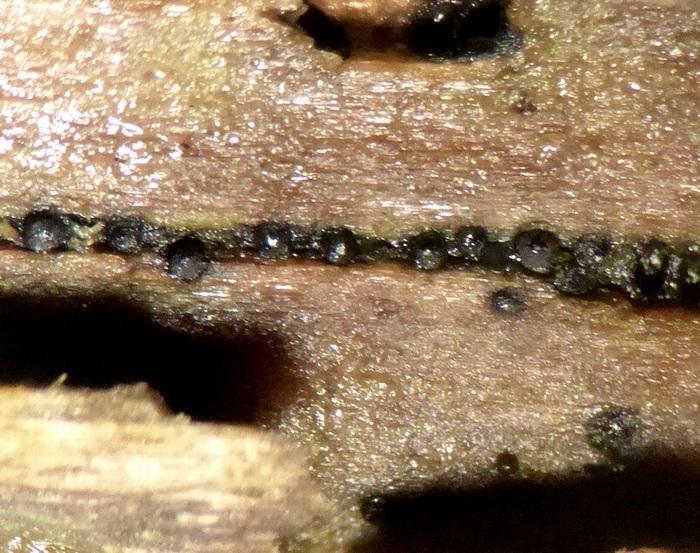
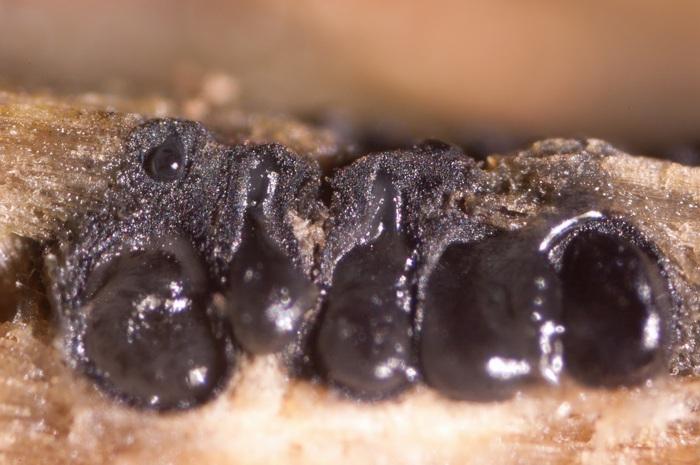
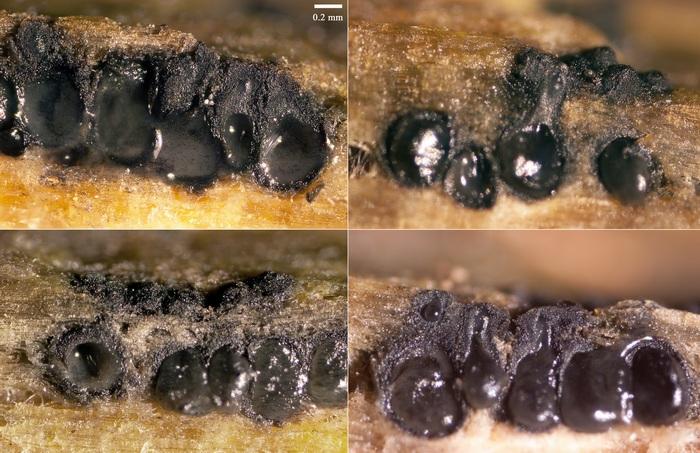

Hi Enrique,
E. xanthostroma is a good option, you said it. On the fourth photo, we can see yellow tissues, do you agree ?
The other features fit almost well with E. xanthostroma.
Alain
Hi Alain
Really this is a photographic artefact because there are not yellowish tones in the wood or stromata. By the other hand Untereiner doesn't describe the small but conspicuous hyaline papilla on the ascospores
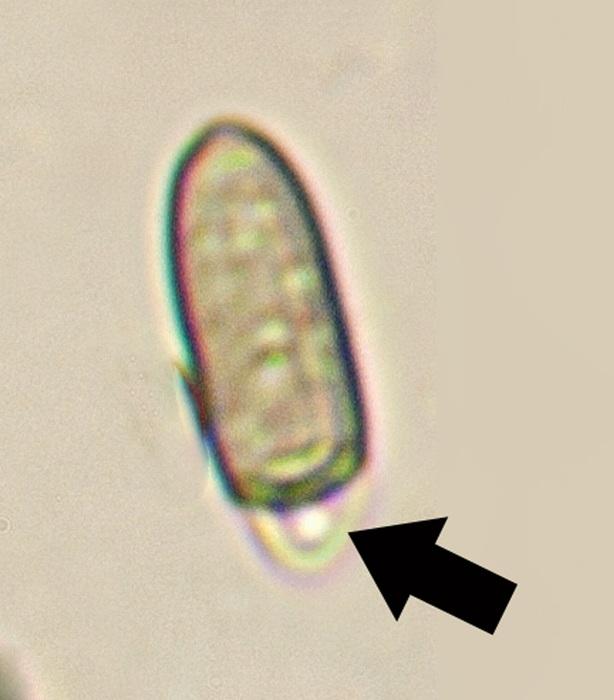

in fact she does mention the "cellula hyalina" (p. 305 and figs. 21-22).
Regards
Martin
Hi Martin
The hyaline cell was described, and it was drawn by Untereiner, but not the small hyaline appendage under this cell!