

30-04-2026 10:28
Rot BojanHello, by appearance I would say that I am dealing
27-04-2026 18:48
Tony MoverleyCollected 23rd April 2026, Norfolk, EnglandSwarms
14-04-2026 05:32
Ethan CrensonHi all, A few weeks back a friend pointed out som
27-04-2026 20:52
 Lothar Krieglsteiner
Found on hanging tiwg of Olea europaea in dried-ou
28-04-2026 22:51
 Bernard CLESSE
Bonsoir à toutes et tous,Pourriez-vous m'aider à
29-04-2026 08:01
Lothar Krieglsteiner
... on twig attached to small tree of Citrus auran
29-04-2026 10:44
Lothar Krieglsteiner
growing at moist, drying-out soil at the side of a
28-04-2026 20:33
Vitus SchäfftleinHello, I found Trochila ilicina on Ilex aquifoliu


Hi to all
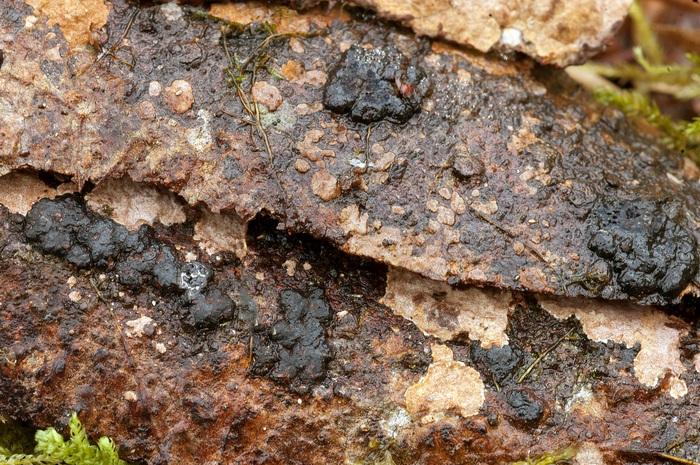
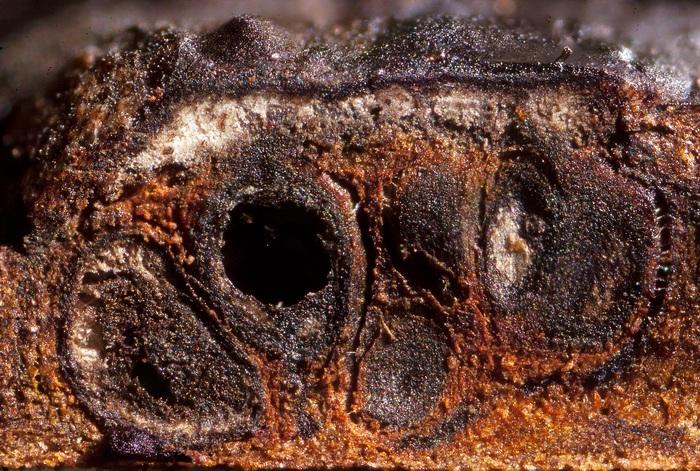
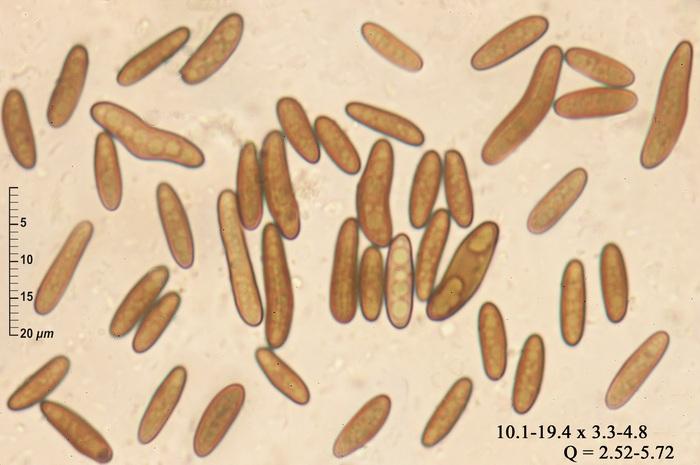
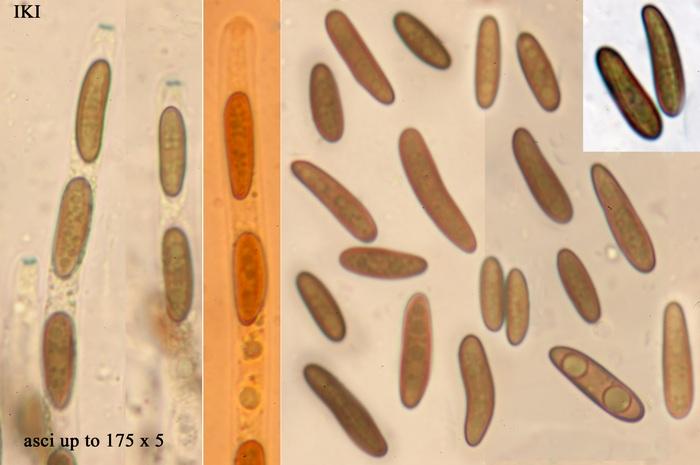
These pulvinate erumpent stromata grew on corticated wood of Quercus robur. The very polymorphic and aberrant ascospores are mostly in 4-spored asci. It could be the Lopadostoma dryophilum of the recent paper of Jaklitsch, Fournier. Rogers and Voglmayr?
Thanks again

Hi Enrique,
Have you read the last paper in Persoonia 32 ?
Alain
Hi Alain
Yes. I have the paper. I have doubts because 'my' stromata have a reddish tissue between the perithecia and the asci are mostly narrower and 4-spored
Thanks!
Yes, and ascospores also don't fit with described species.
You should contact Jacques or Walter...
Alain

the second photo shows some white tissue above the perithecia, thus I think that L. dryophilum can be ruled out.
It should be assessed if all asci are definitely 4-spored, which would be highly distinctive, or if only a variable percentage of asci are fortuitously 4-spored. Such asci are more frequent in hardly mature perithecia and may be responsible for abnormal ascospores. Enrique, try to find 8-spored asci and make measurements of ascospores, their length range should be smaller and more informative.
Cheers,
Jacques

Je te serais reconnaissant recevant une copie de l'article concerné.
Amitiés,
Bernard
Hi to all
Jacques, je vais t'envoyer mon materiel avec l'autre Lopadostoma similaire au gastrinum, avec blanchatre endostroma, que nous avions trouvé sur Quercus ilex.
Amitiés
envoie moi les deux, c'est vraisemblablement la même espèce.
Merci
Jacques