
12-06-2026 14:50
 François Freléchoux
Bonjour, Voici la brève description d'une Mollis
10-06-2026 21:16
François Freléchoux
Bonsoir,Le dernier du jour, en attendant votre avi
11-06-2026 19:01
 William Slosse
Hello all,In an attempt to make a culture of a sus
11-06-2026 19:03
 Nicolas VAN VOOREN
Chers membres d'Ascofrance,Le site sera placé en

09-06-2026 18:32
Camille MertensSur morceau de roseau immergé 0,5 - 0,7 mm de dia
10-06-2026 12:54
Steve ClementsBonjour encore, Pouvez-vous m'aider, s'il vous pl
10-06-2026 21:07
François Freléchoux
Toutes les tiges de gentianes jaunes de l'an passÃ
10-06-2026 13:41
François Freléchoux
Bonjour à nouveau, Voici une trouvaille d'hier.
#4297 (Colpoma ledi)
Apothecia submerged under bark, bursting by gongitudinal stil, 1.7–3.4 mm long, 0.5–1 mm broad, fusoid or curved, ellipsoid, hymenial surface blue, edge dark.
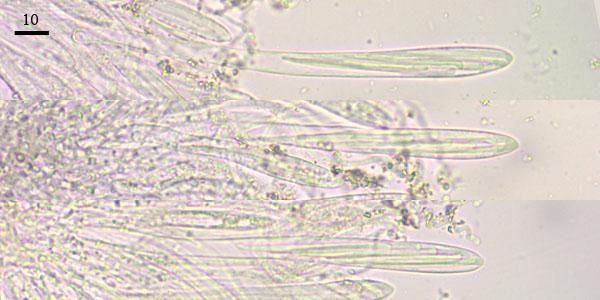
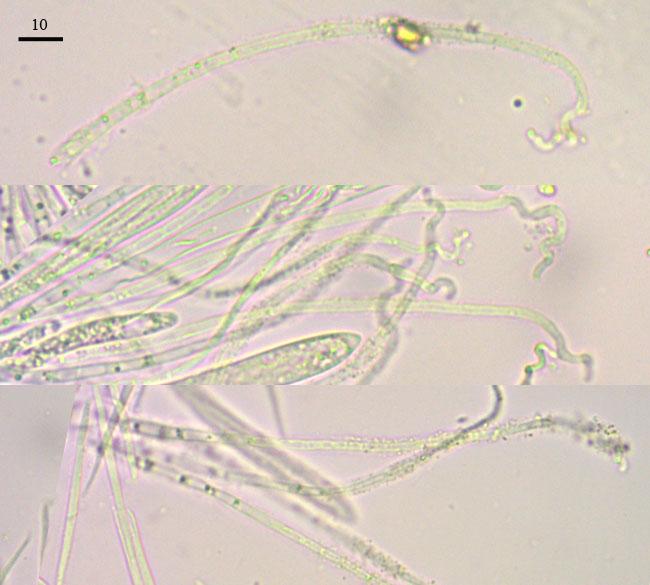
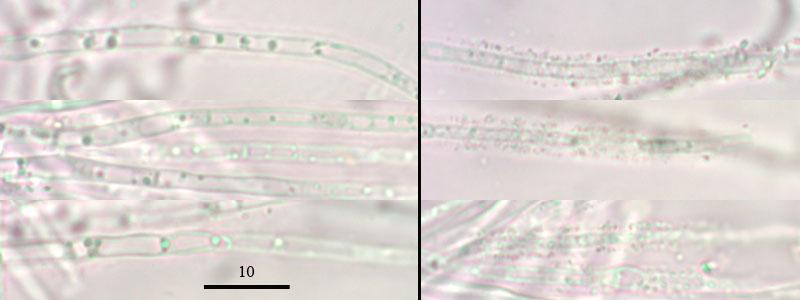
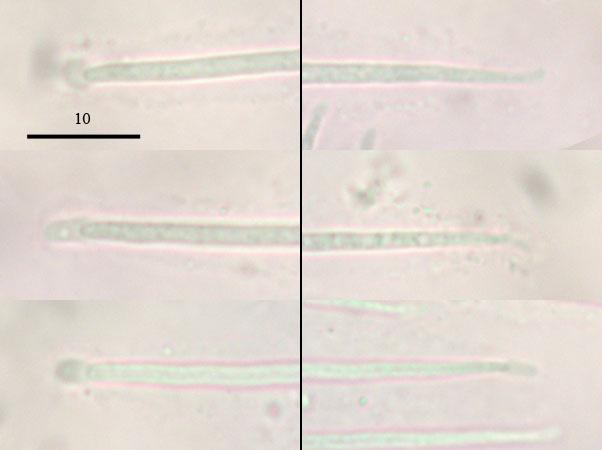
Asci clavate, inamyloid, medium size 130 x 9; paraphyses cylindrical, exceeding the asci, about 3 broad at base, 2 in upper part, tip circinate, middle part covered by cilia (pubescent), and base segmented, with small guttules; spores needle-shaped, with small hemi-circular appendix at obtuse, and elongated at acute ends, with weak inpersistant coating, 45.8 (40.1–49.9) x 2 (1.9–2.3) (n=14).
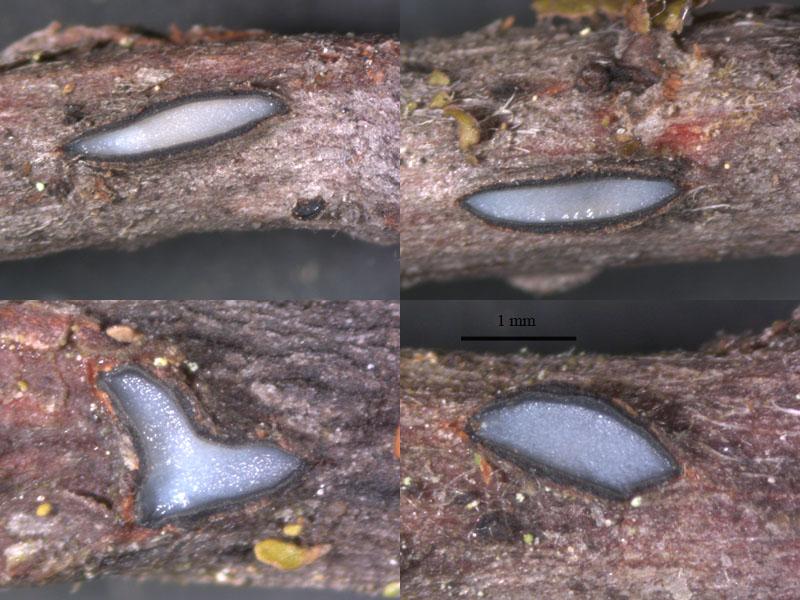
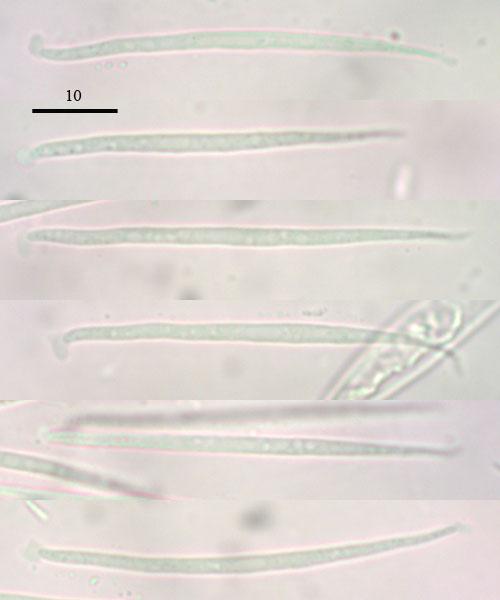
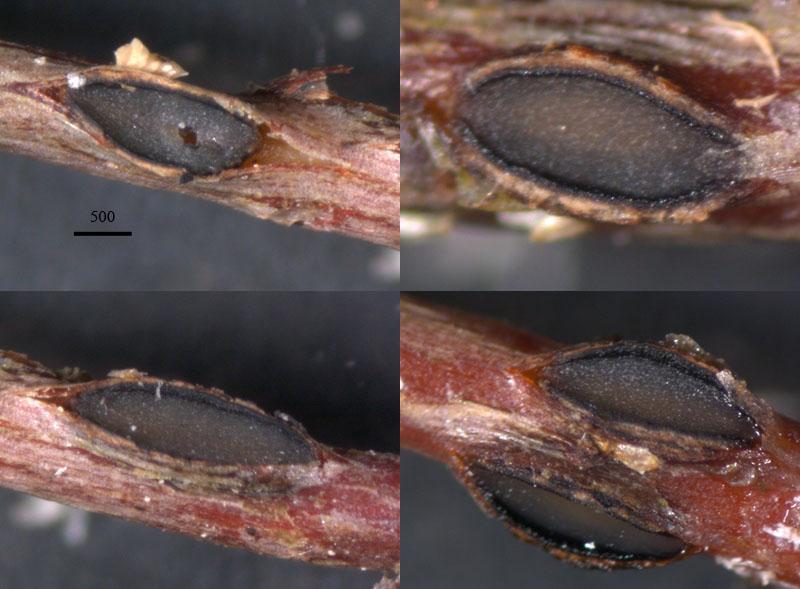
Apothecia submerged under bark, bursting through longitudinal slit, fusoid, with dark edge and gray hymenium, 1.3–2.4 mm long, 0.4–0.8 broad.
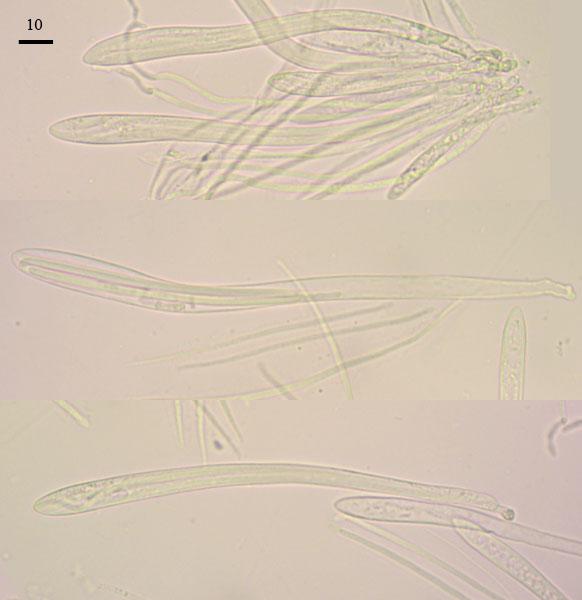
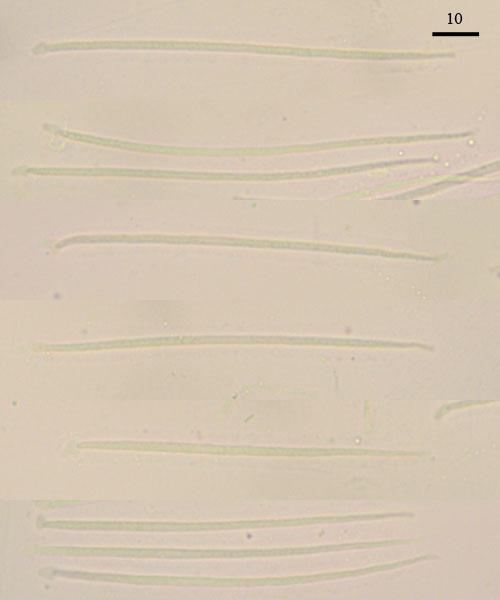
Asci clavate, crozier not clear seen, inamyloid, 125.7–165 x 9–10.8; paraphyses cylindrical, branched and wavy inupper part, near 2 broad; spores neddle-shaped, with short round appendix at obtuse end, and elongated one at acute end, without oils, 84.7 (72.5–101.3) x 1.8 (1.4–2) (n=14).

2. Impossible for C. andromedae as represented in Schmid-Heckel: on leaves, with broad, clavate-tailed spores.
Zotto