
28-04-2026 20:07
 Lothar Krieglsteiner
... on twig in the air at standing Ceratonia siliq
12-05-2026 15:41
 Nicolas VAN VOOREN
Dear Ascolovers, especially interested in Pezizale
27-04-2026 20:52
Lothar Krieglsteiner
Found on hanging tiwg of Olea europaea in dried-ou
11-05-2026 20:22
Lothar Krieglsteiner
on attached twig of standing Ficus caricaquite uns
11-05-2026 12:32
 Bernard CLESSE
Pourriez-vous m'aider à identifier cette héloti
29-04-2026 10:44
Lothar Krieglsteiner
growing at moist, drying-out soil at the side of a
05-04-2026 22:46
Lothar Krieglsteiner
on wood of Ceratonia, Algarve, 3.4.2026.The color
10-05-2026 16:18
brigitte vignotbonjour trouvée en Ariège sur bois une petite
Perithecioid fungi is tabula rasa for me, but i will try to do approximate identifications; hope that it will find interest of specialists in the groups.
Physalospora vaccinii
I compared my specimen with the description of Barr (1970, Some Amerosporous Ascomycetes on Ericaceae and Empetraceae).
Collected from leaves of Oxycoccus palustris, regular species, 04.08.2012, N61,065408° E69,455652°.
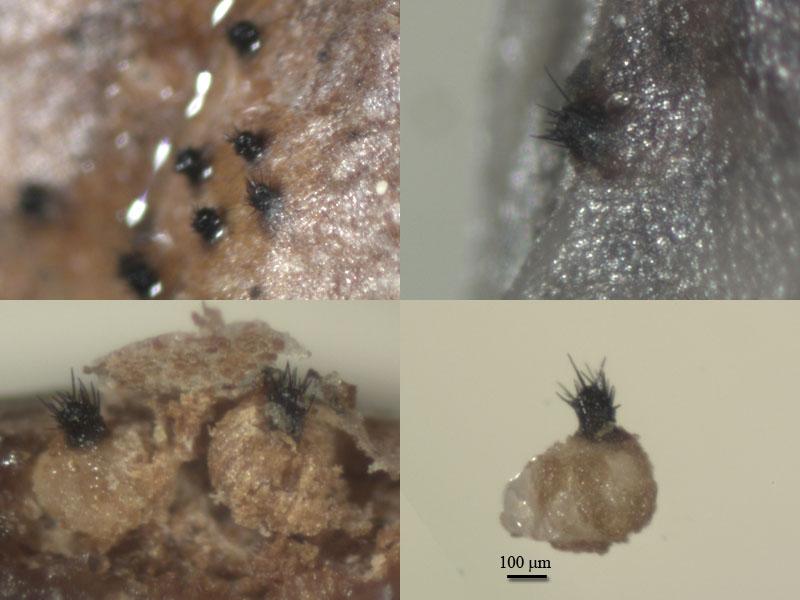
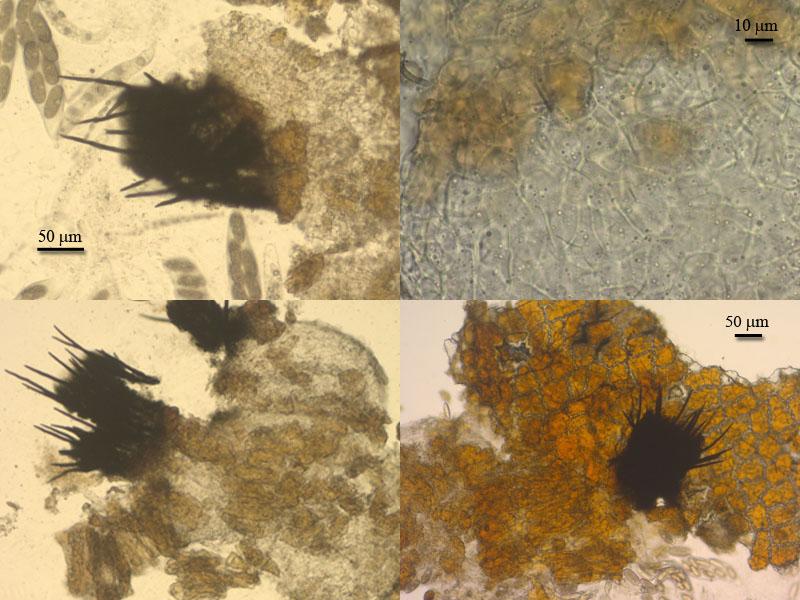
Perithecia globose, to 300 mk in diam, light-brown, submerged in leaf tissue, only black conical tip projected at the surface (near 100 mk height), covered with brown bristles.
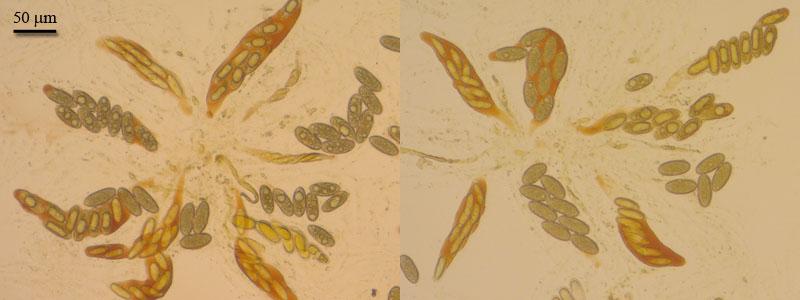
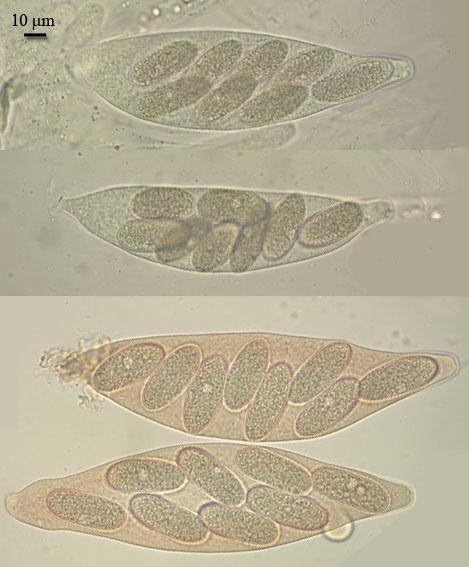
Tip from dark irregular cells; bristles brown, sharp, near 180 mk long, straight or some curved; submerged excipulum from angular hyaline cells near 20 mk in diameter, with adhered host epidermis; asci utriform, huge, near 200x50 mk; spores ellipsoid, with ornamentation from regular warts, some with gelatinose sheath, 39 (36-42) x 16,5 (14-17,3) (N=15); paraphysoid tissue present, becoming deliquescent.
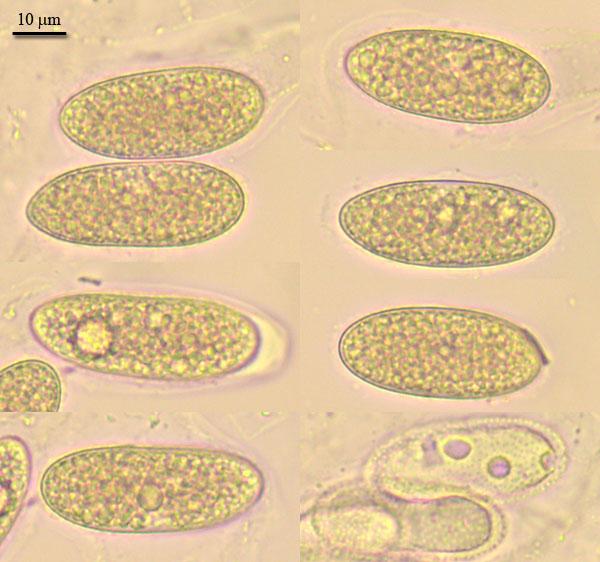
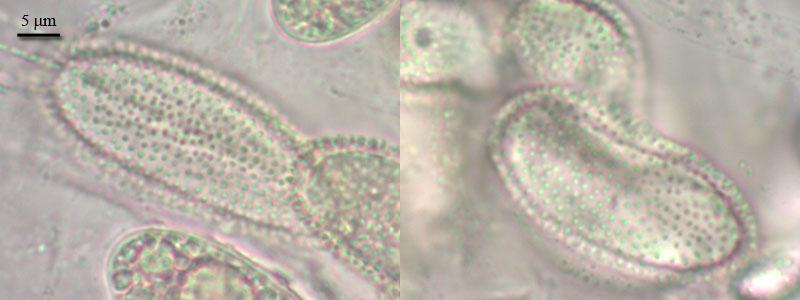

really interesting species you have found there (incl. Wentiomyces). I know Physalospora to be a member of Hyponectriaceae, which is comparable with Pseudomassaria chondrospora or, with no regard on ascus structure, with Botryosphaeria.
For me your determination seems to be right, but I am only a specialist for european pyrenomycetes. I will save your photos just to learn about far russian species.
Best wishes,
björn