
12-04-2026 17:56
 Hardware Tony
Found on dead stems in February earlier this year
12-04-2026 15:52
Gernot FriebesHi,I'm looking for help with this anamorph collect
12-04-2026 12:22
 William Slosse
In a dune grassland in Oostduinkerke (Belgium), on
11-04-2026 15:45
 Zuzana Sochorová (Egertová)
Please, could anyone send me this paper?Moyne G.,
11-04-2026 13:34
Artem PtukhaHello, I am seeking assistance with the identific

11-04-2026 10:19
 Michel Hairaud
Chers amis d'Ascofrance , voici une très bonne no
11-04-2026 10:10
Michel Hairaud
Dear Ascofrance members, here is some very good ne
10-04-2026 23:22
Gernot FriebesHi,ascospores are 1- to 3-septate, approximately
10-04-2026 15:51
William Slosse
Hello everyone, On 08/04/26, I found a growth sit
I was wondering if anybody could confirm what I think this is? The substrate is a 1 year old Corsican pine needle (Pinus nigra subsp. laricio), entirely necrotic and abscised. The fruit body was sub epidermal, erumpent, black and a few millimetres in diameter. The asci are not clearly visible but the ascospores are. The ascospores are 2 - 3.5 um wide and about 13 -19um long. I think this is Mycospharella. Does anyone think so as well or can maybe identify to species?
Many thanks in advance,
Martin
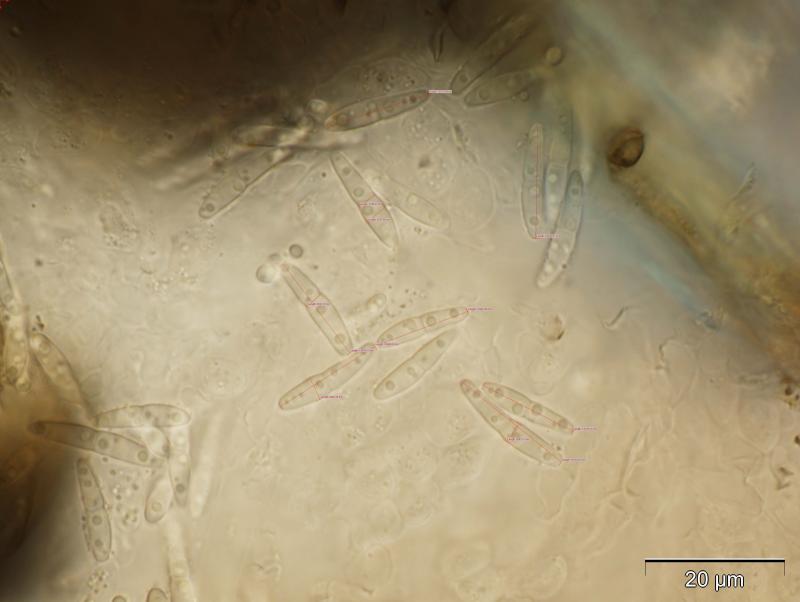
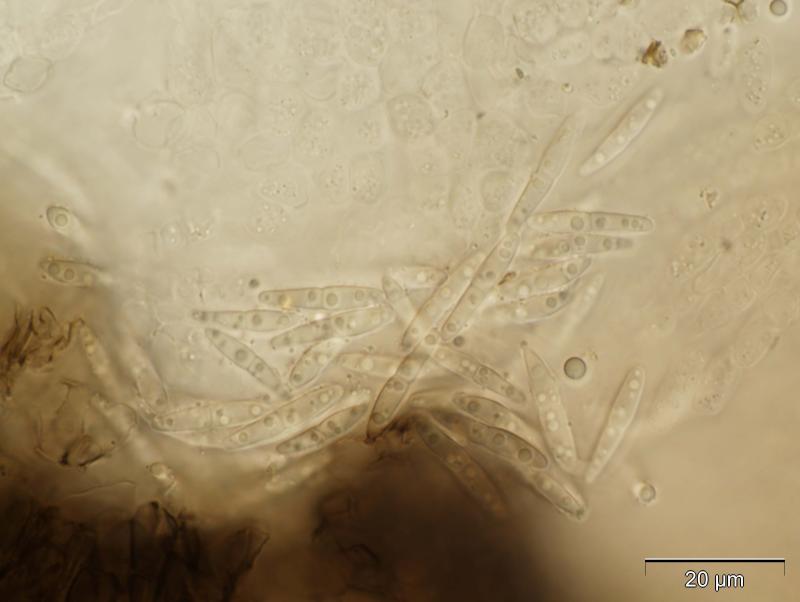
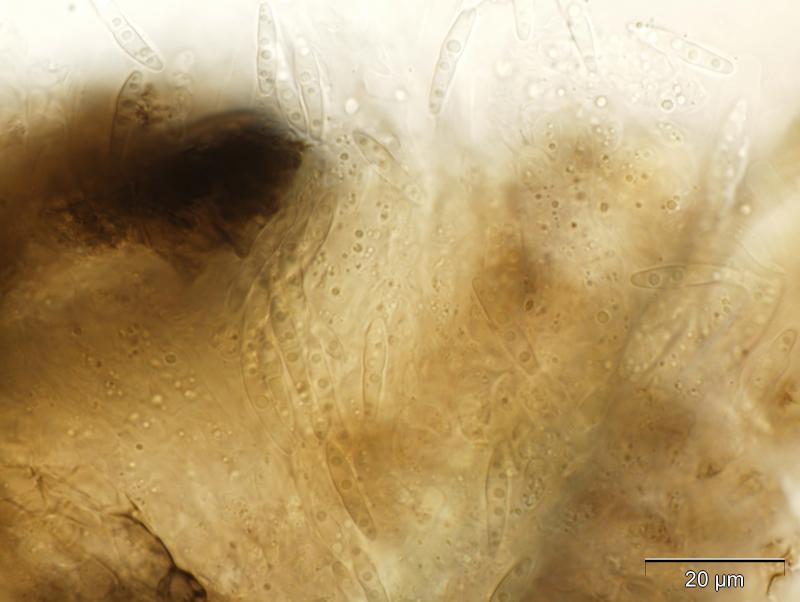
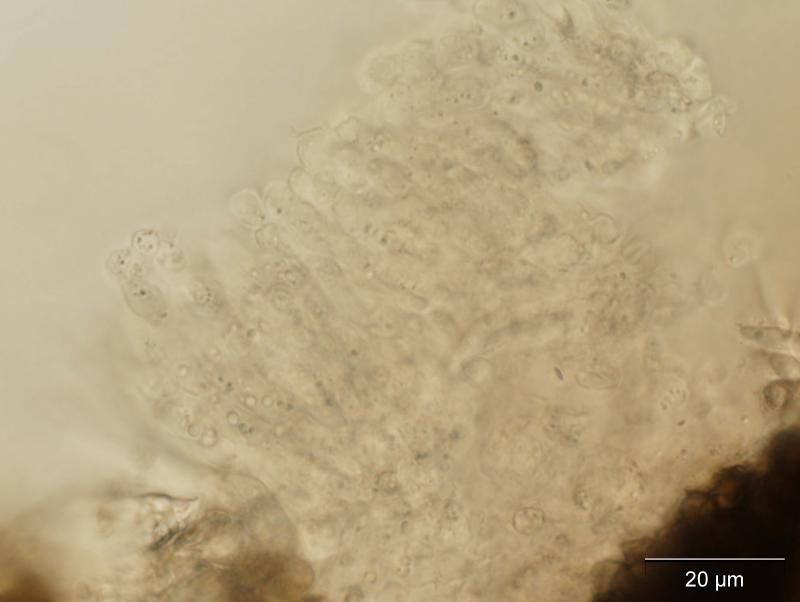
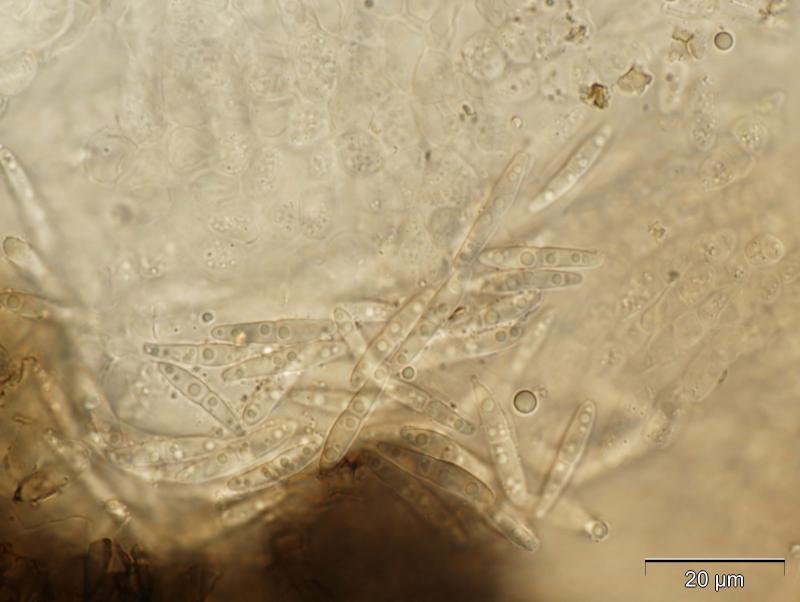

The first question is important of course.
For the identification, if it's really a Mycosphaerella ( I think it is), you can use the website : http://www.cbs.knaw.nl/mycosphaerella/defaultinfo.aspx?Page=Home
You should be successful with it.
Alain
I am glad you think it is Mycosphaerella. I wanted to be sure before continuing.
Given the locality and that there was significant Dothistroma infection on other needles and also the size of the ascospores I am now much more confident that it is Mycosphaerella pini! Interesting as this is the first time the teleomorph has been observed in the UK!
Thank you for your help!
Martin
It is probably not M. pini.
In CBS- website (Stalpers'one, I have given the link), ascospores size is 10-12 x 3-3.5 µm (so a ratio L/l very different). Perhaps it's another species. In Europe, more than 5 are recorded on Pinus: pini, pinicola, pinifolia, conygena, dearnesii, and perhaps other ones. But is it really a Mycosphaerella ? Could you describe hamathecium and could you show asci ?
Alain
Hmm, now I am thoroughly confused J You are right Alain, there seem to be nine Mycosphaerella species on Pinaceae, of which at least five have been found in Europe. But is seems there is at least some partial synonmy. Are not M. acicola and M. dearnessii the same? And according to Evans (1984) there seems to be some confusion between M. pinicola and M. gibsonii. There also seem to be two entries for M. pini on Mycobank. One entry gives the ascospore dimensions as 10-12 x 3-3.5 (http://www.cbs.knaw.nl/mycosphaerella/BioloMICS.aspx?Table=Mycosphaerella%20sensu%20lato%20teleomorphs&Rec=1489&Fields=All) the other as 11-17 x 3-4.5 (http://www.cbs.knaw.nl/mycosphaerella/BioloMICS.aspx?Table=Mycosphaerella%20sensu%20lato%20teleomorphs&Rec=1490&Fields=All) .
I will try to have another look at the sample but it doesn't look promising L . Sorry for the lack of data, but does it look like it could be something other than Mycosphaerella (unfortunately only from info so far given)? The asci seem to disintegrate or are not very visible at all. :(
Would anybody happen to have the original description of M. pini? Munk, A., 1957, Dansk botanisk Arkiv 17(1): 312 Maybe it will offer some insights?
Thank you again for your help and comments!!
Kind regards,
Martin