
12-04-2026 17:56
 Hardware Tony
Found on dead stems in February earlier this year
12-04-2026 15:52
Gernot FriebesHi,I'm looking for help with this anamorph collect
12-04-2026 12:22
 William Slosse
In a dune grassland in Oostduinkerke (Belgium), on
11-04-2026 15:45
 Zuzana Sochorová (Egertová)
Please, could anyone send me this paper?Moyne G.,
11-04-2026 13:34
Artem PtukhaHello, I am seeking assistance with the identific

11-04-2026 10:19
 Michel Hairaud
Chers amis d'Ascofrance , voici une très bonne no
11-04-2026 10:10
Michel Hairaud
Dear Ascofrance members, here is some very good ne
10-04-2026 23:22
Gernot FriebesHi,ascospores are 1- to 3-septate, approximately
10-04-2026 15:51
William Slosse
Hello everyone, On 08/04/26, I found a growth sit
 Dear Friends
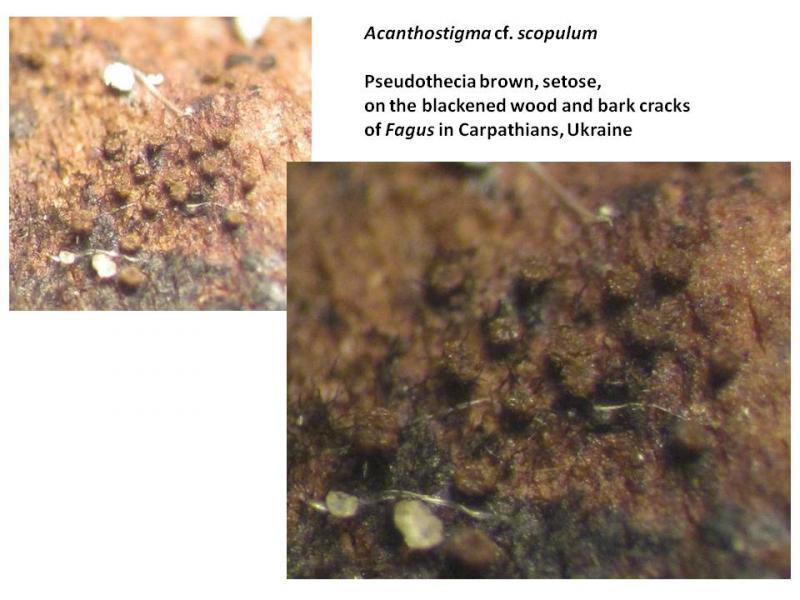
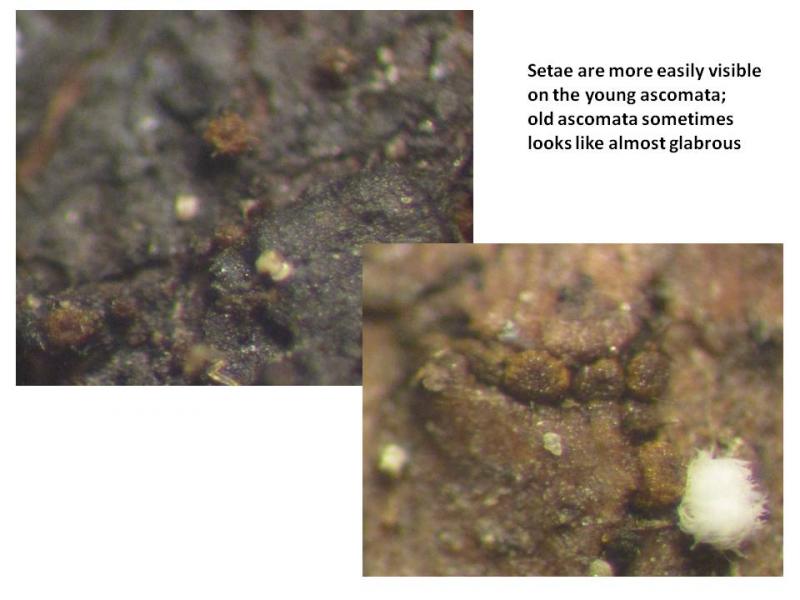
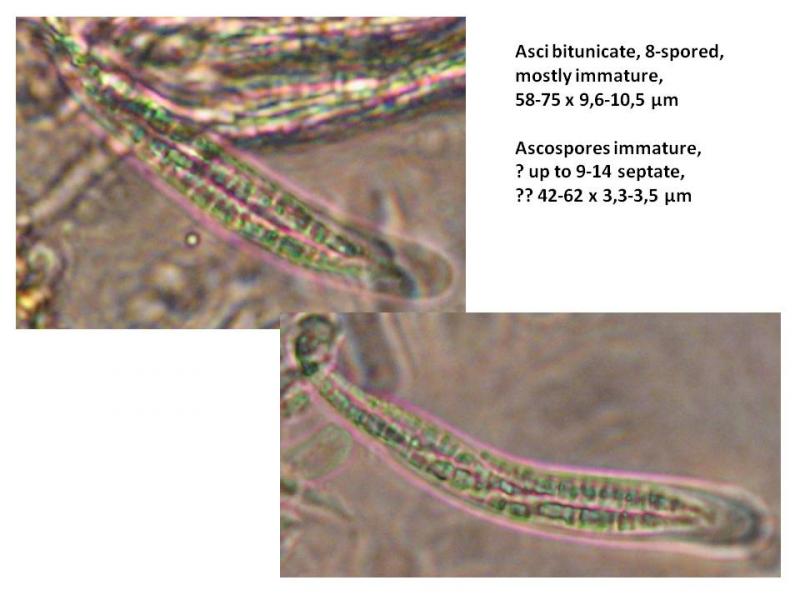
Today, during the review of other specimens from the Carpathians, I found Acanthostigma sp. sample (unfortunately, slightly immature). I think it can be Acanthostigma scopulum Peck.
I am never seen this species earlier, therefore I can not be sure.
Do you familiar with this species?
Grateful before,
Alex
 Acanthostigma-Promputtha-Miller-Mycologia-2010-0001.pdf
I don't think this is Acanthostigma. To me, your find resembles more to a Tubeufia.
Best wishes,
Gernot
Thank you.
I contacted about this species with Andrew Miller. Till now we have not come for a unique solution of this question. Our first thought was that it is Tubeufia aurantiella, but the degree of development of setaes favors Acanthostigma.
Alex
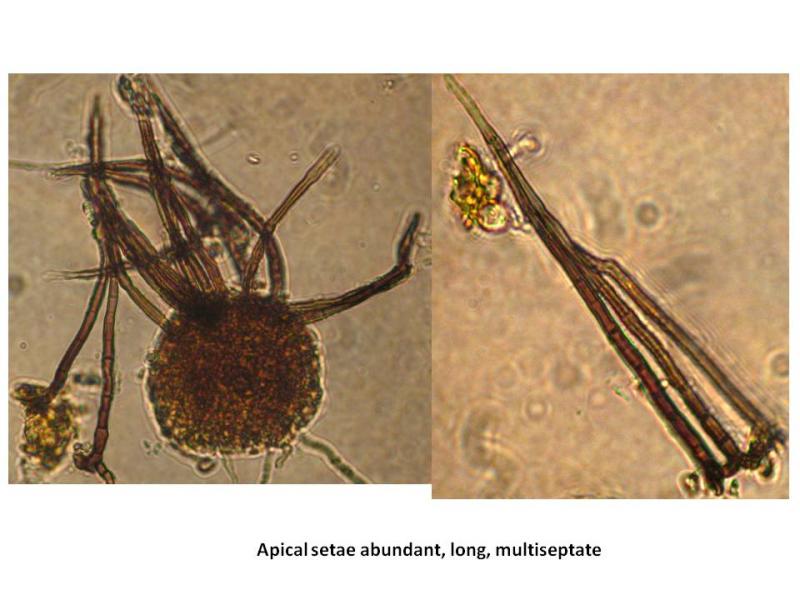
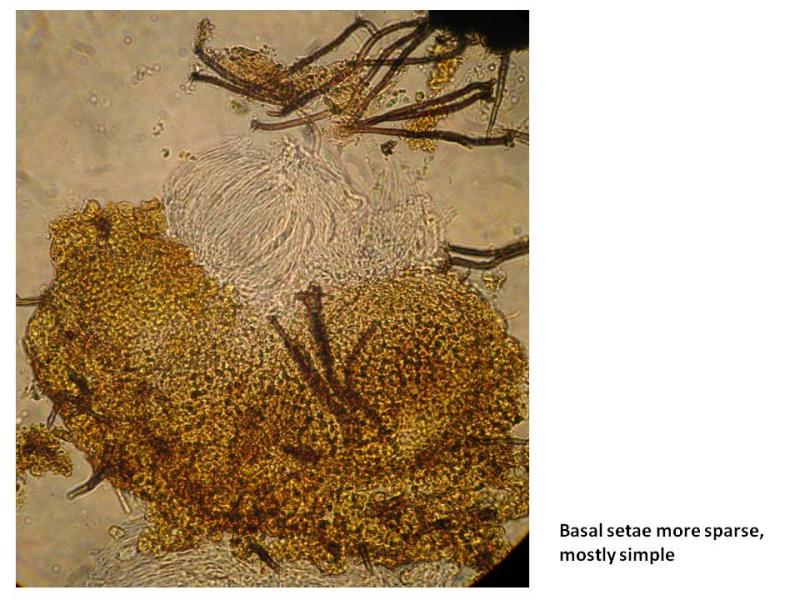
In various sources information about Acanthostigma (=Tubeufia) scopulum: the size and presence of septa in setaes, as well as pseudothecia colour, size of asci and ascospores for this species are different.
In Kodsueb, R. et al, Mycologia, 2004, 96(3): 667
Acanthostigma scopulum (Cooke & Peck) Peck, Bull. New York State Mus. 1:22 (1887) (figs. 1-6)
Ascomata 145-250 µm diam, superficial, globose, solitary or gregarious, dark brown to black, membranous, ostiolate, with setae; setae (56-)80-90(-99) µm long, 4-6 µm wide at base, 1.5-2 µm wide at apex, dark brown, 1-2-septate, thick-walled, straight. Asci (64-)90-120(-130) x 8-10 µm (av. = 103 x 9.2 µm, n = 20), 8-spored, cylindric-clavate, bitunicate, short stalked, pseudoparaphyses. Ascospores (66-)70-85(-90) x 3-3.5(-4) µm (av. = 78 x 3.4 µm, n = 30), fasciculate, long-fusiform to cylindrical-fusiform, hyaline, straight or slightly curved, (5-)9-12-septate, smooth-walled, guttulate, lacking appendages and sheaths.
Substratum. - Wood submerged in streams, decaying wood (Fagus sylvatica, Pinus sp. and Tsuga sp.)
Known distribution. - Australia, Europe, Hong Kong and U.S.A.
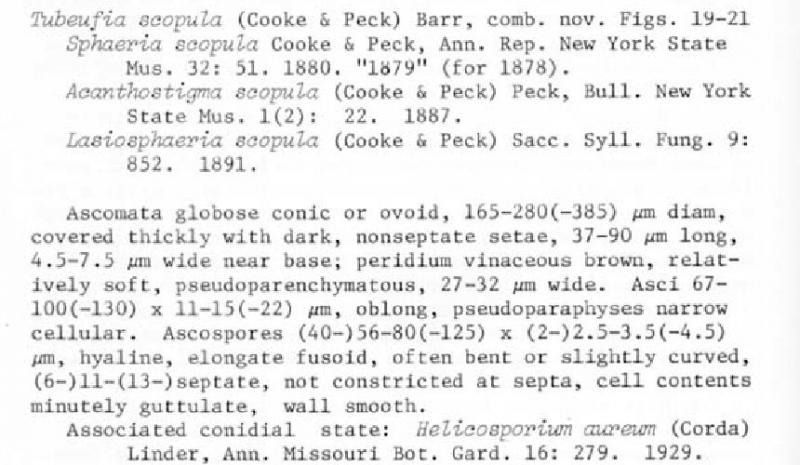
In Barr apical setaes are non septate.
I have some news!
Now I receive the letter about my sample from Kevin Hyde (one of the world experts in Acanthostigma).
He wrote:
Dear Alex
Yes I think so (Acanthostigma scopulum) although these taxa (Acanthostigma scopulum and Tubeufia aurantiella) do not split into Tubeufia and Acanthostigma when we do molecular work.
If you want to send me some dried material I will try to isolate it and sequence it
Best wishes
Kevin