
12-06-2026 14:50
 François Freléchoux
Bonjour, Voici la brève description d'une Mollis
10-06-2026 21:16
François Freléchoux
Bonsoir,Le dernier du jour, en attendant votre avi
11-06-2026 19:01
 William Slosse
Hello all,In an attempt to make a culture of a sus
11-06-2026 19:03
 Nicolas VAN VOOREN
Chers membres d'Ascofrance,Le site sera placé en

09-06-2026 18:32
Camille MertensSur morceau de roseau immergé 0,5 - 0,7 mm de dia
10-06-2026 12:54
Steve ClementsBonjour encore, Pouvez-vous m'aider, s'il vous pl
10-06-2026 21:07
François Freléchoux
Toutes les tiges de gentianes jaunes de l'an passÃ
10-06-2026 13:41
François Freléchoux
Bonjour à nouveau, Voici une trouvaille d'hier.
Leptosphaeria
Enrique Rubio,
26-06-2011 17:19
 Hi to all:
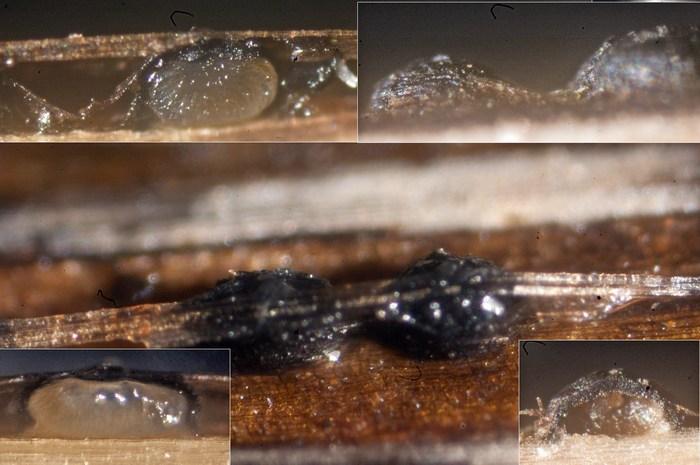
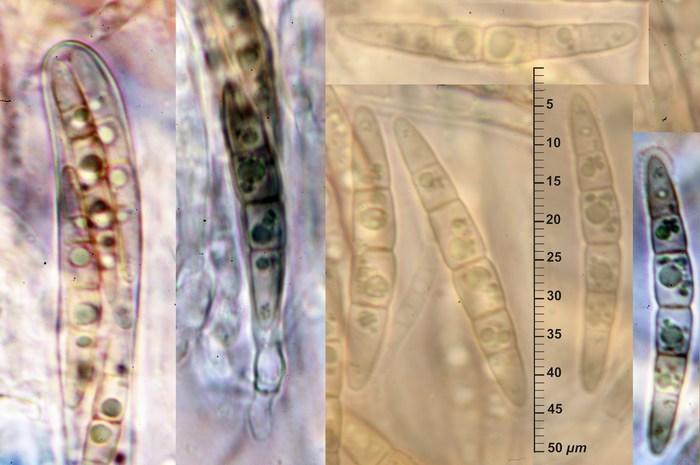
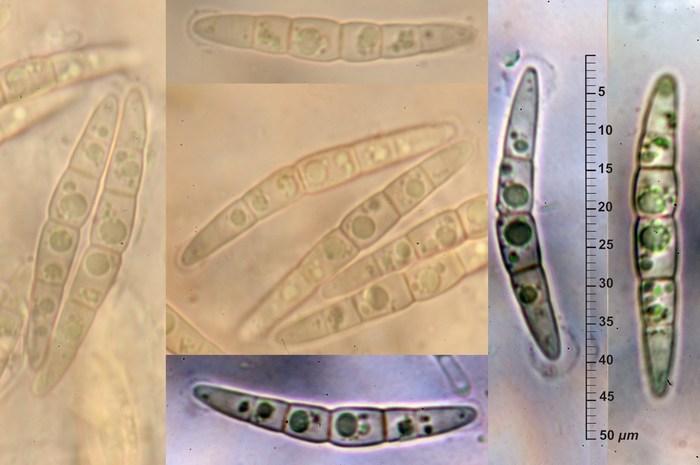
Do you know this Leptosphaeria species that grows on dicot. herbaceous stems? Maybe Leptosphaeria ogilviensis? Are the roundish polar gel sheath of the spores typical for this fungus?
Many thanks again
Enrique
Christian Lechat,
26-06-2011 17:41

Re : Leptosphaeria
Hi Enrique,
I think you are right, L. ogilviensis possess such ascospores with globose, terminal appendages.
Christian
I think you are right, L. ogilviensis possess such ascospores with globose, terminal appendages.
Christian
Enrique Rubio,
26-06-2011 17:45
Re : Leptosphaeria
Merci bien, Christian
Enrique
Enrique
Alain GARDIENNET,
27-06-2011 22:41

Re : Leptosphaeria
Holm put the Leptoshaeria species with such appendages in the genus Nodulosphaeria. I never read that ogilviensis have that feature.
Enrique, don't you have any idea for the substrate ?
Another question : have you noticed that the substrate is blackened ?
Alain
Enrique, don't you have any idea for the substrate ?
Another question : have you noticed that the substrate is blackened ?
Alain
Enrique Rubio,
28-06-2011 18:29
Re : Leptosphaeria
No. Alain. Sorry. I only know that is a dicot. herbaceous stem and I have seen any blackened zone at the sustrate.
Björn Wergen,
03-05-2012 13:29

Re : Leptosphaeria
Hi
I am sorry to restart such an old topic but I have some problems here with L.ogilviensis. I think L. ogilviensis is a species with Sp. 30-40µm length with 3rd cell enlarged.
In this case I would say you fungus is Leptosphaeria maculans, which has spores around 40-50µm length and no enlarged cells (and septa are not strongly constricted).
@Alain: you have found the L. maculans already. What do you think?? I also have found this species and called it L. ogilviensis (see database). But now I think this one is L. maculans too.
regards,
björn
I am sorry to restart such an old topic but I have some problems here with L.ogilviensis. I think L. ogilviensis is a species with Sp. 30-40µm length with 3rd cell enlarged.
In this case I would say you fungus is Leptosphaeria maculans, which has spores around 40-50µm length and no enlarged cells (and septa are not strongly constricted).
@Alain: you have found the L. maculans already. What do you think?? I also have found this species and called it L. ogilviensis (see database). But now I think this one is L. maculans too.
regards,
björn
Chris Yeates,
03-05-2012 20:45

Re : Leptosphaeria
Bonsoir à tous
I agree with Björn - see http://www.ascofrance.com/search_recolte/3097 note the ascospores constricted centrally, but much less so at the other septa
Chris
I agree with Björn - see http://www.ascofrance.com/search_recolte/3097 note the ascospores constricted centrally, but much less so at the other septa
Chris
Enrique Rubio,
03-05-2012 21:14
Re : Leptosphaeria
Have you seen the roundish gel sheath around de spore poles?
Enrique
Björn Wergen,
03-05-2012 21:33
Re : Leptosphaeria
Yes I have, and L. maculans have them too, this is not only characteristic for L. ogilviensis.
regards,
björn
regards,
björn
Alain GARDIENNET,
04-05-2012 08:13
Re : Leptosphaeria
Hi friends,
Yes, surely ascospores feautures fit better for maculans, I agree of course.
But I've read nowhere in litterature (and you ?) that ascospores have roundish polar gel ; that's the reason why, I prefered to say nothing.
Perhaps this feature is occasionnal ?
Alain
Yes, surely ascospores feautures fit better for maculans, I agree of course.
But I've read nowhere in litterature (and you ?) that ascospores have roundish polar gel ; that's the reason why, I prefered to say nothing.
Perhaps this feature is occasionnal ?
Alain
Enrique Rubio,
04-05-2012 20:44
Re : Leptosphaeria
Many thanks to all