07-05-2018 00:19
Marc Detollenaere
On decorticated wood of Picea abies, I found sever
25-04-2018 21:03
Manak RomanHello,I found nice ascomycete (max around 1 mm) on
02-05-2018 19:43
Alvarado Cordobes Manuel
Hola a todos.Tamaño unos 0,6 mmEn cañas de una g
06-05-2018 20:02
Andgelo Mombert
Bonsoir à tous,Sur tiges mortes de plante herbacÃ
04-05-2018 22:52
Thorben HülsewigHi there,today i found this black spots on Rosa ca
21-04-2016 14:21
ghania azouaoui
Hello evrybody. I have isolated a species of Keiss
02-05-2018 16:56
Blasco Rafael
Hola, parece que sea la propuesta? sobria madera d
01-05-2018 20:37
Angel Pintos
Hello, I need help with this bitunicate apothecium
02-05-2018 17:44
Danny Newman
Hello AscoFrance,This was found on fallen, decorti

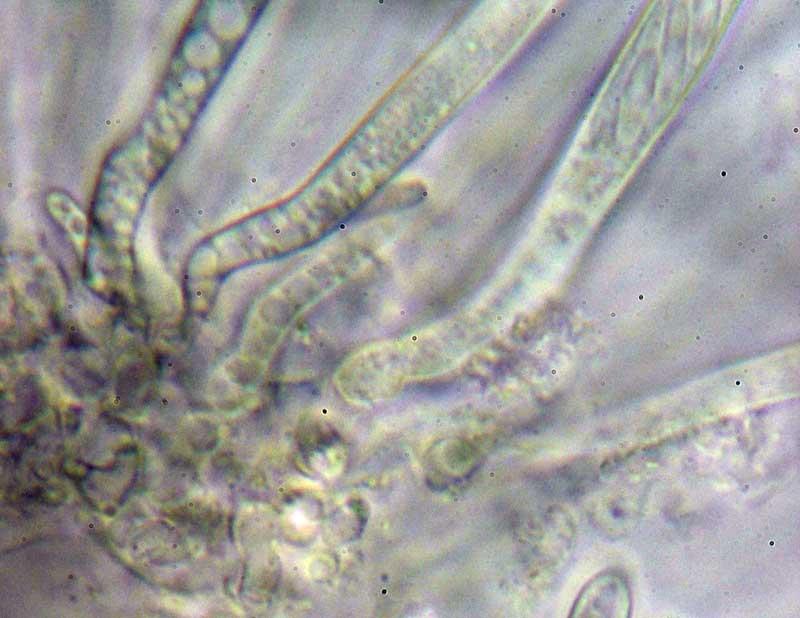
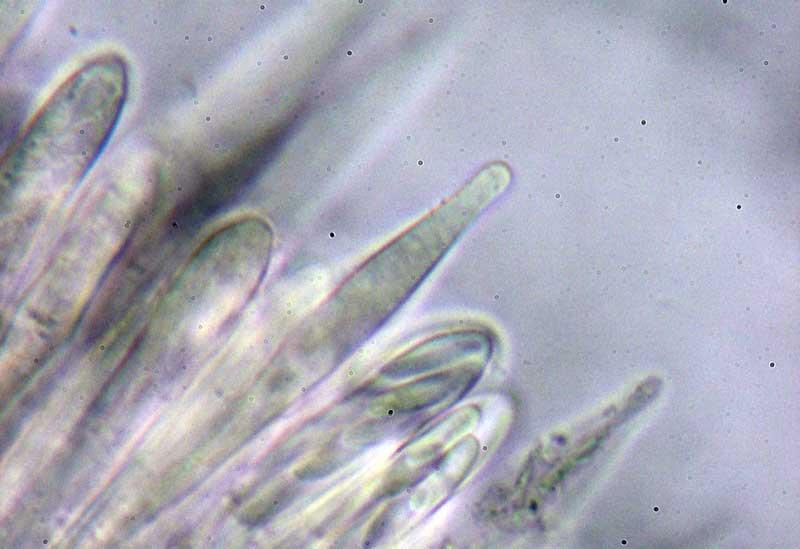
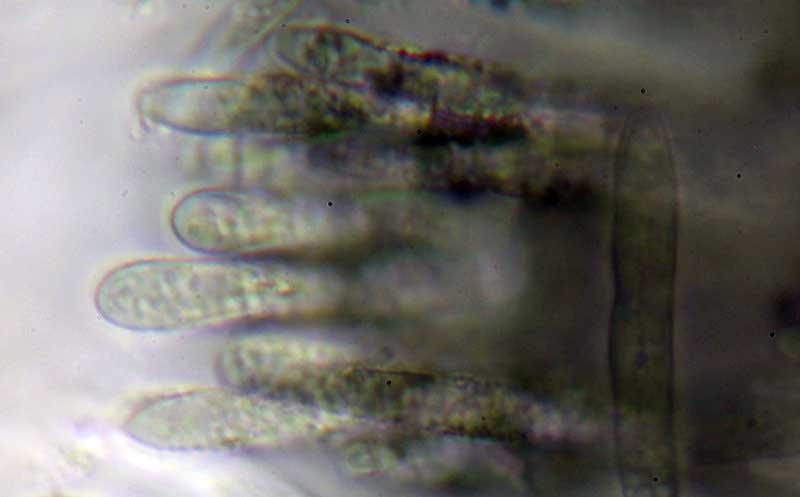
On decorticated wood of Picea abies, I found several small globose pseudothecia of about 100µ with non-septate brown setae of 50x3µ. Tha clavate asci appeared bitunicate, and had 8 biseriate spores which were almost hyaline( 13x6µ)The dimensions of the asci were 70x17µ.Spores were muriform with 4 transversal septae and 3-4 longitudinal septae.No paraphyses were seen.
With the key of Friebes(2012) I came to Capronia chlorospora.The spores also matched with the pictures in The Handbook of Ascomycota of Wergen.
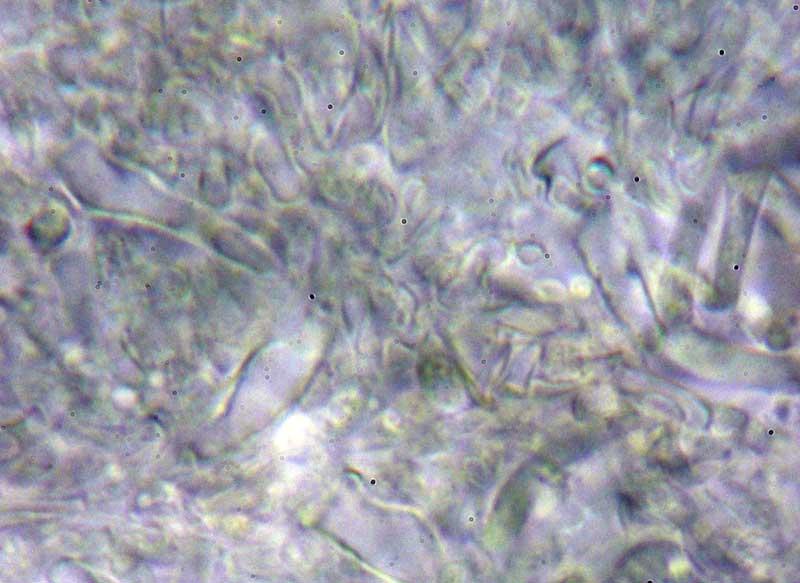
Unfortunately the asci didn't react red after using KOH nor blue with IKI after pretreatment with KOH. Does this mean that I have to look in another genus?
Hello Marc,
perhaps you should use the IKI without pretreatment with KOH.
As far as I know all hemiamyloid reactions do not work with KOH.
Best regards, Lothar
Not all Capronia species react heimamyloid, some are negative.Â
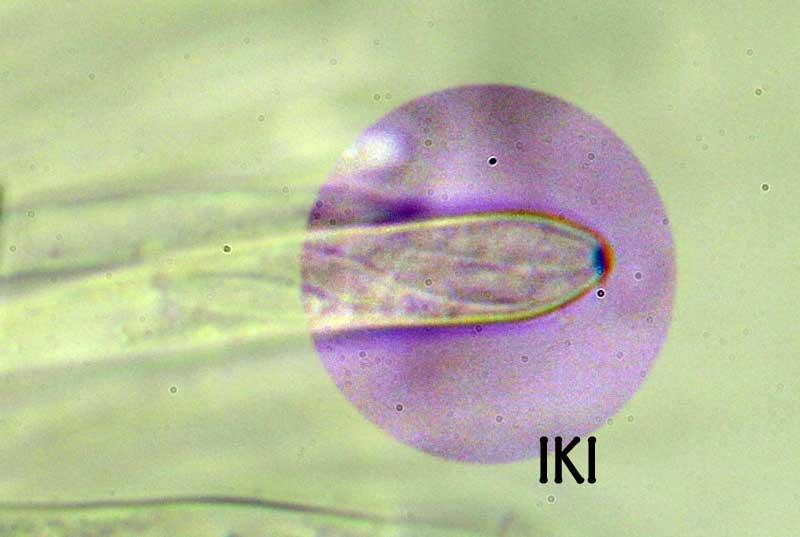
Your second photo shows a blue colour in the middle part, is it in KOH+IKI?
The red hemiamyloid reaction is ONLY obtained without using KOH, as Lothar correctly says. After KOH-treatment and washing with water IKI gives a blue reaction, and in taxa with indistinct hemiamyloid reaction like Capronia it is recommended to test both, IKI without KOH, and pretreatment with KOH, because the blue reaction is always easier to see than the red reaction.
Zotto
Thanks Zotto.
Do you still think it's a Capronia?