Accès membres

Mot de passe perdu? S'inscrire

09-06-2020 07:27

Juuso Äikäs

I thought I'll post one more species and then have

07-06-2020 21:11

Pavol Palo

Hello friends, may I ask you for help ? I would n

04-06-2020 19:30

Edvin Johannesen Edvin Johannesen

I did not draw the black lines here - the fungus d

06-06-2020 17:17

Robin Pétermann Robin Pétermann

J'ai également trouvé ce Lachnum sur Filipendula

01-06-2020 15:51

Andgelo Mombert Andgelo Mombert

Bonjour, Sur branche morte décortiquée de Salix

08-06-2020 07:01

Juuso Äikäs

I found these on a piece of dead Equisetum (fluvia

01-06-2020 16:39

Andgelo Mombert Andgelo Mombert

Bonjour, Un dernier pour aujourd'hui. Sur tige m

18-02-2017 20:37

Stephen Martin Mifsud Stephen Martin Mifsud

Hi, I found clusters of amber=yellow discoid ascom

29-05-2017 12:45

Stephen Martin Mifsud Stephen Martin Mifsud

I am reposting the finding of a Cosmospora species

05-06-2020 06:41

Jérôme MAFFERT

Bonjour, il semble bien que Tuber aestivum Vitt. s

« < 469 470 471 472 473 > »
Mollisia polygoni?
Juuso Äikäs, 09-06-2020 07:27
I thought I'll post one more species and then have a little break.

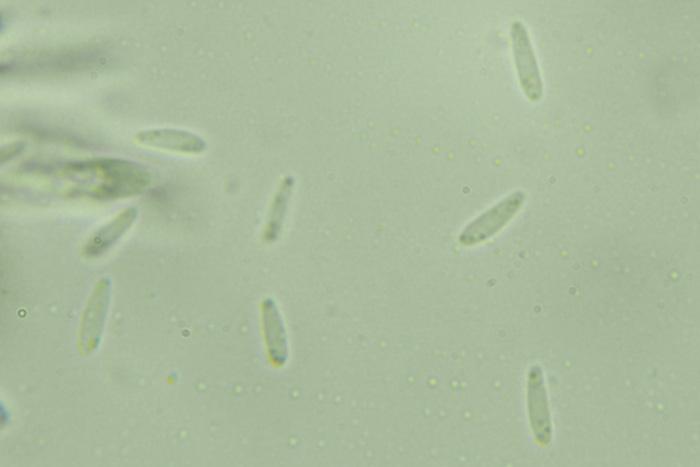
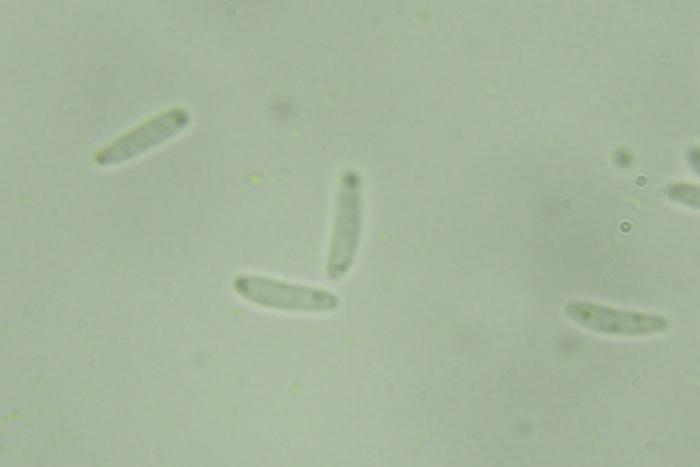
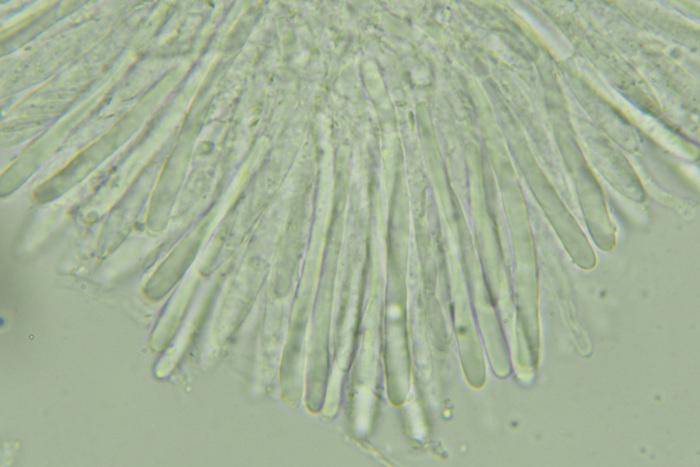
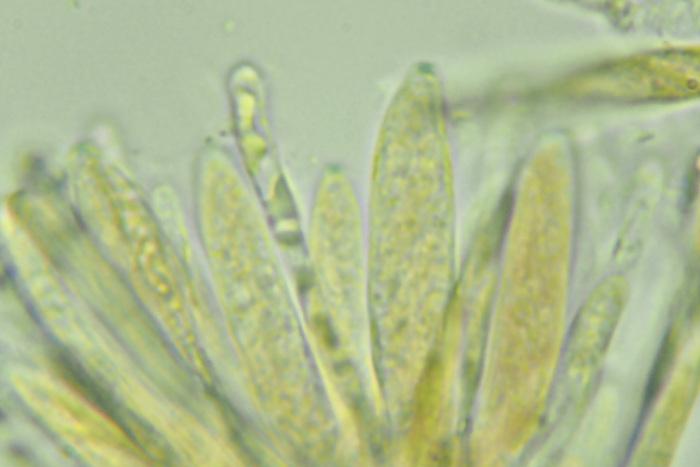
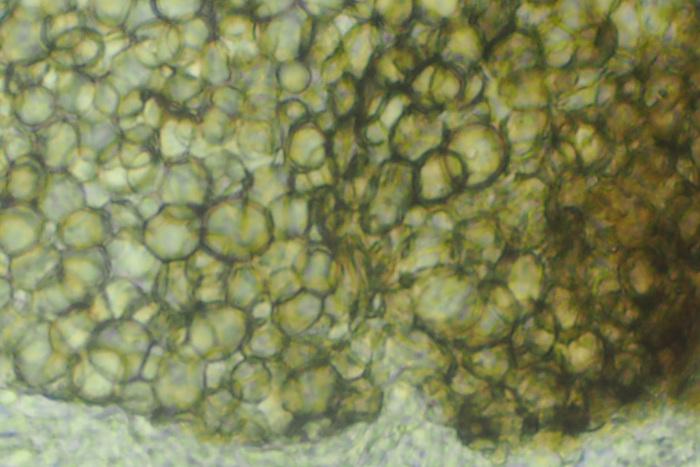
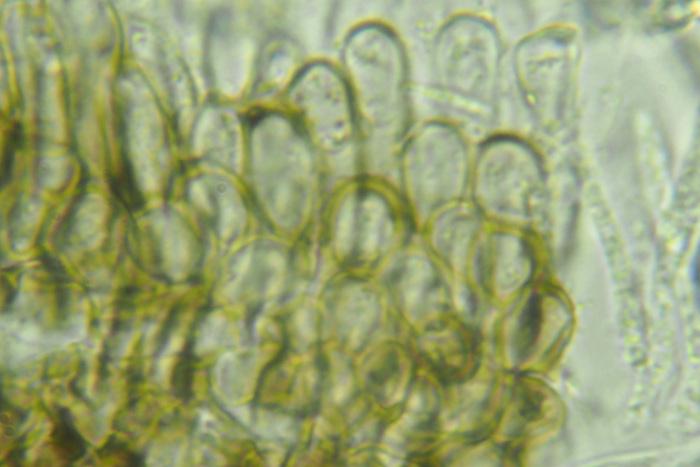
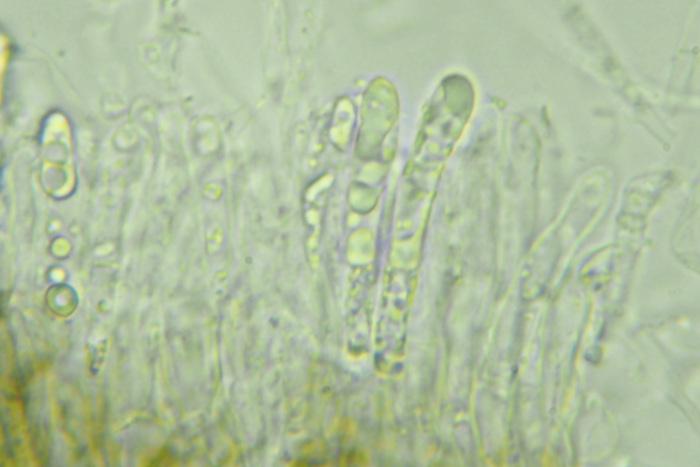
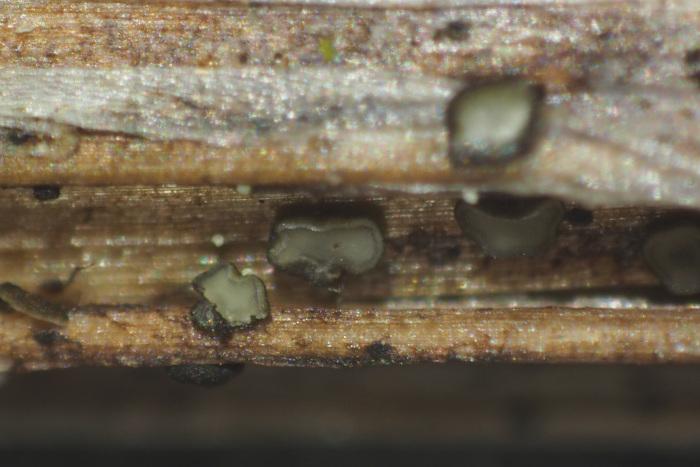
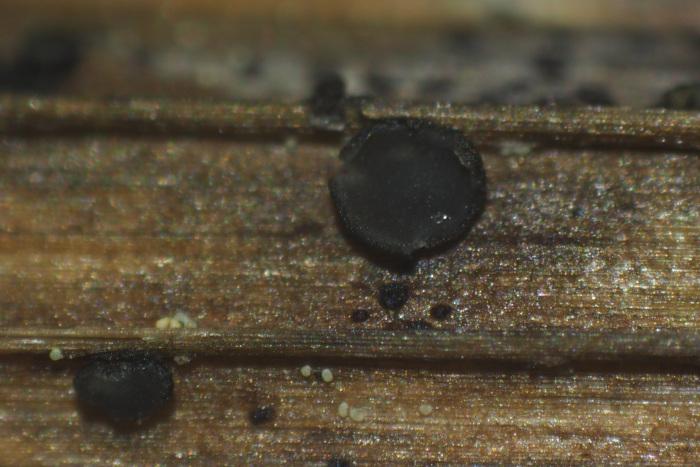
This one was growing on a dead Polygonatum odoratum stem. There were both pale and black apos on the same stem and I think both are of the same species. The dark one's spores were slightly narrower and the oil content seemed to be a bit higher but no big difference. Both gave a vivid yellow KOH reaction.


In Gminder's key there's M. polygoni with a negative KOH reaction and M. ?polygoni with a clearly yellow reaction.


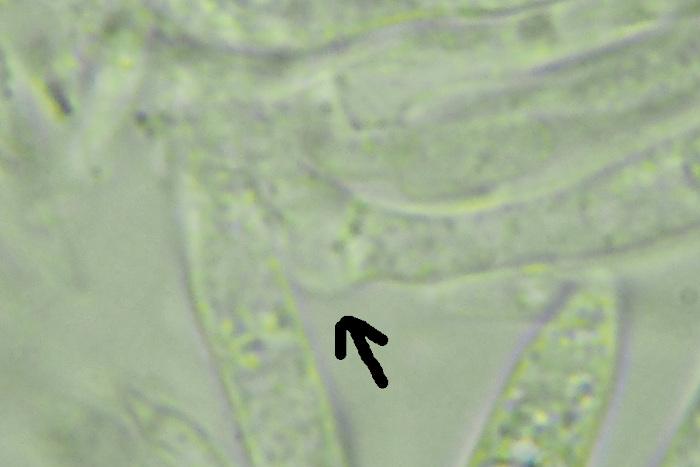
Pyrenopeziza polygoni is apparently a synonym but wouldn't the VBs and yellow reaction speak for Mollisia? That is, if this is that species. Any thoughts?


Spore measurements:
(7.6) 7.8 - 9.3 (9.7) × (2.1) 2.2 - 2.4 (2.6) µm
Q = (3.4) 3.43 - 4.2 (4.4) ; N = 15
Me = 8.7 × 2.3 µm ; Qe = 3.9
  • message #63623
  • message #63623
  • message #63623
  • message #63623
  • message #63623
  • message #63623
  • message #63623
  • message #63623
  • message #63623
  • message #63623
  • message #63623
Hans-Otto Baral, 09-06-2020 18:03
Hans-Otto Baral
Re : Mollisia polygoni?
This is a good example for the importance of vital taxonomy. What I have in my Pyrenopeziza polygoni folder are samples without VBs and therefore belong in Ploettnerulaceae.

Yours is of course a Mollisia. Now it could be that the type of M. polygoni is either a Mollisia or a Pyrenopeziza. Often those workers have made several samples and mixed both species, and a lectotype needs to be chosen to settle the identity of such an old (1842!) name.
Juuso Äikäs, 09-06-2020 19:19
Re : Mollisia polygoni?
Alright, thank you for the clarification!