
14-04-2026 21:52
Gernot FriebesHi,found on dead leaves of Carex elata. Conidia: 4
14-04-2026 20:31
Gernot FriebesHi,can this be Psilachnum lateritioalbum on Phragm
14-04-2026 05:32
Ethan CrensonHi all, A few weeks back a friend pointed out som
12-04-2026 17:56
 Hardware Tony
Found on dead stems in February earlier this year
12-04-2026 15:52
Gernot FriebesHi,I'm looking for help with this anamorph collect
12-04-2026 12:22
 William Slosse
In a dune grassland in Oostduinkerke (Belgium), on
11-04-2026 15:45
 Zuzana Sochorová (Egertová)
Please, could anyone send me this paper?Moyne G.,
11-04-2026 13:34
Artem PtukhaHello, I am seeking assistance with the identific

11-04-2026 10:19
 Michel Hairaud
Chers amis d'Ascofrance , voici une très bonne no
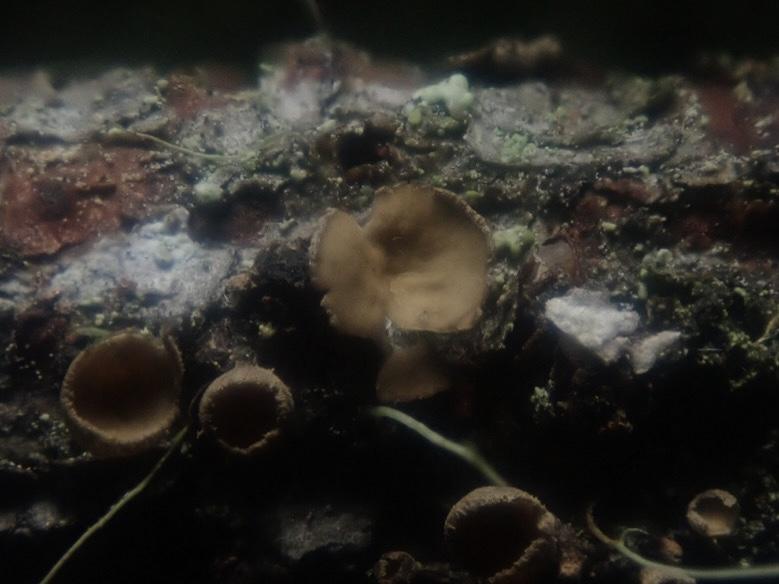
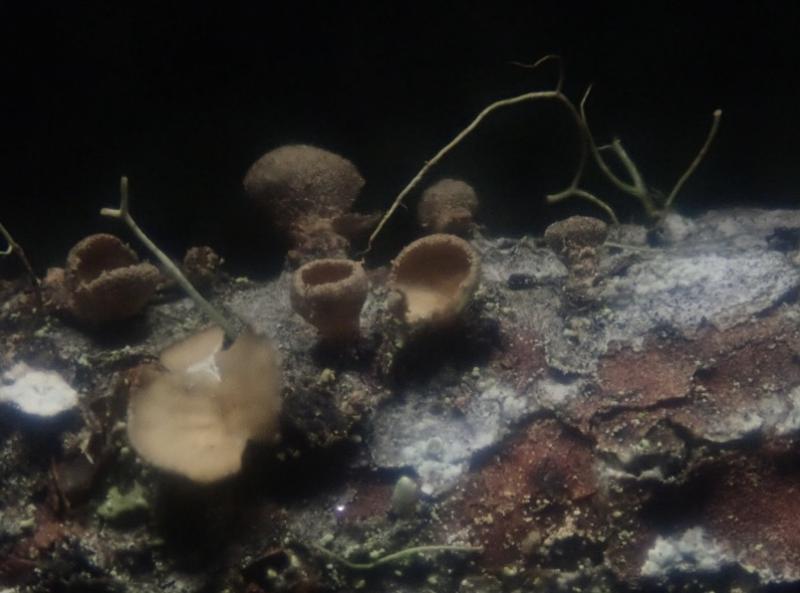
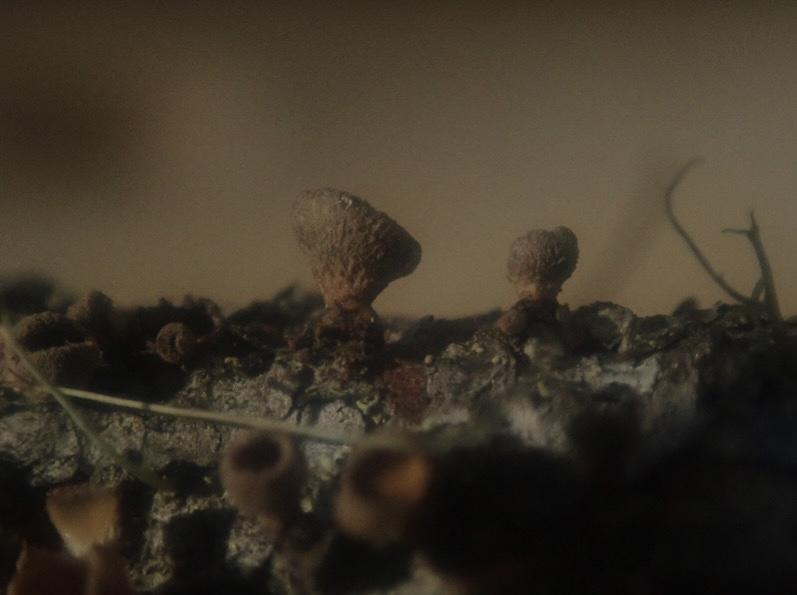
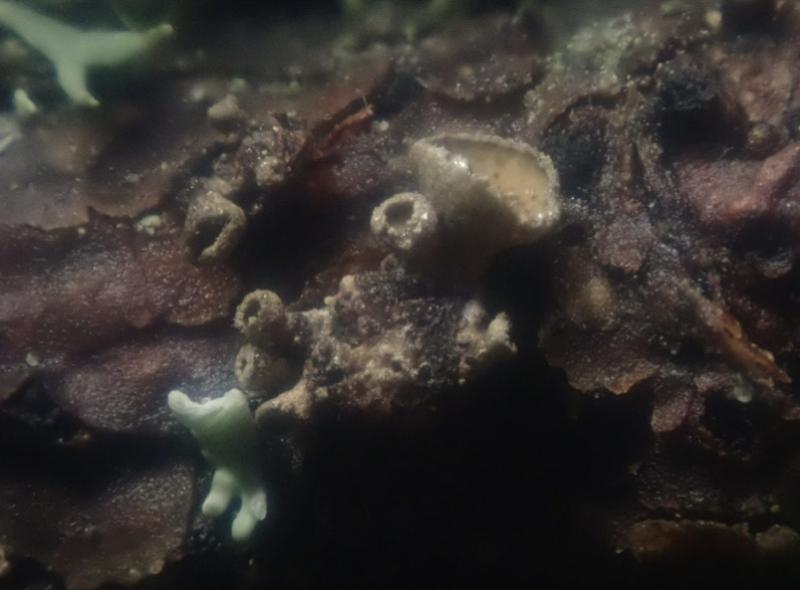
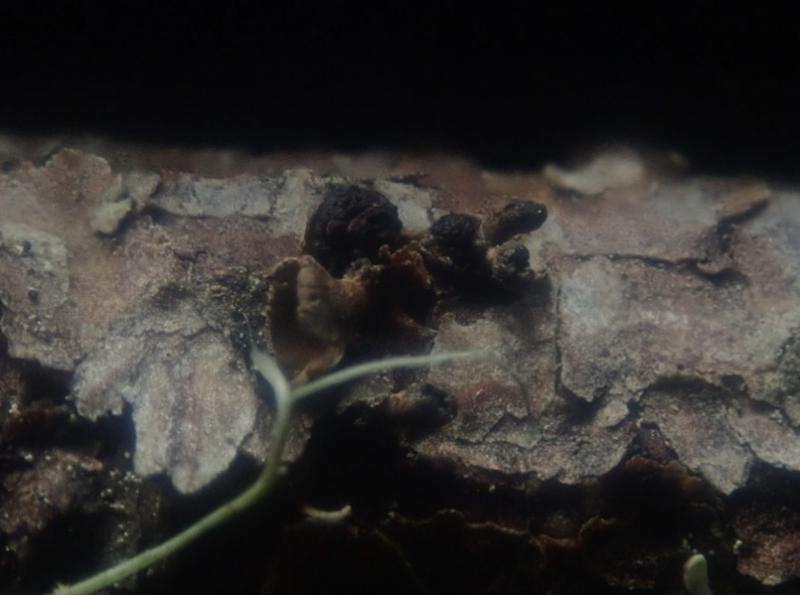
I collected this species growing on a dead branch (broken off a tree) of Picea abies on the 4th of march, in Buskerud county, Norway.
The apothecia are up to 2,5mm wide and 2mm tall. The hymenium has a hazelnut brown color and the outside is slightly lighter. The outer side is granular to felty and often has lighter tufts of short hairs at the margin. The flanks frequently tears in older specimens. The apothecia grows in groups of 2-6 arising from a common structure resembling, but somewhat different from, a sclerotium. The "sclerotia" start off small and black/dark brown before increasing in size and turning lighter brown with a cracked surface. The inside is light brown.
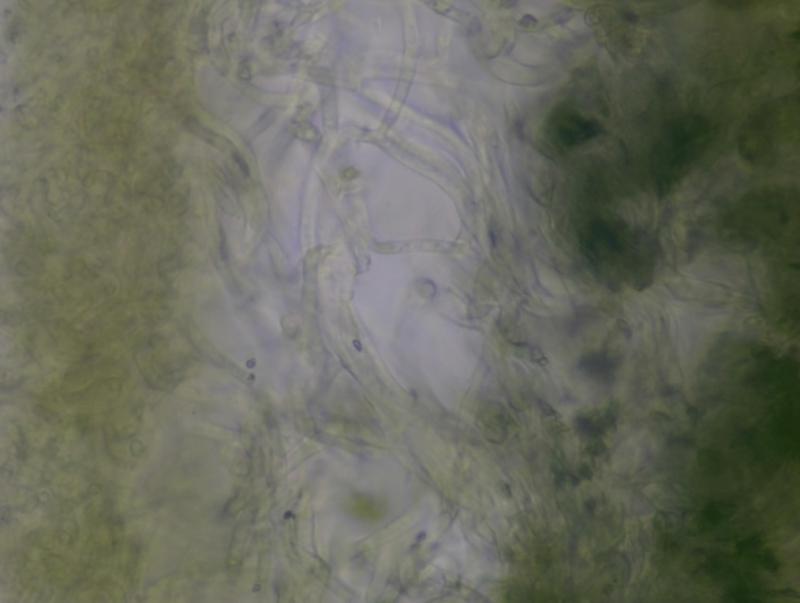
Medulla of textura intricata and possibly with crystals. The hyphae are about 2-4 µm wide.
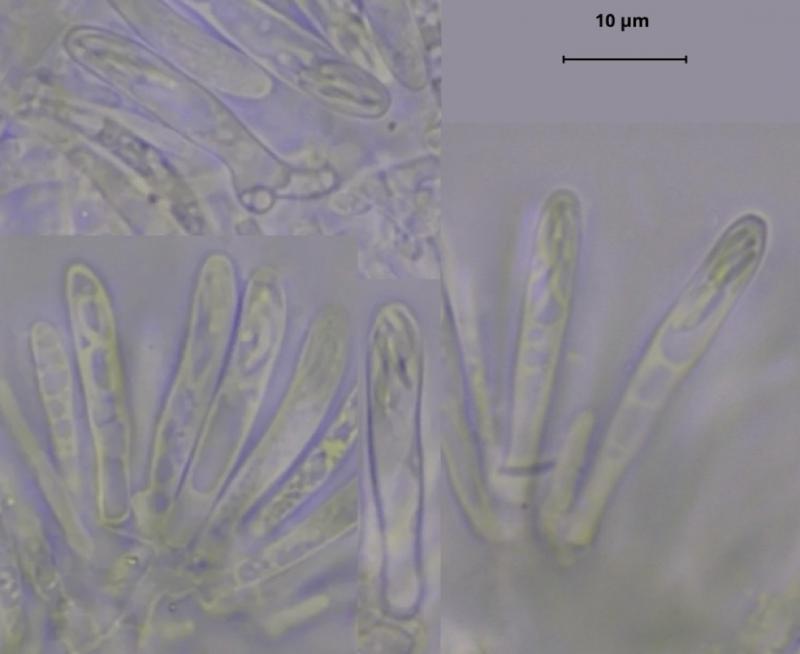
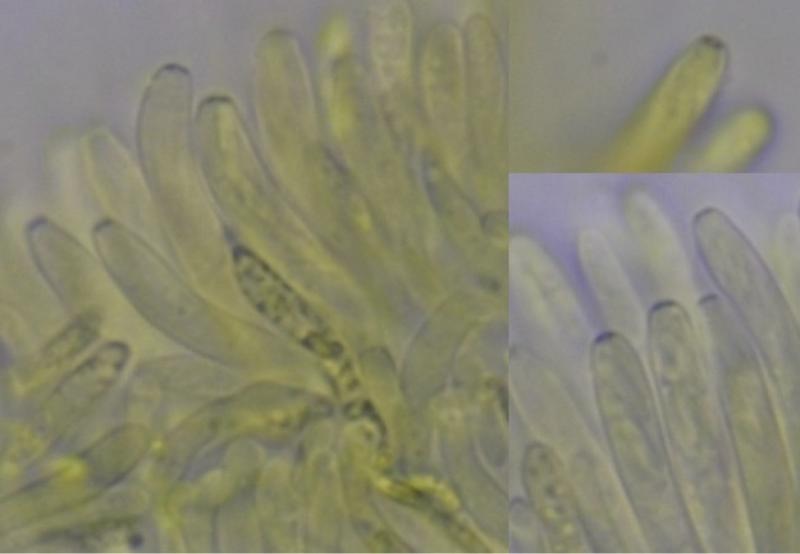
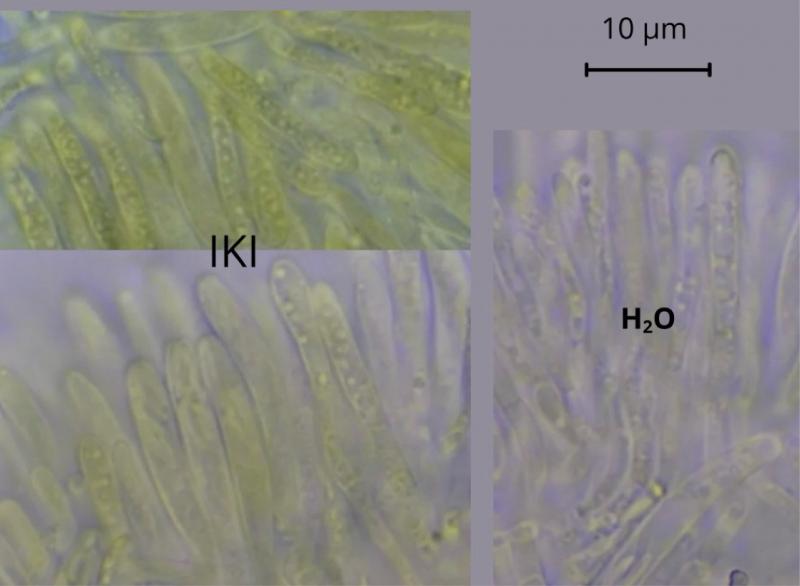
Asci IKI+ bb, with croziers (possibly a bit variable)
24-29,76 x 3,36-3,84 µm
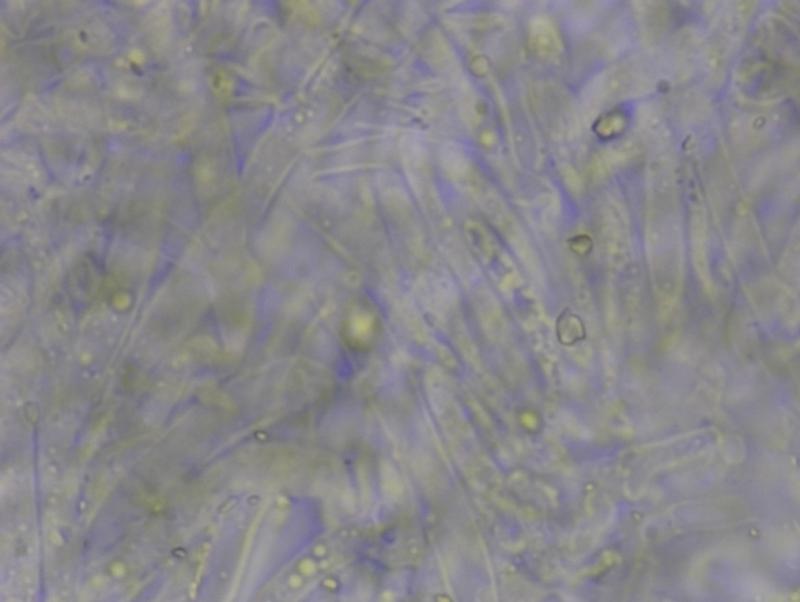
The paraphyses are cyllindric-clavate, scarcely septate and with some drops. The paraphyses measure up to 3,3µm at the tips.
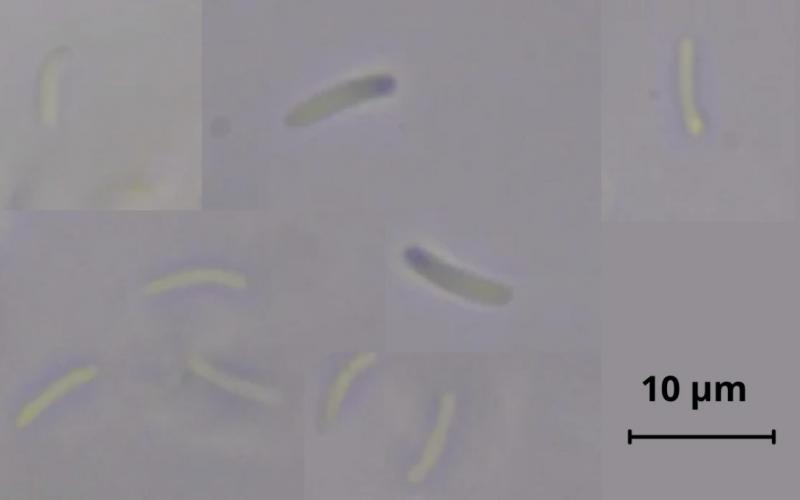
The spores are thinly allantoid, sometimes with small LBs near the ends. OCI 0/1
(4,8)5,8-6,2 x1-1,5µm
All measurements were taken from living cells in water. The spores were incredibly difficult to measure and photograph due to their small, narrow shape and constant shifting, so the spore measurements might not be 100% accurate. I apologize for the subpar photos and I can try to take more if needed.
The description of Cenangium impudicellum (synonym of E. impudicella) in P. Karst., Bidrag Kännedom Finlands Natur Folk 19: 219 (1871) is the closest match that I have found, but the asci are noted there as being inamyloid. I have struggled to find newer collections of this species to compare my specimen with and I would be grateful for any input.
Thank you in advance and best regards,
Hulda

Do you believe that this species can be variable in its amyloidity and that my specimen is Encoelia impudicella regardless of the reaction?
E. impudicella has not been recorded in Norway previously, and I have not found any collections of the species from Sweden or Finland (where it was derscribed from) since 1935. Therefore, I would like to be certain before I determine it.
Kind regards, Hulda
Species concepts and delimitation is of course primarily a theoretical construction and changes with our understanding of nature. I know that completely determinate answers in this group of fungi are rare. What I meant to ask was if you, as an expert, would consider my specimen to be close enough to register/note it as E. impudicella (in the current sense of the taxon and with the data that I have given)?
Kind regards, Hulda
I have read the description of E. impudicella in Karsten (1871) which Mycobank gave as the protologue. I have tried to compare it to the best of my abilities. I especially note that the color is said to be grey in young apothecia and later cinnamonish brown. This also fits with my specimen.
Kind regards, Hulda
I would like to take DNA sequence from that specimen. Could you share please some apothecia from your material?
Thank you in advance!
Best wishes,
Kadri Pärtel
Chair of Mycology
Department of Botany
University of Tartu
Oecologicum
J. Liivi St. 2
50409 Tartu
Estonia
kadri.partel@ut.ee
Kind regards, Hulda
Did you get a result from Kadri?
The idea with C. glauca isn't bad, but I think the IKI reaction is too strong in Hulda's specimen, and I wonder also about what then the similar HB 4871 would be, with inamyloid asci and apos 0.7 mm diam.
Yes, I did not send this before. Ryszard found this fungus 2 times, on Picea twigs beneath the snow, in a old growth Picea forests, which I think quite well simulate Scandinavian boreal conditions. Otherwise it is surely rare.
Judging by the associated Tryblidiopsis pinastri, your estimate of 2-5 mm must be correct. I do not have scales to Ryszards macro pics. If I assume that the Karstens description of 3-5 mm is correct. The Ryszards fungus fits the description remarkably, even by the colour of epithecium.
I dont think Huldas and Igors sample are exactly Ch. glauca, but perhaps closely related species. These collections deserve further attention. Yours HB 4871 I dont know what couls be:(
I dont have results from Kadri, I remember Ryszek kept the fungus in a fridge for a few days for me... I hope it didnt spoil the results.