Accès membres

Mot de passe perdu? S'inscrire

06-03-2026 09:41

Alain GARDIENNET Alain GARDIENNET

Hi forum, I'm now looking for another reference c

28-02-2026 11:05

Yanick BOULANGER

Bonjour à tousLe 24/02/2026 à Montmacq, devant m

06-03-2026 17:51

William Slosse William Slosse

Good evening all,On March 4, 2026, I found the fol

05-03-2026 10:07

Hulda Caroline Holte

Hello, I found and collected this species growing

05-03-2026 19:29

William Slosse William Slosse

Good evening everyone,On March 4, 2026, I found th

05-03-2026 16:30

François Bartholomeeusen

Dear forum members, On the 2nd of February 2026,

19-02-2026 17:49

Salvador Emilio Jose

Hola buenas tardes!! Necesito ayuda para la ident

03-03-2026 20:34

Miguel Ãngel Ribes Miguel Ángel Ribes

Good eveningThese small, amphora-shaped perithecia

28-02-2026 11:54

Alain GARDIENNET Alain GARDIENNET

Hi forum,Is anyone aware if the 1936 edition of Si

02-03-2026 22:07

Jorge Hernanz

Buenas noches!Entre musgos, bajo Pinus halepensis

« < 1 2 3 4 5 > »
Coryneum (?) acervuli on oak (?) branch
Ethan Crenson, 12-01-2026 22:02
Hello all,

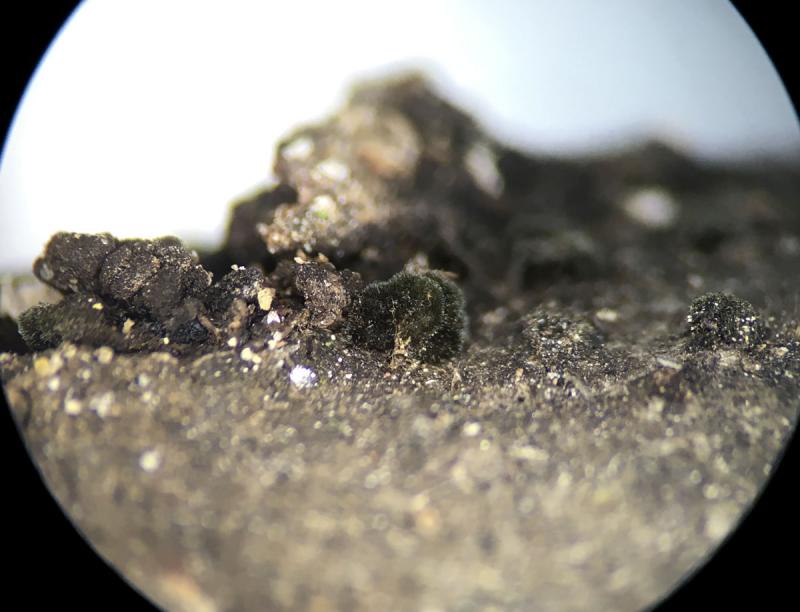
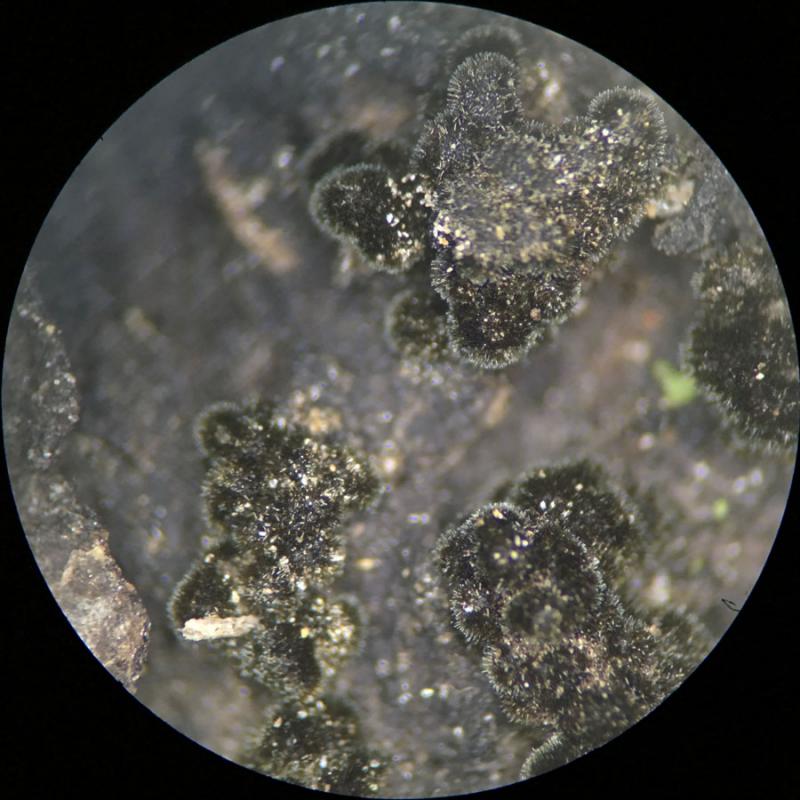
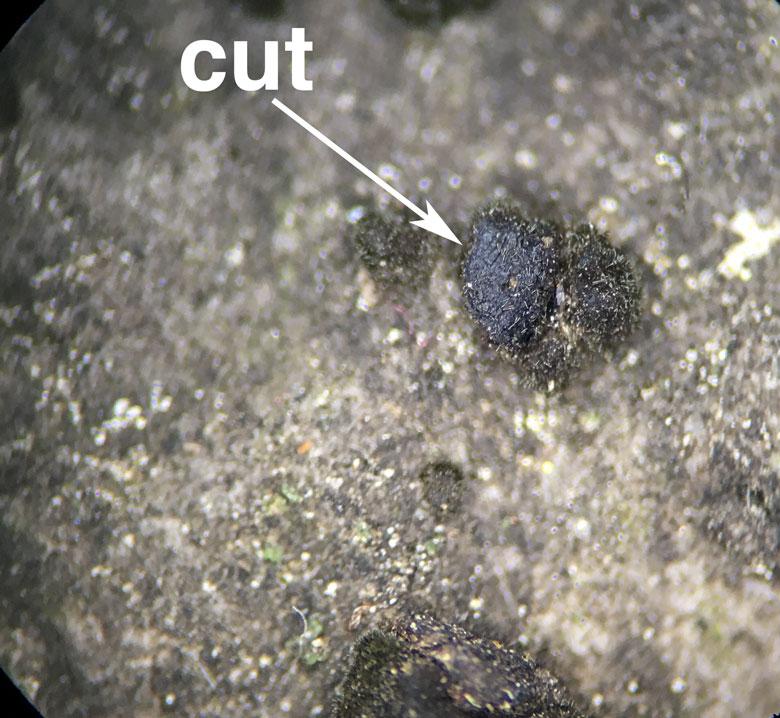
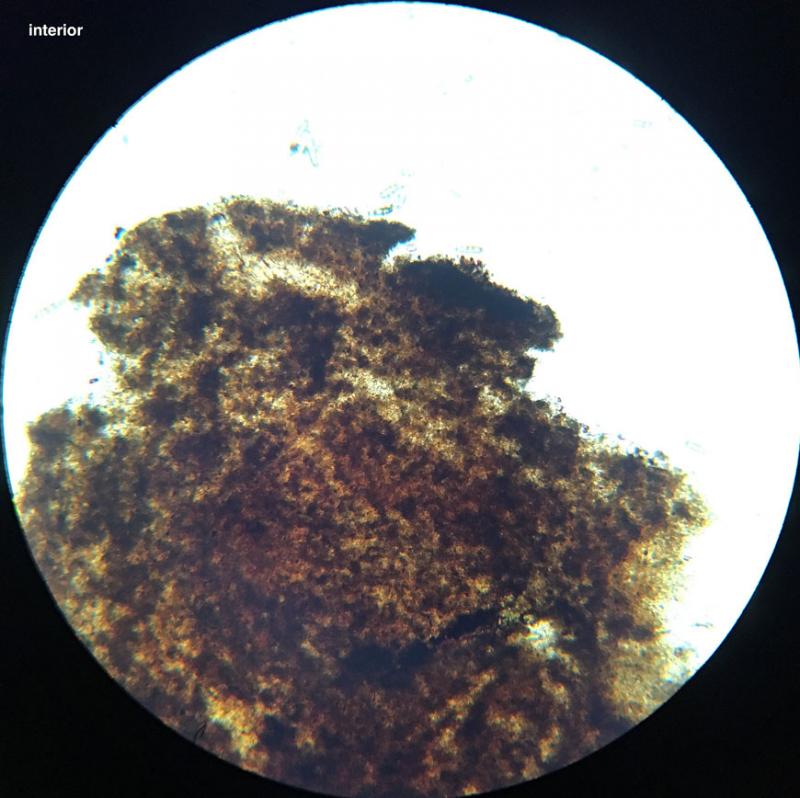
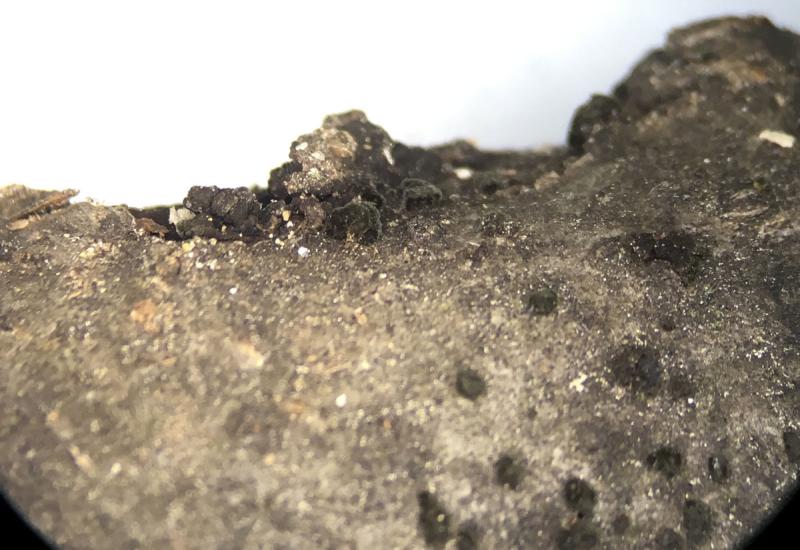
I am hoping someone will have some insight into this interesting asexual fungus I found on hardwood (probably oak) in a New York City park yesterday. It appears to be erumpent, gelatinous acervuli which bristle with conidia on the surface. When cut the solid interior of the acervuli are black (when fresh) and gelatinous. As they age and hollow out they become tan.


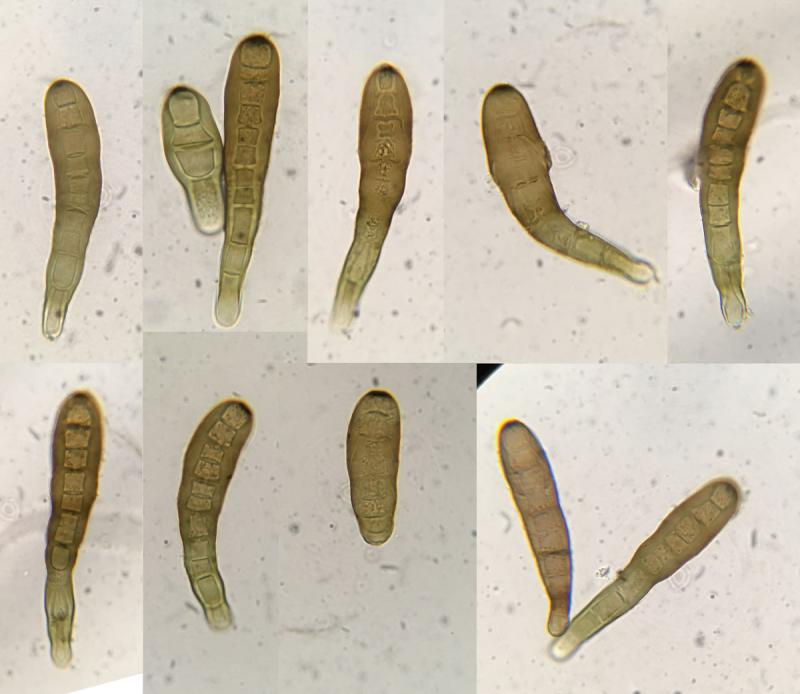
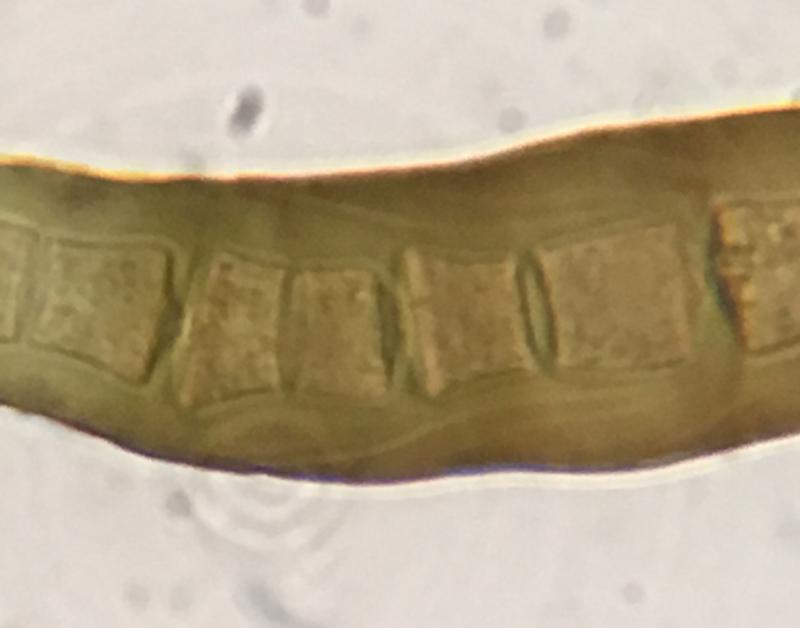
The conidia are brown, very thick walled, multi-septate, and shaped like bowling pins. Sometimes they are curved. There are wavy striations in the flanks of the conidiospores. I am reminded of the conidiospores of Helminthosporium velutinum, but of course that does not produce acervuli like this.


I have seen some discussion/images of the genus Coryneum which seems similar. Can anyone point me in the right direction?


Thanks!
Ethan
  • message #84306
  • message #84306
  • message #84306
  • message #84306
  • message #84306
  • message #84306
  • message #84306
Mathias Hass, 13-01-2026 08:01
Mathias Hass
Re : Coryneum (?) acervuli on oak (?) branch
Hi Ethan

I agree with Coryneum (or teleomorph name Pseudovalsa). There are several species on oak. The dimensions of the conidia might be helpful.

Cheers Mathias
Ethan Crenson, 13-01-2026 21:06
Re : Coryneum (?) acervuli on oak (?) branch
Mathias, 

Thanks for the confirmation on genus.  I guess I did forget to include conidia measurements.  

The larger spores (I excluded the "stunted" looking ones) measure:

76.7-101.9 x 15.3-21.1µm

Me: 91.4 x 18.2µm

Q: 4.4-5.4

Qe: 5

N=9

I have counted from 7 to 11 distosepta in the conidia that I have illustrated here.

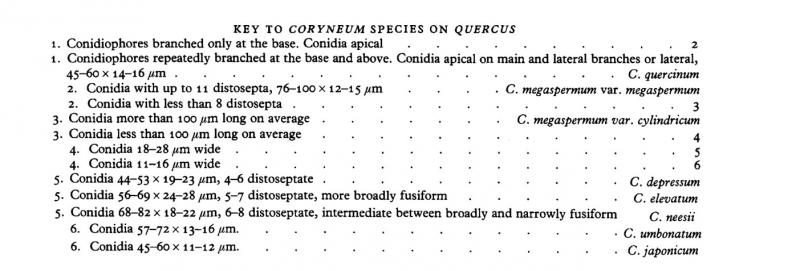
I found a key in J. Muthumary; B.C. Sutton. (1986). Coryneum quercinum sp.nov. on Quercus alba from India. , 86(3), 0–515. The key treats Coryneum on Quercus only, so I hope that my ID of the substrate is correct.  

I am unable to see the conidiophores (I am assuming I would need a microtome to section the gelatinous material properly).  But I feel I can exclude C. quercinum based on dimensions of the conidia.  Which leaves the next option at C. megaspermum var. megaspermum "Conidia with up to 11 distosepta, 76-100 x 12-15." The conidia in my collection are somewhat wider. Continuing in the key I get to C. neesii, but the length and number of distosepta doesn't match. 

So I'm left with perhaps C. megaspermum var. megaspermum with conidia somewhat too wide. 

Or maybe I have the wrong substrate.

Ethan
  • message #84332