
21-03-2026 15:13
Lepista ZacariasHello everyone, Does any one know of any literatu
20-10-2017 09:23
Garcia SusanaEste otro crecía en el mismo trocito de madera qu
20-03-2026 16:16
 Edvin Johannesen
These 0.5 mm diam. acervuli were breaking through
19-03-2026 19:34
 Filip Fuljer
Hello everyone,a few days ago I collected this str
19-03-2026 18:25
 William Slosse
Good evening everyone, On 18/03/26 I found a few
17-03-2026 10:09
 François Freléchoux
Bonjour, Voici la description rapide d'un petit d
19-03-2026 17:50
 Enrique Rubio
Hi to everybodyThese thiny, blackish pseudothecia
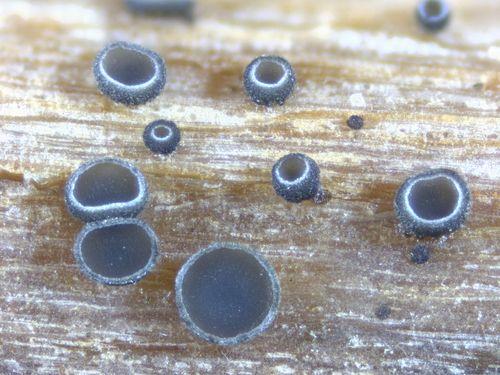
Pyrenopeziza atrata on Angelica silvestris
Thomas Flammer,
28-04-2025 12:51
Spore mass: 8.4 - 11.1 x 2.1 - 2.7 µm - Q: 3.13 - 4.54 (Ø LxB: 9.4 x 2.4 ØQ:3.9 N: 18)
Spore shape: fusiform
Paraphyses: septated
Clamps: yes
Barals: Apical ring IKI+
Determined by: Microfungi on land plants - Ellis, Martin B; Ellis, Pamela J - The Richmond Publishing Co. Ltd. - 978-085546-246-8
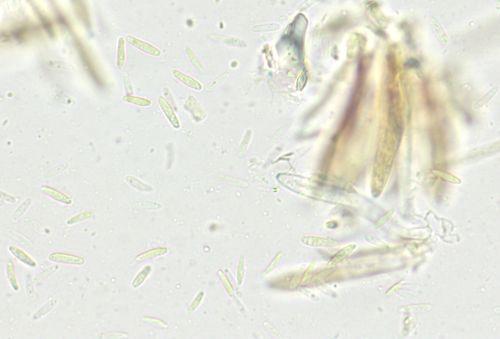

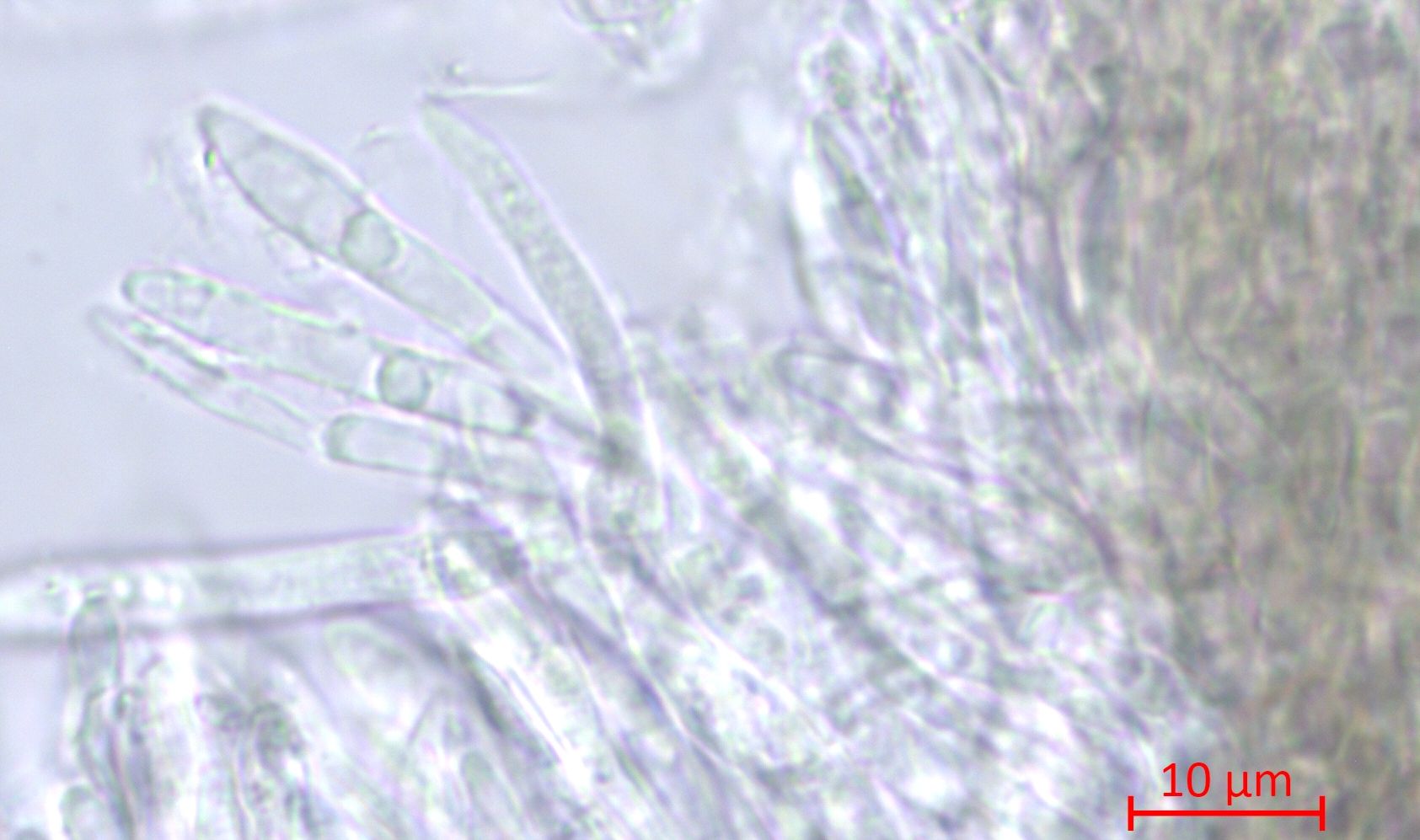 Paraaphyses in water
Michel Hairaud,
28-04-2025 20:17

Re : Pyrenopeziza plicata on Angelica silvestris
Bonsoir Thomas, Je ne connais pas cette espèce et ne connais pas de littérature récente la mentionnant.
Pour être certain qu il s'agit d'un Pyrenopeziza et non d'un Mollisia, il faut s'assurer que les paraphyses n'ont pas de contenu vacuolaire homogène. Je crois le deviner sur la photo micro, mais pas certain.
Sur ce même support, je suis arrivé parfois à P. atrata , qui est peut être une espèce collective.
AmitiésMichel
Pour être certain qu il s'agit d'un Pyrenopeziza et non d'un Mollisia, il faut s'assurer que les paraphyses n'ont pas de contenu vacuolaire homogène. Je crois le deviner sur la photo micro, mais pas certain.
Sur ce même support, je suis arrivé parfois à P. atrata , qui est peut être une espèce collective.
AmitiésMichel
Hans-Otto Baral,
29-04-2025 08:56

Re : Pyrenopeziza plicata on Angelica silvestris
Michel is right. To me it looked like a Pyrenopeziza, but I am not sure. If you still have the fungus fresh, please try a section or a soft squash mount in order to see living asci and paraphyses. Only then you have a chance to observe the refractive elongated vacuoles characteristic of Mollisia.
Thomas Flammer,
29-04-2025 10:32
Re : Pyrenopeziza plicata on Angelica silvestris
I added a picture of the paraphyses in water. There really is some refractive content.
Hans-Otto Baral,
29-04-2025 10:36
Re : Pyrenopeziza plicata on Angelica silvestris
This is good, it is an SCB, not a VB. This means that when you add Cresyl Blue you will get no stain. SCBs are not vacuolar, unlike VBs. Such globose SCBs are typical of Pyrenopeziza, also the lanceolate shape of the paraphyses are not uncommon in that genus..
Thomas Flammer,
29-04-2025 10:54
Re : Pyrenopeziza plicata on Angelica silvestris
Can I also use Patentblau or Baumwollblau? Is there a need to get Cresyl blue?
Hans-Otto Baral,
29-04-2025 10:56
Re : Pyrenopeziza plicata on Angelica silvestris
You must use an aqueous stain, otherwise you will kill the cells immediately. Cotton blue is o.k. but not the one in lactophenol. If you have the powder you can make a solution in water. Patent blue is perhaps similar. Cresyl blue has the advantage to be metachromatic, changing the colour from turquoise to lilac, I think cotton blue doesn't.
Thomas Flammer,
29-04-2025 11:11
Re : Pyrenopeziza atrata on Angelica silvestris
Sorry to bother you again with my questions. But I am quite confuesd with the use of the 4 stains. I have also Toluidinblau, but I have never used it. So what is the "Best blue". Cresyl? Do I really need 4 "Blues". Cresyl blue seems quite interesting due to the metachromatic properties.
Hans-Otto Baral,
29-04-2025 11:45
Re : Pyrenopeziza atrata on Angelica silvestris
I do not fully remember, but it can be that Toluidine blue also gives the metachromatic colour change. I prinicipally use Cresyl Blue, it was the stain used by Chadefaud and Le Gal as I remember.
I should asdd that CRB slowly enters the cells as all vital dyes, and a very slight addition of an acid facilitates the transfer.
Cotton Blue/lactic acid is surely helpful, but not for the purpose of accumulation and metrachromasy of living cell contents, which depends on the semipermeable plasmalemma and tonoplast.