
12-06-2026 14:50
 François Freléchoux
Bonjour, Voici la brève description d'une Mollis
10-06-2026 21:16
François Freléchoux
Bonsoir,Le dernier du jour, en attendant votre avi
11-06-2026 19:01
 William Slosse
Hello all,In an attempt to make a culture of a sus
11-06-2026 19:03
 Nicolas VAN VOOREN
Chers membres d'Ascofrance,Le site sera placé en

09-06-2026 18:32
Camille MertensSur morceau de roseau immergé 0,5 - 0,7 mm de dia
10-06-2026 12:54
Steve ClementsBonjour encore, Pouvez-vous m'aider, s'il vous pl
10-06-2026 21:07
François Freléchoux
Toutes les tiges de gentianes jaunes de l'an passÃ
10-06-2026 13:41
François Freléchoux
Bonjour à nouveau, Voici une trouvaille d'hier.
Pyreno on Pinus
Juuso Äikäs,
23-03-2025 01:00
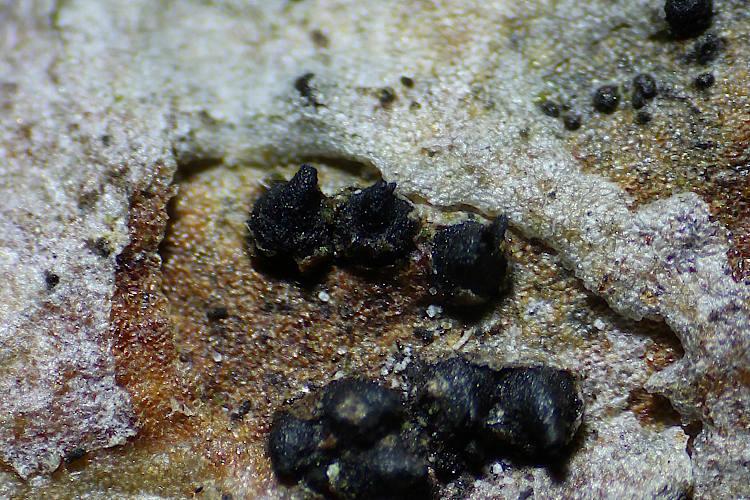
These little black pyrenos were growing on bark of a fallen Pinus sylvestris branch. Some of the perithecia were more or less round, and some had a little neck.
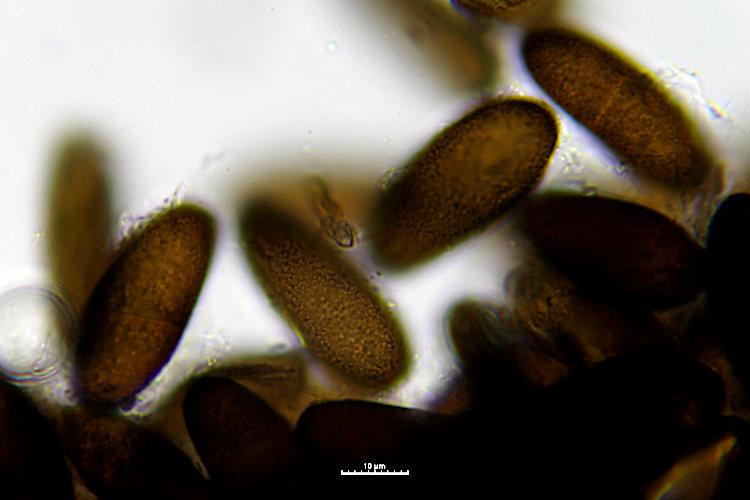
These appeared to be rather old fruitbodies, but there were spores inside. Some had a septum, which was located either centrally or inequilaterally. The spore surface has some minute ornamentation, and the size of the spores is quite large: 34.5 - 38.5 × 12.9 - 15.6 µm, Q = 2.2 - 2.7; avg = 35.8 × 14.4 µm, Qav = 2.5; n = 5.
Any thoughts about the species/genus/family?

Mathias Hass,
23-03-2025 06:37

Re : Pyreno on Pinus
Hi Juuso
Looks very much like Diplodia sapinea, pycnidia with conidia. This fungus is very common on Pinus cones, needles, twigs and bark. May occasionally also be found on other coniferous trees, at least as D. sapinea s.l.
Kind regards
Mathias
Juuso Äikäs,
23-03-2025 06:57
Re : Pyreno on Pinus
Thank you Mathias. Yes, that does seem to fit. Apparently this species has just recently begun spreading here.