
12-06-2026 14:50
 François Freléchoux
Bonjour, Voici la brève description d'une Mollis
10-06-2026 21:16
François Freléchoux
Bonsoir,Le dernier du jour, en attendant votre avi
11-06-2026 19:01
 William Slosse
Hello all,In an attempt to make a culture of a sus
11-06-2026 19:03
 Nicolas VAN VOOREN
Chers membres d'Ascofrance,Le site sera placé en

09-06-2026 18:32
Camille MertensSur morceau de roseau immergé 0,5 - 0,7 mm de dia
10-06-2026 12:54
Steve ClementsBonjour encore, Pouvez-vous m'aider, s'il vous pl
10-06-2026 21:07
François Freléchoux
Toutes les tiges de gentianes jaunes de l'an passÃ
10-06-2026 13:41
François Freléchoux
Bonjour à nouveau, Voici une trouvaille d'hier.
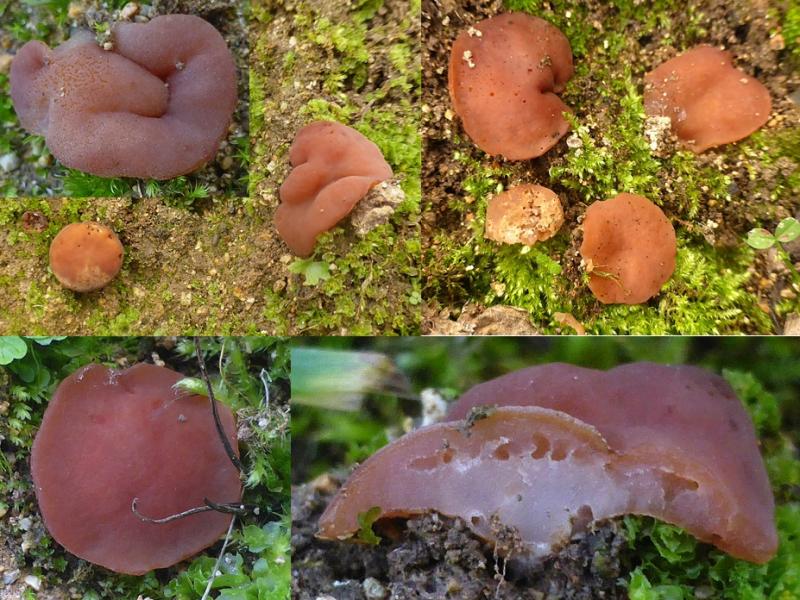
Purpureodiscus - kreiselii?
Lothar Krieglsteiner,
17-12-2024 18:50
 from Portugal, on naked soil under Quercus suber above slate-stone.
 When collecting, I strongly thought of Purpureodiscus subisabellinus but hesitated mainly because of the different ecology (I know P.s. in connection with Fraxinus-wood from different findplaces).
Under the microscope it became clear very soon that the collection is not P. subisabellinus. The recherche now led to the paper of Hirsch and his description of P. kreiselii with quite similar characters. Unfortunately, I have no access to the descriptions of P. bananincola (likely not my fungus) and P. luteorosellus - as the latter is a LeGal-species likely from Southern Europe it also could perhaps be a possibility.
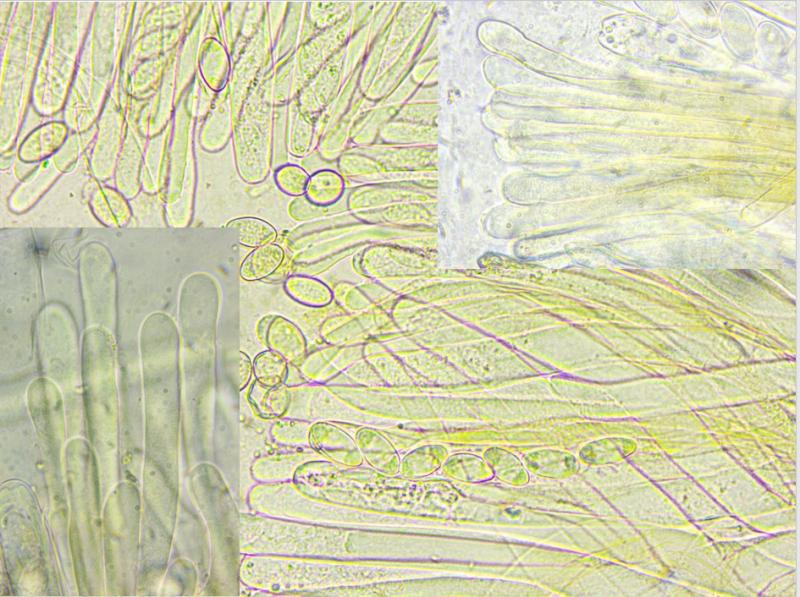
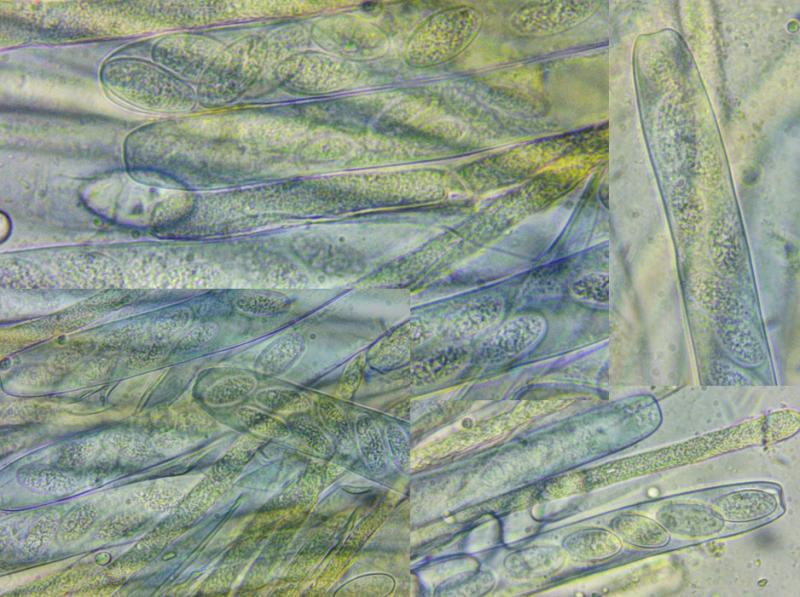
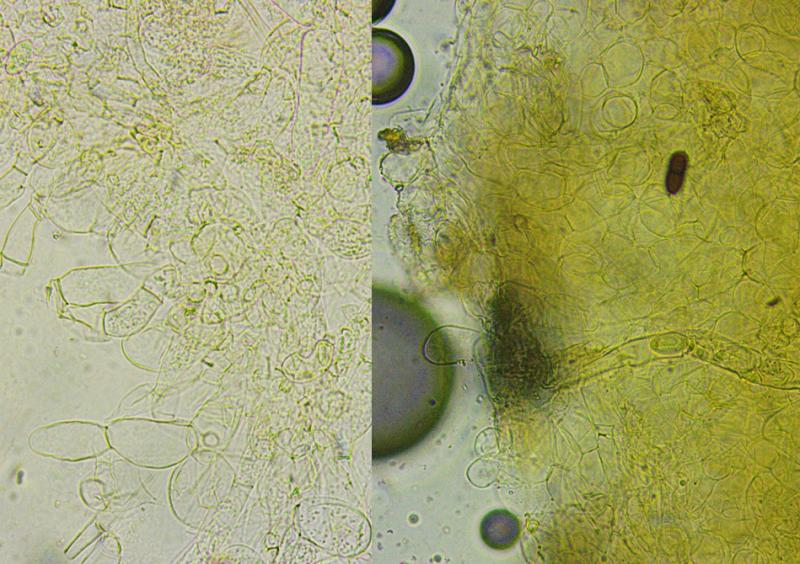
I noted clavate paraphyses that are often clustered, eguttulate spores of about 17-21/9,5-11,5 µm, asci with a diffuse iodine reaction at nearly entire length and pleurorhynchous ascus-bases. I also had thought of Pachyella because of the thick ascomata, but I found no gel and no oildrops in the spores (besides the drier ecology).
Who can tell me if P. kreiselii is correct or if P. luteorosellus is perhaps a better choice.
Yours, Lothar




Nicolas VAN VOOREN,
17-12-2024 18:57
Re : Purpureodiscus - kreiselii?
Interesting, this collection deserves a sequencing to evaluate if P. kreiselii is a good species or simply a form of P. subisabellinus. The other known Purpureodiscus are excluded because they are pantropical species.
Lothar Krieglsteiner,
17-12-2024 19:07
Re : Purpureodiscus - kreiselii?
thank you for your opinion. If you want me to send the specimen please tell me.
Yours, Lothar
Yours, Lothar