12-06-2026 14:50
 François Freléchoux
Bonjour, Voici la brève description d'une Mollis
10-06-2026 21:16
François Freléchoux
Bonsoir,Le dernier du jour, en attendant votre avi
11-06-2026 19:01
 William Slosse
Hello all,In an attempt to make a culture of a sus
11-06-2026 19:03
 Nicolas VAN VOOREN
Chers membres d'Ascofrance,Le site sera placé en

09-06-2026 18:32
Camille MertensSur morceau de roseau immergé 0,5 - 0,7 mm de dia
10-06-2026 12:54
Steve ClementsBonjour encore, Pouvez-vous m'aider, s'il vous pl
10-06-2026 21:07
François Freléchoux
Toutes les tiges de gentianes jaunes de l'an passÃ
10-06-2026 13:41
François Freléchoux
Bonjour à nouveau, Voici une trouvaille d'hier.
Possibly Mycothyridium lividum (to confirm)
Stephen Martin Mifsud,
13-11-2024 08:01
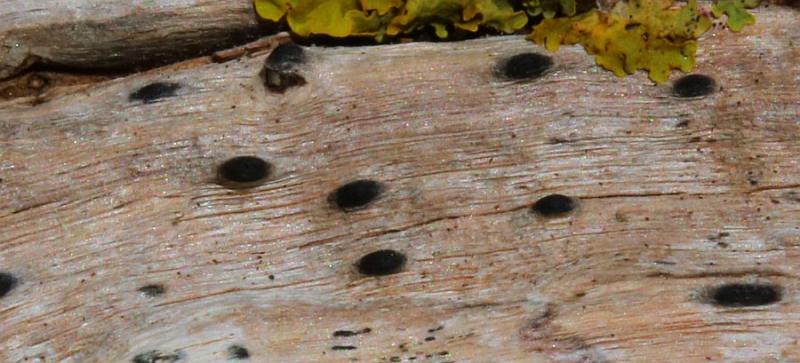
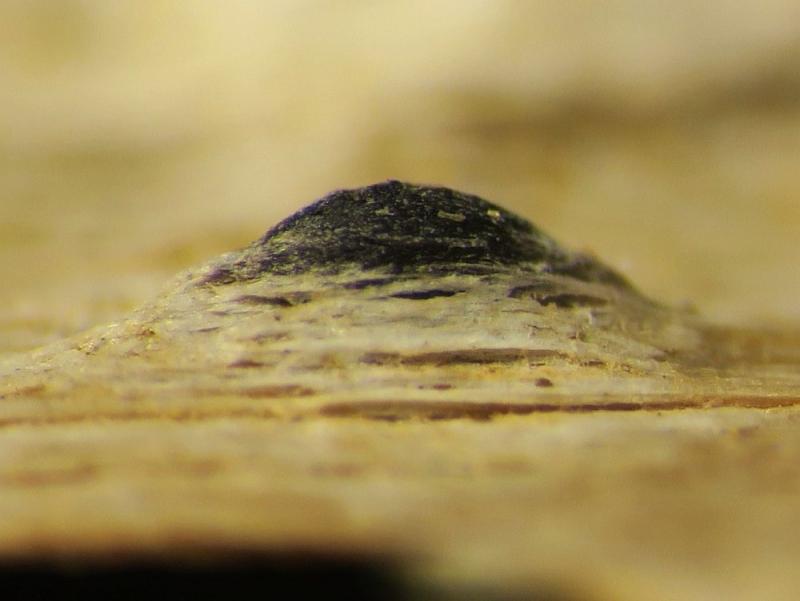
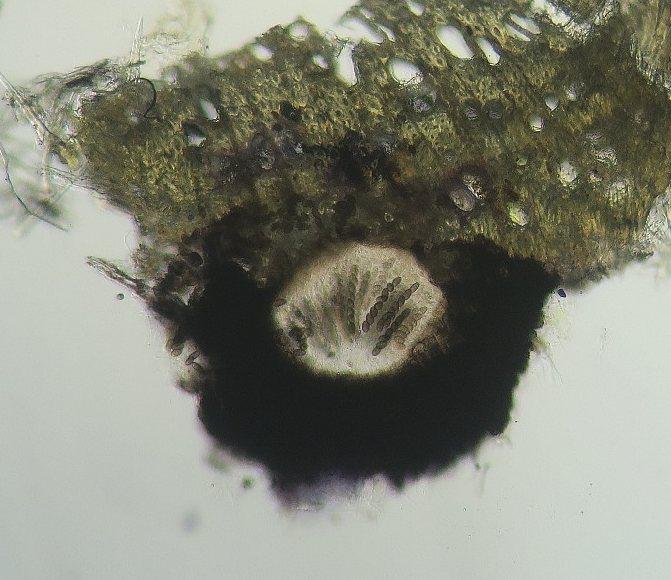
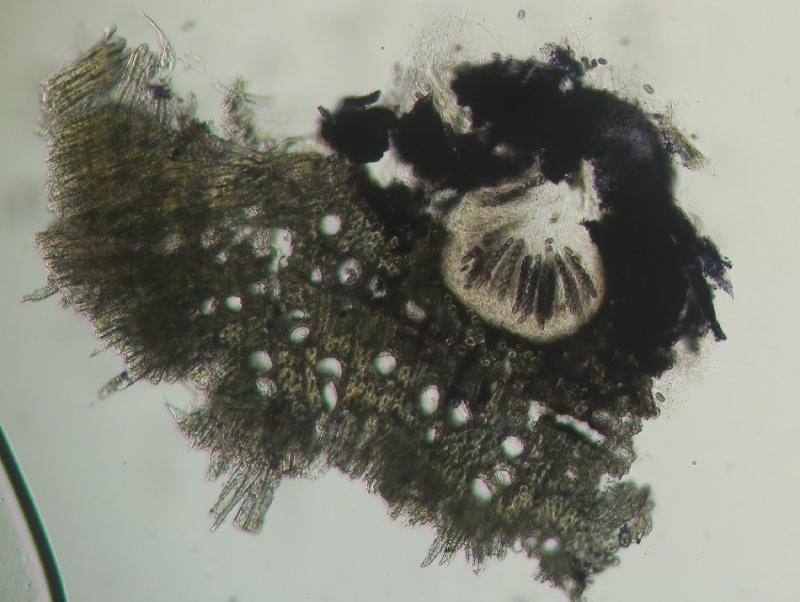
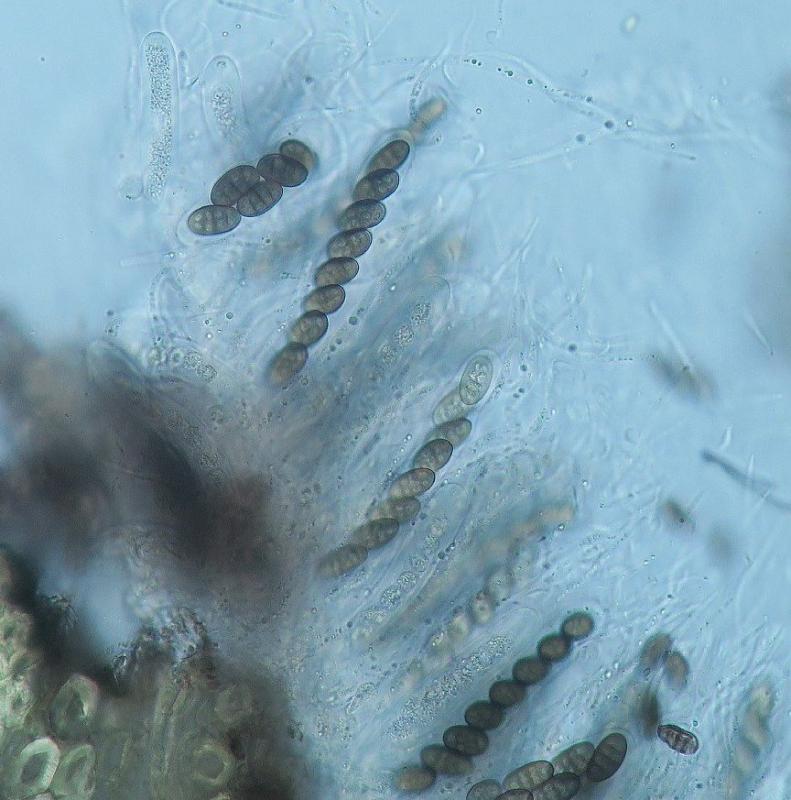
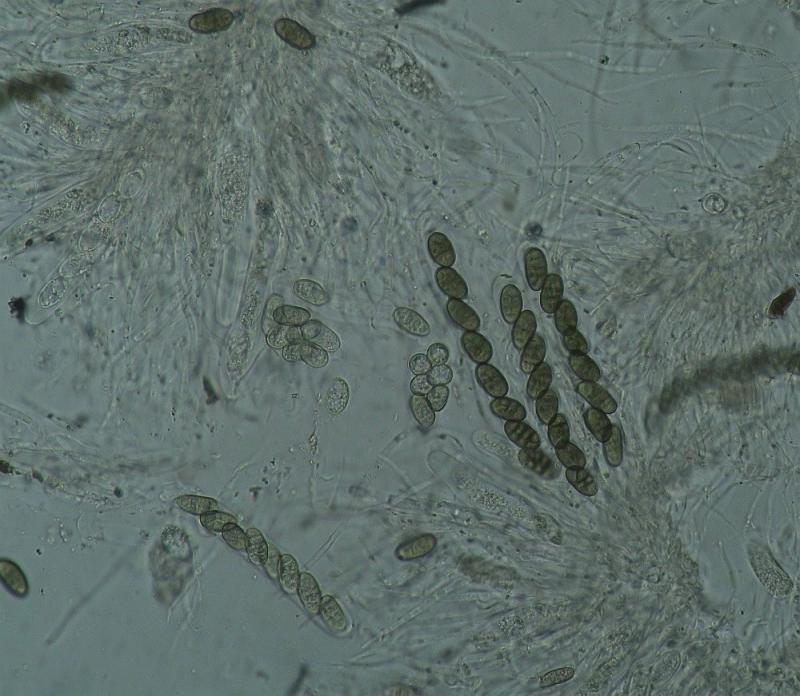
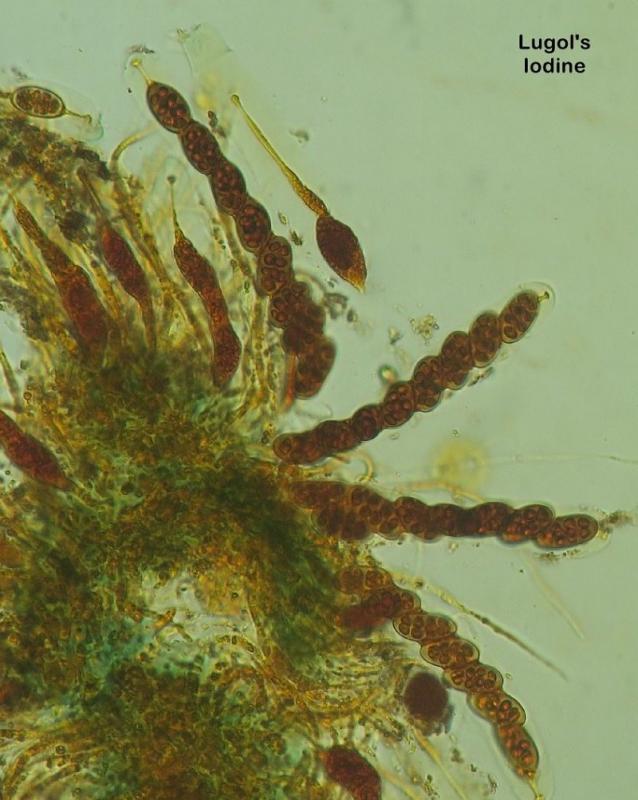
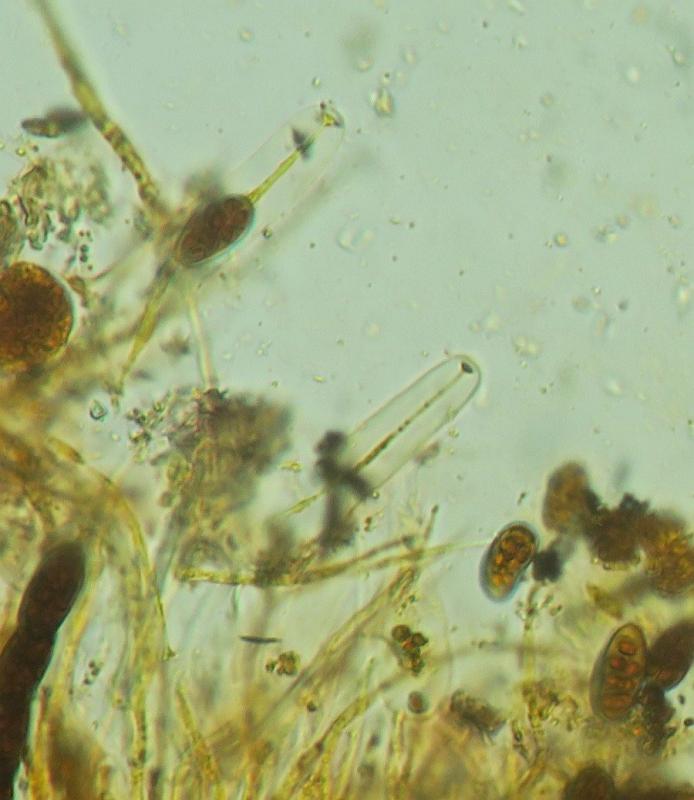
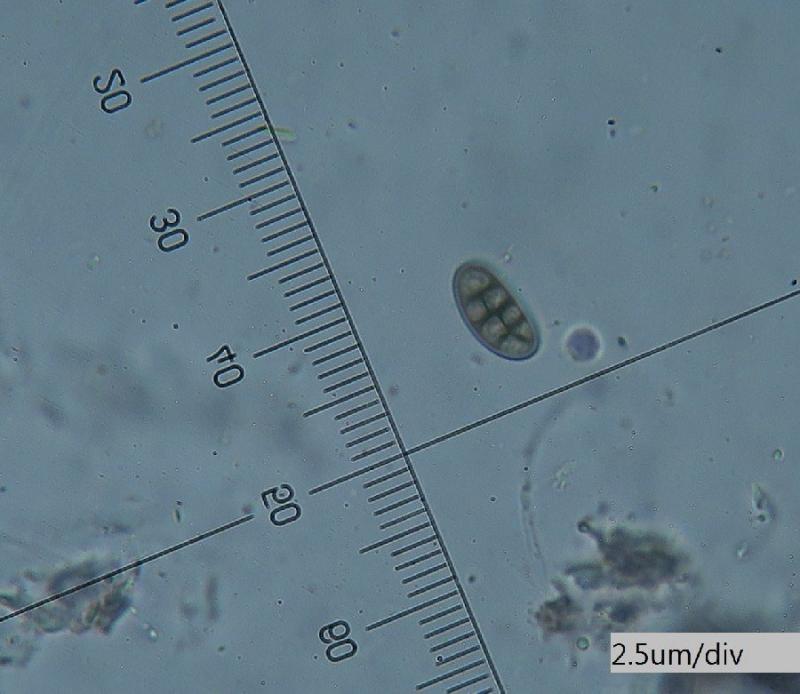
 I am revising some old material again and I have these black semiglobular perithecia on bark of Thymus capitatus, about 0.5 mm in across mostly immersed in the woody bark. The ascospores are 5-7 septate (or having 6-8 compartmnts if that is easier), brownish-black, arranged imbricately or stacked diagonally in the ascus. The Asci are also interesting for having a broad funnel-shaped pore with a lonk neck when not fully mature and I think they are J-ve and bitunicate. Ascospores dextrinoid in KI (?). Paraphyses simple, threadlike, unspecialised, flexuous, 2-3um wide.
 Asci size (mean): 150 x 15 um
Ascospores (mean) : 18 x 9 um
I am considering this to be Mycothyridium lividum, already reported from thyme but expert advice is welcomed. There is actually one thing that I am not seeing in my collection - the ascospores of (Myco)Thyridium lividum sometime have diagonal septae - not sure if this is characteristic for the species. Mattirolia sp. is another fungus to consider, (e.g. Mattirolia ohiensis = Teichospora ohiensis Ellis & Everh)...