
10-06-2026 21:16
 François Freléchoux
Bonsoir,Le dernier du jour, en attendant votre avi
11-06-2026 19:01
 William Slosse
Hello all,In an attempt to make a culture of a sus
11-06-2026 19:03
 Nicolas VAN VOOREN
Chers membres d'Ascofrance,Le site sera placé en

09-06-2026 18:32
Camille MertensSur morceau de roseau immergé 0,5 - 0,7 mm de dia
10-06-2026 12:54
Steve ClementsBonjour encore, Pouvez-vous m'aider, s'il vous pl
10-06-2026 21:07
François Freléchoux
Toutes les tiges de gentianes jaunes de l'an passÃ
10-06-2026 13:41
François Freléchoux
Bonjour à nouveau, Voici une trouvaille d'hier.
10-06-2026 11:53
Steve ClementsBonjour, This disco is abundant on dead stems of
Ombrophila species
B Shelbourne,
20-09-2024 00:16
 • Macro and habitat suggested Gelatinodiscaceae.
• With spores too suggests genus Ombrophila and the O. violacea group.
• Seems comparable to O. 'janthina-margarita angio'.
• I'm not sure how to separate O. 'violacea small spored' but there are only two observations outside Europe.
Habitat: On angiosperm log, sawn-end (decorticated), surface blackened and well decayed, quite saturated, on the ground, amongst herbaceous plants, close a stream, generally damp and occasionally flooding, mixed deciduous woodland, Low Weald, England, mid-September.
Apothecia: Pale pink-violet in maturity, diameter < 5 (~7) mm, glassy-translucent, turbinate-discoid, densely caespitose and overlapping in maturity, superficial, very short and thick stipe, appressed, uneven/pitted surface, internally jelly-like, margin indistinct, uneven and slightly lobate, undulating, out-rolled, disc convex in maturity (when unrestricted), soft and gelatinous texture, no evidence of a subiculum, with tiny capitate conidiophores of a seemingly unrelated anamorph on the surface (possibly a parasite).
Asci: Surprisingly small relative to the apothecia, mature and turgid ~65-75 x 6-7 (7.5) um, cylindrical-clavate, 8-spored, obtusely biseriate when turgid, one spore at the apex, croziers, rings bb, form looks typical for Ombrophila (Baral, 1987), apex rounded-truncate, more acute-truncate when flaccid, distinct thickening and more truncate when flaccid, walls also showing some thickening, no noticeable dextrinoid reaction from contents, many discharging in water mount after some time.
Spores: Ellipsoid, homopolar, poles rounded, a +/- symmetric large globose LBs at each pole and some smaller ones (~1-3).
Free spores in water: (5.1) 5.4 - 6.2 (6.4) × (3.2) 3.5 - 3.7 (3.9) µm, Q = 1.5 - 1.7 (1.8), n = 30, mean = 5.8 × 3.6 µm, Q mean = 1.6.
Paraphyses: Narrow cylindrical, width ~2-3 um, apex often slightly inflated, multi-septate, with cylindrical hyaline VBs, reddish en masse.
Medullary: Loose textura intricata, highly gelatinised, narrow hyphae, numerous small to medium hyaline crystals.
Ectal: Textura prismatica, with a large guttule in many cells, seems to be a gelatinised layer on the surface but contents not clearly seen.
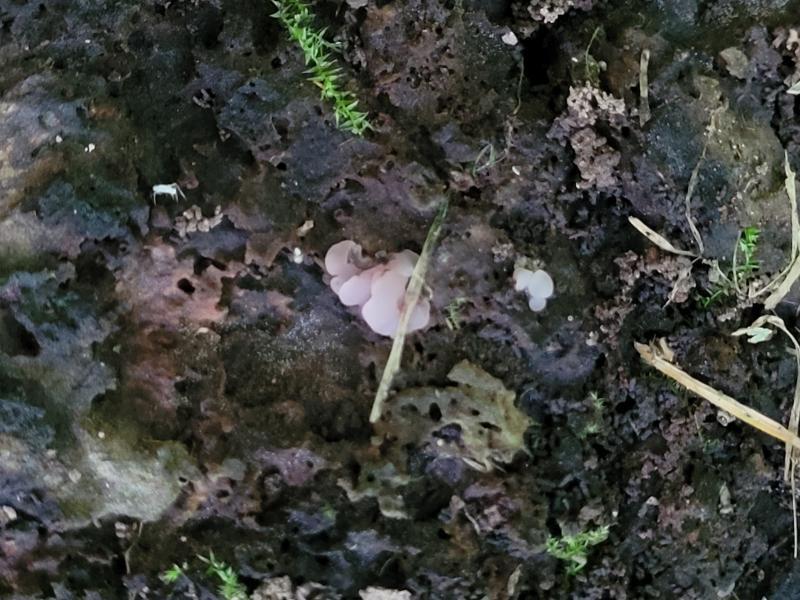
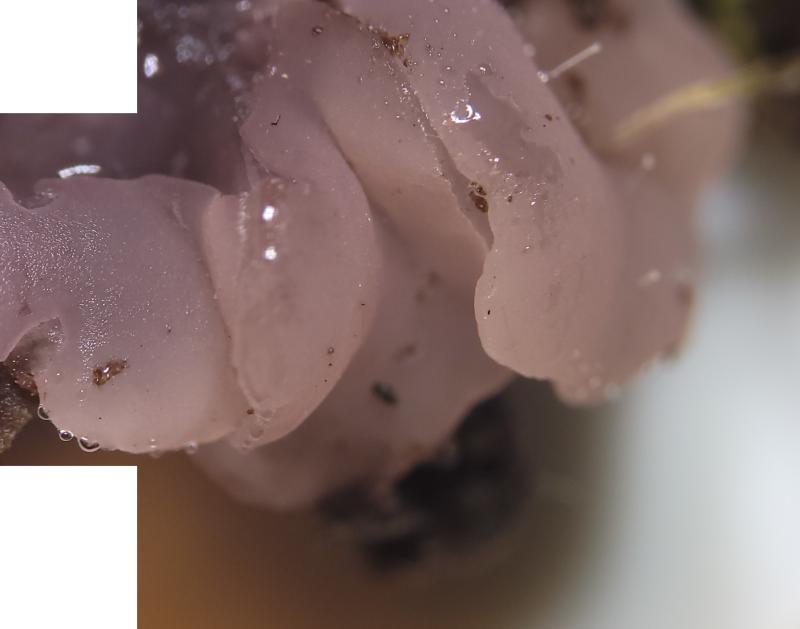
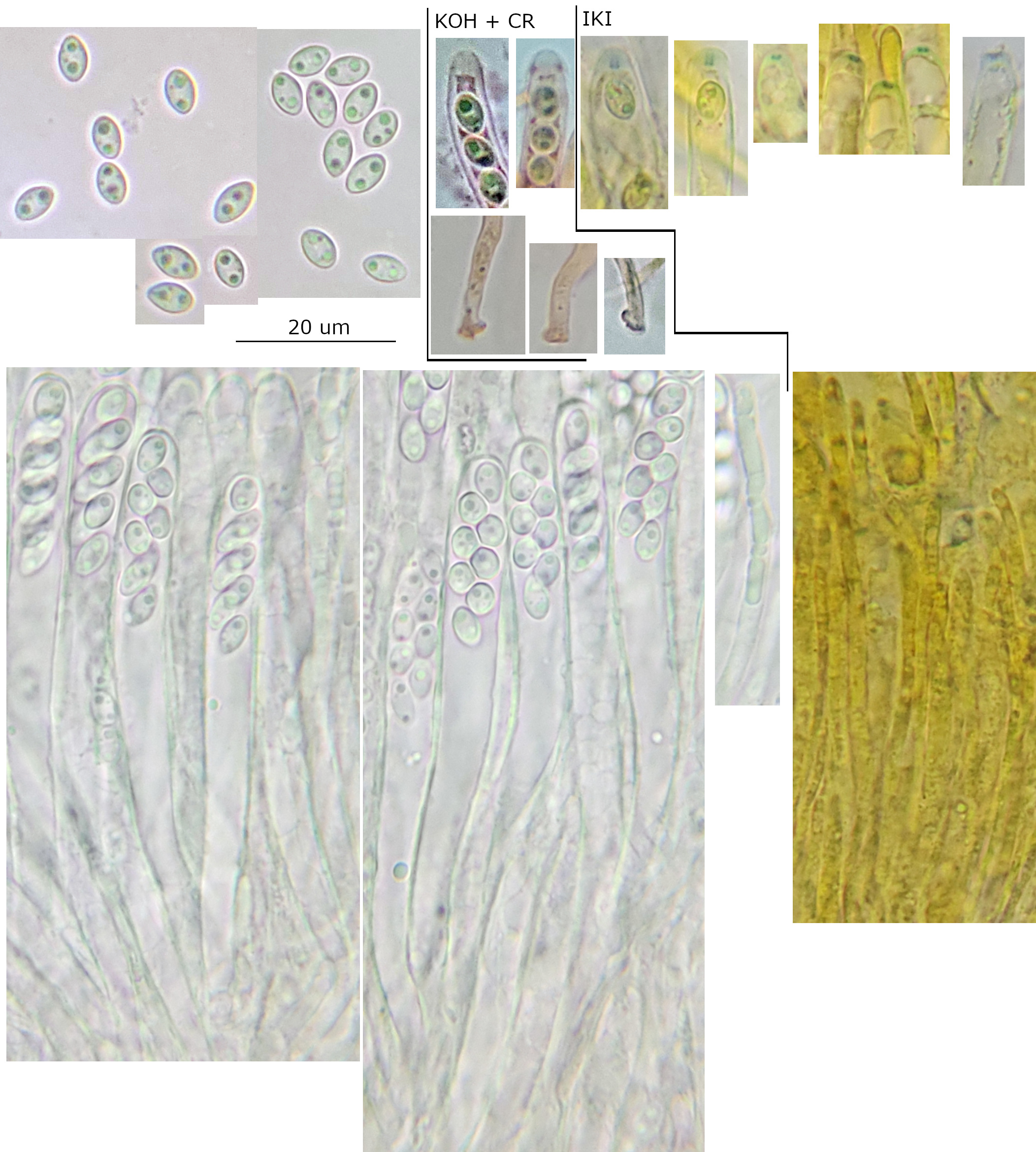 100x-0002.jpeg
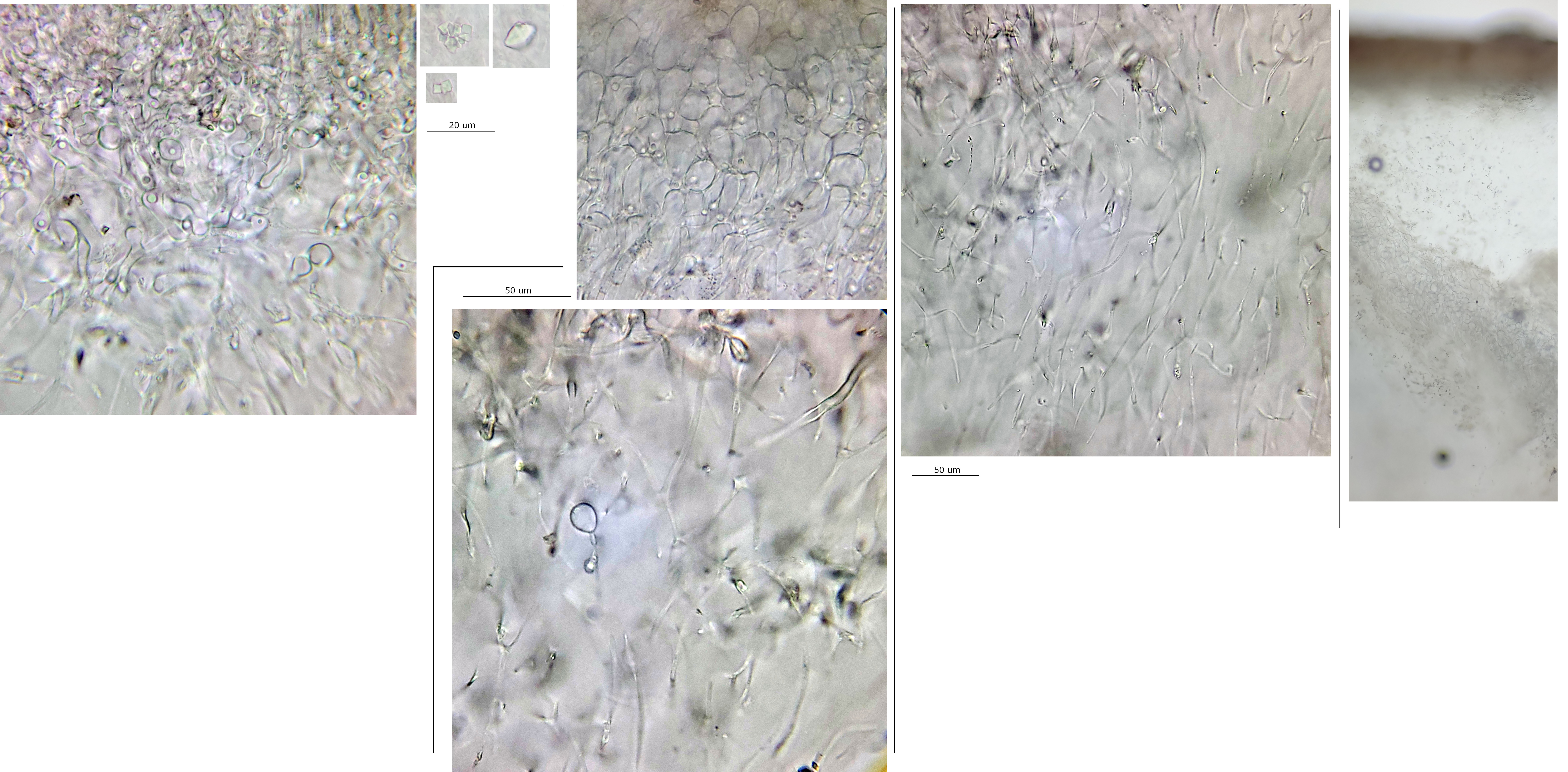 Excipulum-0005.jpeg
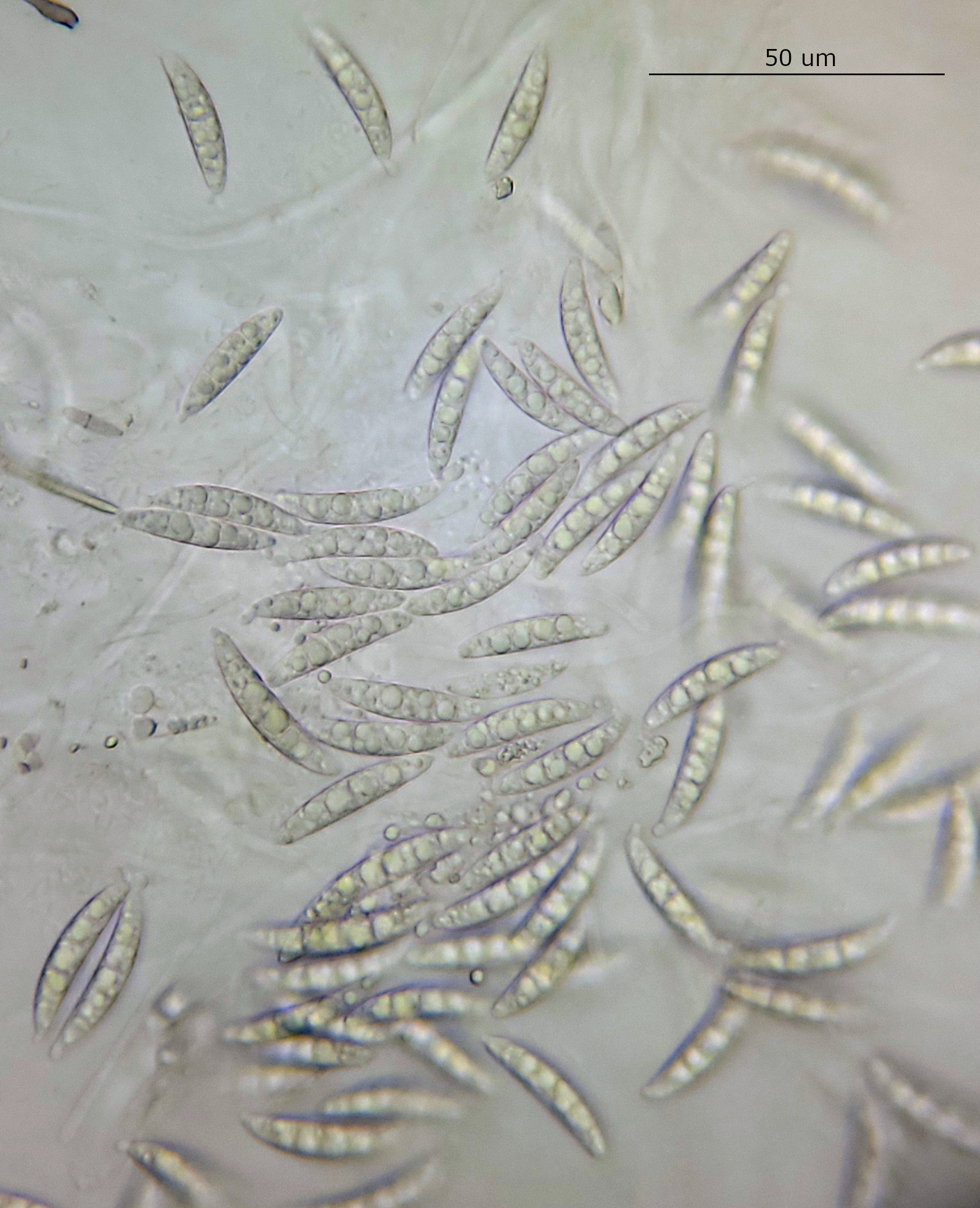 Other-spores-0001.jpeg
Hans-Otto Baral,
20-09-2024 10:04

Re : Ombrophila species
Yes, from the relationship of O. jamthina s.auct., a very complex group which requires DNA study.