
10-06-2026 21:16
 François Freléchoux
Bonsoir,Le dernier du jour, en attendant votre avi
11-06-2026 19:01
 William Slosse
Hello all,In an attempt to make a culture of a sus
11-06-2026 19:03
 Nicolas VAN VOOREN
Chers membres d'Ascofrance,Le site sera placé en

09-06-2026 18:32
Camille MertensSur morceau de roseau immergé 0,5 - 0,7 mm de dia
10-06-2026 12:54
Steve ClementsBonjour encore, Pouvez-vous m'aider, s'il vous pl
10-06-2026 21:07
François Freléchoux
Toutes les tiges de gentianes jaunes de l'an passÃ
10-06-2026 13:41
François Freléchoux
Bonjour à nouveau, Voici une trouvaille d'hier.
10-06-2026 11:53
Steve ClementsBonjour, This disco is abundant on dead stems of
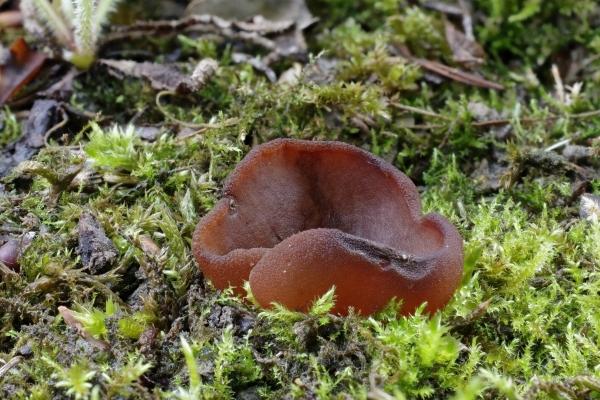
 Hello, I need help with this Peziza s.l. and at the same time I must confess I probably haven't done a good job.
It was found on probably calcareous mossy roadside soil under beech and oak, altitude 500 m.a.s.l.
1 apothecium only, 27 mm on average. I was thinking about P. saccardoana or P. depressa or some Legaliana, but the microcharacters don't match I think.
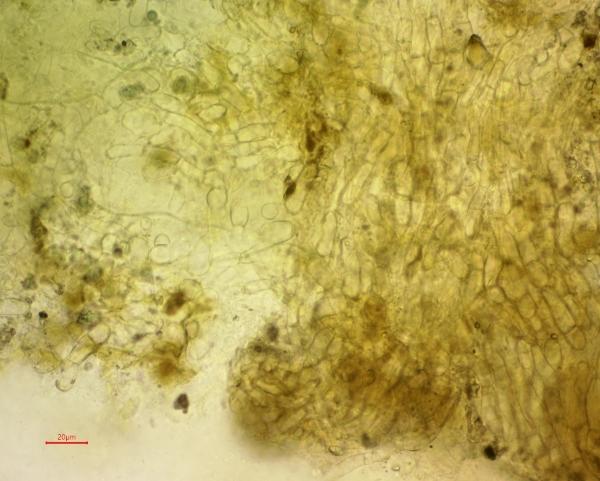
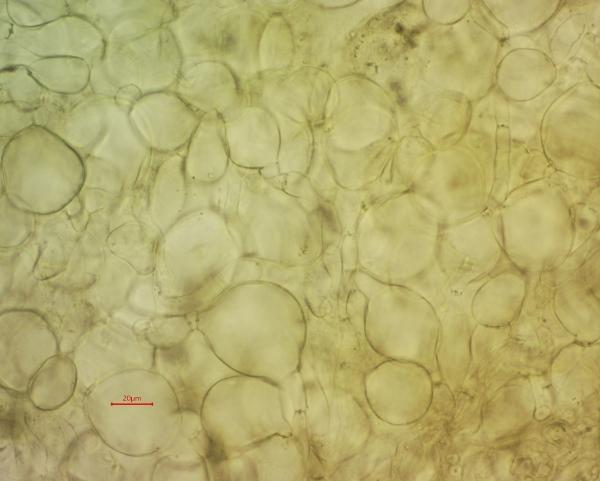
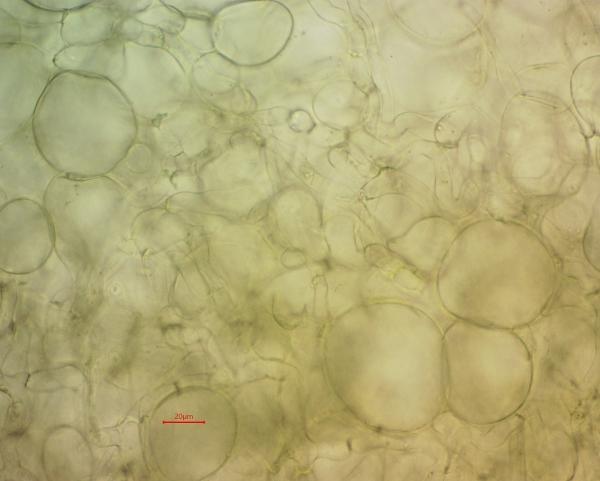
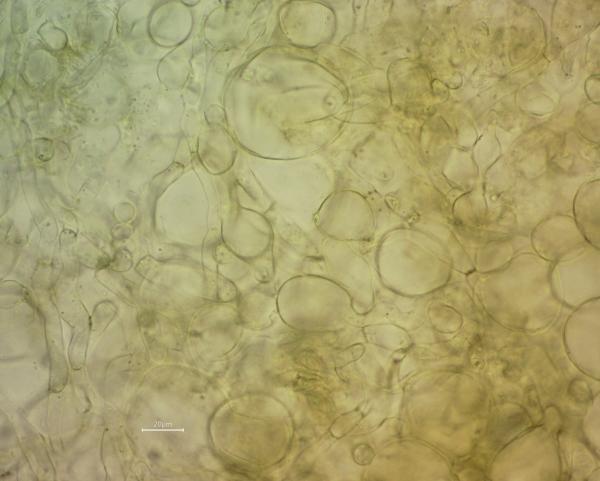
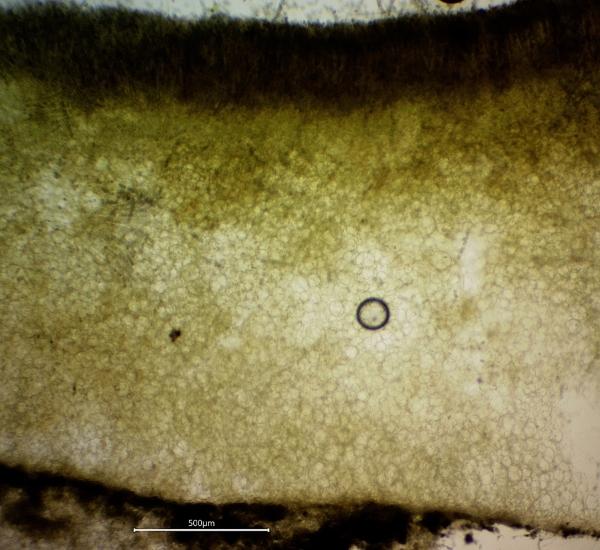
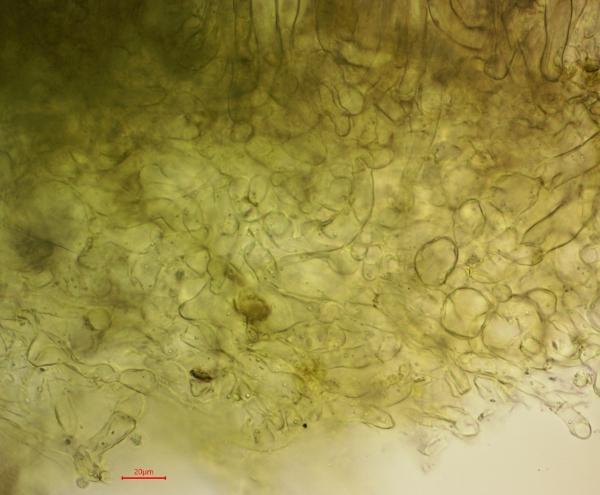
Excipulum composed of globose cells mixed with narrow and inflated hyphae, undifferentiated, but I may have made a mistake in not distinguishing the thin layer of text. intricata from the subhymenium. Latex not observed, but the apotecium was already somewhat drier. External thin pruinose layer of cells of text. prismatica.
Subhymenium – I don't know, how to described it, but look.
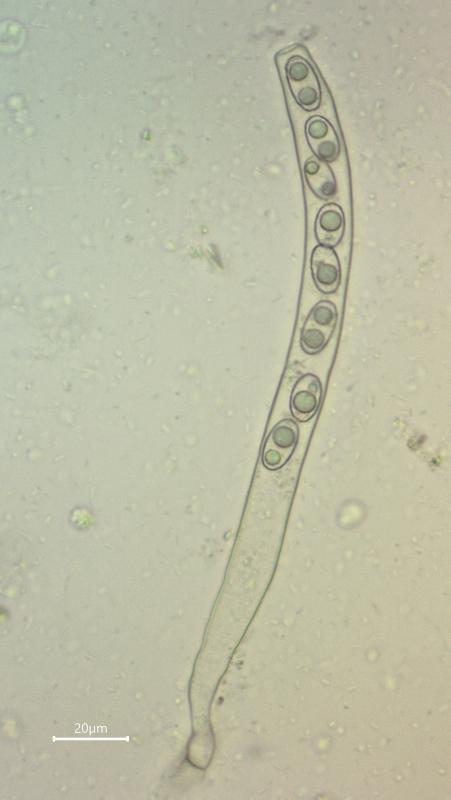
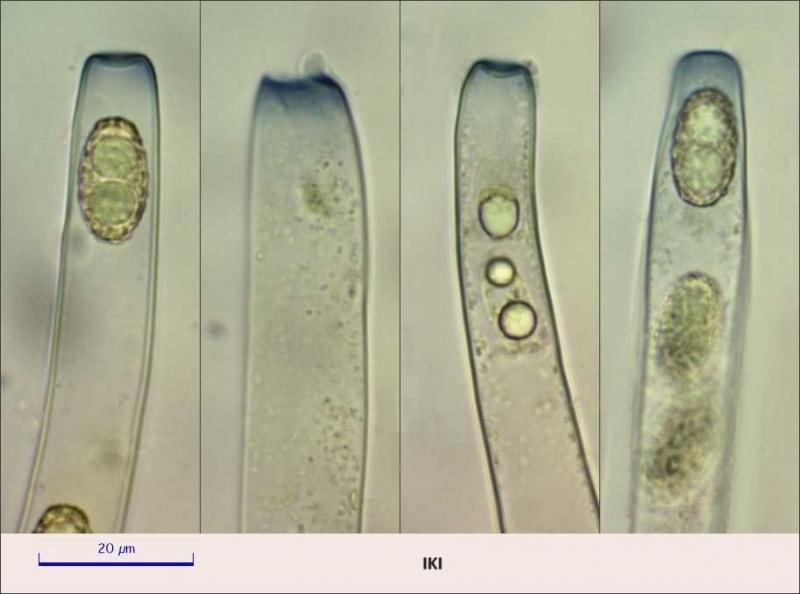
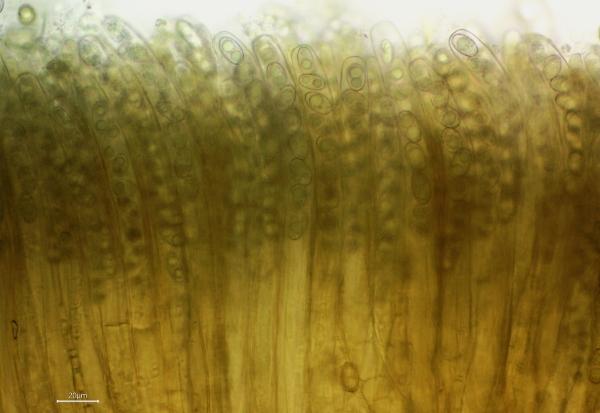
Asci cylindric, up to 260 µm, with amyloid reaction WT type, pleurorhynchous.
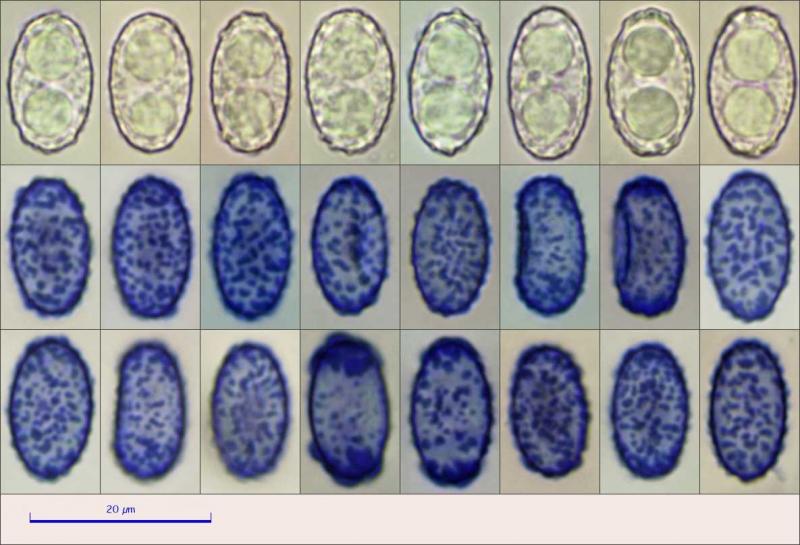
Ascospores from sporeprint in water 14.5–16.3 × 8.3–9.8 µm, Q = 1.6–1.9, N = 40, solely with 2 LBs, ornamentation from irregular warts, mostly up to 0,8 µm, rarely 1,1 µm in height, some somewhat pseudoapiculate.
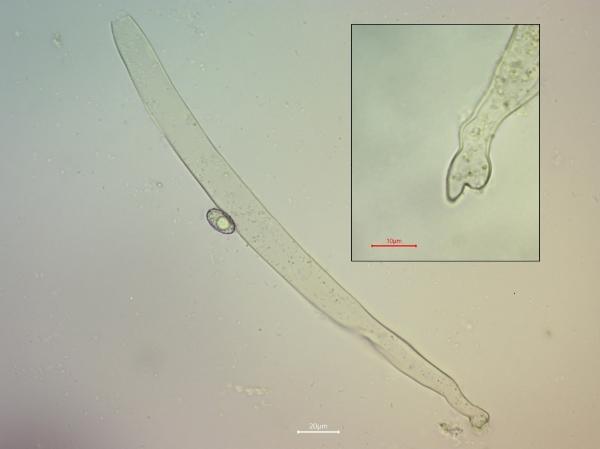
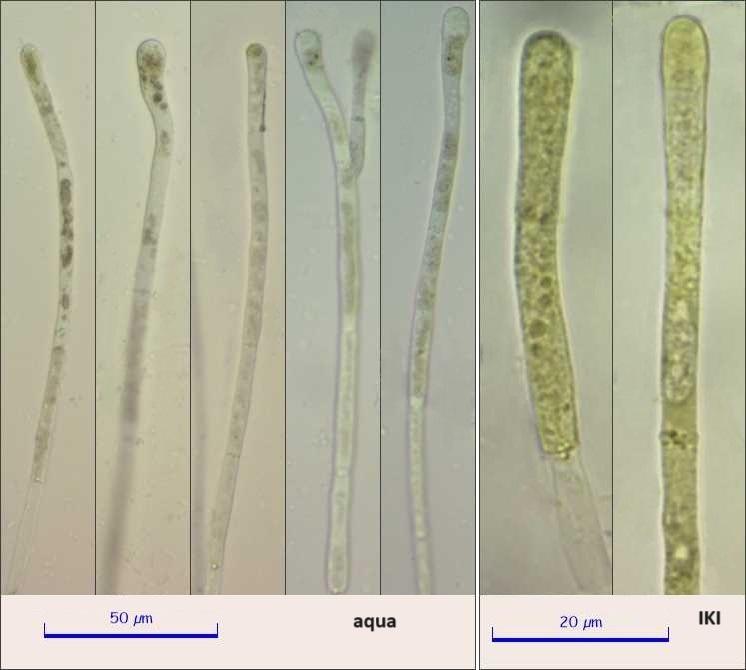
Paraphyses straight, sometimes forked under the top, containing brown intracellular pigment.
It's possible, that some more of my confusions will follow in the next few days. I guess I'm 'lucky' now to only have the most uncertain or mysterious collections, but it's more likely I'm just having a period of some torpid asco-decline :-)
Many thanks for your patience ;-)
Marek
The ecology is also compatible with this species.
Thank you.
M.