
10-06-2026 21:16
 François Freléchoux
Bonsoir,Le dernier du jour, en attendant votre avi
10-06-2026 21:07
François Freléchoux
Toutes les tiges de gentianes jaunes de l'an passÃ
10-06-2026 13:41
François Freléchoux
Bonjour à nouveau, Voici une trouvaille d'hier.
09-06-2026 18:32
Camille MertensSur morceau de roseau immergé 0,5 - 0,7 mm de dia
10-06-2026 11:53
Steve ClementsBonjour, This disco is abundant on dead stems of
10-06-2026 12:54
Steve ClementsBonjour encore, Pouvez-vous m'aider, s'il vous pl
10-06-2026 10:45
François Freléchoux
Bonjour à nouveau, Encore une détermination qui
08-06-2026 10:16
 Spooren Marco
I don`t have a clou about this fungus,it is not in
10-06-2026 09:24
François Freléchoux
Bonjour, J'imagine que cette détermination ne do
08-06-2026 17:00
François BartholomeeusenGood day everyone, On June 5 2026, I collected de
Otidea / Sowerbyella
Miguel Ángel Ribes,
29-05-2009 21:18
 Could you help me with this Otidea or Sowerbyella? It doesn't fit with anyone.
Thank you
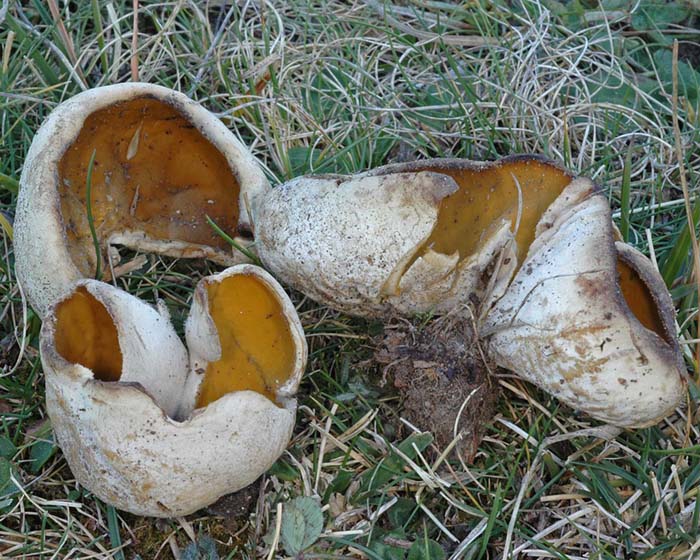
 7983.pdf
François Valade,
29-05-2009 21:22

Re:Otidea / Sowerbyella
Miguel
Avec cette ornementation, il faut exclure le genre Otidea et rechercher vers Sowerbyella.
Je me demande si S. radiculata ne conviendrait pas
(http://www.ascofrance.fr/index.php?r=bdd&page=fiche&id=1497)
François
Avec cette ornementation, il faut exclure le genre Otidea et rechercher vers Sowerbyella.
Je me demande si S. radiculata ne conviendrait pas
(http://www.ascofrance.fr/index.php?r=bdd&page=fiche&id=1497)
François
Jean Pierre Dechaume,
29-05-2009 22:01

Re:Otidea / Sowerbyella
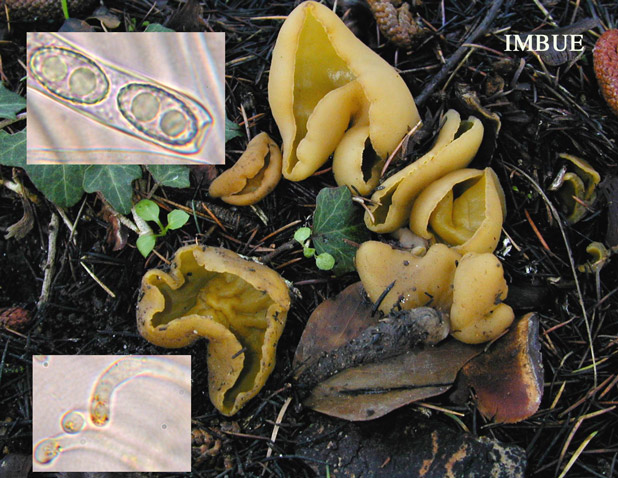
Tout à fait d' accord pour Sowerbyella radiculata. je le trouve sous Cedrus, mais en début d'hiver, avec cette racine sombre et poilue. L'extérieur devient entièrement blanc et feutré en séchant, comme sur ta photo.
Miguel Ángel Ribes,
29-05-2009 22:45
Re:Otidea / Sowerbyella
Thank you François, Jean Pierre
I had excluded S. radiculata by the habitat (not Juniperus / Cupressus) and the lack of stipe, but it is the first time I see it. Ok, S. radiculata.
Best regards
I had excluded S. radiculata by the habitat (not Juniperus / Cupressus) and the lack of stipe, but it is the first time I see it. Ok, S. radiculata.
Best regards
Miguel Ángel Ribes,
30-05-2009 00:10
Re:Otidea / Sowerbyella
According to the papers that François has send me, I think it could be fits Ok with S. radiculata var. kewensis, which has smaller and ellipsoid ascospores compared with cylindric-ellipsoid ascospores measuring (13.5)-14-15.5-(16.5) x 7.5-9 microns in the typical variety of S. radiculata.
Thanks François,
Thanks François,
Nicolas VAN VOOREN,
30-05-2009 11:47

Re:Otidea / Sowerbyella
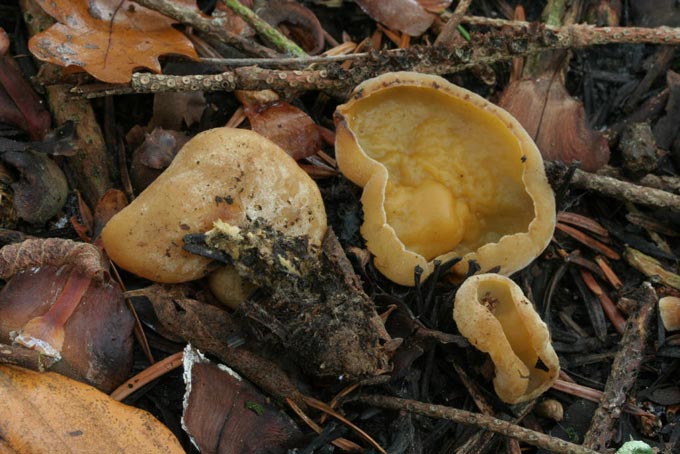
Je ne reconnais pas S. radiculata sur cette photo. Même si je ne l'ai pas vu souvent, ça me semble différent ; la photo de Jean-Pierre est plus significative.
Cette récolte m'évoque également S. crassisculpturata. Ci-joint la photo de R. Chalange d'une récolte que j'avais étudié et dont les cractères me semblent proches de ceux de Miguel.
Sur cette récolte, spores de 14-16 x (6.5) 7.5-8 µm.
Cette récolte m'évoque également S. crassisculpturata. Ci-joint la photo de R. Chalange d'une récolte que j'avais étudié et dont les cractères me semblent proches de ceux de Miguel.
Sur cette récolte, spores de 14-16 x (6.5) 7.5-8 µm.
Jean Pierre Dechaume,
30-05-2009 12:10
Re:Otidea / Sowerbyella
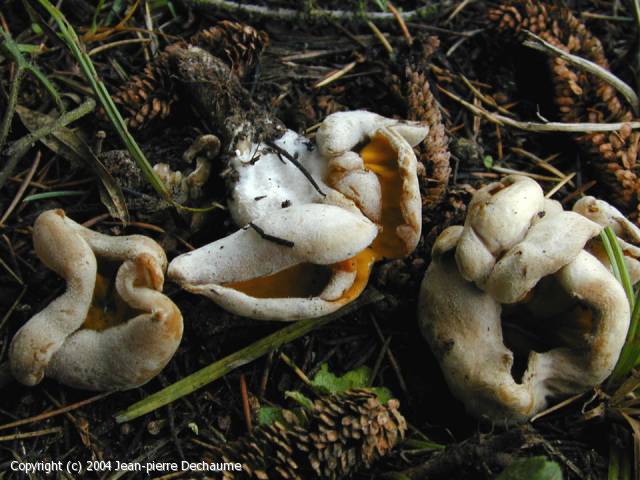
Regarde ce que deviennent les miennes , même station sous cèdres, à Autun. Je les vois presque tous les ans, dans un espace de 50m de long. Jean Mornand me l'avait déterminée il y a bien longtemps.
Miguel Ángel Ribes,
30-05-2009 20:16
Re:Otidea / Sowerbyella
Ok, both species are very similar.
In Yao, Y-L. & B. Spooner. (2006), Species of Sowerbyella in the British Isles, with validation of Pseudombrophila sect. Nannfeldtiella (Pezizales). Fungal Diversiti, 22: 267-279, they said this about S. crassisculpturata:
"Sowerbyella crassisculpturata J. Moravec in Mycotaxon 23: 492 (1985).
= Sowerbyella radiculata (Sowerby: Fr.) Nannf. in Svensk Bot. Tidskr. 32: 119 (1938)
Examination of the Bristish specimen cited by Moravec revealed no significant character to distinguish it from other specimens of typical S. radiculata. S. crassisculpturata was separated from S. radiculata based on spore ornamentation which is 'a certain number of mature ascospores is sureticulate, but in the majority os ascospores is verrucose'.... They are very similar to those of typical S. radiculata. The characters emphasises by Moravec are considered here not to warrant recognition of S. crassisculpturata as a separate species from S. radiculata. They are, therefore, treated here as synonyms."
Anyway, boths species seem very closed, isn't it?
Thanks,
In Yao, Y-L. & B. Spooner. (2006), Species of Sowerbyella in the British Isles, with validation of Pseudombrophila sect. Nannfeldtiella (Pezizales). Fungal Diversiti, 22: 267-279, they said this about S. crassisculpturata:
"Sowerbyella crassisculpturata J. Moravec in Mycotaxon 23: 492 (1985).
= Sowerbyella radiculata (Sowerby: Fr.) Nannf. in Svensk Bot. Tidskr. 32: 119 (1938)
Examination of the Bristish specimen cited by Moravec revealed no significant character to distinguish it from other specimens of typical S. radiculata. S. crassisculpturata was separated from S. radiculata based on spore ornamentation which is 'a certain number of mature ascospores is sureticulate, but in the majority os ascospores is verrucose'.... They are very similar to those of typical S. radiculata. The characters emphasises by Moravec are considered here not to warrant recognition of S. crassisculpturata as a separate species from S. radiculata. They are, therefore, treated here as synonyms."
Anyway, boths species seem very closed, isn't it?
Thanks,