
10-06-2026 21:16
 François Freléchoux
Bonsoir,Le dernier du jour, en attendant votre avi
11-06-2026 19:01
 William Slosse
Hello all,In an attempt to make a culture of a sus
11-06-2026 19:03
 Nicolas VAN VOOREN
Chers membres d'Ascofrance,Le site sera placé en

09-06-2026 18:32
Camille MertensSur morceau de roseau immergé 0,5 - 0,7 mm de dia
10-06-2026 12:54
Steve ClementsBonjour encore, Pouvez-vous m'aider, s'il vous pl
10-06-2026 21:07
François Freléchoux
Toutes les tiges de gentianes jaunes de l'an passÃ
10-06-2026 13:41
François Freléchoux
Bonjour à nouveau, Voici une trouvaille d'hier.
10-06-2026 11:53
Steve ClementsBonjour, This disco is abundant on dead stems of
Orbilia sarraziniana or Orbilia luteorubella ?
Ethan Crenson,
30-05-2024 07:23
Did I pay close attention to the lecture Zotto gave two weekends ago? Here's my chance to find out.
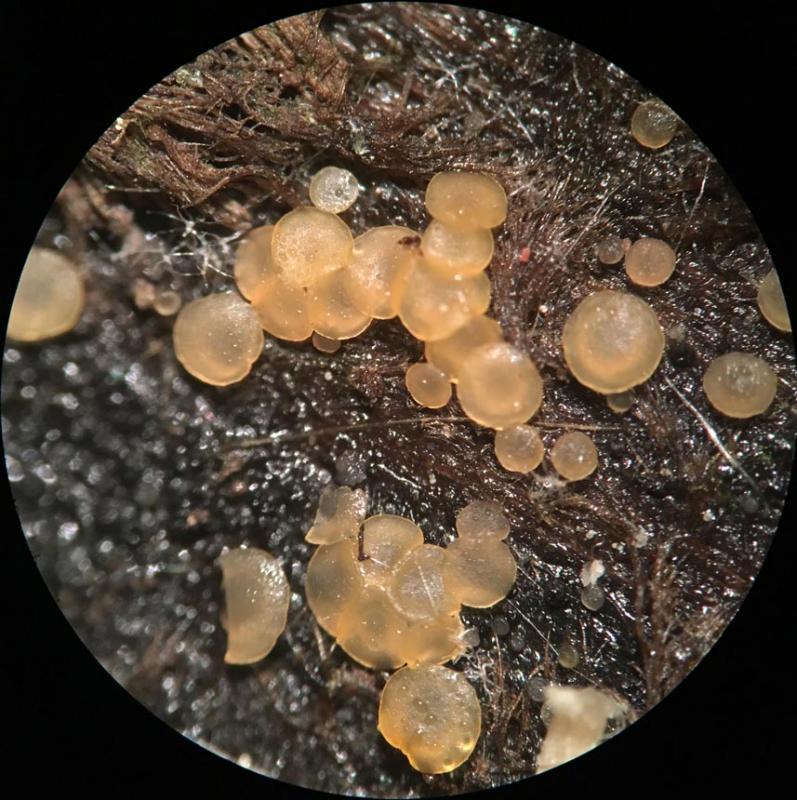
This Orbilia is from a decorticated branch of hardwood, probably found on the ground (it was not my collection, it was handed to me) from a New York City park last weekend.
I initially thought it might be Orbilia luteorubella, but after staring for a while at the orientation of the spores in the asci I have changed my opinion. Now I tend to think that it is Orbilia sarraziniana.
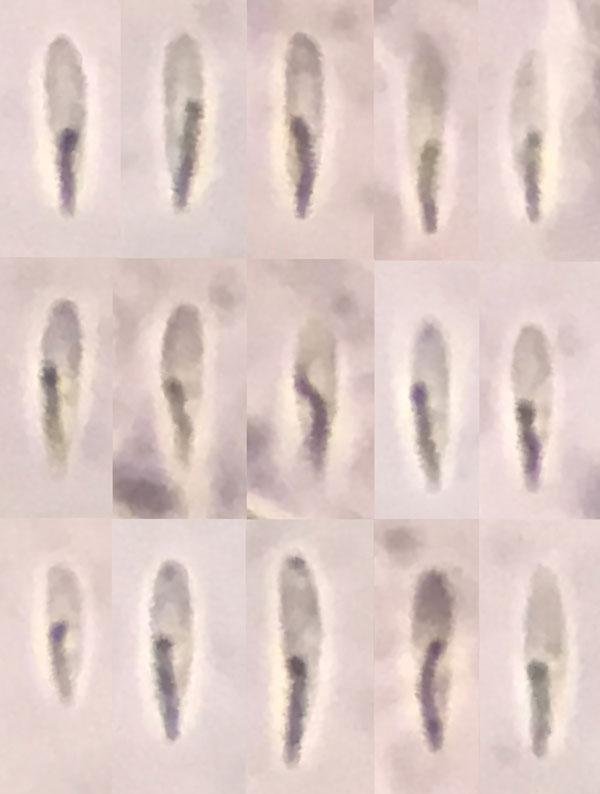
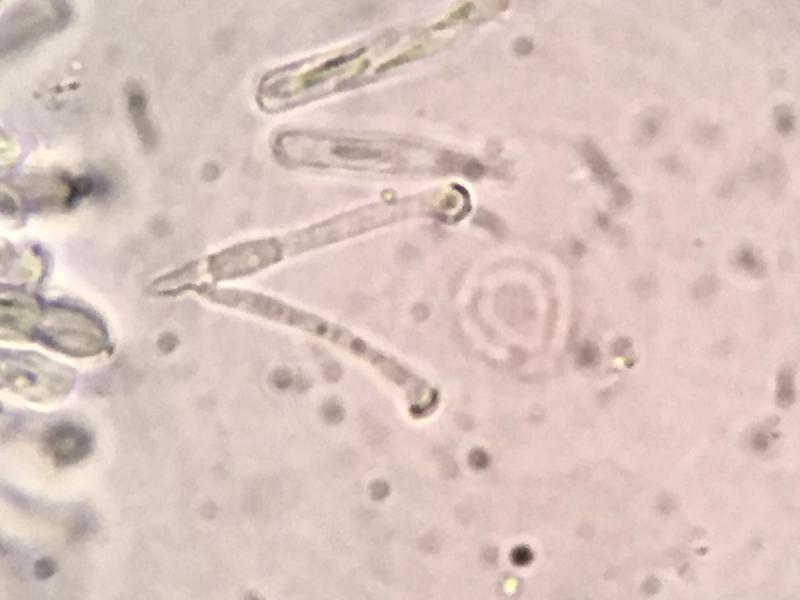
Spores:
fusiform-clavate, with one acute end and one rounded end. The spore body a long, sometimes winding form ending at the pointed end of the spore:
4.9-7.5 x 1.3-1.6µm.
fusiform-clavate, with one acute end and one rounded end. The spore body a long, sometimes winding form ending at the pointed end of the spore:
4.9-7.5 x 1.3-1.6µm.
The spore body 2-4µm in length
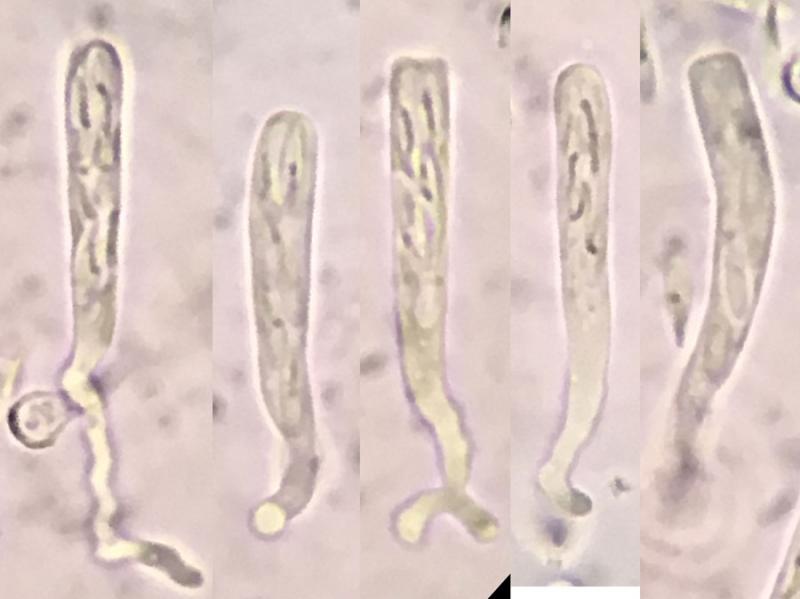
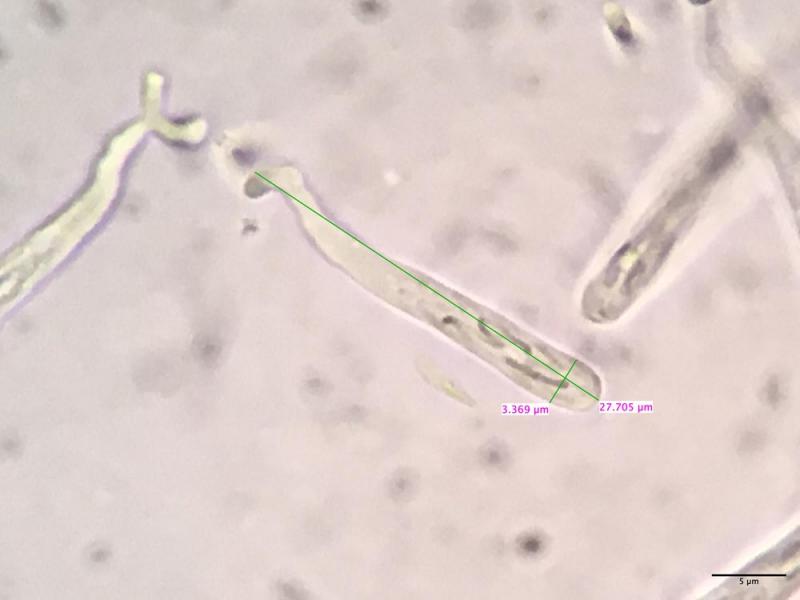
Asci:
22.9-27.7 x 3.4-3.9µm (I know this probably seems short.)
truncate apex, furcate base. It looks to me that the upper spores have spore bodies at the bottom, lower spores with spore bodies up.
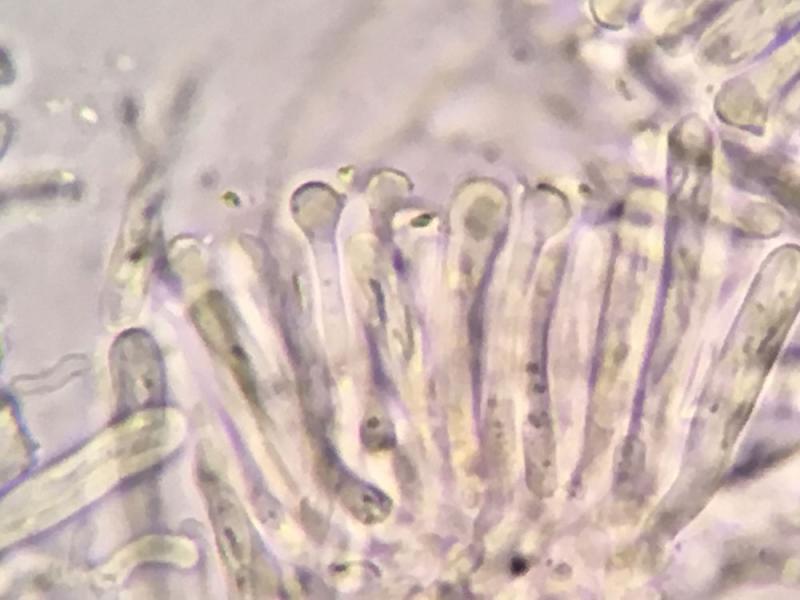
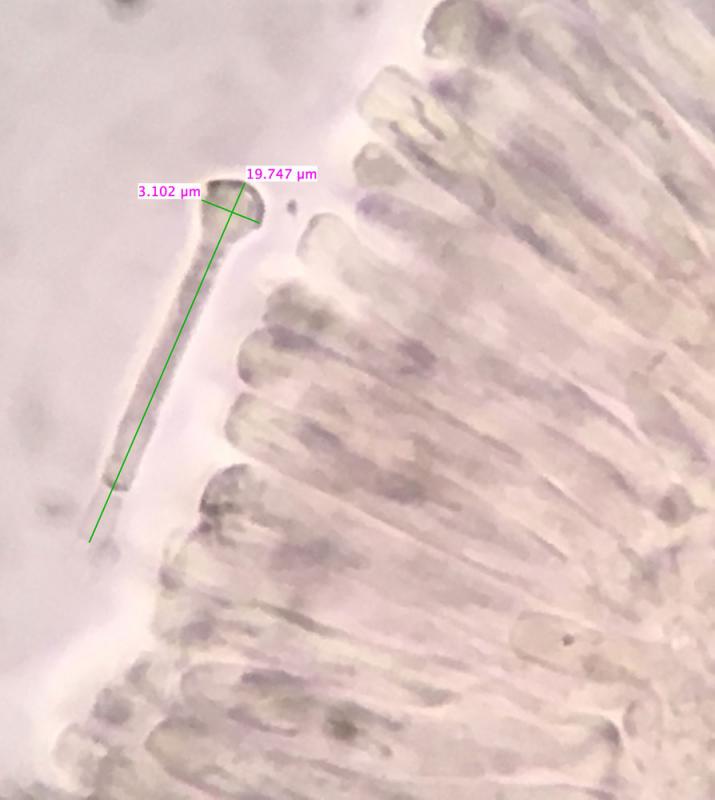
Paraphyses
capitate, with material covering the apex
19.8 x 3.1µm
capitate, with material covering the apex
19.8 x 3.1µm
I don't have images of the conidia, unfortunately. In fact, the bulb blew on my microscope and I am waiting for a replacement, so I can't check for them until the replacement bulb comes in the mail.
Is it possible to tell from this evidence?
Many thanks in advance,
Ethan
Hans-Otto Baral,
30-05-2024 09:36

Re : Orbilia sarraziniana or Orbilia luteorubella ?
Hi Ethan
indeed I would classify this as O. sarraziniana. Besides spore orientation O. luteorubella and O. rosea have longer spores, though this much overlaps.
Although the upper spores are oriented inversely I would anyway speak of the acute spore end with the SB as the upper end and orient them also on plates with SB upwards.
We had some collections of this group in which there was much variation with both directions occurring near the ascus apex and at the lower end of the pars sporifera.
So the place of the SB is the indication, and you can imagine when dealing with dead spores you may easily think the acute end is the lower end.
Zotto
Ethan Crenson,
30-05-2024 14:41
Re : Orbilia sarraziniana or Orbilia luteorubella ?
Hi Zotto,
Thank you as always for your help!
Ethan