10-06-2026 21:16
 François Freléchoux
Bonsoir,Le dernier du jour, en attendant votre avi
11-06-2026 19:01
 William Slosse
Hello all,In an attempt to make a culture of a sus
11-06-2026 19:03
 Nicolas VAN VOOREN
Chers membres d'Ascofrance,Le site sera placé en

09-06-2026 18:32
Camille MertensSur morceau de roseau immergé 0,5 - 0,7 mm de dia
10-06-2026 12:54
Steve ClementsBonjour encore, Pouvez-vous m'aider, s'il vous pl
10-06-2026 21:07
François Freléchoux
Toutes les tiges de gentianes jaunes de l'an passÃ
10-06-2026 13:41
François Freléchoux
Bonjour à nouveau, Voici une trouvaille d'hier.
10-06-2026 11:53
Steve ClementsBonjour, This disco is abundant on dead stems of
asco possibly Encoelia-like, reviving after drying out and rehydrating
Ethan Crenson,
11-05-2024 00:33
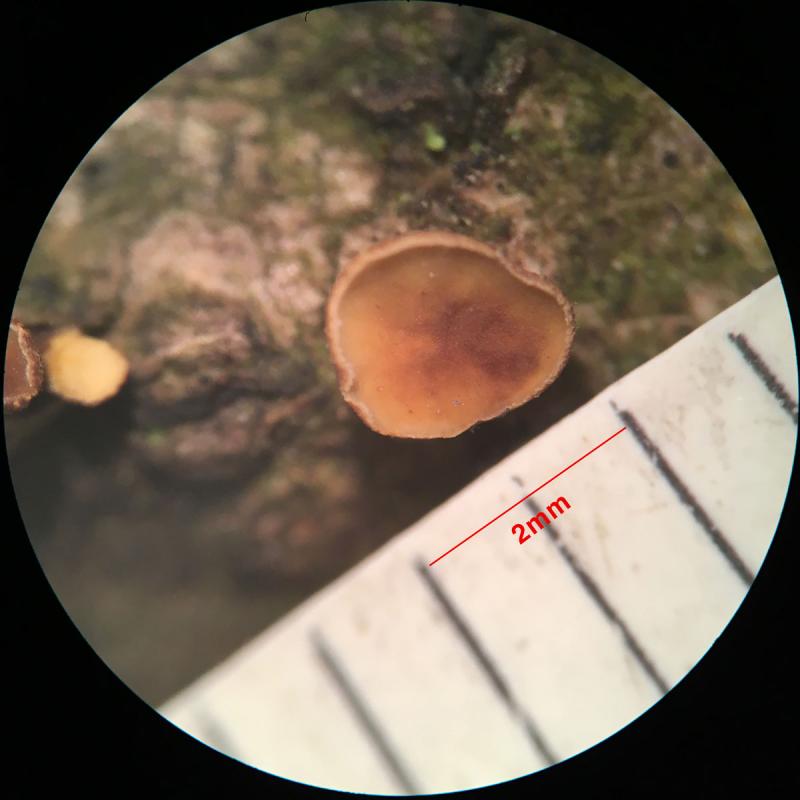
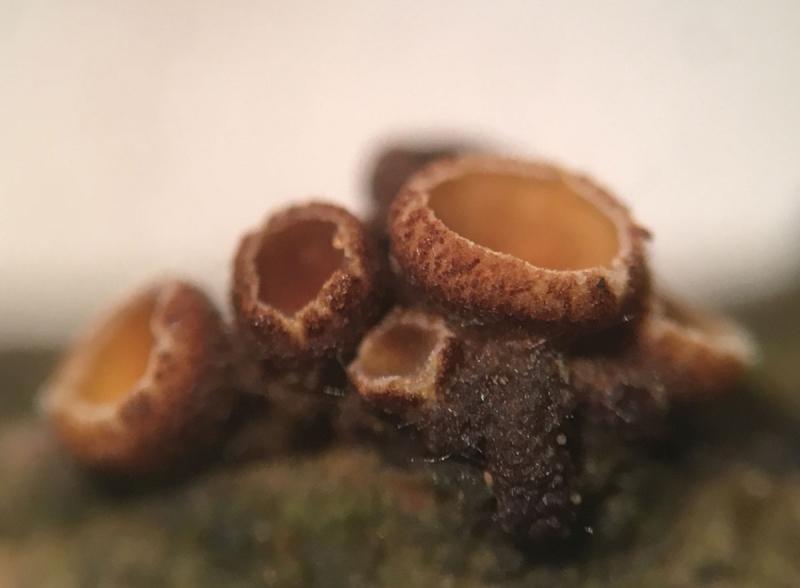
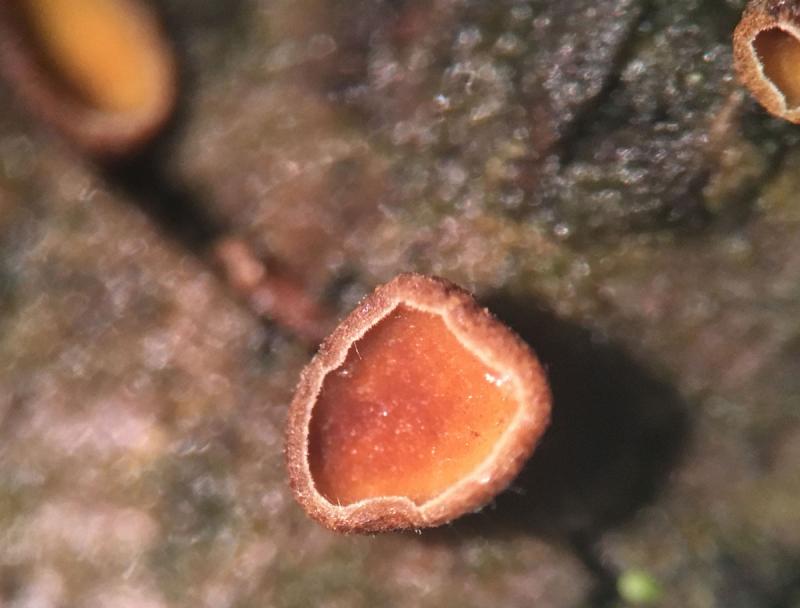
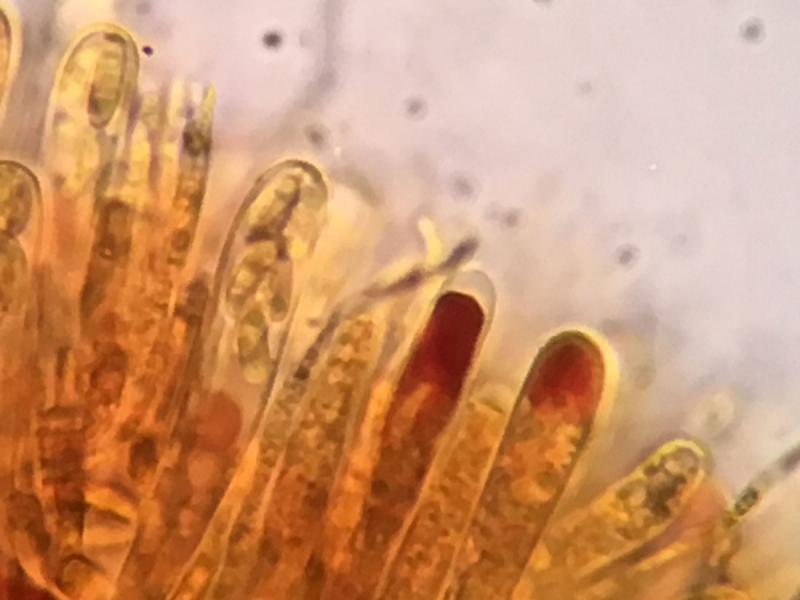
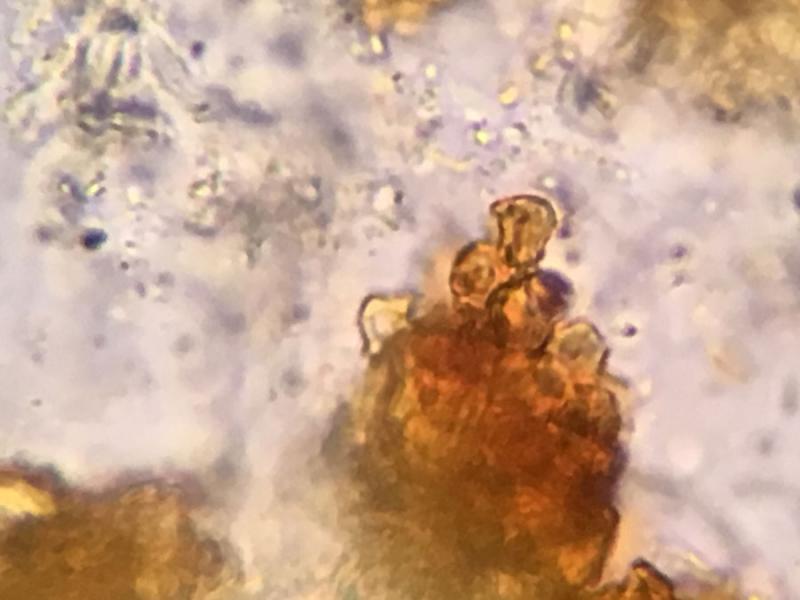
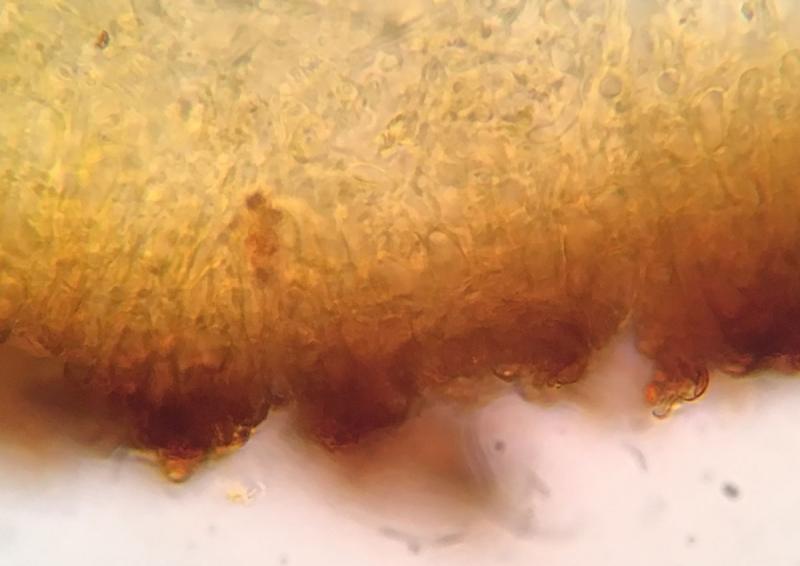
I'm not entirely sure that Encoelia-like is the right way to describe this. These cups were found on a branch of hardwood in the Eastern US. They were brown and shriveled in the field, but rehydrated to a fairly stunning appearance when left in a moist chamber for a day. The hymenium is yellow, becoming orange brown. The receptacle is scurfy brown. They are clustered and erumpent through the bark. The largest one is slightly larger than 2mm in diameter. Some have a short pseudo stipe.
Asci:
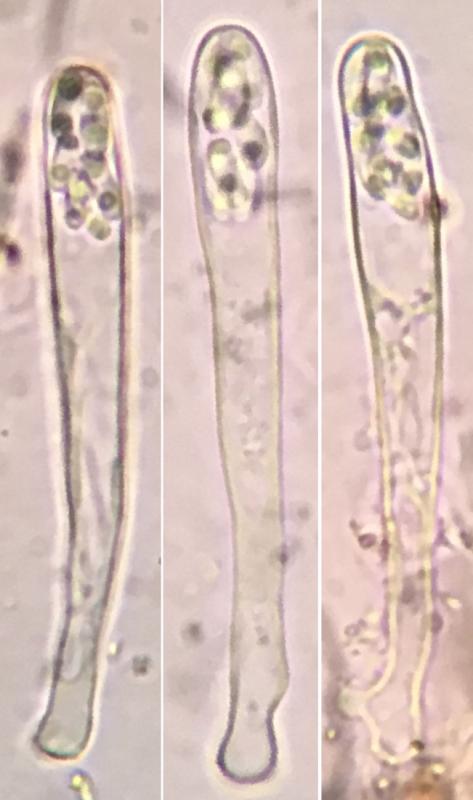
IKI-, croziers+, clavate, 35-54 x 4-7µm
IKI-, croziers+, clavate, 35-54 x 4-7µm
Spores:
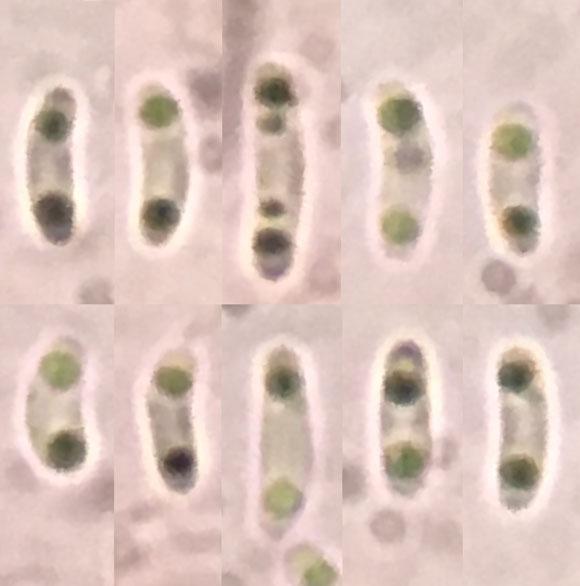
biseriate in the asci, hyaline, fusiform, sometimes slightly curved, usually with two oil drops,
5.0-7.6 (8.5) x 1.7-2.0 (2.3)µm
Me 6 x 1.9µm
N=48
Q 2.5-4.3 MeQ=3.1
Paraphyses:
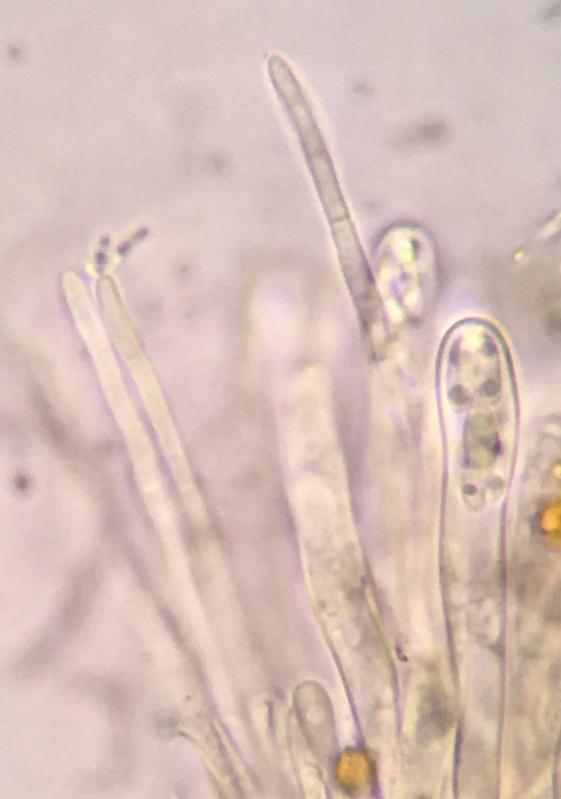
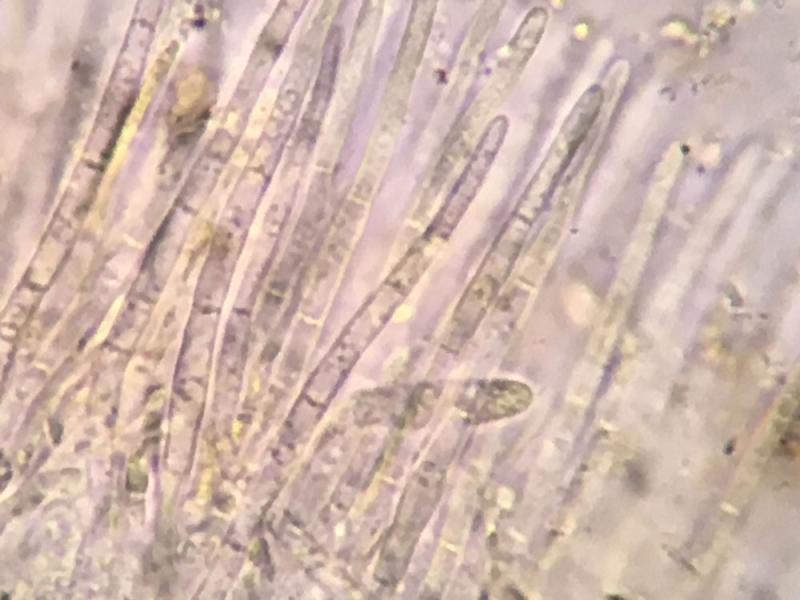
septate, slightly tapering, about 2µm wide
Ectal excipulum brown, textura angularis.
Any help would be greatly appreciated.
Ethan
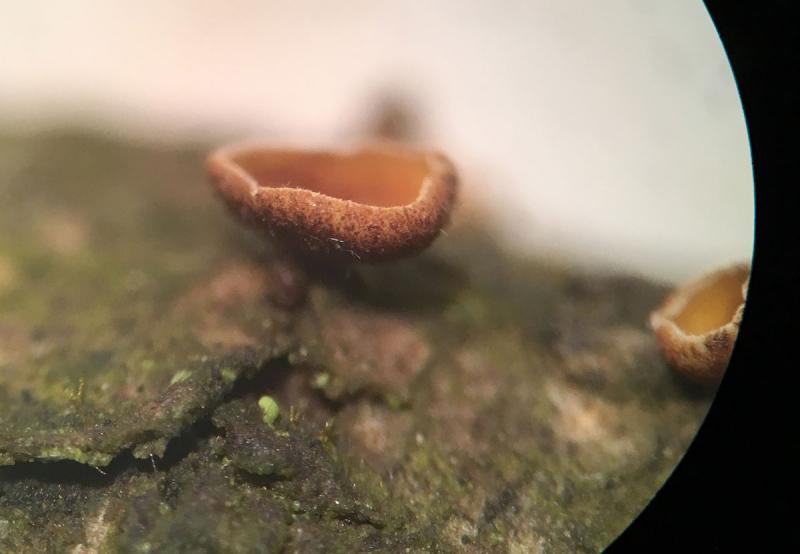
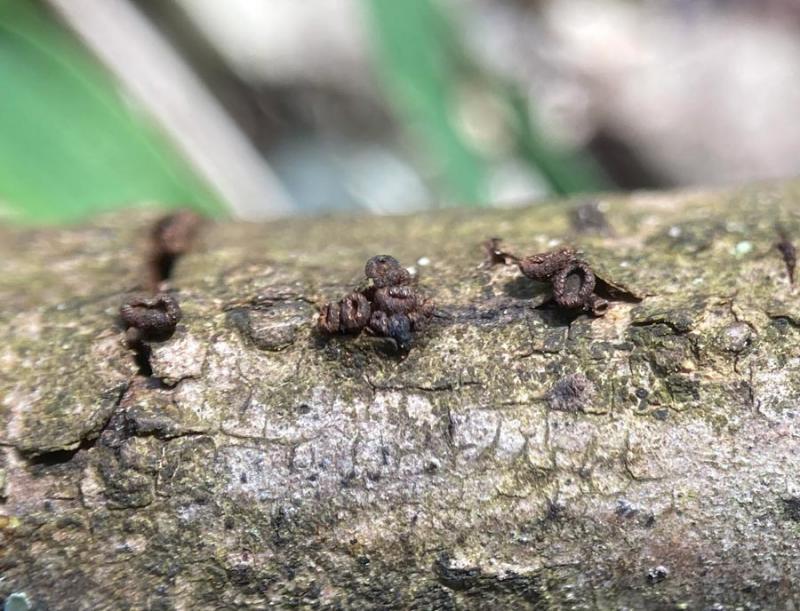
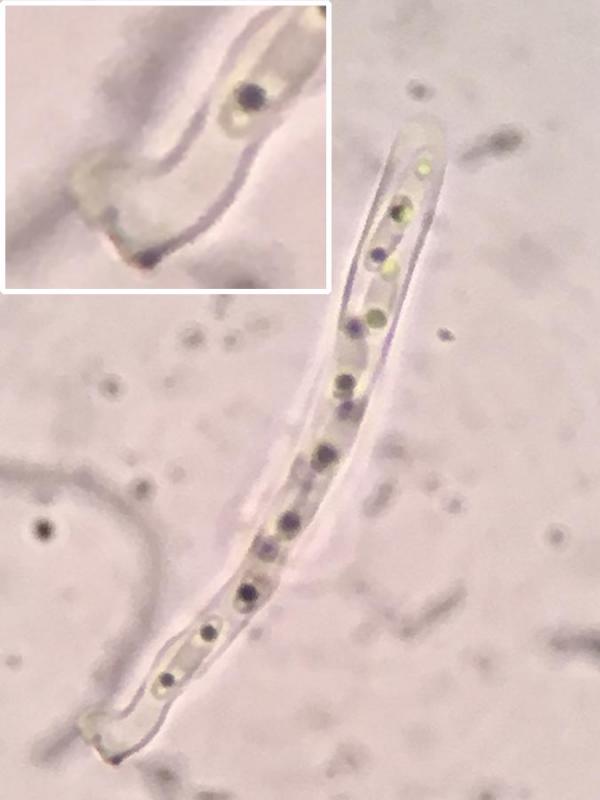
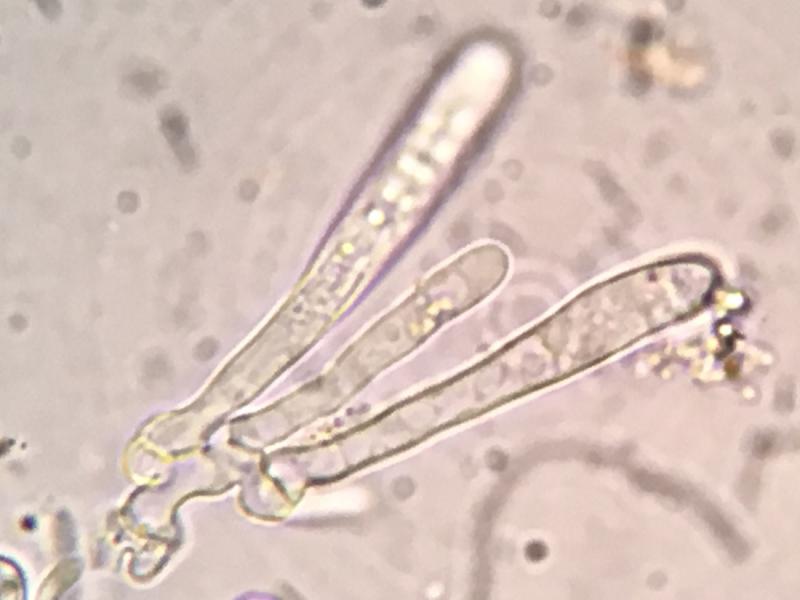
Hans-Otto Baral,
11-05-2024 08:32

Re : asco possibly Encoelia-like, reviving after drying out and rehydrating
Good docu! How large are the apos? Encoelia is a very small genus now. Since the paraphyses do not contain VBs I rather consider a Cordieritidaceae. Did you try KOH for the ionomidotic reaction? It could be the collemoides complex in my "Ionomidotis aff." folder.
Ethan Crenson,
11-05-2024 15:11
Re : asco possibly Encoelia-like, reviving after drying out and rehydrating
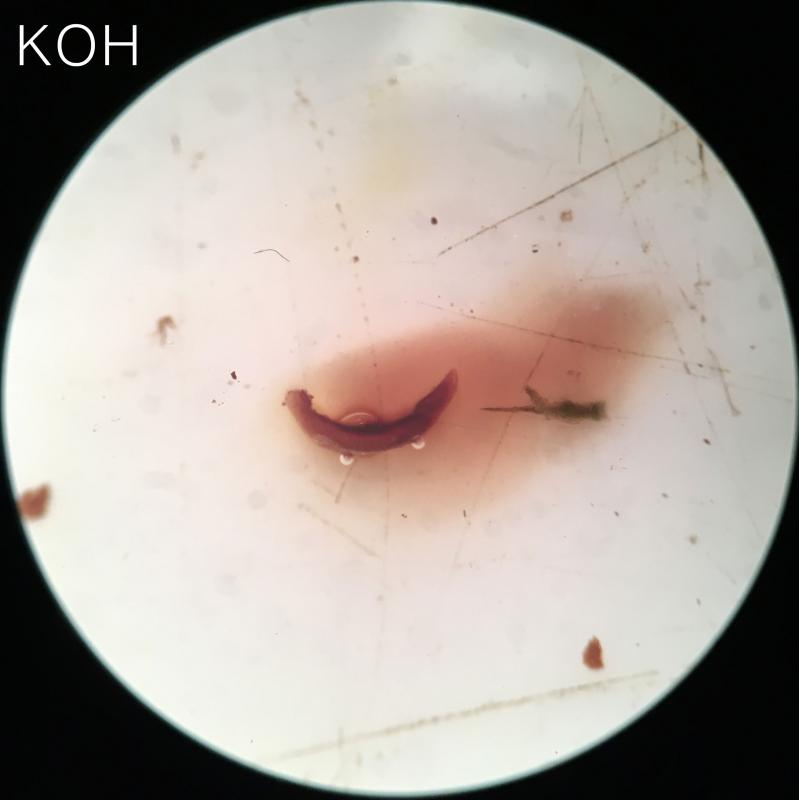
The apos are up to 2mm. KOH has yielded red pigents, so positive for ionomidotic reaction.
The embarrasing thing is that I have found this before. I just didn't recognize it. The photos labeled Ionomidotis fulvotingens ochre in your folder are my collection from Untermyer Gardens in Yonkers, NY. Is this rather something closer to I. collemoides? If possible I will sequence this. I have not had good luck sequencing Ionomidotis however.