
10-06-2026 21:16
 François Freléchoux
Bonsoir,Le dernier du jour, en attendant votre avi
11-06-2026 19:01
 William Slosse
Hello all,In an attempt to make a culture of a sus
11-06-2026 19:03
 Nicolas VAN VOOREN
Chers membres d'Ascofrance,Le site sera placé en

09-06-2026 18:32
Camille MertensSur morceau de roseau immergé 0,5 - 0,7 mm de dia
10-06-2026 12:54
Steve ClementsBonjour encore, Pouvez-vous m'aider, s'il vous pl
10-06-2026 21:07
François Freléchoux
Toutes les tiges de gentianes jaunes de l'an passÃ
10-06-2026 13:41
François Freléchoux
Bonjour à nouveau, Voici une trouvaille d'hier.
10-06-2026 11:53
Steve ClementsBonjour, This disco is abundant on dead stems of
Bactridium flavum
B Shelbourne,
14-04-2024 22:58
 • Bactridium flavum (anamorph): Distinctive macro and habitat.
• From what I can determine, a teleomorph is not known, and the genus is insertae sedis (hyphomycete).
• I struggled to find a good reference online for describing the morphology of sporodochia.
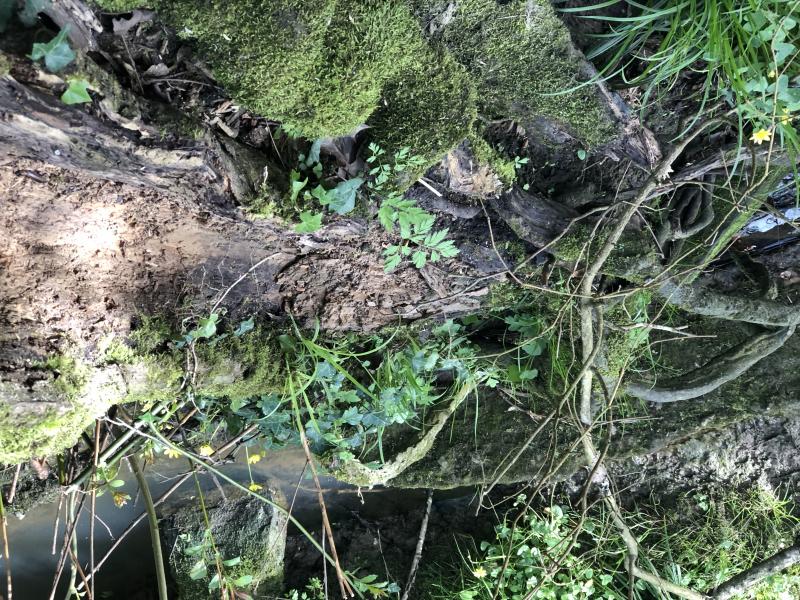
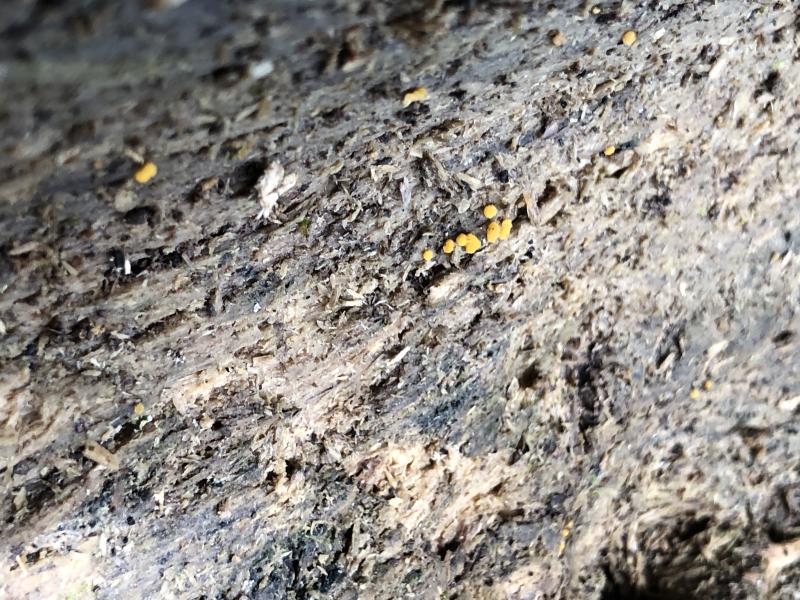
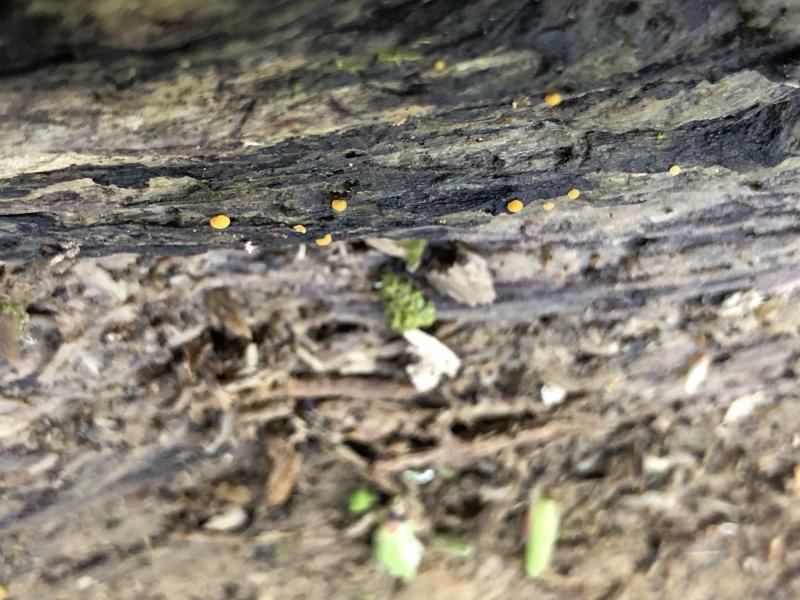
Habitat: On damaged and decaying wound on the trunk of living deciduous tree, decorticated parts, very damp when observed but presumably dries out occasionally, near the base, lower part of trunk lying on the floor, tree rooted in a small stream (often dries out in dry weather), shady area, mixed deciduous woodland, Low Weald, England (south), mid-April, after rain.
Associates: Algae, bryophytes nearby, some small plants apparently growing in detritus on the decaying wood.
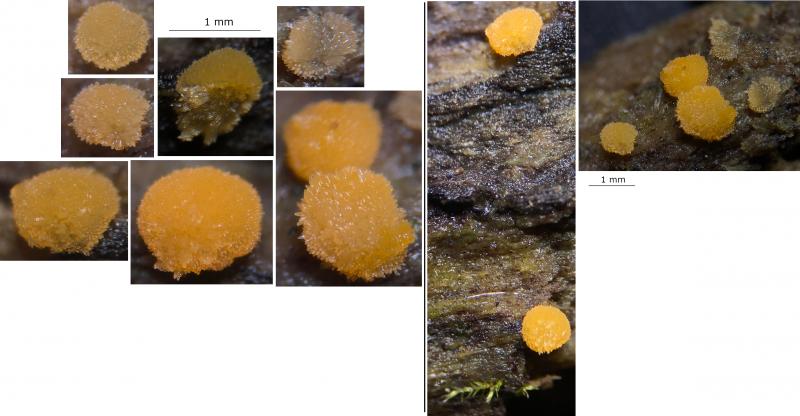
Conidiomata: Sporodochia (pulvinate and short conidiophores), broadly distributed across the decorticated part, scattered to gregarious, sometimes 2-caespitose, 0.9-1.2 (1.4) mm diameter, pale whitish to bright orange-yellow (depending on density of conidia and possibly age), pulvinate to globose, formed of dense conidia giving frosted or densely warty appearance, loosely structured with soft texture, appearing to 'burst' when pressure initially applied, no anchoring hyphae or subiculum observed; conidia clearly visible under 20x magnification, translucent orangish, apical cell more opaque and whitish.
Storage and methods: Stored for ~36 hours in a damp box, structure made it difficult to section, an edge section taken from a single average-size mature looking apothecia, mounted in water, increasing pressure applied to separate cells, IKI added to water mount.
IKI: Conidia strongly dextrinoid (dark red), other cells with some yellowish contents.
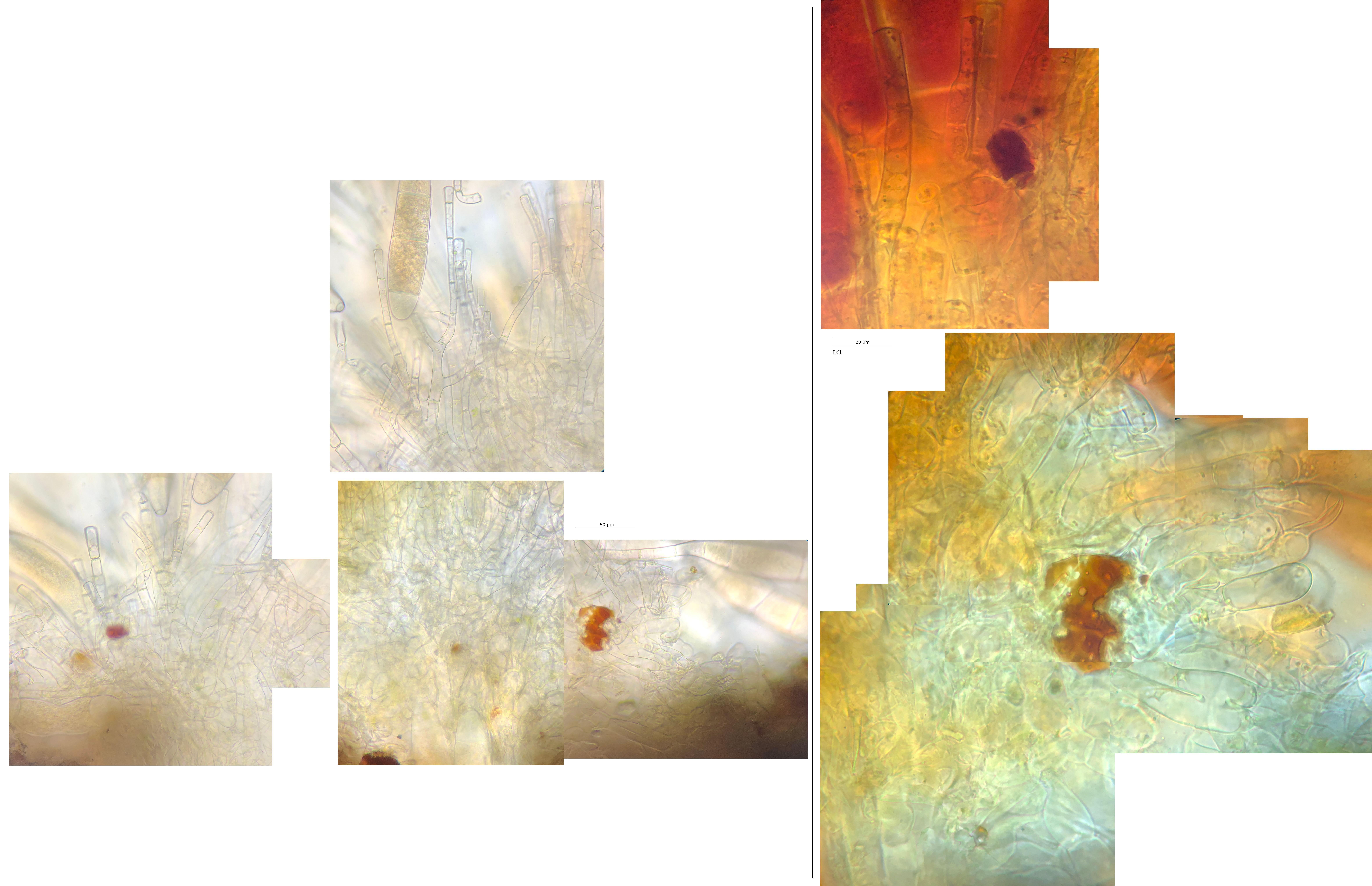
Conidiophores: < 250 µm long, hyaline, smooth, multi-septate, Woronin bodies visible around the septa, several small shadowy LBs, cells ~15-30 µm long, cylindrical, tapering slightly, apical cell ~7-9 µm wide and often short, basal cell ~10-13 µm wide, regularly branching (dichotomously), septum on one side after branching, terminal branches with ~5 cells and apex developing a single conidium by blowing out the end, anastomosis regularly observed (even between terminal branches) and apparently septating, gradually vacuolising and becoming filled with medium-size hyaline vacuoles each with an LBs inside.
Conidia: Large phragmoconidia, cylindrical-ellipsoid to slightly clavate, apex rounded-hemispherical, sometimes more acute when mature, with truncate hilum, apparently with 3-4 (5) septa in maturity, occasionally Woronin bodies seen, only transverse sept observed, yellowish contents (VBs?) usually more concentrated in central cells, subapical cell often larger and sometimes cell below, many small LBs, contents deforming when dead and cells less turgid (no photos).
Measurements for vital conidia in IKI with 3-5 septa: (127) 147-167 (193) × (28) 32-35 (40) µm, Q = (3.9) 4.4-5.1 (5.2), n = 15, mean = 158 × 34 µm, Q mean = 4.7.
Base/mycelium: Pseudostroma?, hyaline, appearing partially immersed, forming a textura intricata with branching, at the edge hyphae with short protruding part similar to marginal cells.
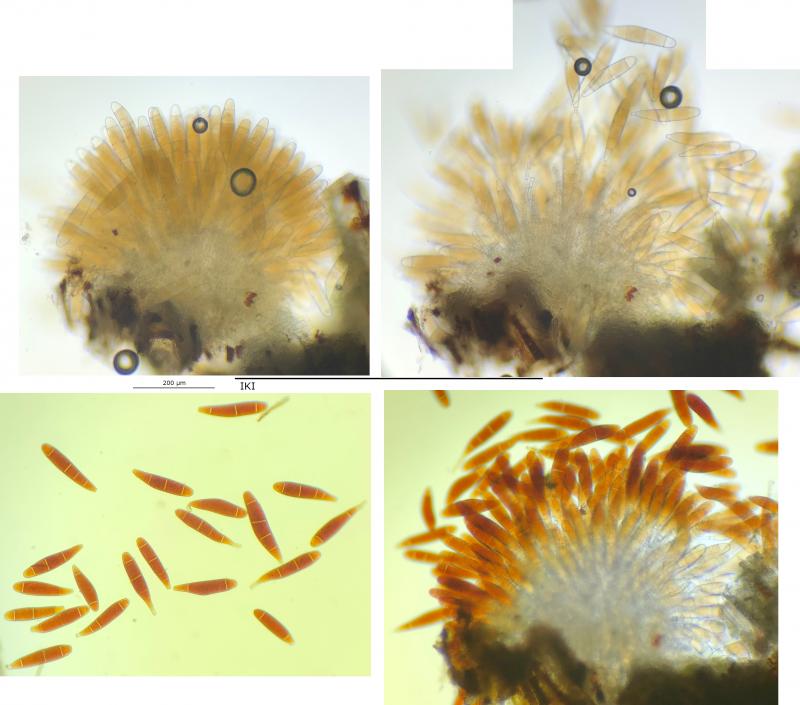
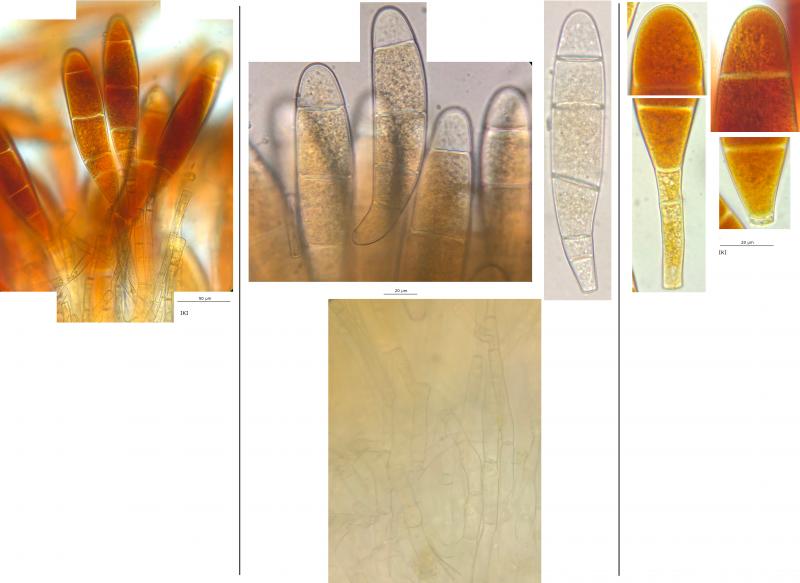
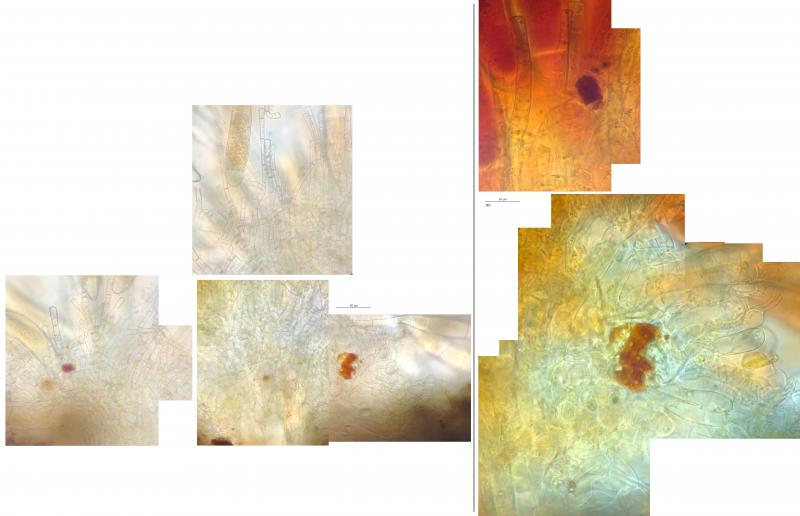
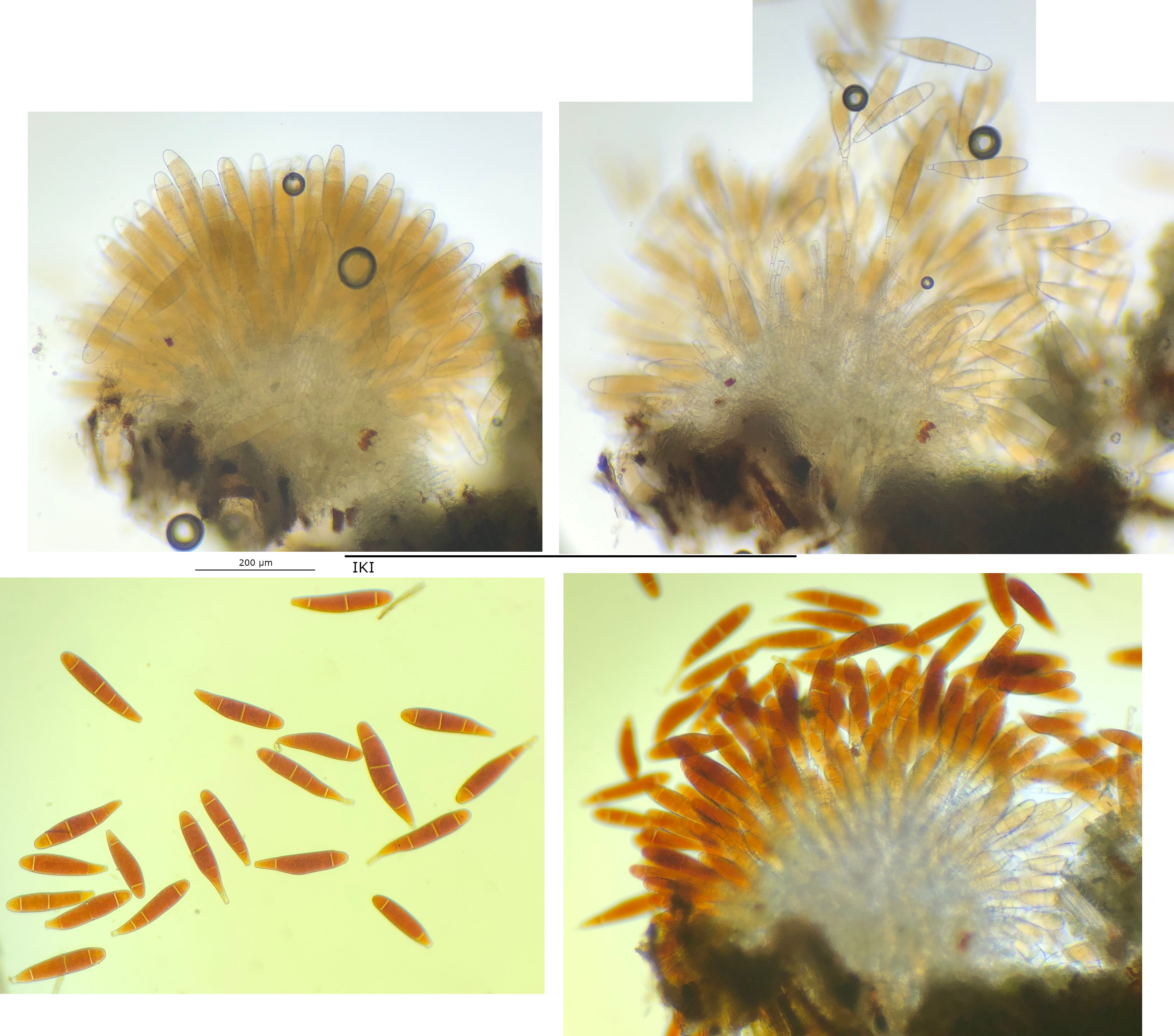 10x-0001.jpeg
 Base-0001.jpeg
Nicolas VAN VOOREN,
16-04-2024 19:16
Re : Bactridium flavum
Yes, this B. flavum but there exists several phylospecies under this name. They belong to the family Pyronemataceae. A forthcoming paper is in prep...
B Shelbourne,
16-04-2024 20:36
Re : Bactridium flavum
Thank you for looking and the information.
I saw this placement of the genus in iNaturalist, but I wasn't sure as I couldn't find a reference with a quick search.
At first glance, the sporodochia seem to have few characters, so I look forward to seeing the paper and some nice descriptions and depictions of the anatomy.
I saw this placement of the genus in iNaturalist, but I wasn't sure as I couldn't find a reference with a quick search.
At first glance, the sporodochia seem to have few characters, so I look forward to seeing the paper and some nice descriptions and depictions of the anatomy.