
03-06-2026 14:39
Thomas FlammerApothecia yellow, glassy-transparent, 80 - 120 ymS
16-03-2014 13:39
 Enrique Rubio
HI to all I'm looking for B. Hein's article on Wi

02-06-2026 14:33
 Nicolas VAN VOOREN
Hello.I'm searching for a PDF copy of the followin
18-10-2022 00:12
Valencia Lopez Francisco JavierHola amigos/asRecientemente encontré esta colecci
02-06-2026 17:58
Louis DENYBonjour forum, Sur feuille de Populus tremula, en

28-07-2011 18:31
 Alex Akulov
Dear FriendsToday I made the pdf file of Velenovsk
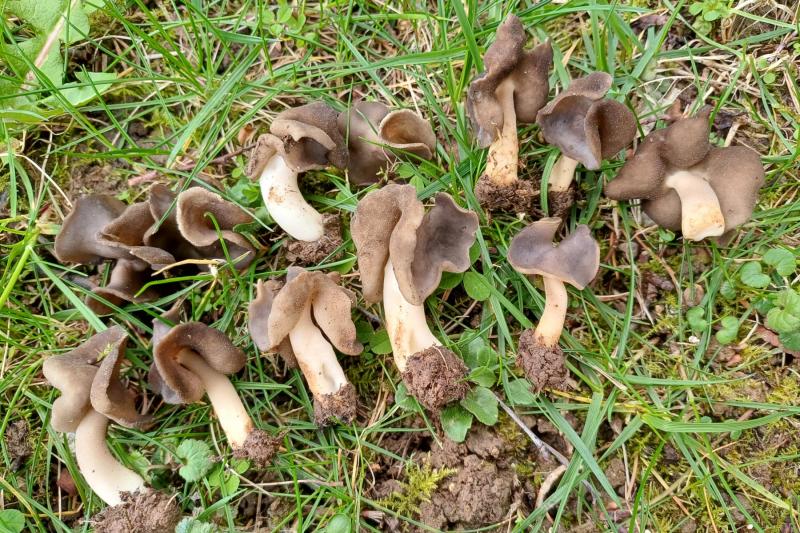
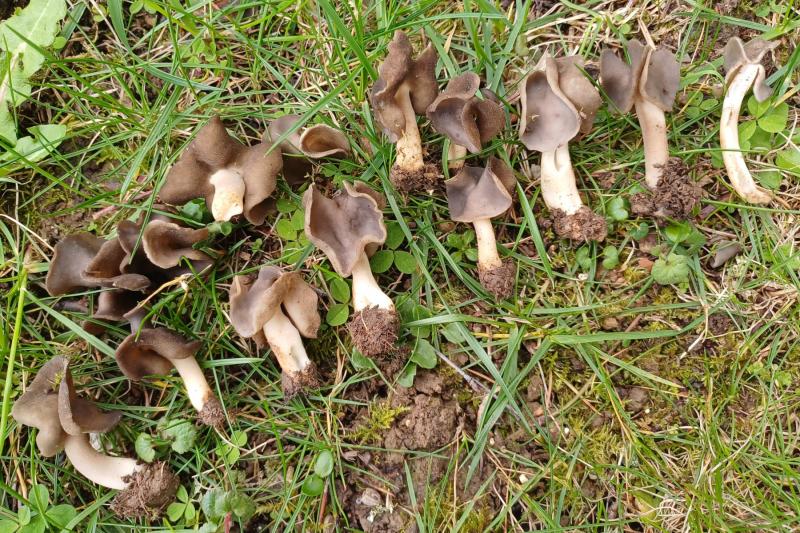
Récolte le 31/03/2024 – Somme (80) – France – Etude sur matériel frais vivant.
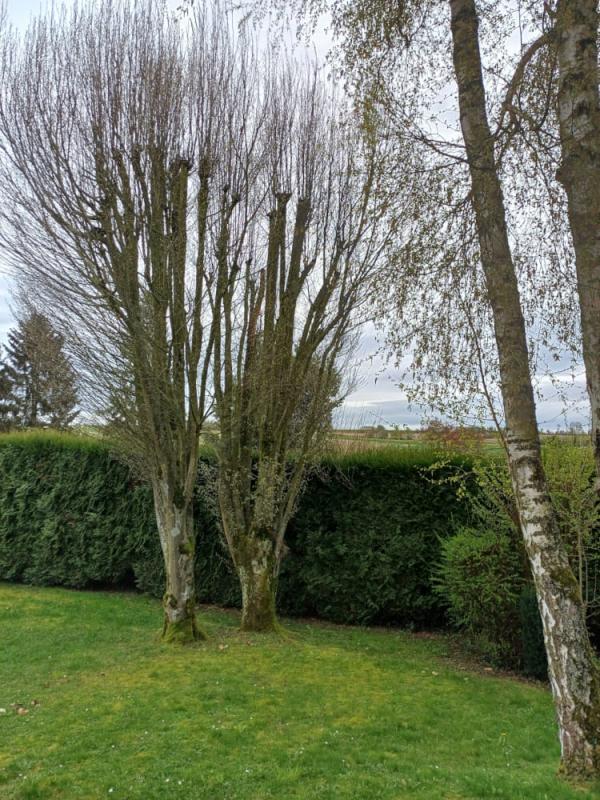
Une trentaine de fructifications dans la pelouse d'un jardin sous Carpinus betulus en mélange avec des Tricholoma groupe scalpturatum/argyraceum.
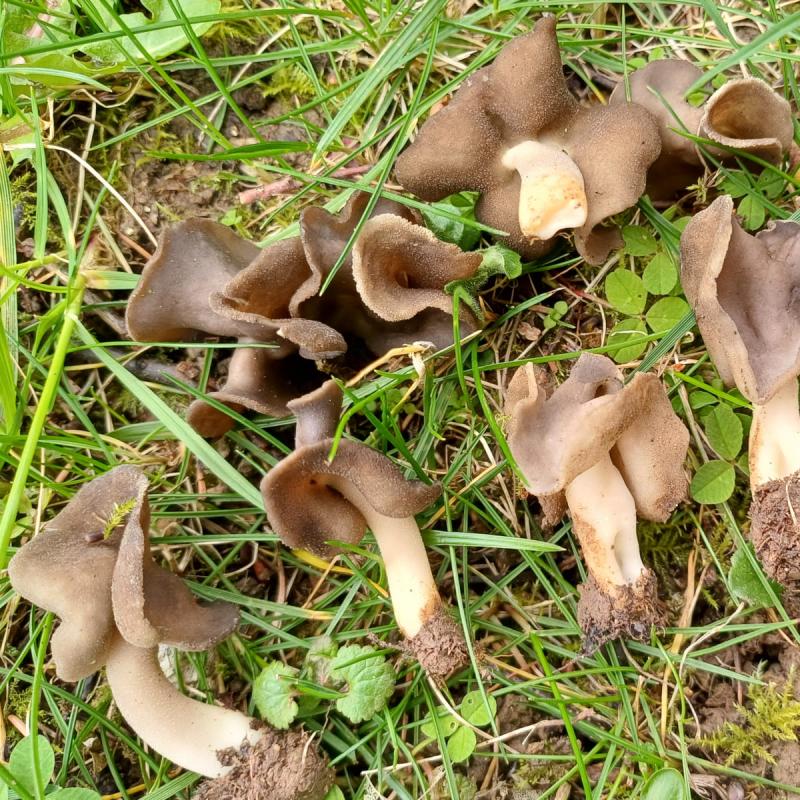
Apothécies stipitées hautes de 40mm. Partie fertile en forme de selle, de largeur 20mm. Hyménophore lisse gris/brun. La face externe est plus claire, nettement garnie de furfurations blanches visibles à l'œil nu la plupart du temps. Le stipe fait 0.8mm de large sur l'exemplaire le plus trapu, longtemps blanc puis tâché de brun, souvent finement villeux à l'œil nu surtout dans la moitié supérieure.
Sporée dans l'eau d'un premier specimen : 15 mesures = 17.8[18.6;19.0]19.8 x 12.9[13.6;14.0]14.6µm soit Q = 1.3[1.35 ;1.4]1.5
Sporée dans l'eau d'un second specimen : 15 mesures = 17.4[18.8;19.7]21.0 x 11.9[12.8;13.4]14.3µm soit Q = 1.4[1.45]1.5
Je pense que j'ai affaire à Helvella sublicia = H. ephippium mais j'ai tout de même des doutes: est-ce que la fructification est suffisamment villeuse et la littérature donne des spores moins larges. Qu'en pensez-vous ?
En vous remerciant d'avance,
Pierre-Yves
31/03/2024 – Somme (80) – France – Study on fresh living material.
In the grass of a garden, under Carpinus betulus, next to fruitbodies of Tricholoma scalpturatum/argyraceum group.
Saddle-shaped & stipitate apothecia (height 40mm – width 20mm).
Hymenium from greyish to brownish.
External side a bit lighter, clearly furfuraceous with naked eye most of the time.
Stem 0.8mm wide at most, white then stained, often villose with naked eye especially on the upper part.
Spore print in water for 1st fruitbody : 15 mesures = 17.8[18.6;19.0]19.8 x 12.9[13.6;14.0]14.6µm - Q = 1.3[1.35 ;1.4]1.5
Spore print in water for 2nd fruitbody : 15 mesures = 17.4[18.8;19.7]21.0 x 11.9[12.8;13.4]14.3µm - Q = 1.4[1.45]1.5
I guess this is Helvella sublicia = H. ephippium but I still have doubts : are the fruitbodies sufficiently villose and aren't the spores too wide for this species ?
Thanks in advance for your help,
Pierre-Yves
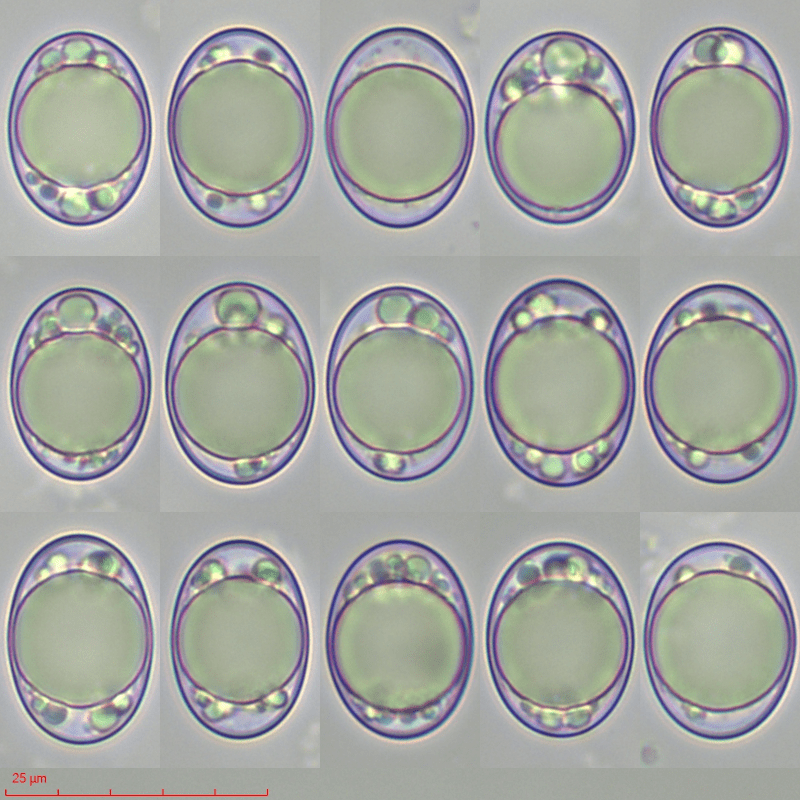
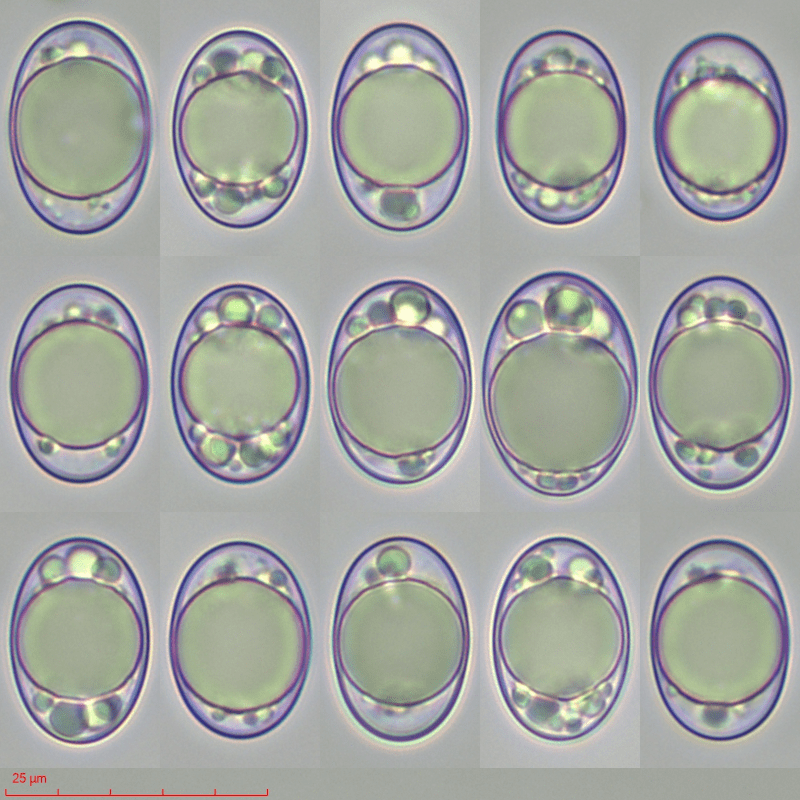

the spore proportions remind me of H. latispora. And for H. ephippium I would also expect the hymenium to be rather grey. But your apos are more robust than I have experienced with H. latispora...
Greetings, Marek
Marek, I rejected macroscopically H. levis = H. latispora as excipulum is really far from being white here. But indeed, spores could fit.