
10-06-2026 12:54
Steve ClementsBonjour encore, Pouvez-vous m'aider, s'il vous pl
09-06-2026 18:32
Camille MertensSur morceau de roseau immergé 0,5 - 0,7 mm de dia

10-06-2026 21:16
 François Freléchoux
Bonsoir,Le dernier du jour, en attendant votre avi
10-06-2026 21:07
François Freléchoux
Toutes les tiges de gentianes jaunes de l'an passÃ
10-06-2026 13:41
François Freléchoux
Bonjour à nouveau, Voici une trouvaille d'hier.
10-06-2026 11:53
Steve ClementsBonjour, This disco is abundant on dead stems of
10-06-2026 10:45
François Freléchoux
Bonjour à nouveau, Encore une détermination qui
08-06-2026 10:16
 Spooren Marco
I don`t have a clou about this fungus,it is not in
10-06-2026 09:24
François Freléchoux
Bonjour, J'imagine que cette détermination ne do
Claussenomyces? on twig of Abies
Robin Isaksson,
28-01-2024 19:20
 Hi
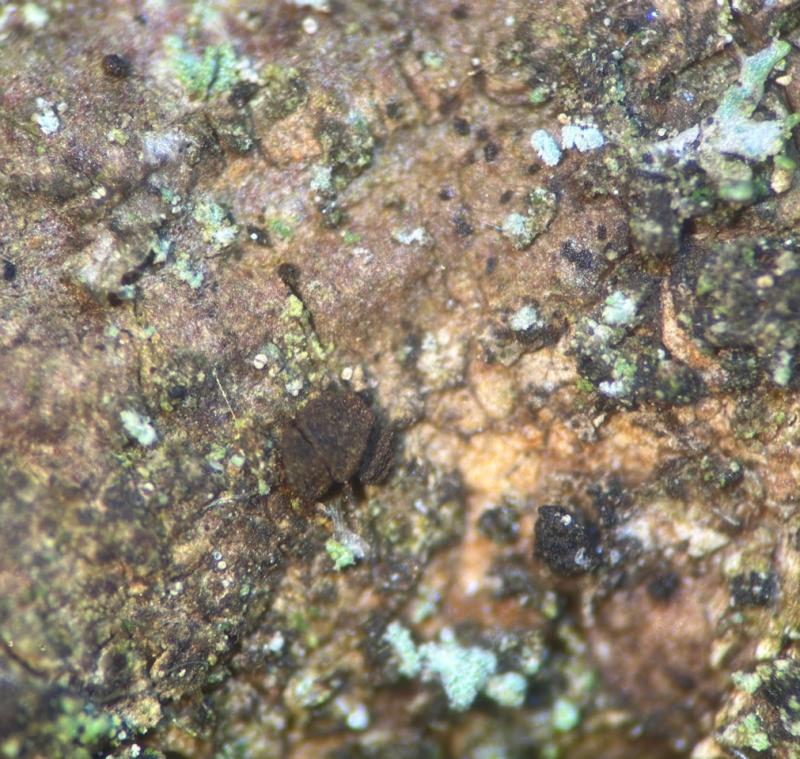
HiFound this one on a twig of Abies in Sweden.
Apothecia paler when wet.
Apothecia react K+ yellow floating substance.
Asci 8, 100-130 x 12-14, IKI -
Spores at fist aseptate finaly 1 septate, 16-19 x 8-9.5
paraphyses a litle wider at top, septate
Anyone knows it?
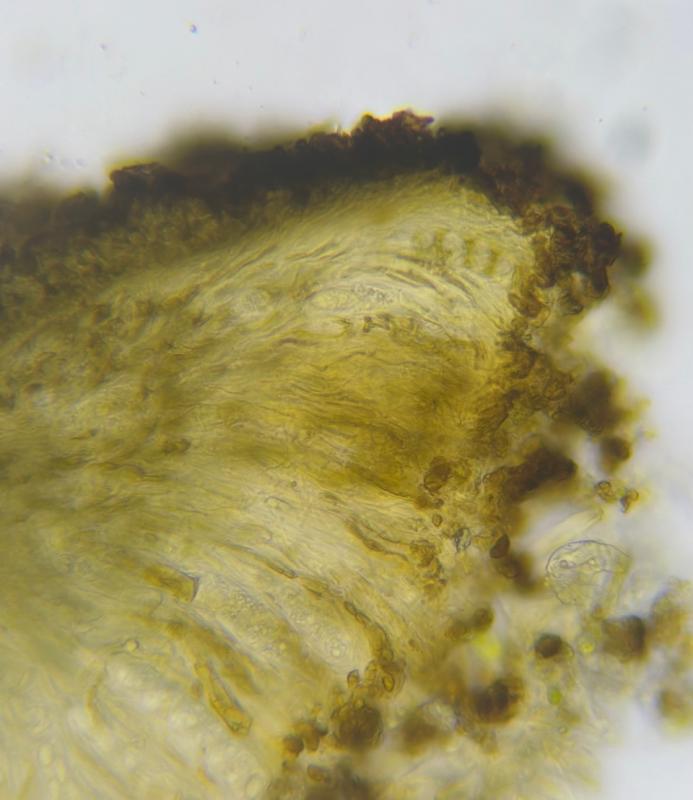
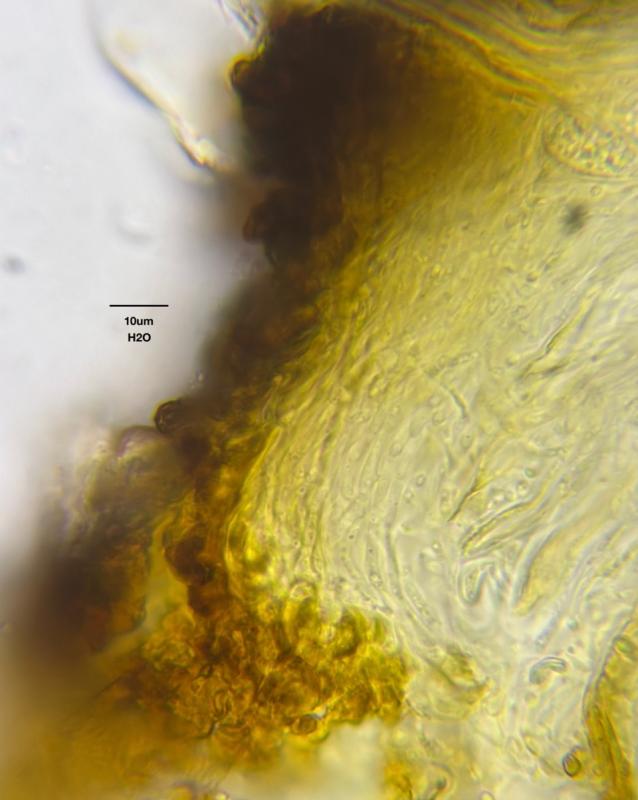
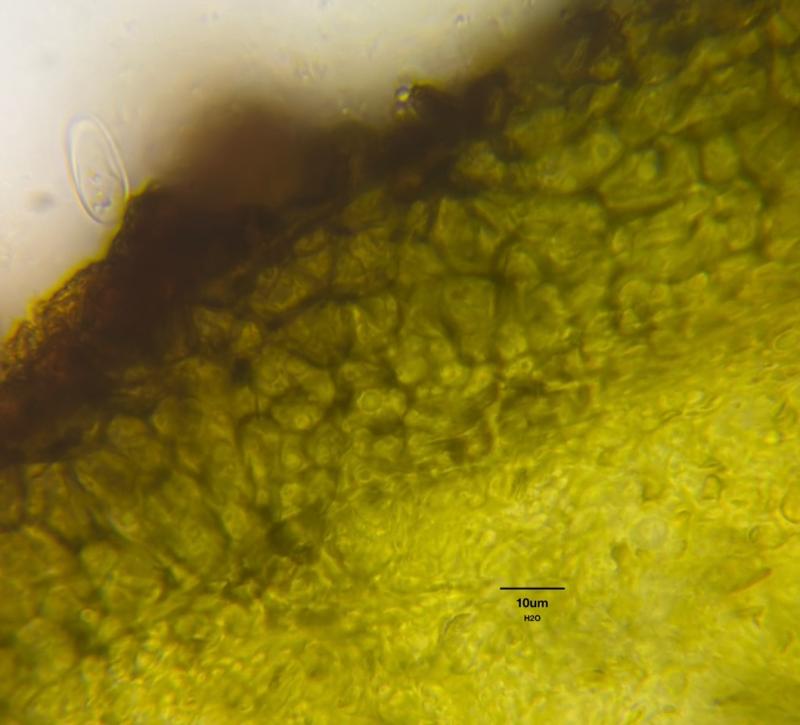
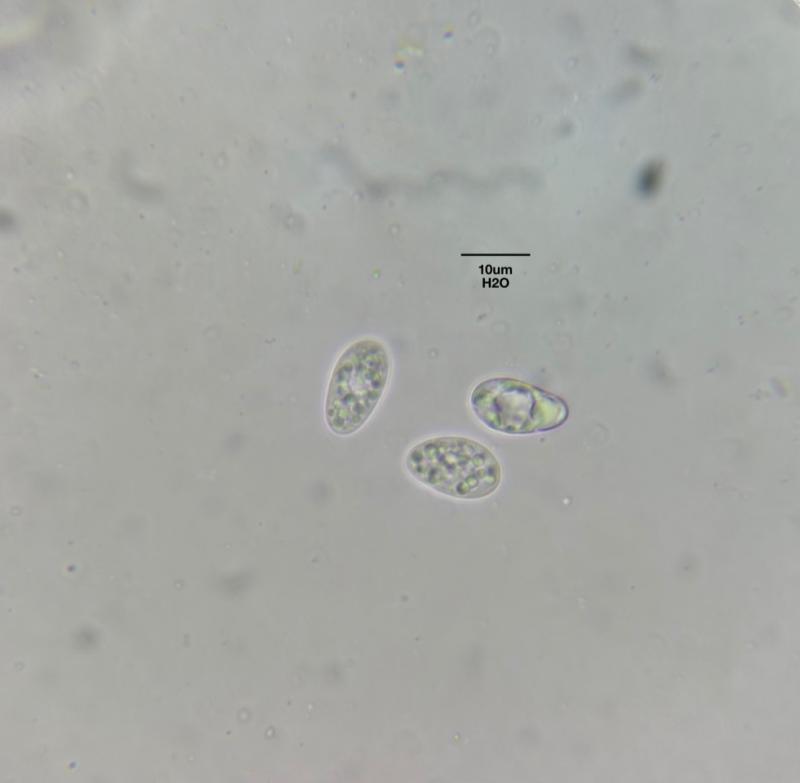
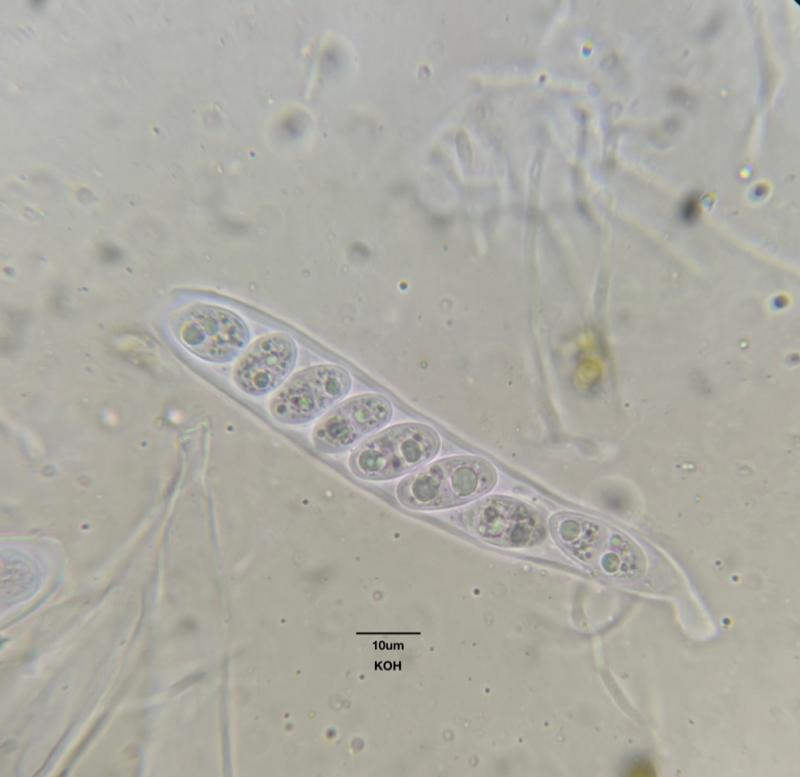
 H2O
H2O
Hans-Otto Baral,
28-01-2024 21:42

Re : Claussenomyces? on twig of Abies
Although the asci are narrower and the spores uniseriate, this sounds to me like Patinella punctiformis. I have it actually in Tympanidaceae, folder Pragmopora-like.
This is among my wishes for a sequence, I studied the type but never saw a further collection, except for one on Quercus.
Could you please measure the apo diameter? I am not sure with my 0.3-0.7 mm. Rehm measured 0.2-0.4 mm.
Robin Isaksson,
28-01-2024 21:57
Re : Claussenomyces? on twig of Abies
Dear Zotto,
Amazing as usual!
Its a good collection with many apothecia.
Regarding sequnce it i will try to convince my friend to do it.
I will measure some apothecia and take pictures tomorrow.
All the best,
Robin
Amazing as usual!
Its a good collection with many apothecia.
Regarding sequnce it i will try to convince my friend to do it.
I will measure some apothecia and take pictures tomorrow.
All the best,
Robin
Adam Polhorský,
28-01-2024 22:36
Re : Claussenomyces? on twig of Abies
Hello, this should be Pseudotryblidium neesii. Not that rare on Abies bark. Patinella punctiformis f. quercina is probably related indeed, I've seen it 2 times on Quercus bark. Not sure about Patinella punctiformis.
Adam
Hans-Otto Baral,
29-01-2024 09:49
Re : Claussenomyces? on twig of Abies
Good hint, Adam! I overlooked the KOH-reaction mentioned by Robin. That species I have in Dermateceae.
For the type of Patinella punctiformis on Picea bark I already had the note: "Similar to Pseudotryblidium neesii, but without ionomidotic reaction".
For P. neesii exist sequences in GenBank, so no need for this one.
Robin Isaksson,
29-01-2024 21:44
Re : Claussenomyces? on twig of Abies
Dear Adam and Zotto,
Thank you!
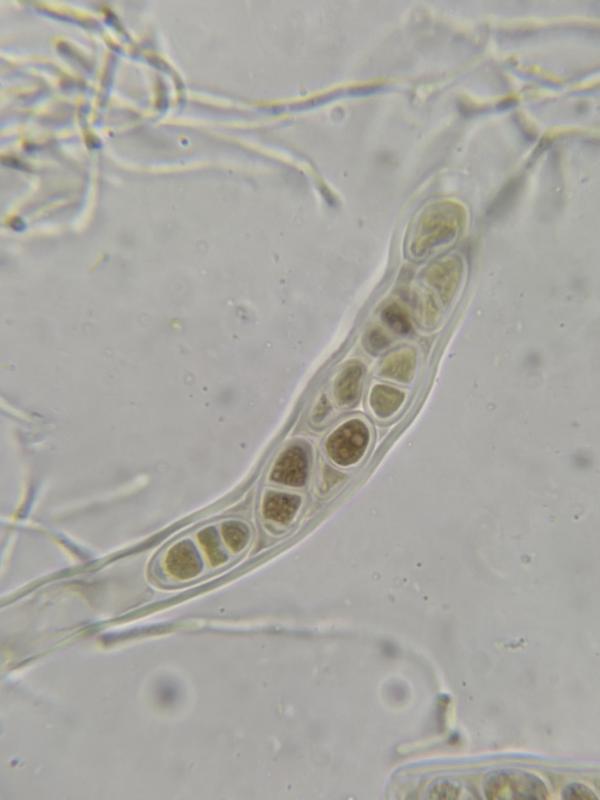
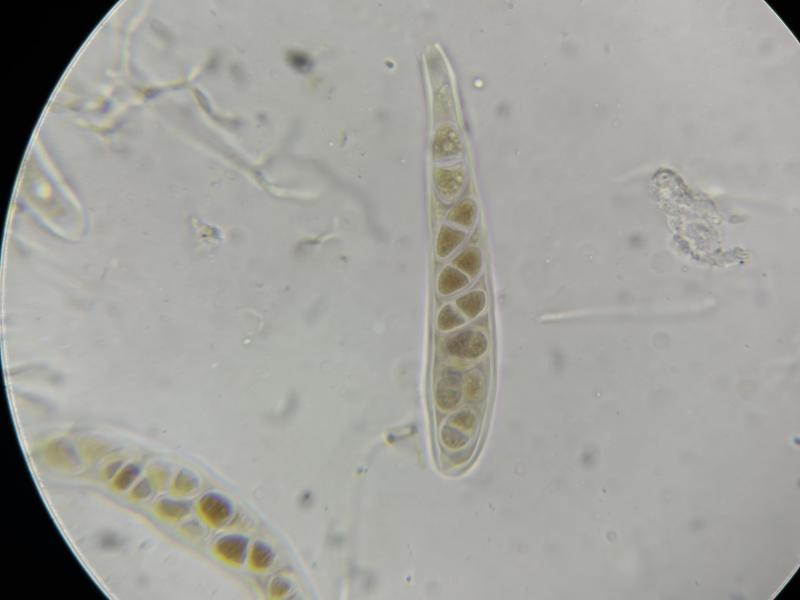
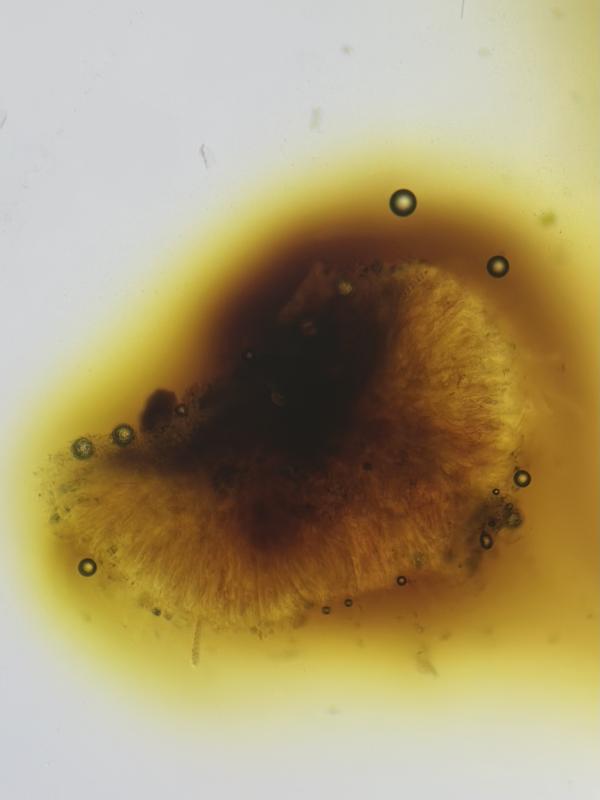
I did cut some moore apothecia, after some time i did found 2-3 septate spores in asci.
The asci is weak react brownish red in K.
I can not se the red/ purpurle reaktion in K.
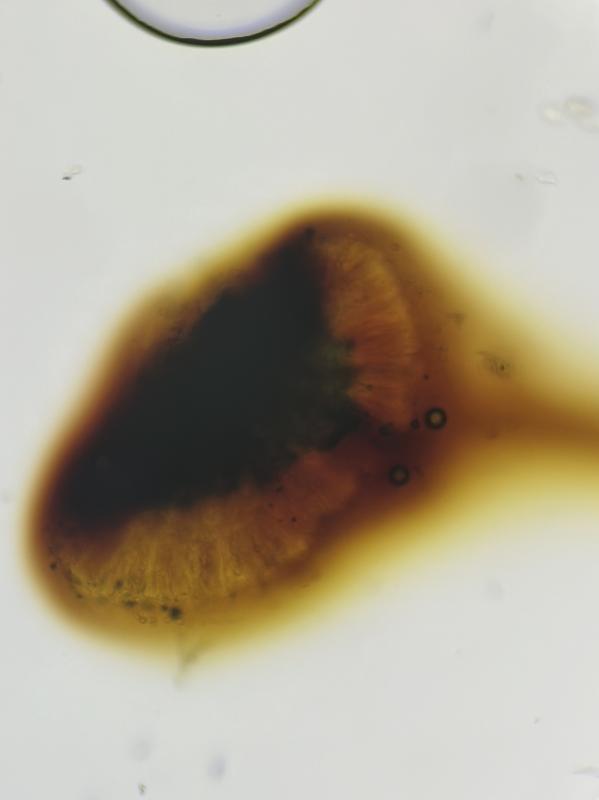
In my it become a brown floting lequid.
Maybe this is okey? as it is a new species to Sweden.
Adde pictures seen in KoH 10%
Best regards
Thank you!
I did cut some moore apothecia, after some time i did found 2-3 septate spores in asci.
The asci is weak react brownish red in K.
I can not se the red/ purpurle reaktion in K.
In my it become a brown floting lequid.
Maybe this is okey? as it is a new species to Sweden.
Adde pictures seen in KoH 10%
Best regards
Hans-Otto Baral,
30-01-2024 20:32
Re : Claussenomyces? on twig of Abies
This is distinctly a ionomidotic reaction. The asci and spores are in KOH + iodine? I see no reaction of either of them.
Robin Isaksson,
30-01-2024 22:03
Re : Claussenomyces? on twig of Abies
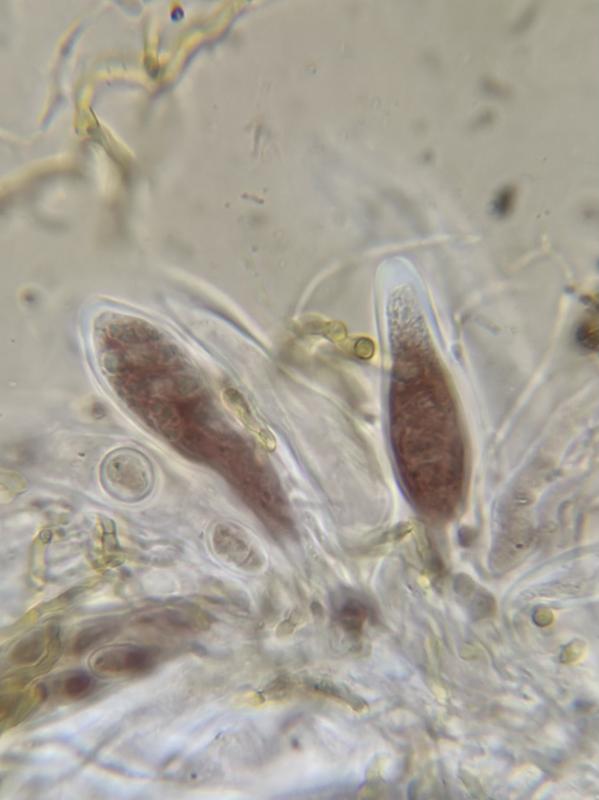
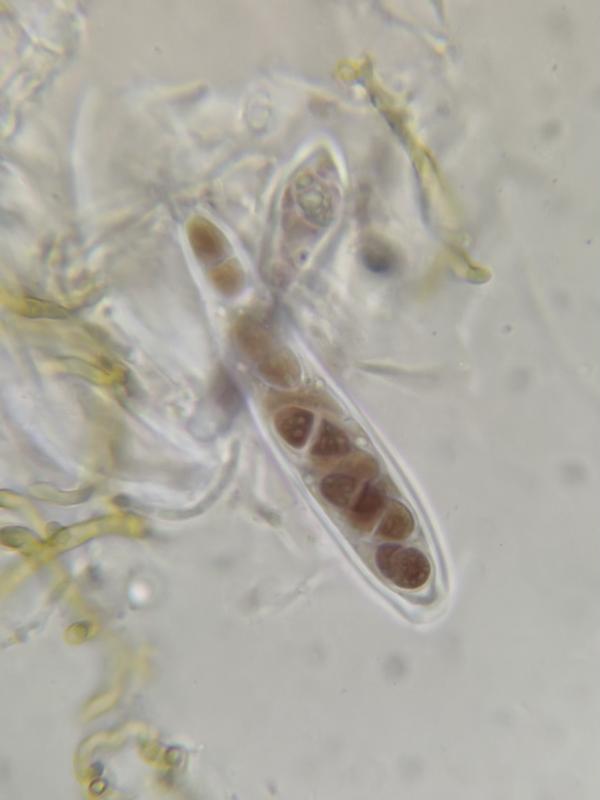
All picture Above in already sent is only water+ koh
Here is 2 pictures of asci in water +koh.
Reaction best seen in asci without spores and not all get this reaction.
Last picture is koh + lugols
Here is 2 pictures of asci in water +koh.
Reaction best seen in asci without spores and not all get this reaction.
Last picture is koh + lugols
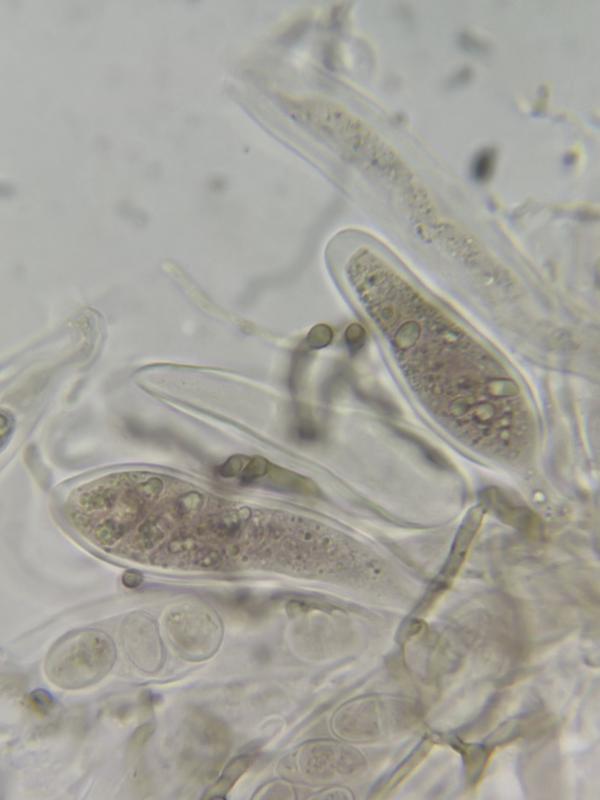
Hans-Otto Baral,
31-01-2024 11:14
Re : Claussenomyces? on twig of Abies
Ah, you mean the ascoplasma (and sporoplasma) reacts in a similar colour as the pigment extruding from the excipulum. That is right, although hyaline when alive such coloured plasma often occurs in dead cells, I am not sure if KOH is necessary for that.