10-06-2026 12:54
Steve ClementsBonjour encore, Pouvez-vous m'aider, s'il vous pl
09-06-2026 18:32
Camille MertensSur morceau de roseau immergé 0,5 - 0,7 mm de dia
10-06-2026 21:16
 François Freléchoux
Bonsoir,Le dernier du jour, en attendant votre avi
10-06-2026 21:07
François Freléchoux
Toutes les tiges de gentianes jaunes de l'an passÃ
10-06-2026 13:41
François Freléchoux
Bonjour à nouveau, Voici une trouvaille d'hier.
10-06-2026 11:53
Steve ClementsBonjour, This disco is abundant on dead stems of
10-06-2026 10:45
François Freléchoux
Bonjour à nouveau, Encore une détermination qui
08-06-2026 10:16
 Spooren Marco
I don`t have a clou about this fungus,it is not in
10-06-2026 09:24
François Freléchoux
Bonjour, J'imagine que cette détermination ne do
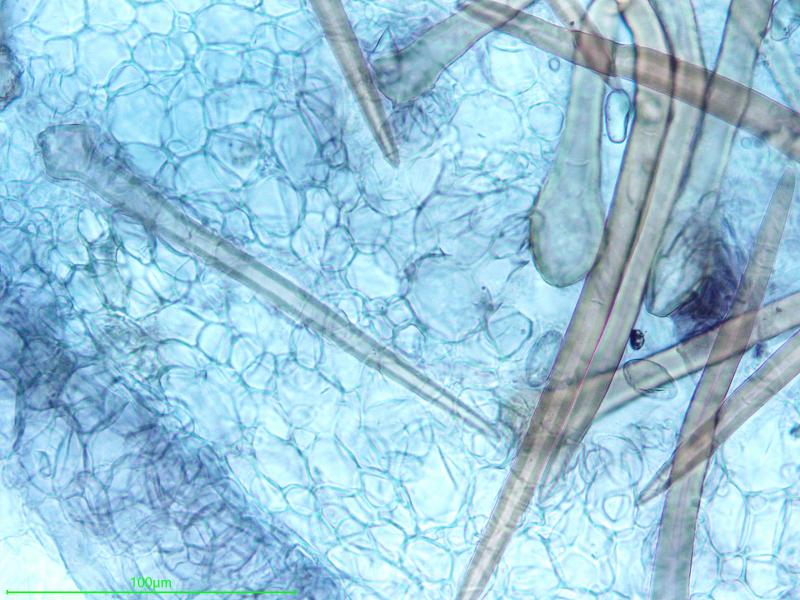
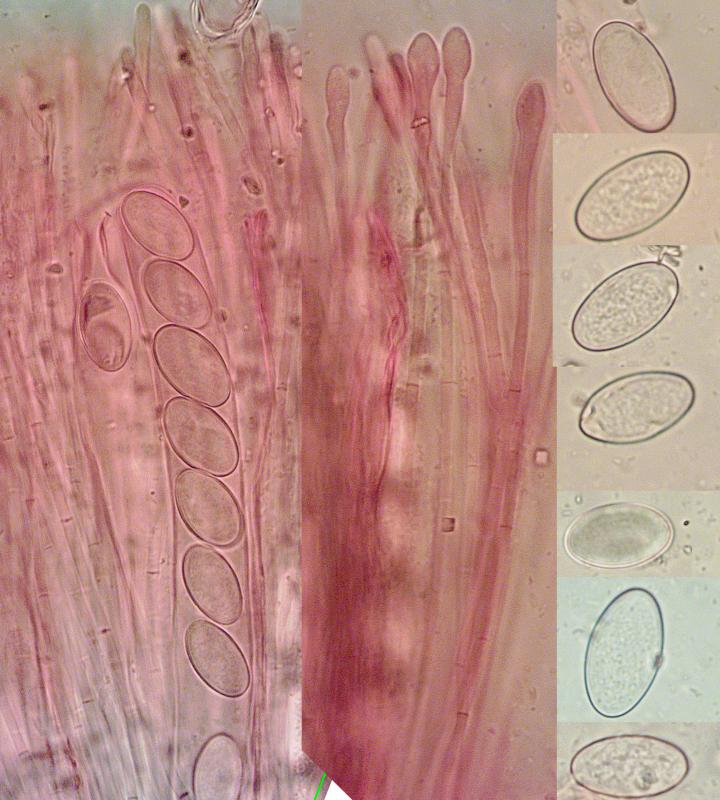
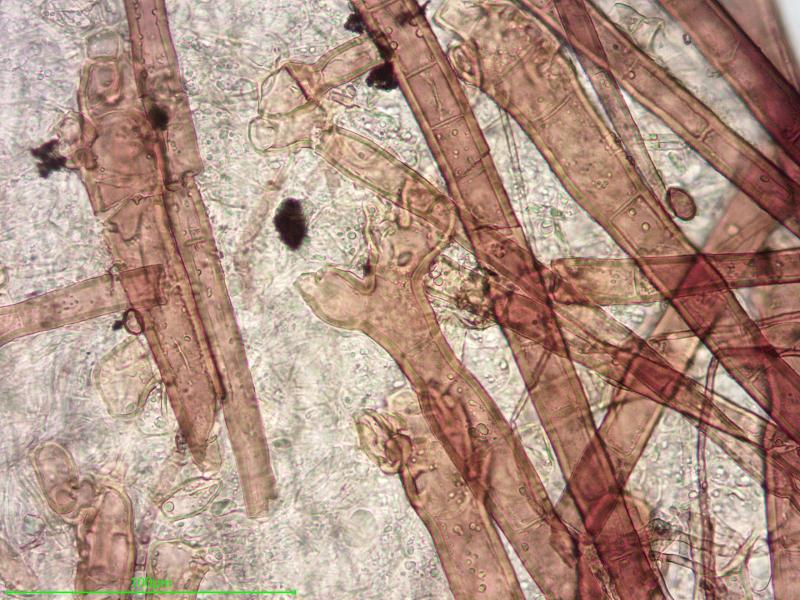
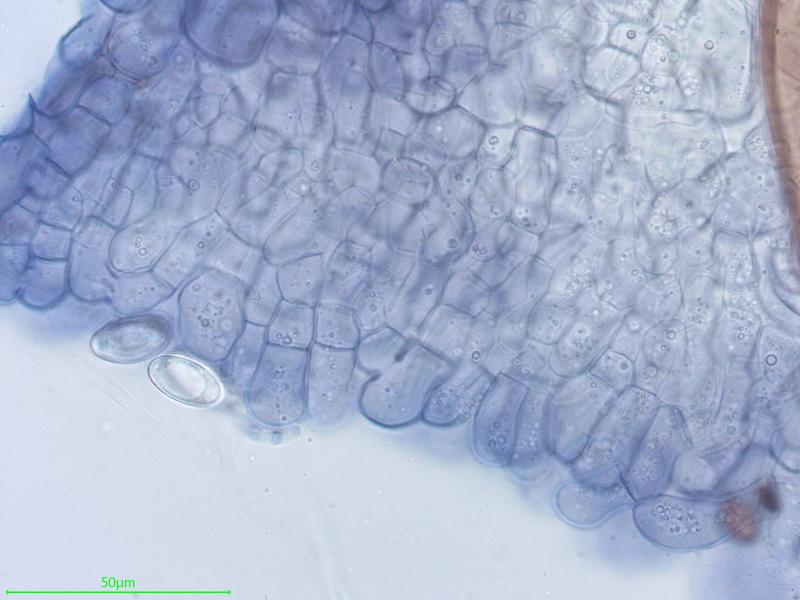
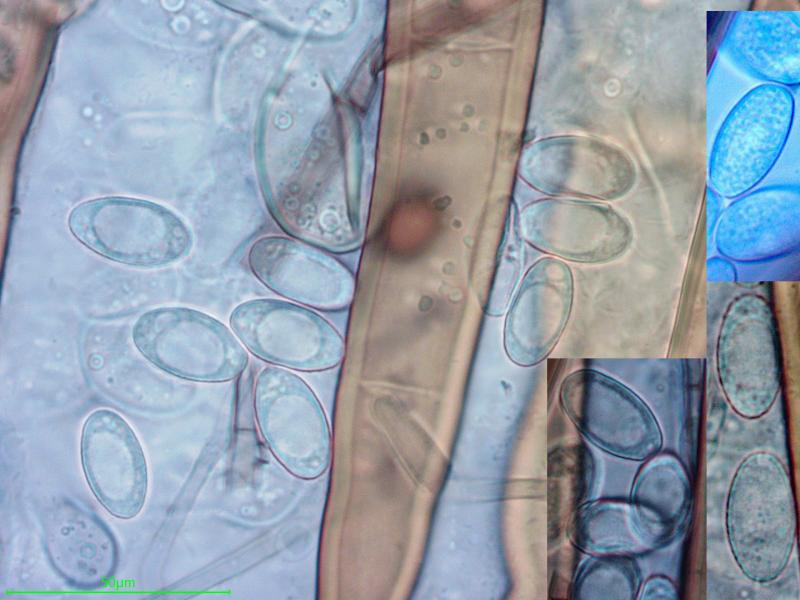
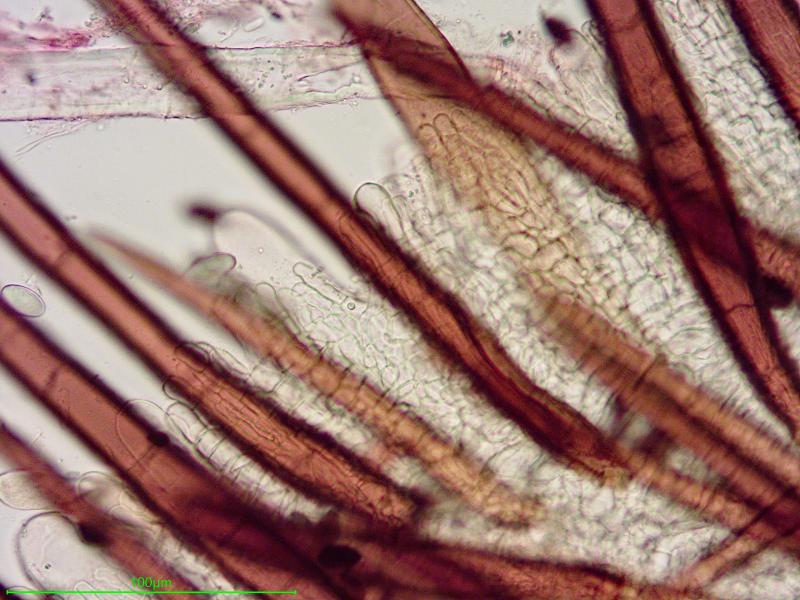
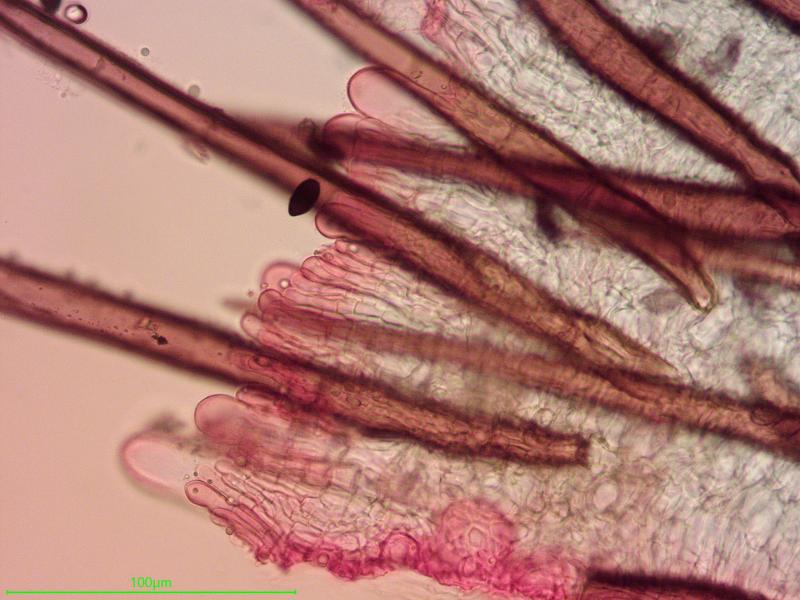
The apothecia were whitish grey when fresh, now they are 1-2 mm wide. The hairs have a simple to furcate base, bringing Scutellinia to mind, the length is up to 700 µm. The ectal exipulum brings Trichophaeopsis to mind. The spores are 17.1-19.4 × 8.4-10.3 µm, Q on avg. 1.88, probably faintly ornamented. The paraph. tips are 4.5-6 µm wide.
Any help much appreciated!


You should read this paper: https://doi.org/10.25664/ART-0315
There are several keys that could help you.
Or do you have something else in mind?
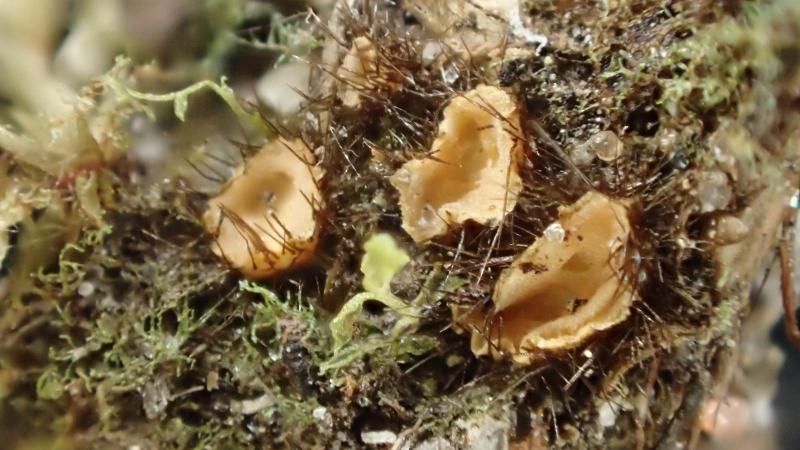
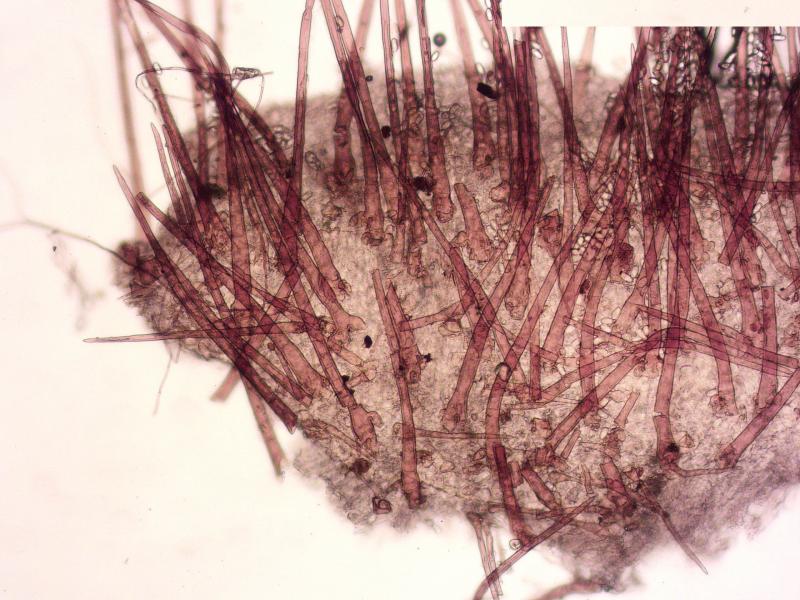
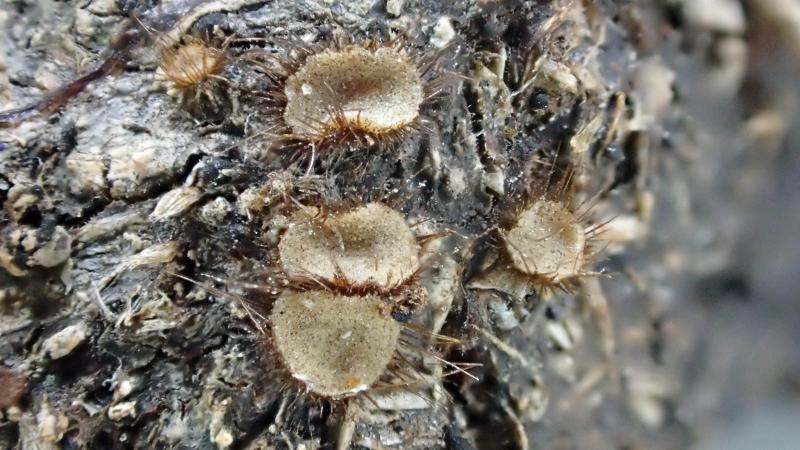
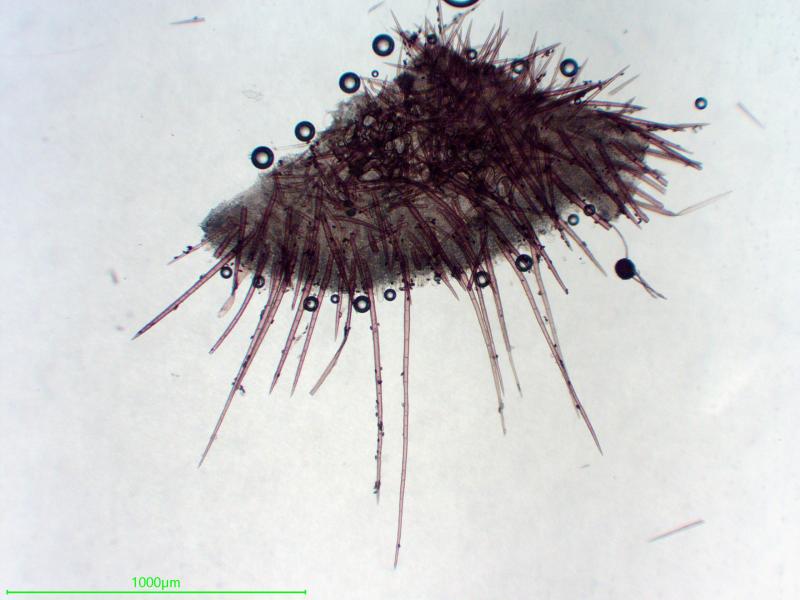
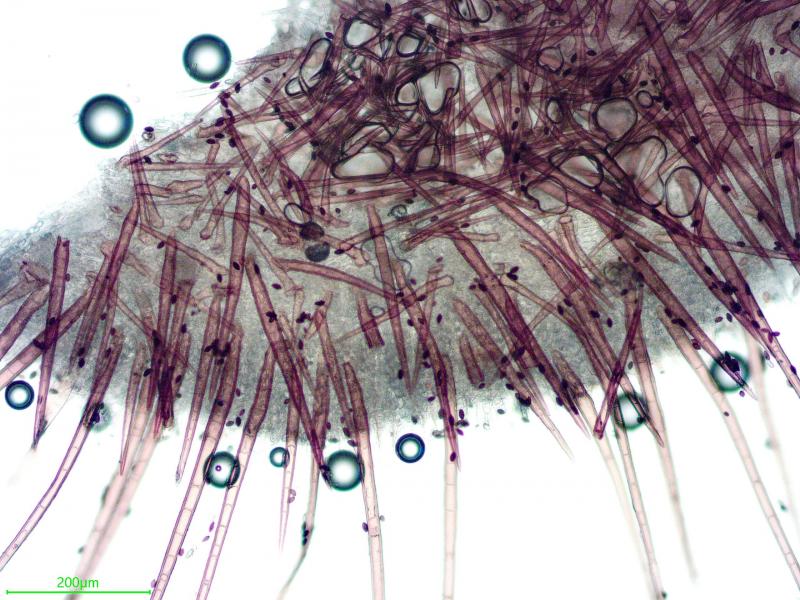
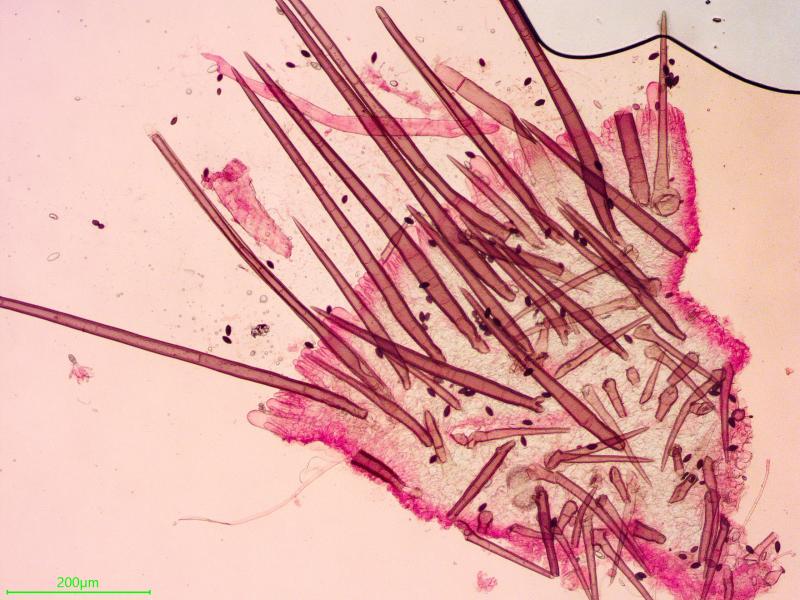
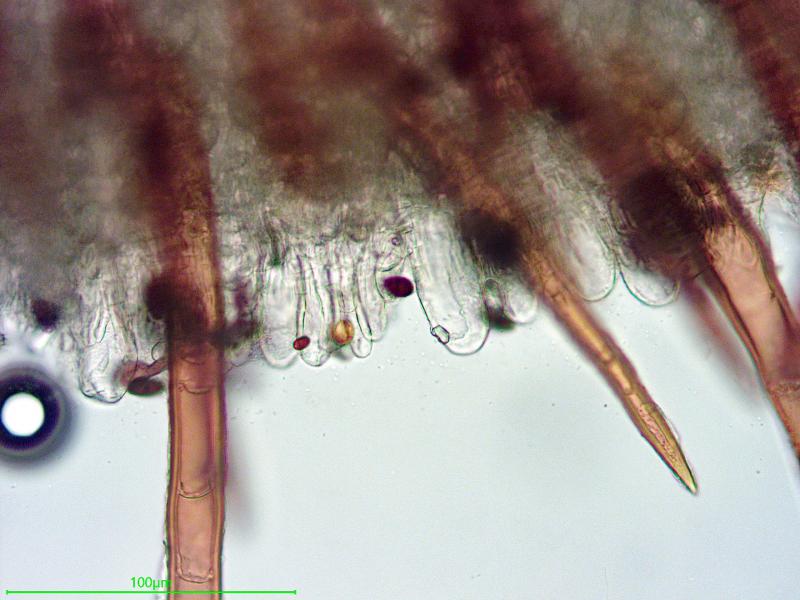
Dry apos are up to 2 mm wide. The marginal hairs are up to 1000 µm, with a bulbous or tapering base, no furcation observed. The margin has "pseudopoils" to 125 × 31 µm. The spores are 15.0-17.2 × 8.1-9.4 µm, eguttulate, Q on avg. 1,84. 8-spored asci.
L. macrocystis should have hairs with a furcate base and slightly larger spores. The spores are somewhat small, but I suppose this one must belong to the L. coprophilum complex. Right?
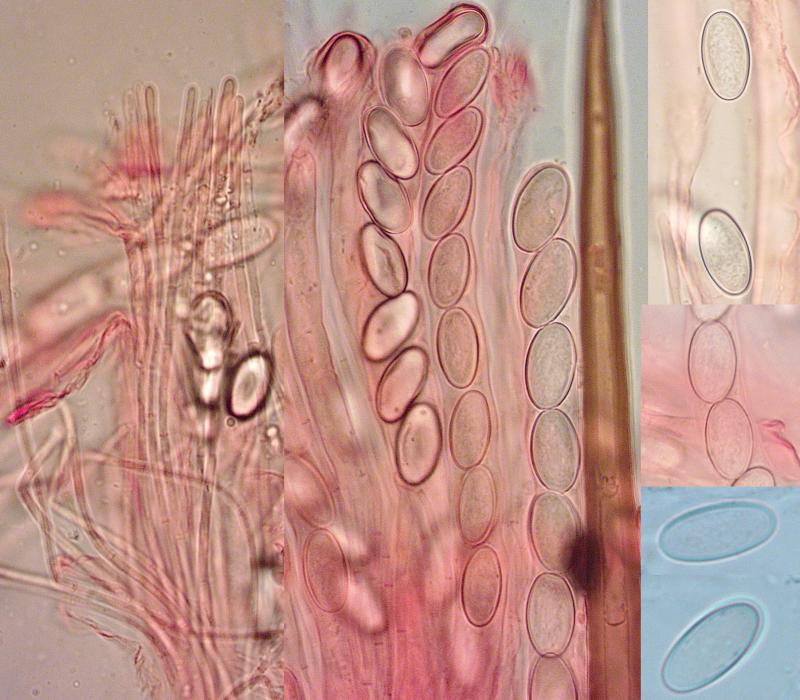
For the first one, it is a bit more difficult because we cannot see the content of spores in living state, but probably also a Lasiobolidium species
Oddly enough, in the same box with specimens of Pezizles from the nineties I found tonight still a third one related to the other two, specimen C.
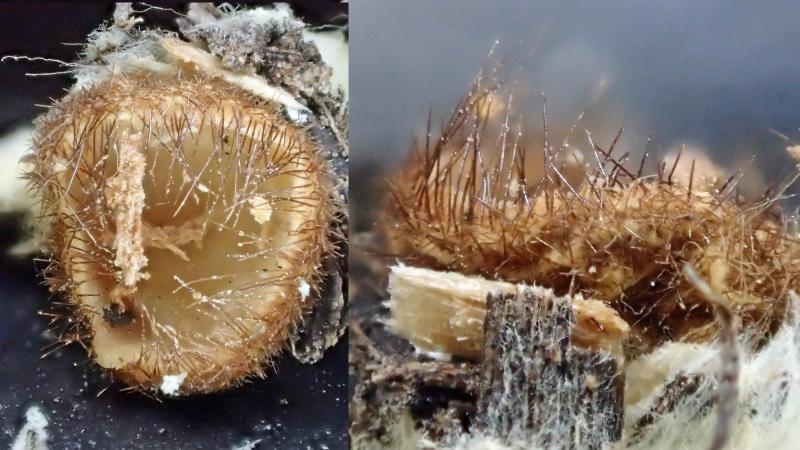
This one was growing inside a hollow trunk of Populus laurifolia very recently logged, in a park in western Finland. The two apos are now 3,5 and 5 mm in diameter. My notes say the hymenium was somewhat yellowish when collected. They are growing on a thick white hyphal mat. I don't know does the mat belong to this species or perhaps to Rigidoporus populinus growing close by; at least there are no clamps.
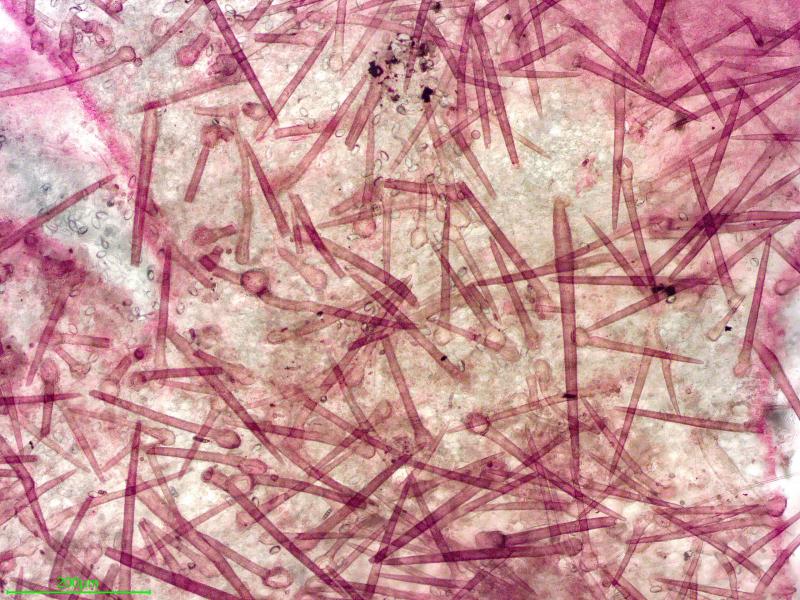
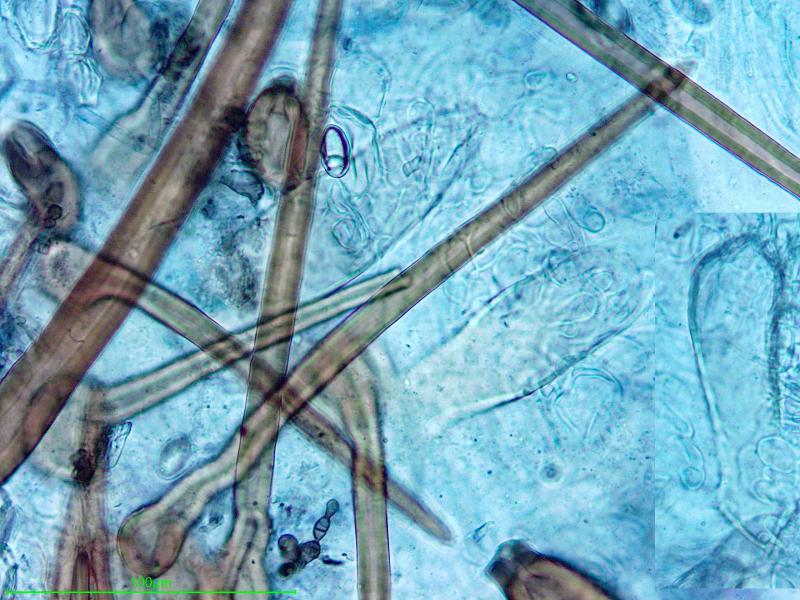
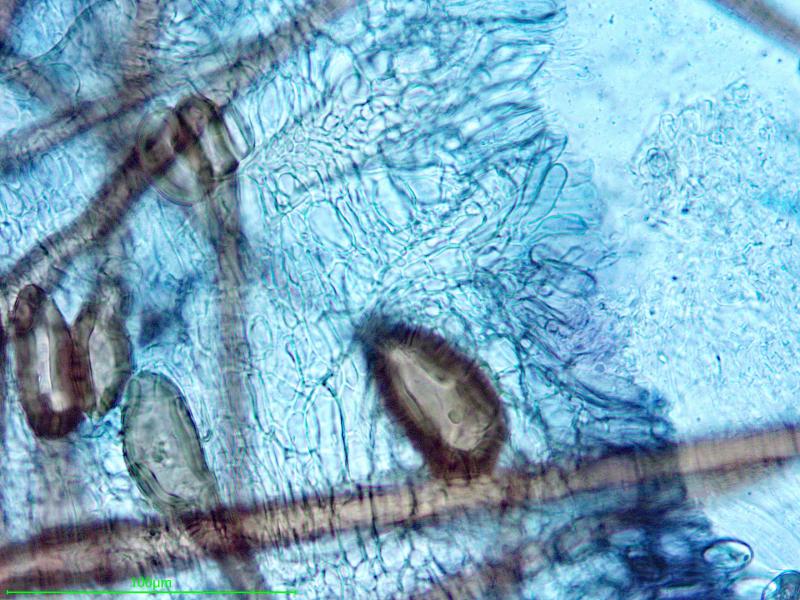
The marginal hairs are up to 1400 µm, almost all hairs with a bulbous base and in addition a few hairs of the Trichophaeopsis type with the base "in the middle". There were also some ±clavate thick-walled "pseudohairs" with light brownish walls, up to 190 × 56 µm. The spores are smooth, eguttulate, 17.7-22.1 × 10.0-12.7 µm, Qm = 1.75. Asci 8-spored.
I presume this one does not have a name.