

10-06-2026 12:54
Steve ClementsBonjour encore, Pouvez-vous m'aider, s'il vous pl
09-06-2026 18:32
Camille MertensSur morceau de roseau immergé 0,5 - 0,7 mm de dia
10-06-2026 21:16
 François Freléchoux
Bonsoir,Le dernier du jour, en attendant votre avi
10-06-2026 21:07
François Freléchoux
Toutes les tiges de gentianes jaunes de l'an passÃ
10-06-2026 13:41
François Freléchoux
Bonjour à nouveau, Voici une trouvaille d'hier.
10-06-2026 11:53
Steve ClementsBonjour, This disco is abundant on dead stems of
10-06-2026 10:45
François Freléchoux
Bonjour à nouveau, Encore une détermination qui
08-06-2026 10:16
 Spooren Marco
I don`t have a clou about this fungus,it is not in
10-06-2026 09:24
François Freléchoux
Bonjour, J'imagine que cette détermination ne do
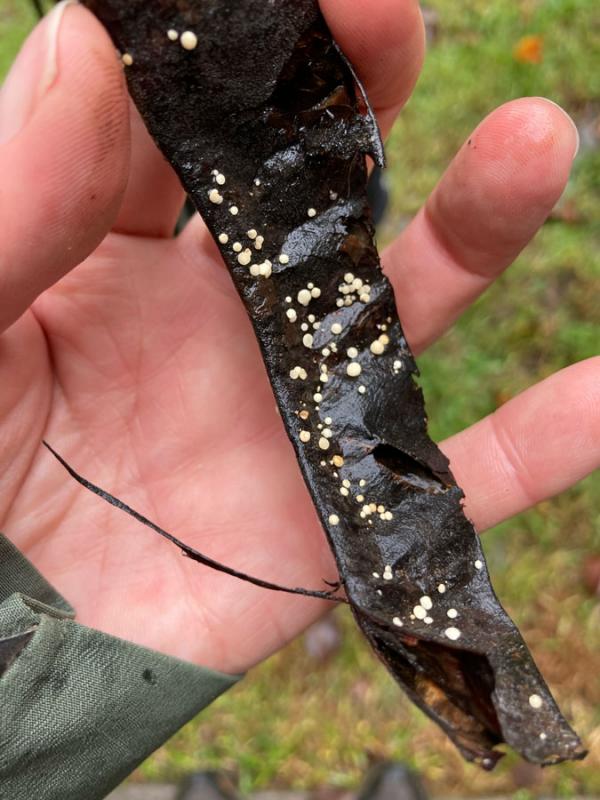
on seed pods of Gleditsia triacanthos
Ethan Crenson,
23-10-2023 23:57
Hi all,
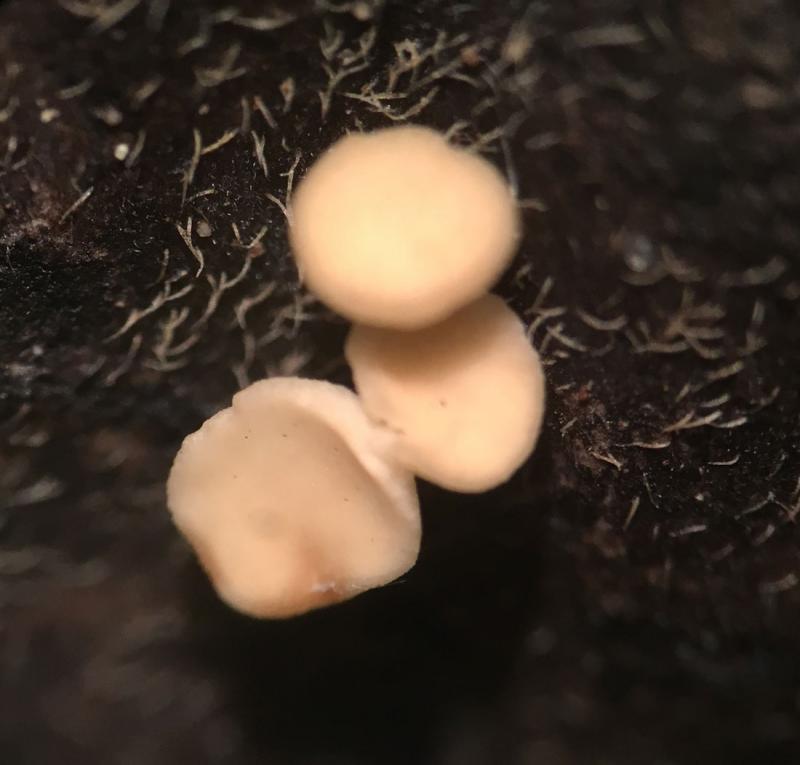
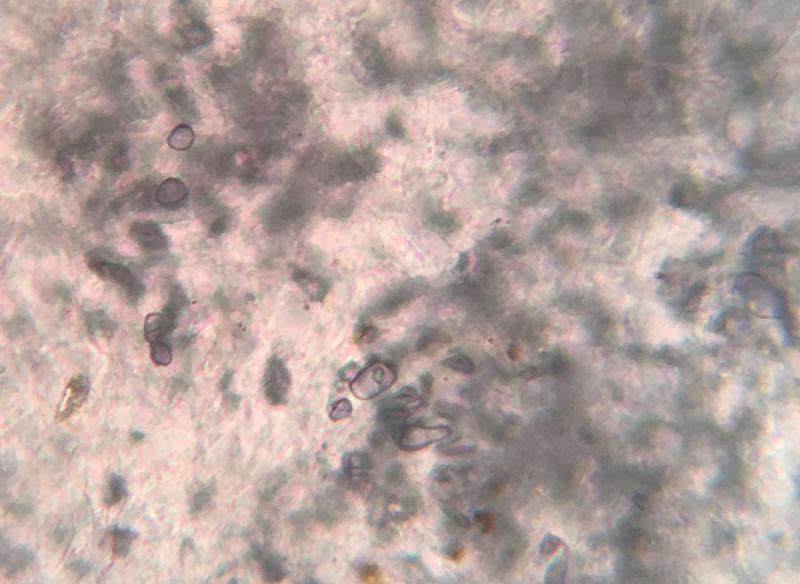
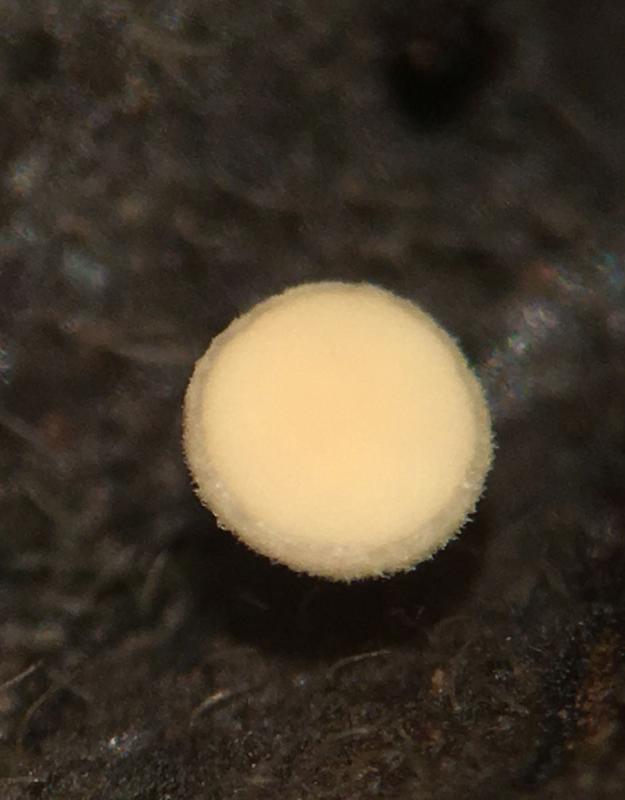
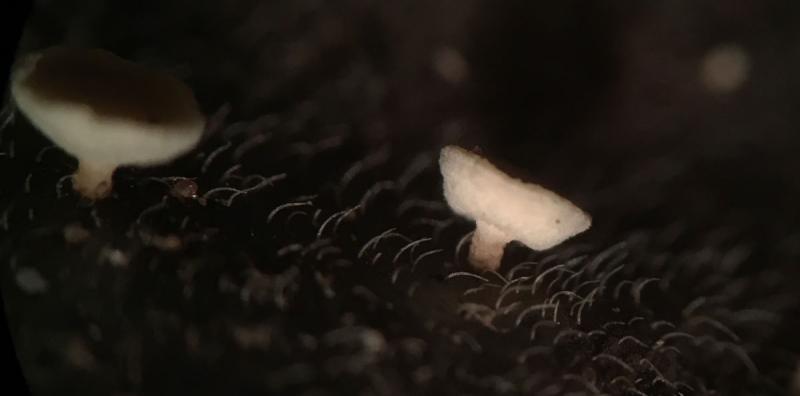
A couple of days ago in northern New Jersey I came across these white stalked cups growing on Honey Locust seed pods.
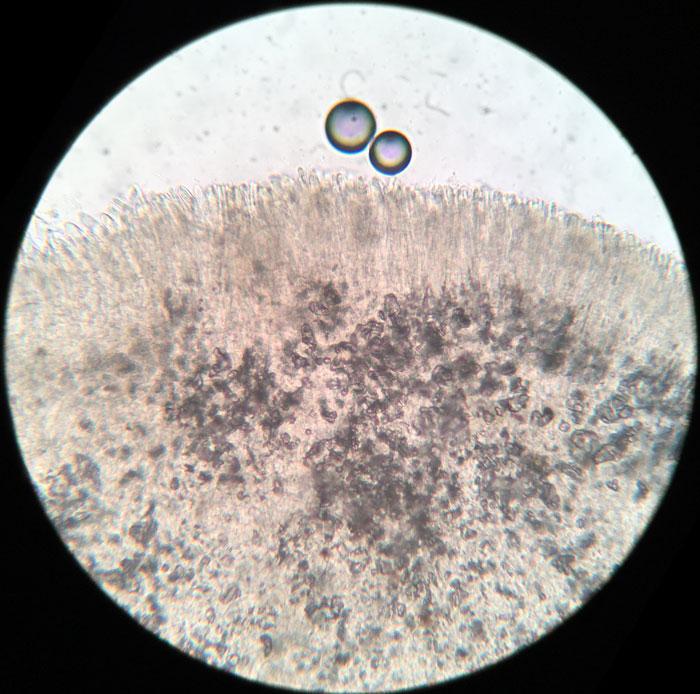
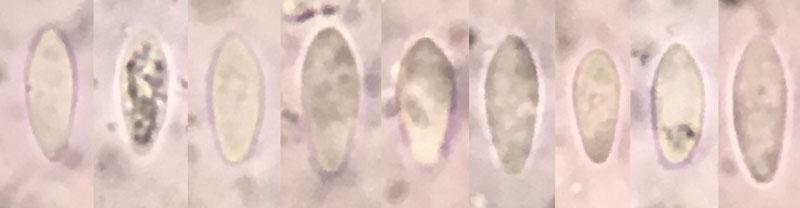
Spores are ellipsoid, tapering at the ends (roughly boat shaped) and mostly without any oil content: 7.8-10.3 x 3.2-4µm
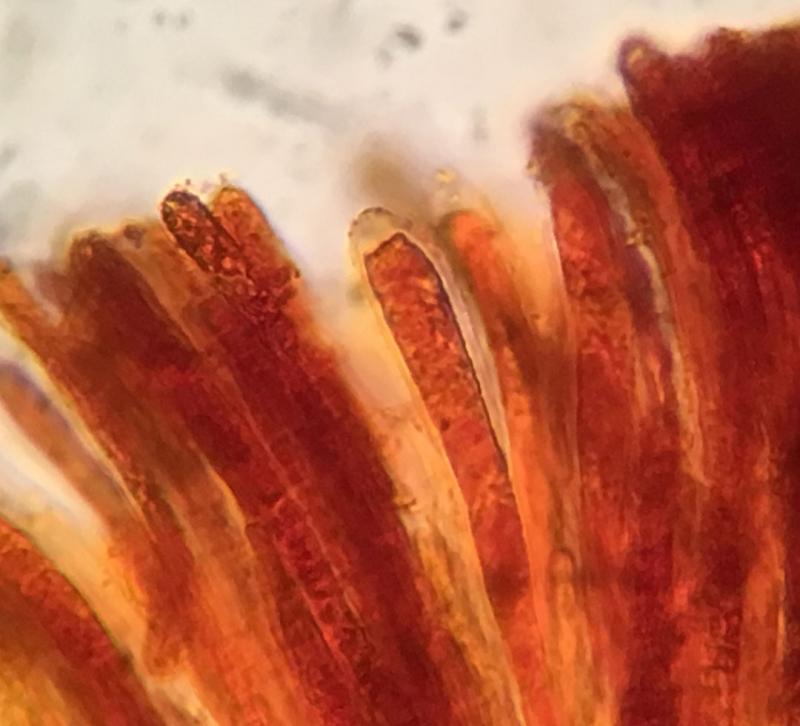
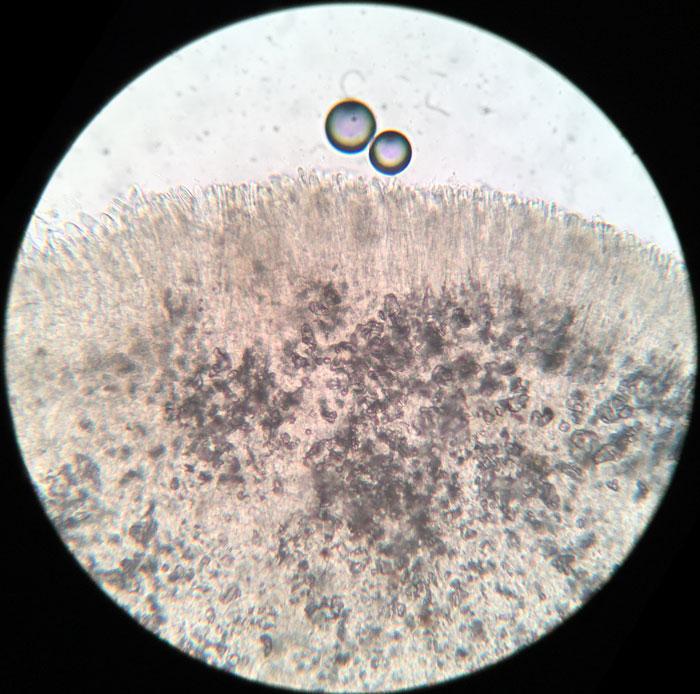
Asci IKI-, with croziers, 66-74 x 5-6µm
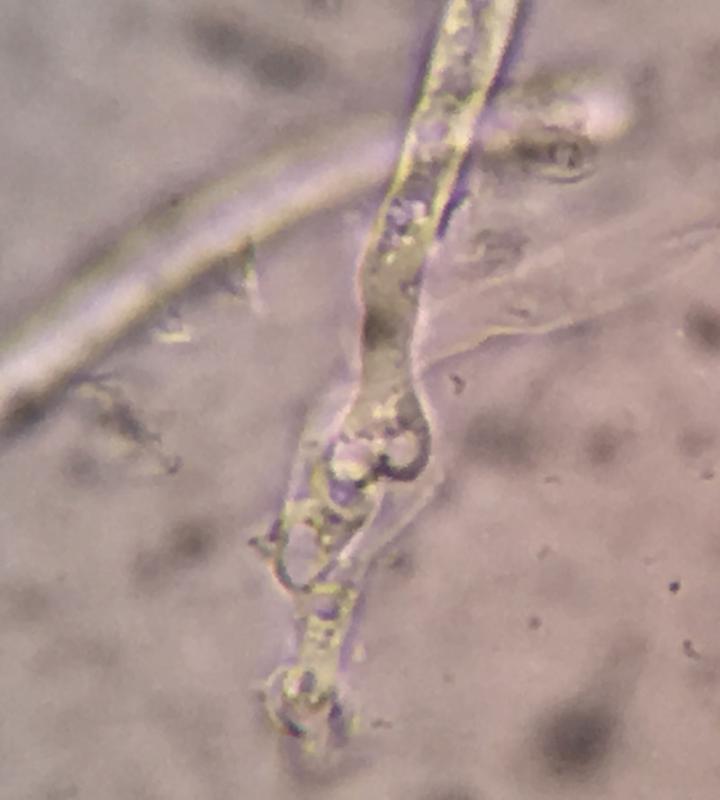
Paraphyses branched, containing some refractive content. Occasionally roughened at the ends.
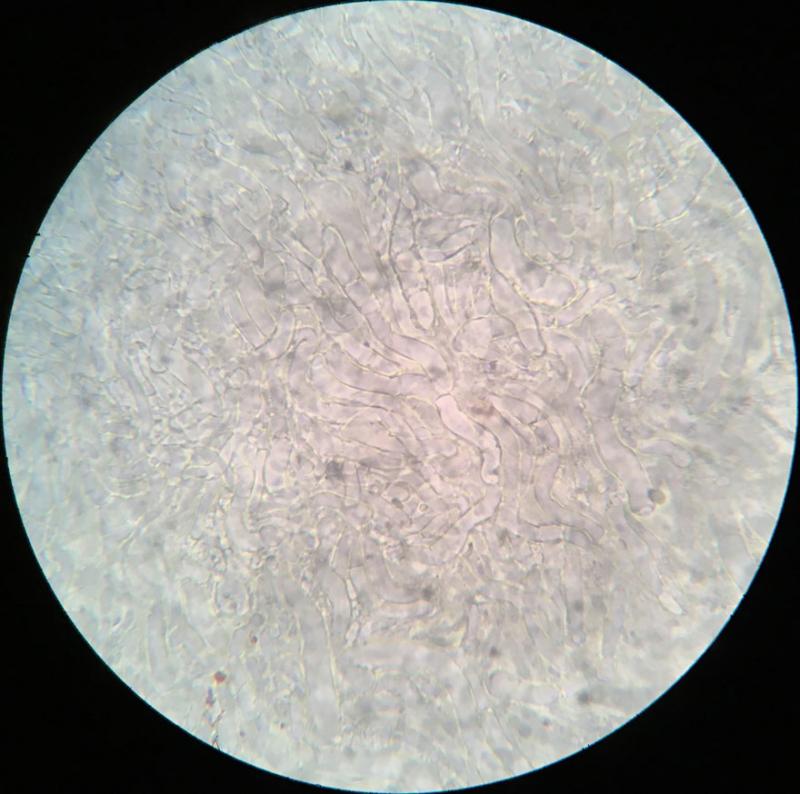
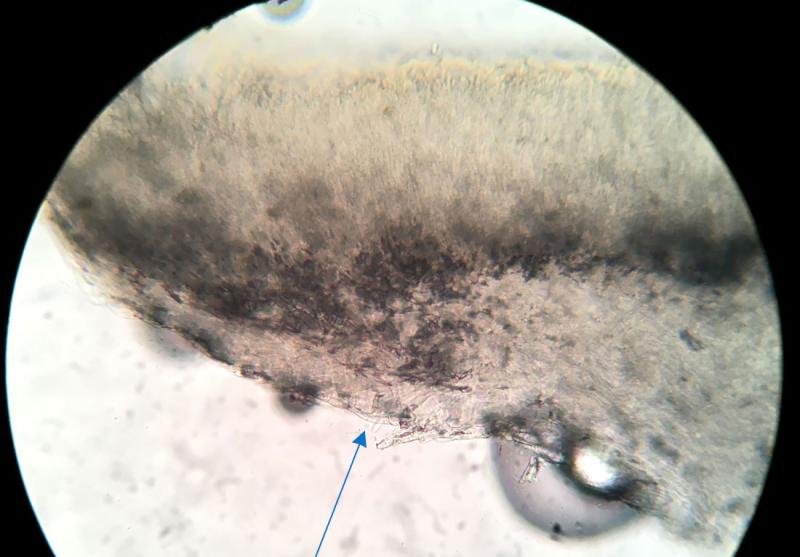
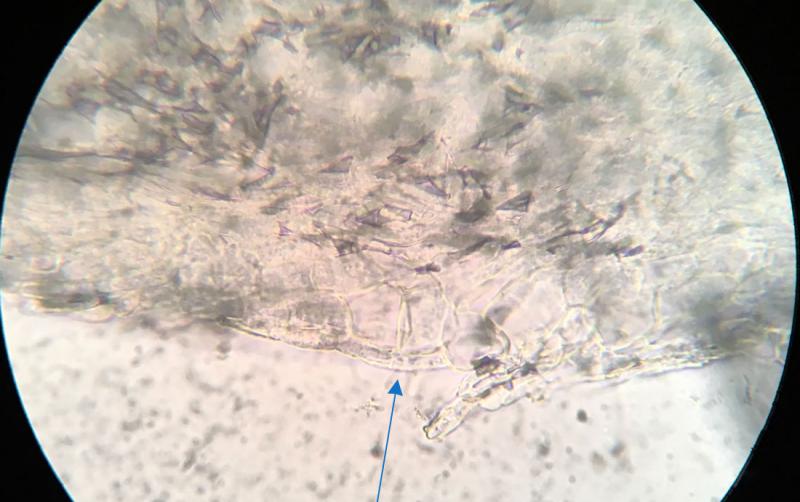
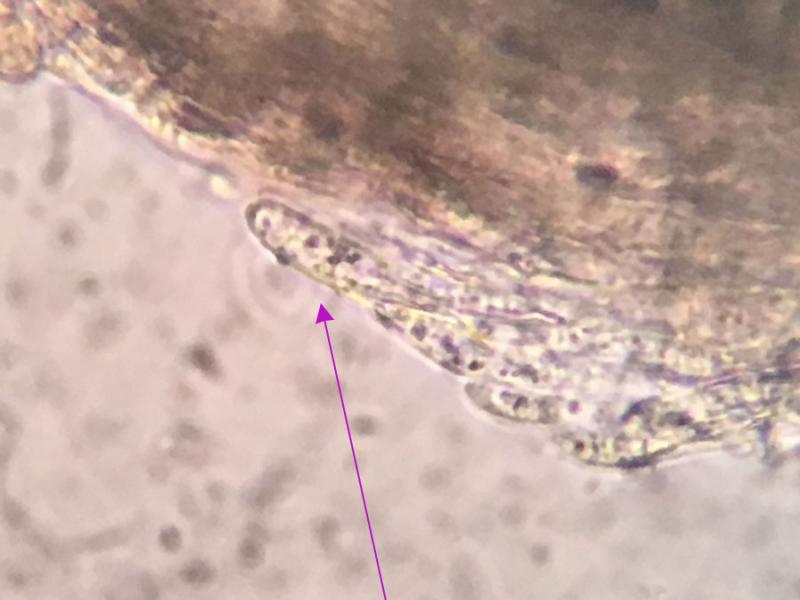
Excipulum textura intricata. There appear to be some gray/blue crystal structures in the excipulum.
Most of my ideas about what genus this could be are complete guesses. Cudoniella? Phaeohelotium?
Ethan
Hans-Otto Baral,
24-10-2023 07:43

Re : on seed pods of Gleditsia triacanthos
Hmm, the paraphyses so not seem to be in good shape, the contents unclear to me. Important would be a median section to show the ectal excipulum in situ.
Inamyloid asci are always bad for saying a genus. Phaeohelotium is a good idea. I tend at the moment to Hymenoscyphus pani, a species of the H. menthae group. I remember in that species such a red reaction in IKI.
Ethan Crenson,
24-10-2023 17:27
Re : on seed pods of Gleditsia triacanthos
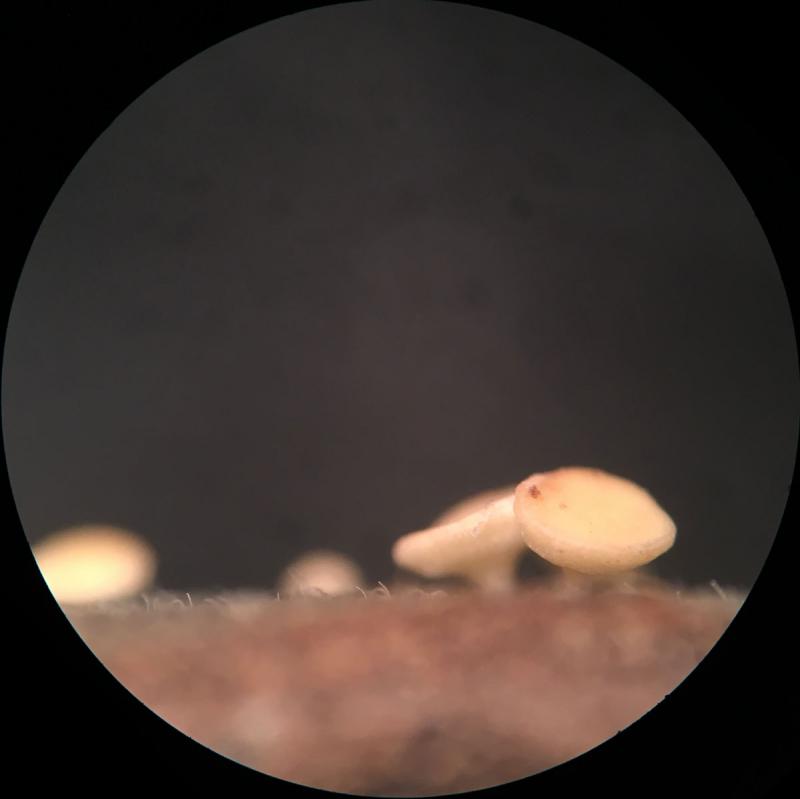
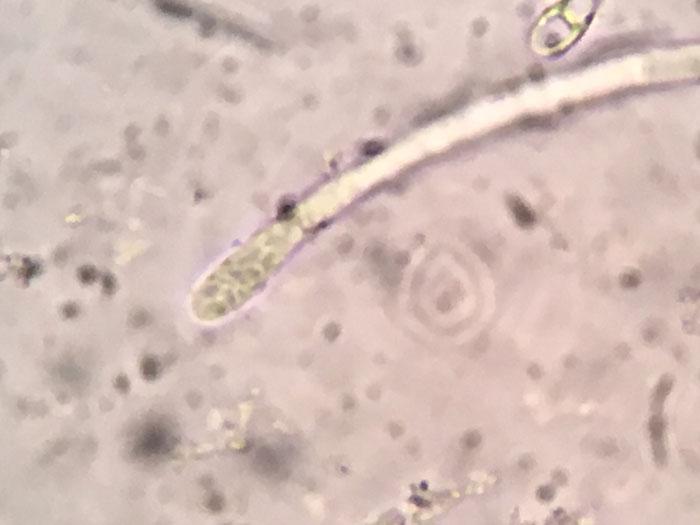
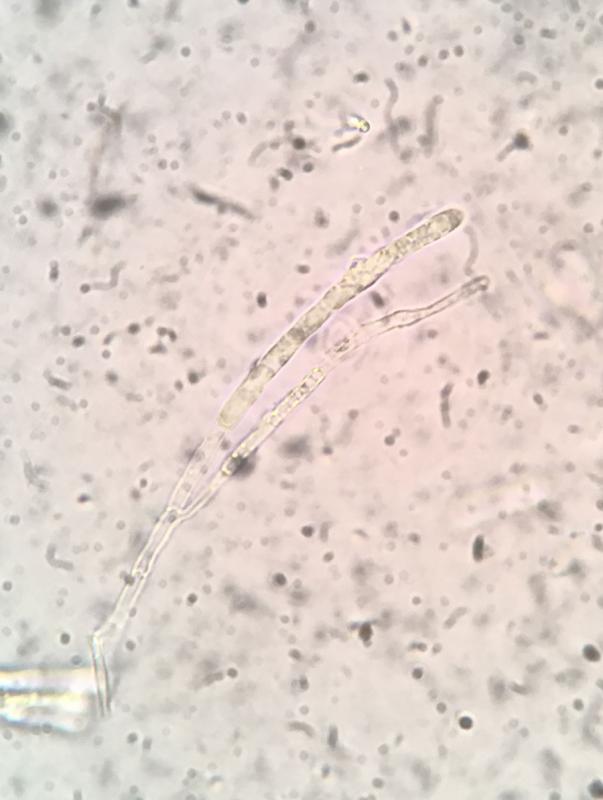
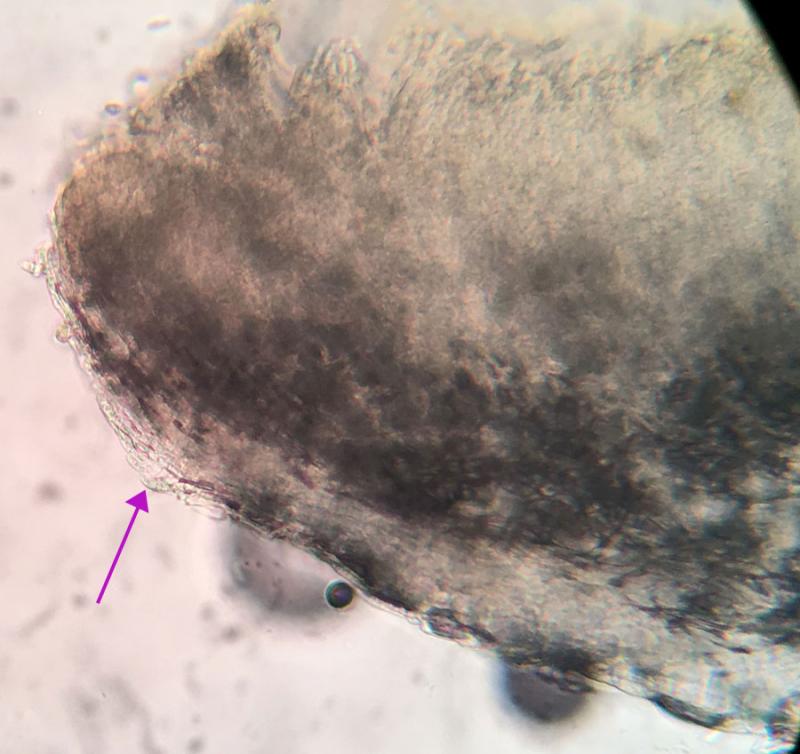
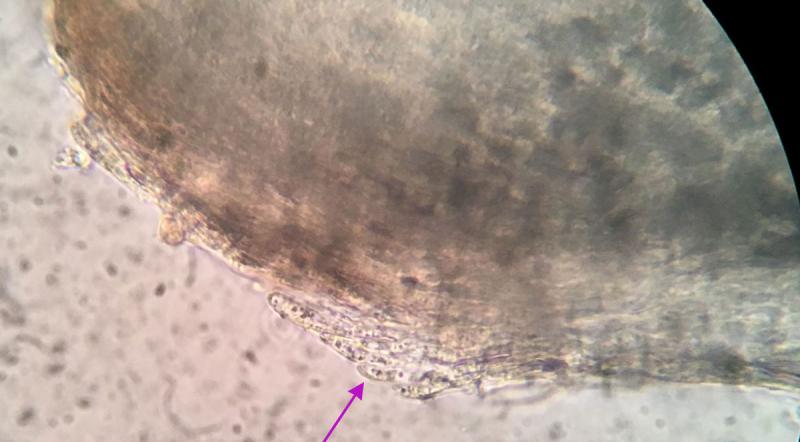
Thank you for your help! Hopefully these photos will provide enough information. I don't have a microtome, so my sections are a bit messy. While I was making these images, I noticed that there are fine hairs on the outside of the recepticle. My previous macro photos didn't make that clear, so I have added a couple, as well as micro photos of the hairs.
Ethan
Hans-Otto Baral,
24-10-2023 19:45
Re : on seed pods of Gleditsia triacanthos
I have actually very few docus of H. pani. One is the type of H. robiniae (both are by Velenovsky). I see much similarities. This species is poorly known and wonder why it is not more often collected. Perhaps it is neglected for its poor characteristics.
Svrcek combined it in Phaeohelotium. I must have some more sketches than are in my folder, all from the past century.
So the excipulum is of prismatica. Could you please tell me the date and site?
Ethan Crenson,
24-10-2023 20:33
Re : on seed pods of Gleditsia triacanthos
This was collected October 21, 2023 at South Mountain Reservation, Millburn NJ: 40.72745, -74.30329
Is this more accurately called Phaeohelotium pani? Or Hymenoscyphus pani?
I am not at all clear on what features separate Hymenoscyphus from Phaeohelotium, so if you have a moment to give me a brief summary I would very much appreciate it.
I will definitely attempt to sequence this collection. Is it possible that the type of H. robiniae has been sequenced?
Ethan
Hans-Otto Baral,
24-10-2023 21:20
Re : on seed pods of Gleditsia triacanthos
Oh this would be a great attempt! No sequence is known to me of this species, and of course none exist for these old types. If my suspicion is right it belongs in vicinity of H. repandus and H. menthae. These are genetically no true Hymenoscyphi but form a very distinct group, though morphologically hardly different (no scutuloid spores exist there).
The limits of Phaeohelotium, which has typically yellow short-stalked apos, are a matter of taste. In a large sense one needs to include Cudoniella with white apos. No scutuloid spores occur also in this big group. I think the heteropolar scutuloid spores are a good character of typical hymenoscyphi, though this is not true for every species.