Accès membres

Mot de passe perdu? S'inscrire

12-03-2026 16:17

Sylvie Le Goff

Bonjour à tousRécolté dans le 22 en France (ré

11-03-2026 17:36

Michel Hairaud Michel Hairaud

Bonjour, Je cherche des indices  pour cette réc

05-03-2026 10:07

Hulda Caroline Holte

Hello, I found and collected this species growing

14-03-2026 13:51

Thierry Blondelle Thierry Blondelle

Hi everybody Under Quercus ilex, i hesitate to na

12-03-2026 19:44

Enrique Rubio Enrique Rubio

Hi to everybody.Can you give me any suggestions ab

12-03-2026 15:45

Åge Oterhals

Dear forum,I found this small discomycete on a ver

08-03-2026 14:05

Thierry Blondelle Thierry Blondelle

Bonjour à tous,Sur 3 récoltes supposées de H. l

12-03-2026 14:37

David Wasilewski

These small ascomycota (1-3 mm) ere observed growi

11-03-2026 16:48

Bruno Coué Bruno Coué

Bonjour, je serais heureux d'avoir votre avis sur

09-02-2026 22:01

ruiz Jose

Hola, me paso esta colección en madera de pino, t

« < 1 2 3 4 5 > »
Thecotheus? on fox dung
Chris Yeates, 23-04-2022 19:05
Chris Yeates
Bonsoir tous

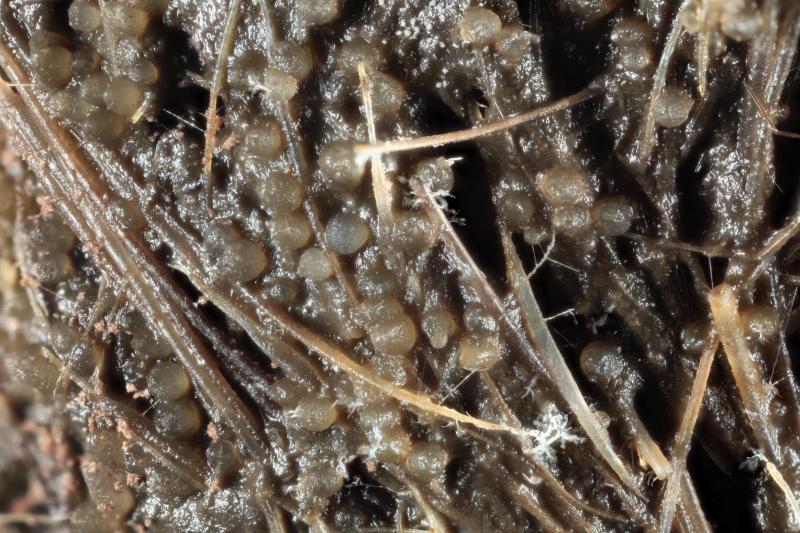
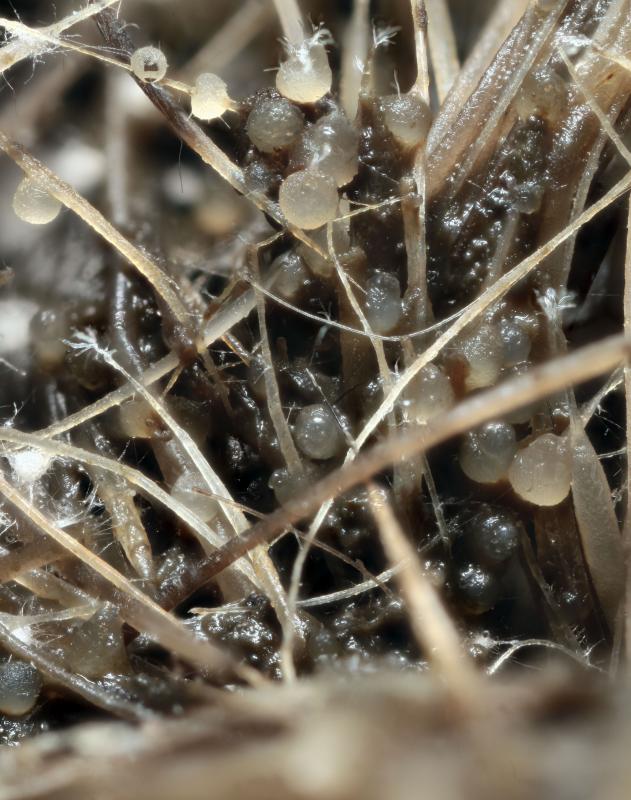
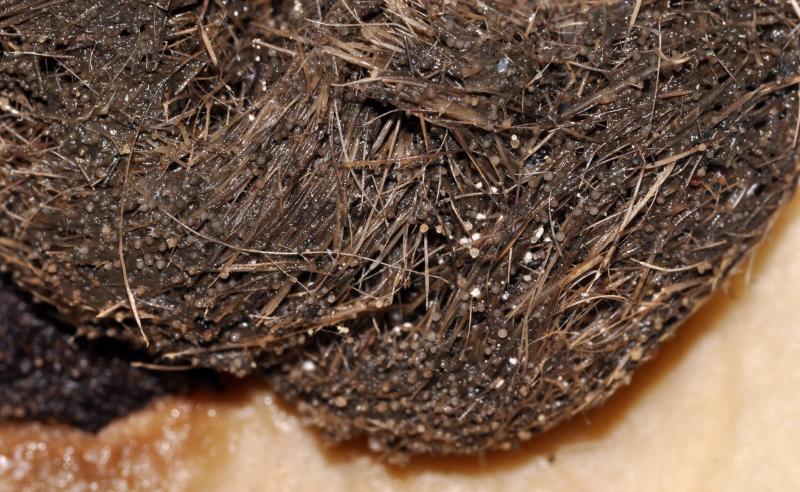
A few days after collection, and being incubated in a damp container, numerous pale globose ascomata appeared on a fox "scat".

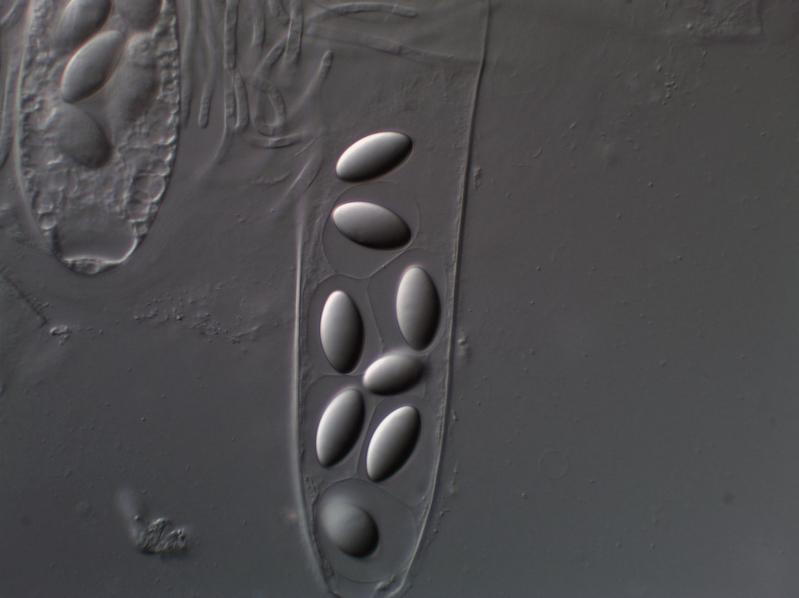
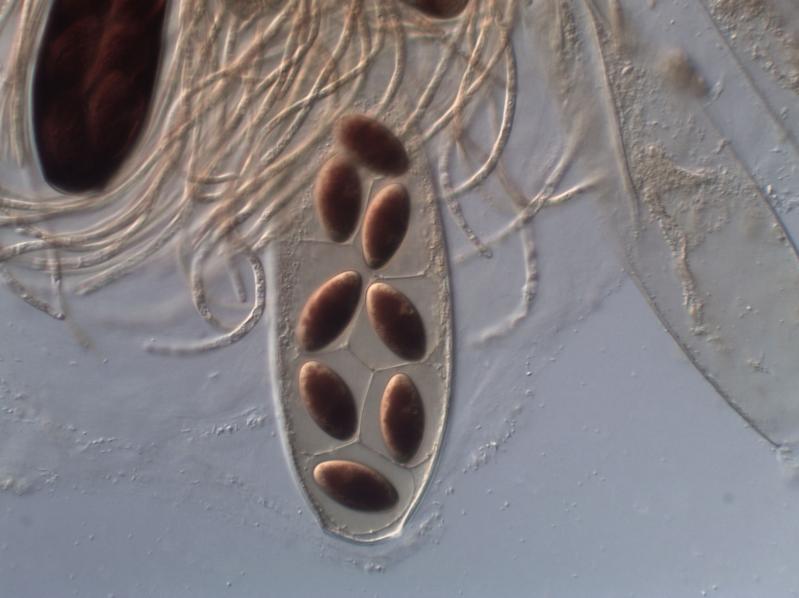
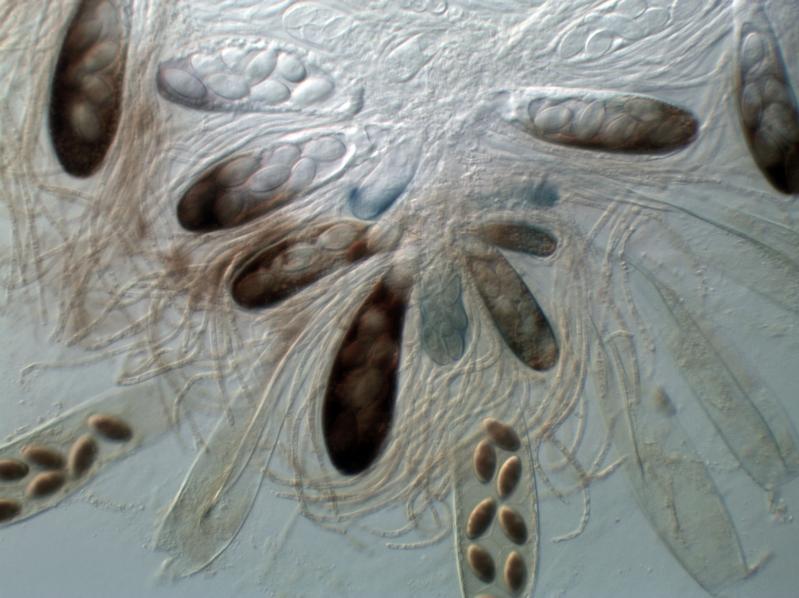
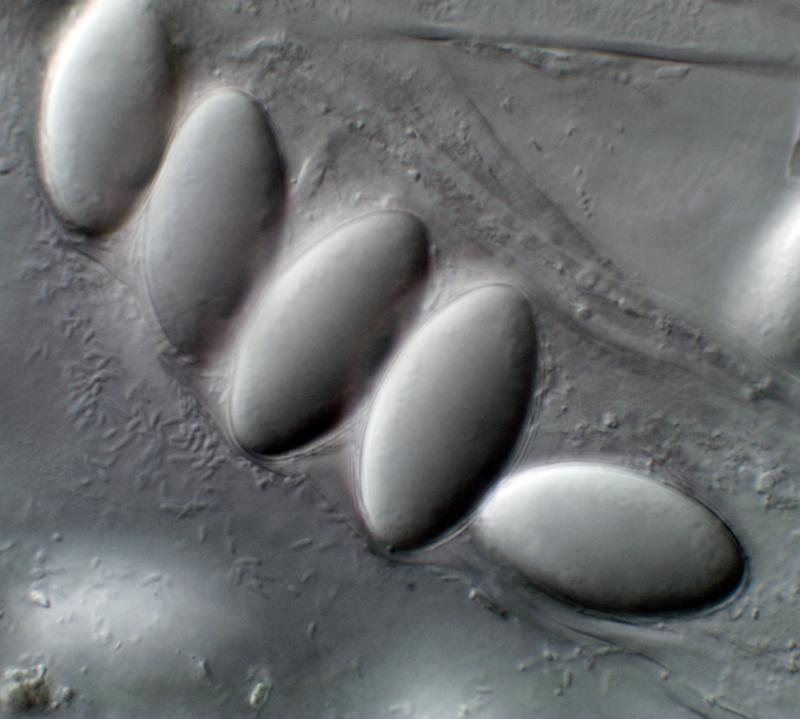
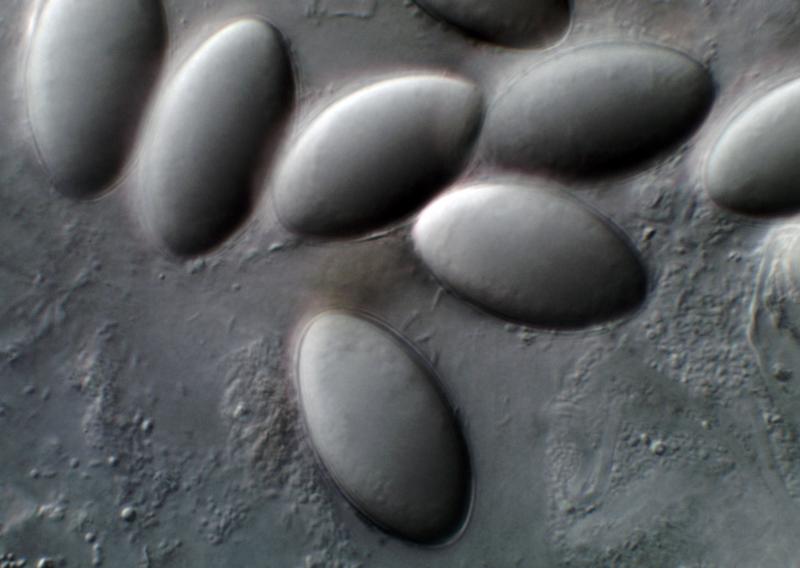
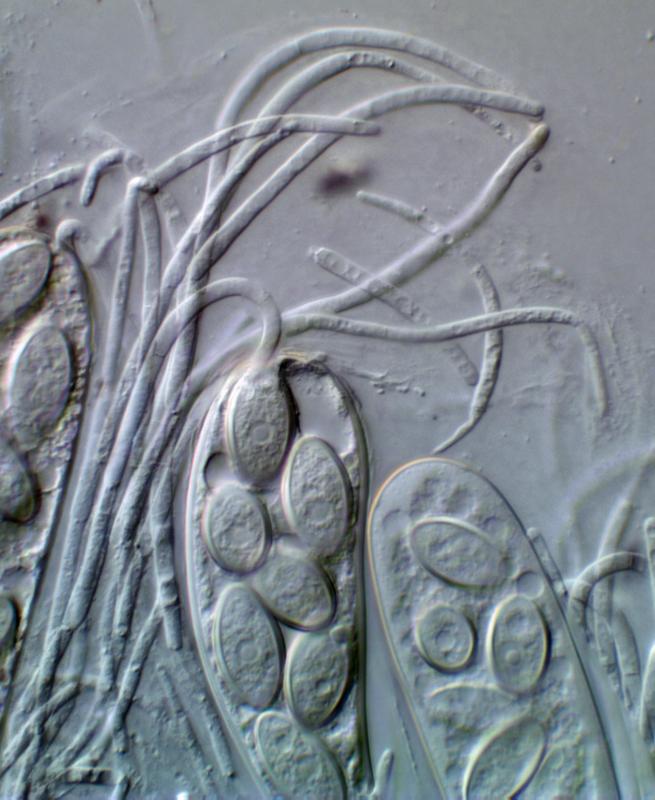
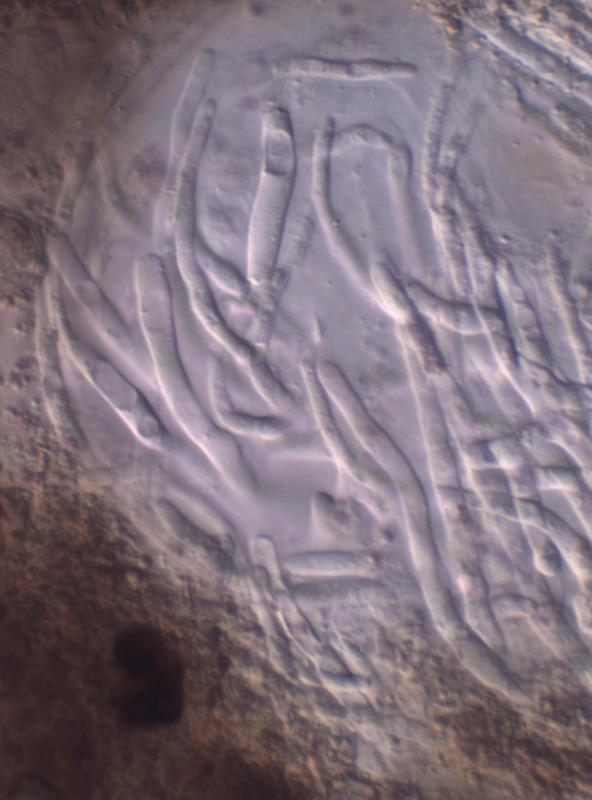
Ascomata up to 400µm in diameter, asci J+ in Baralsche Löhsung, 8-spored, projecting when ripe. The ascospores are smooth and irregularly biseriate - kept apart by copious gelatinous coatings - see images. Measurements 28.9-32 x 15.2-16µm, Qe=1.9.

I may have missed something but this seems to come out as a Thecotheus species. If that is the case then using the key in Aas' thesis it would come out as T. cinereus. My concerns about this are that the spore measurements are at the low end for that species, that the ascomata would appear too small (?), and the fact that in Kew Bulletin 55 (2000) Yao & Spooner state categorically "For British records under this name see T. crustaceus. No British collections representing this species have been seen".

Comments from those with more experience that I have would be very welcome.

Amitiés, Chris

PS the things that look like occasional hairs or bristles are nematodes - this collection is swarming with them!
  • message #72530
  • message #72530
  • message #72530
  • message #72530
  • message #72530
  • message #72530
  • message #72530
Michel Delpont, 23-04-2022 20:58
Michel Delpont
Re : Thecotheus? on fox dung
Hello Chris.

Indeed the measurements of the spores are a bit small but your mushroom still looks like T.cineteus; have you been able to observe the paraphyses which are of two kinds? There is also T.flavidus but the apothecia are normally tinged with yellow; I do not know this last species.


Amitiés.


Michel.

Norbert Heine, 24-04-2022 13:54
Norbert Heine
Re : Thecotheus? on fox dung
Hello Chris,
what a nice collection of a Thecotheus-Species!
At first. This is not Thecotheus crustaceus, which has much smaller and uniseriate ascospores. With smooth, non-apiculate and biseriate ascospores in this dimension it may be Th. cinereus or Th. flavidus. For Th. cinereus in my opinion the spores are too small. Aas writes that the spores should be between 36-42 µm. But the spore size agrees very well with Thecotheus flavidus mentioned by Michel. This species has been described by Wang & Kimbrough in 1993 and it is not in the monograph by Aas. The spores are 28-32 x 14-16 µm. Flavidus means that the spores are yellowish while the apothecia are at first pale yellow, finally grayish.

Here you can find the article to compare.


Best regards, Norbert


Chris Yeates, 24-04-2022 15:25
Chris Yeates
Re : Thecotheus? on fox dung
Thank you both, very much. I shall have a good look at the paraphyses. Thecotheus flavidus (as far as I can tell) has not been reported from the UK before.

Cordaliement, Chris
Michel Delpont, 24-04-2022 15:34
Michel Delpont
Re : Thecotheus? on fox dung
Hello Norbert!

I would also be interested in the article on C.flavidus, thank you!


Regards.


Michel.

Chris Yeates, 24-04-2022 15:49
Chris Yeates
Re : Thecotheus? on fox dung
Here it is:

Chris
Chris Yeates, 24-04-2022 17:32
Chris Yeates
Re : Thecotheus? on fox dung
Having had another look at this collection the yellowish tinge to the spores is rather faint (although definitely there) but difficult to show in a photograph. Far more clear cut is the way the ascomata start out pale yellowish and turn greyish (see earlier images and final one here).

The two types of paraphyses I have - I think - managed to show in these images; the ones that do not widen are much more frequent; with regard to the others I have found them up to 6µm wide at the apex, as opposed to predominantly 2.5-3µm.

So coupled with the spore dimensions, which, as Norbert has pointed out correspond almost exactly to those for T. flavidus I think it has to be that. The question remains as to how common this is - it appears not to have been recorded in the UK before and yet there are many thousands of ascomata all over this 8 x 2.5cm fox dropping. There is abundant mammal fur in the dropping which may be significant, though the original collection was on dung of cow, which has a completely different diet and digestive system. It would be interesting to know about other collections - none appear on GBIF.

Chris
  • message #72537
  • message #72537
  • message #72537
Michel Delpont, 24-04-2022 17:54
Michel Delpont
Re : Thecotheus? on fox dung
Thanks Chris, but I already have this article, I thought it was about another one. We can see very well on your photos the two types of paraphyses and I think that it is indeed this species which moreover is very little reported. Personally I have never met him.

Amitiés.

Michel.