
09-06-2026 18:32
Camille MertensSur morceau de roseau immergé 0,5 - 0,7 mm de dia
08-06-2026 10:16
 Spooren Marco
I don`t have a clou about this fungus,it is not in
08-06-2026 17:00
François BartholomeeusenGood day everyone, On June 5 2026, I collected de
07-06-2026 15:10
 William Slosse
Hello everyone,On 05-06-26, I found following asco
05-06-2026 11:02
Thomas Læssøehttps://svampe.databasen.org/observations/10596691
07-06-2026 12:09
 François Freléchoux
Bonjour, Voici une brève description de ce qui m
07-06-2026 12:43
Steve ClementsBojour. This was a strange find on a stick on my
12-07-2015 00:05
 Nedim Jukic
This one from the same locality as the previous on
06-06-2026 17:44
Steve ClementsBonjour, This disco was on planed wood 3 x 1.5 cm
Orbilia
Ethan Crenson,
08-04-2022 22:29
Hello,
I recently found this orange Orbilia on hardwood in New York City. Unfortunately, I don't have the collection anymore so I hope this will be enough.
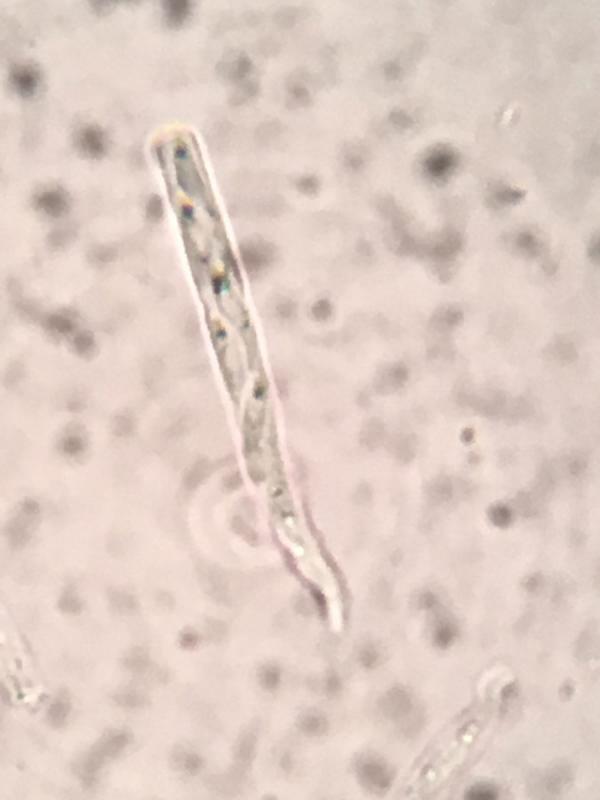
Asci truncate at the apex, 35-42 x 3.4-4.7µm
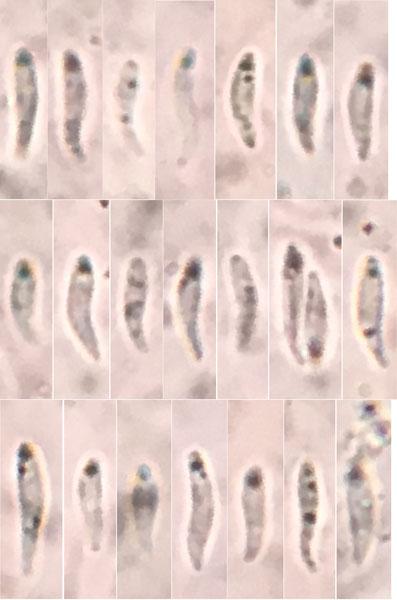
Spores slightly helicoid, blunt at one end, acute at the other, small globose spore body at the blunt end, 6.2-9.7 x 1.4-2.0 µm
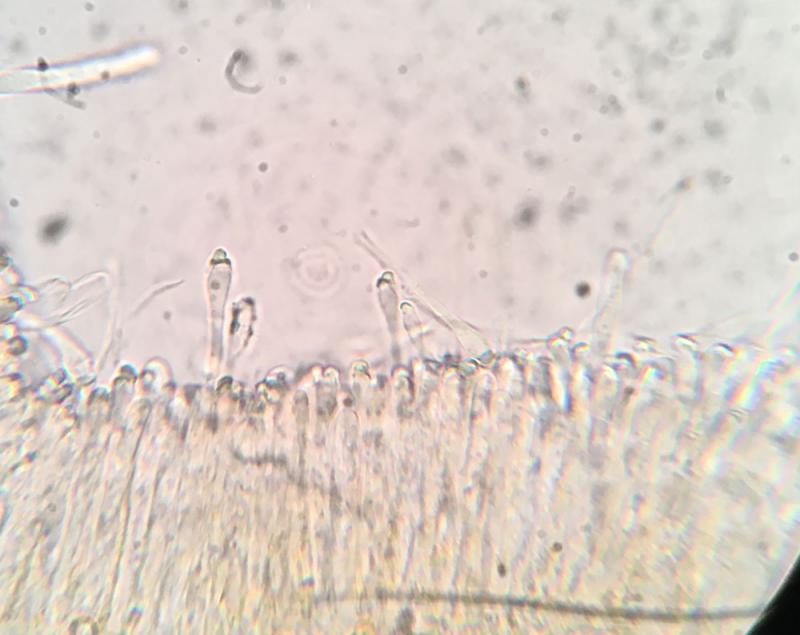
Paraphyses swollen at the apex ~3.3-5.9, with exudate on the tops that can be 2.2µm thick.
Again, I hope that's enough at least to get the options down to a few possibilities.
Thanks,
Ethan
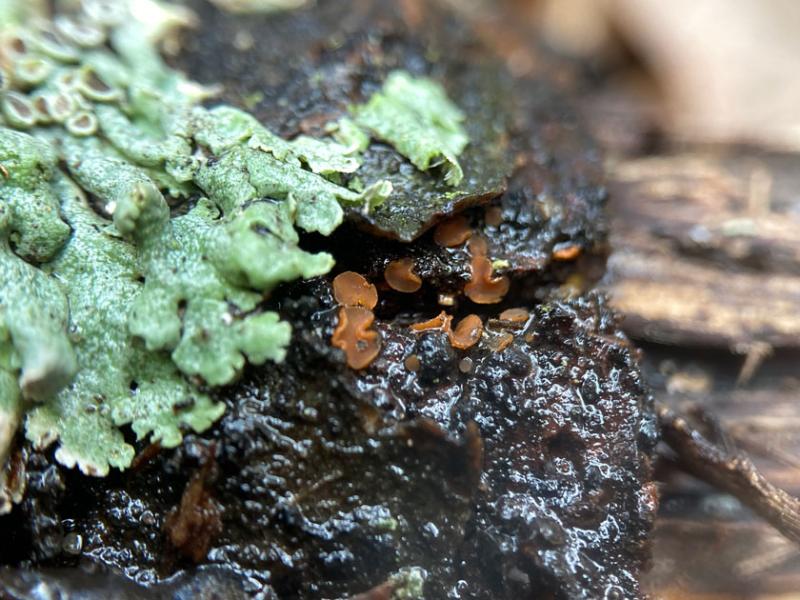
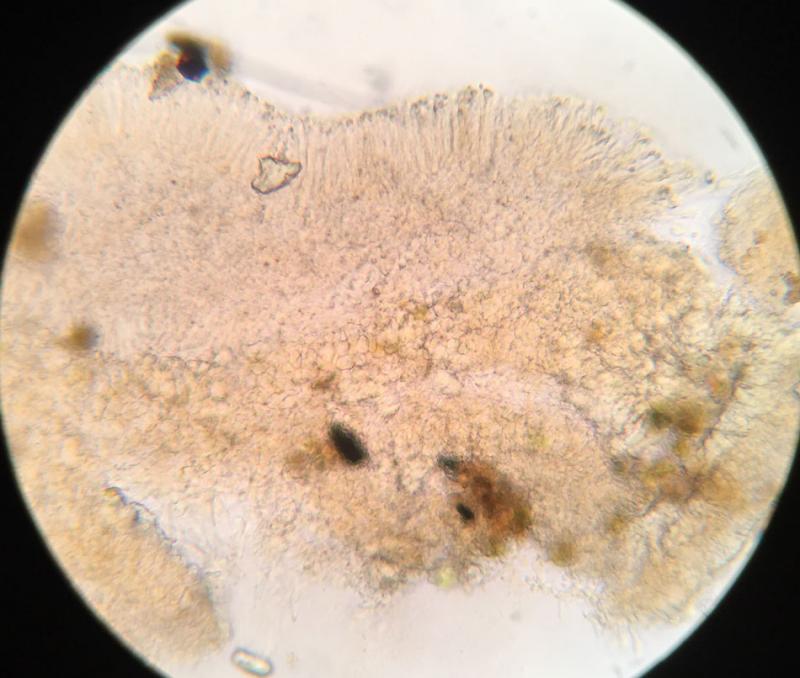
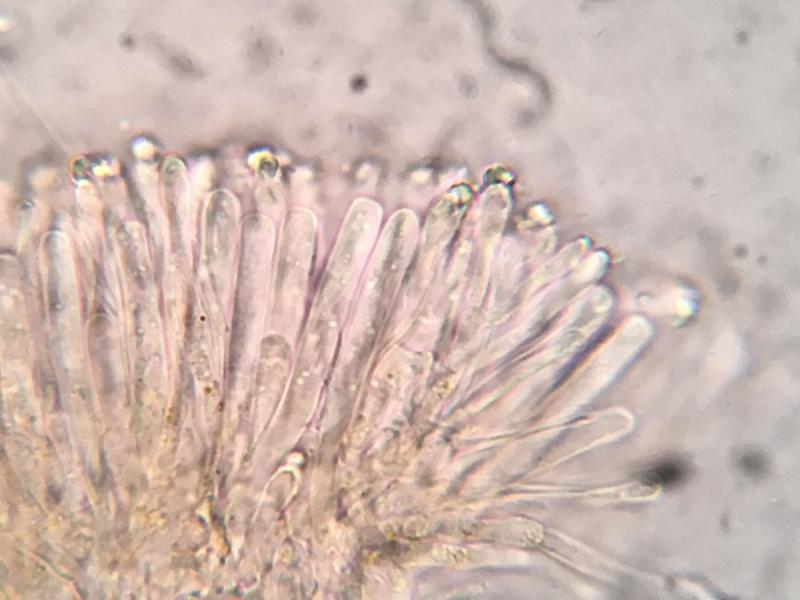
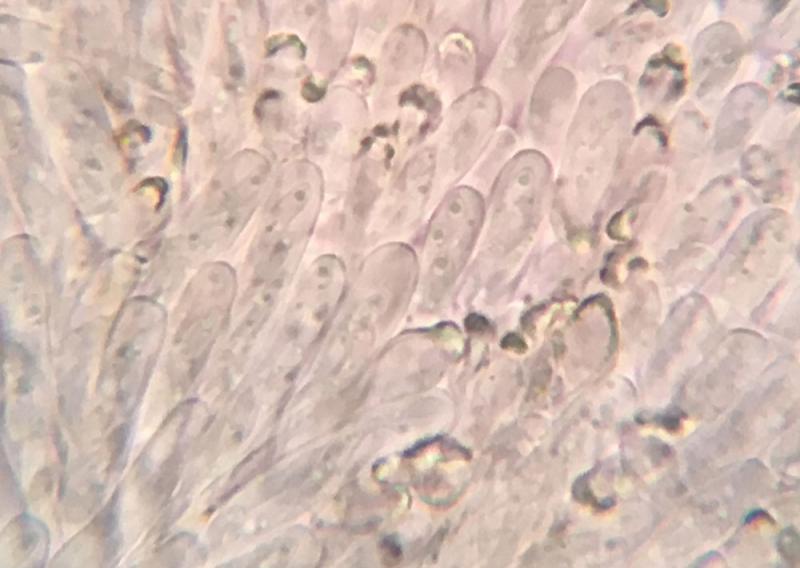
Piotr Perz,
08-04-2022 23:00
Re : Orbilia
O. comma?
Ethan Crenson,
08-04-2022 23:10
Re : Orbilia
Piotr,
I see the resemblance, but isn't that species European only, and mostly in the UK to boot?
Ethan
Viktorie Halasu,
09-04-2022 11:10

Re : Orbilia
Dear Ethan,
do you have any other photos where the margin would be better visible? On the second photo are some lighter areas which I'm tempted to interpret as glassy processes on the margin. So I wonder if it might be (related to) the american O. regalis.
Viktorie
do you have any other photos where the margin would be better visible? On the second photo are some lighter areas which I'm tempted to interpret as glassy processes on the margin. So I wonder if it might be (related to) the american O. regalis.
Viktorie
Hans-Otto Baral,
09-04-2022 13:38

Re : Orbilia
Yes Viktorie, this is my idea as well. The paraphyses have an ellipsoid, almost spathulate apex capped by exudate, and the spores look very much like O. regalis, which is only known in the dead state. What a pity that the sample got lost. The margin does not look much crenulate, but possibly it had short glassy processes.
Ethan Crenson,
11-04-2022 20:57
Re : Orbilia
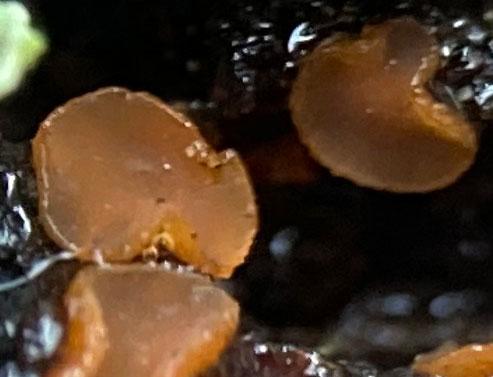
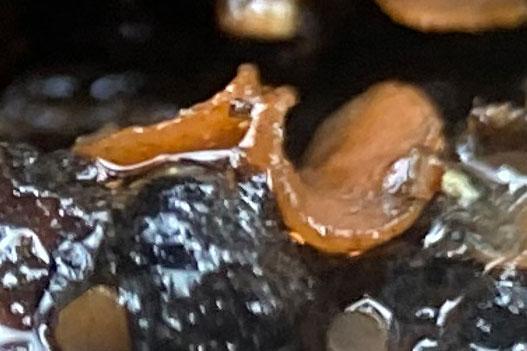
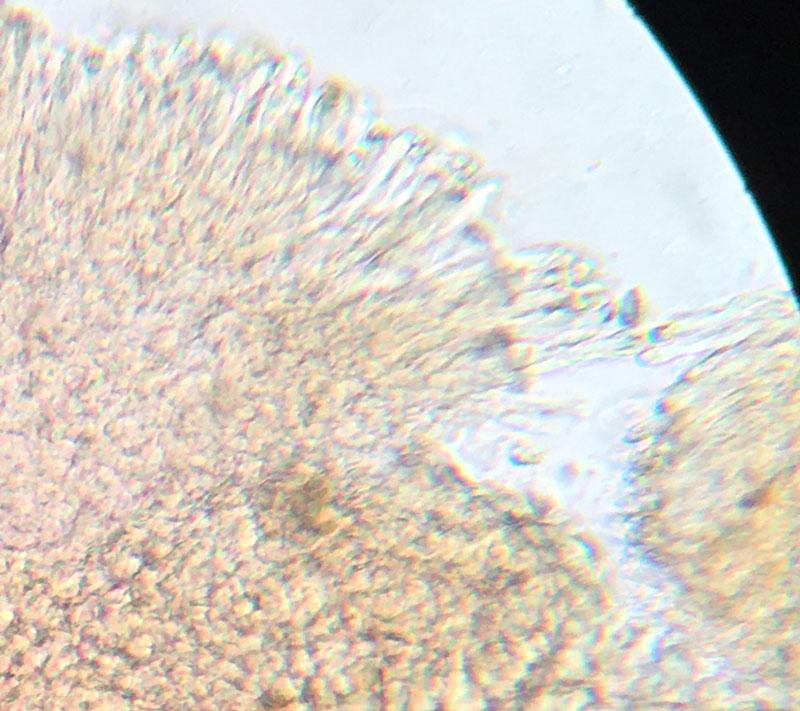
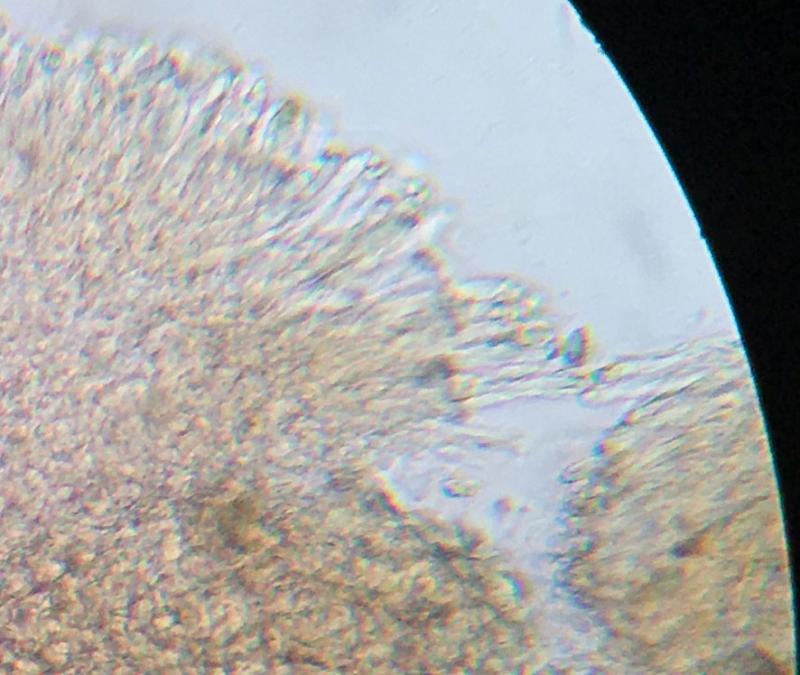
Oh, this is very frustrating. I will have to return to the collection site later this week. In the meantime here are some closeups of the in situ photos. I would not say that the margin is crenulate, but there is a sharp, whitish edge. I have also added more microphotos cropped to the area where, I think, Victorie saw what could be the glassy processes.
Ethan
Hans-Otto Baral,
11-04-2022 21:50
Re : Orbilia
o.k., yes, these might be glassy processes. Would indeed be important to succeed with a further collection.
Ethan Crenson,
15-04-2022 05:13
Re : Orbilia
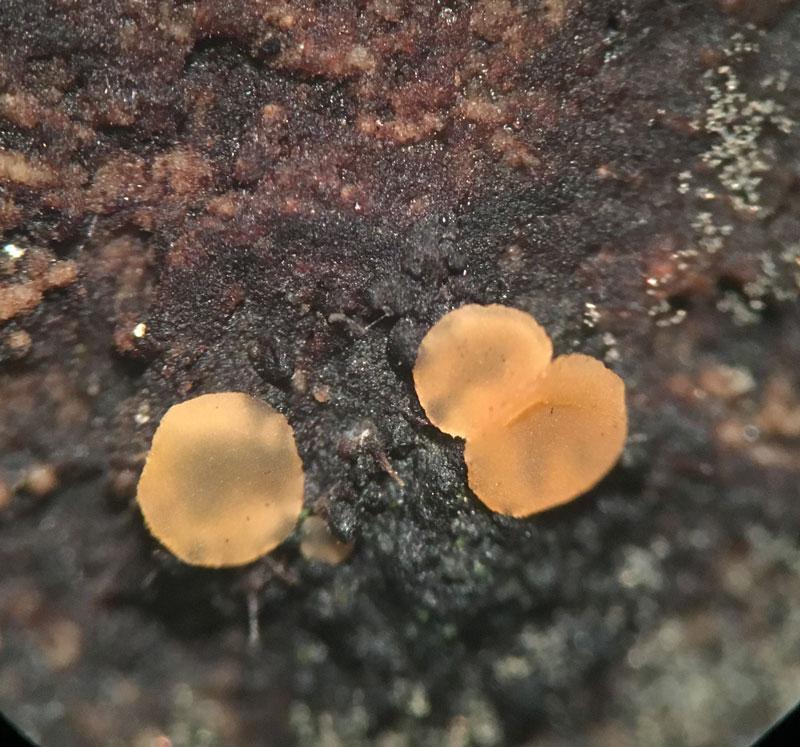
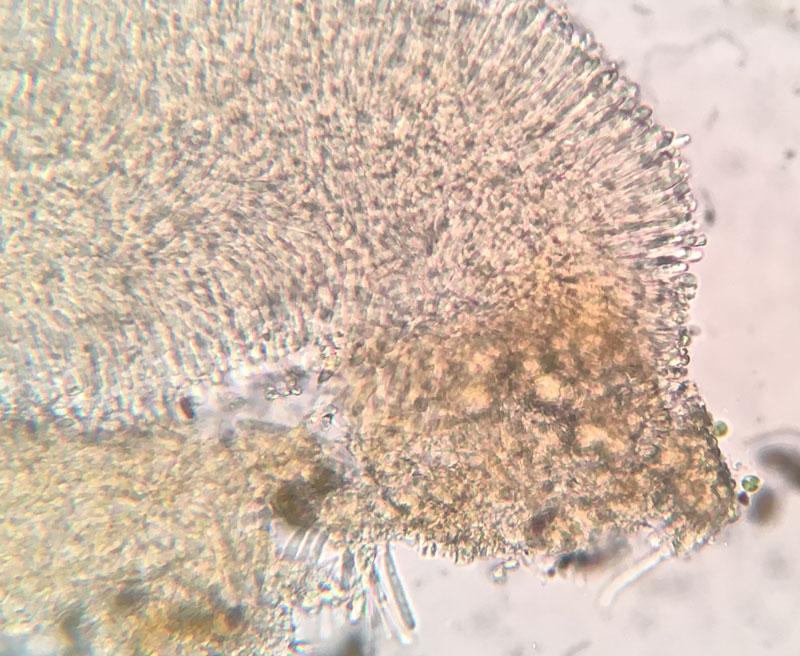
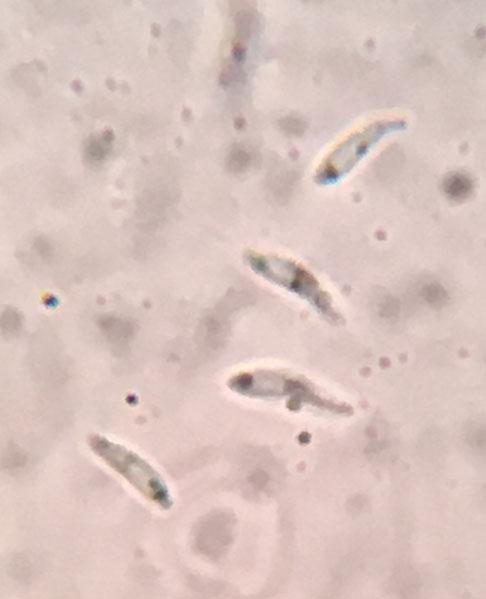
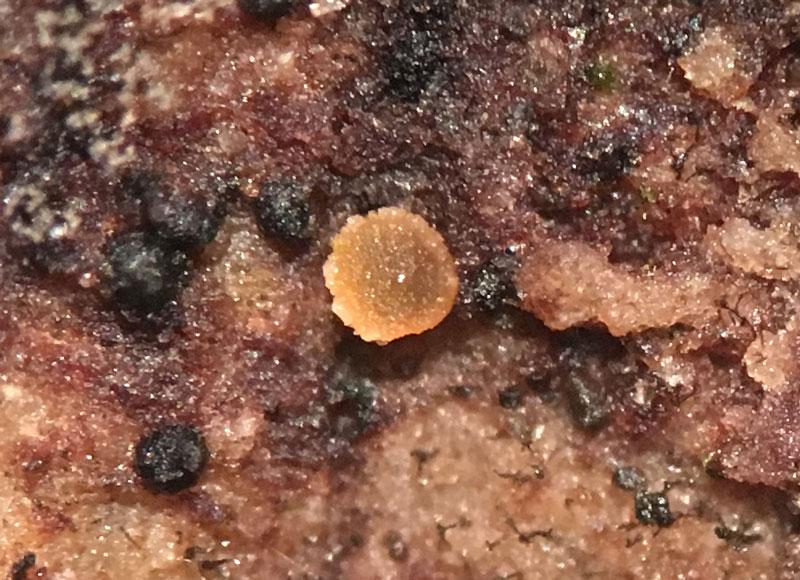
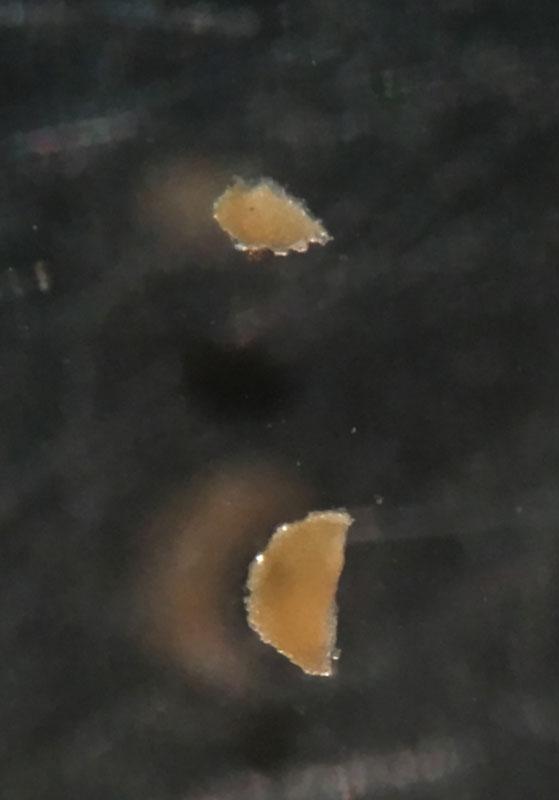
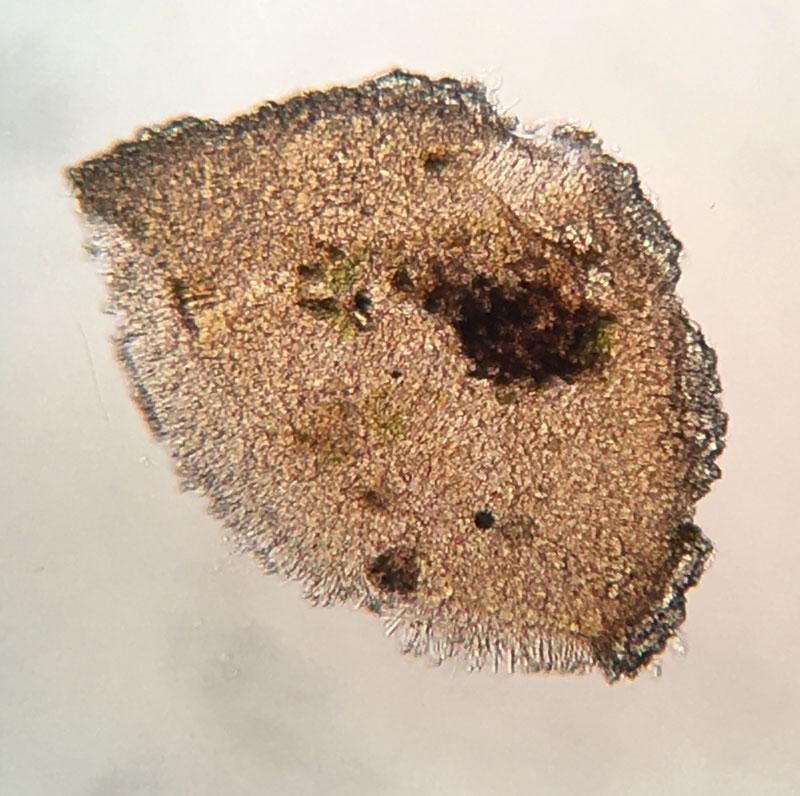
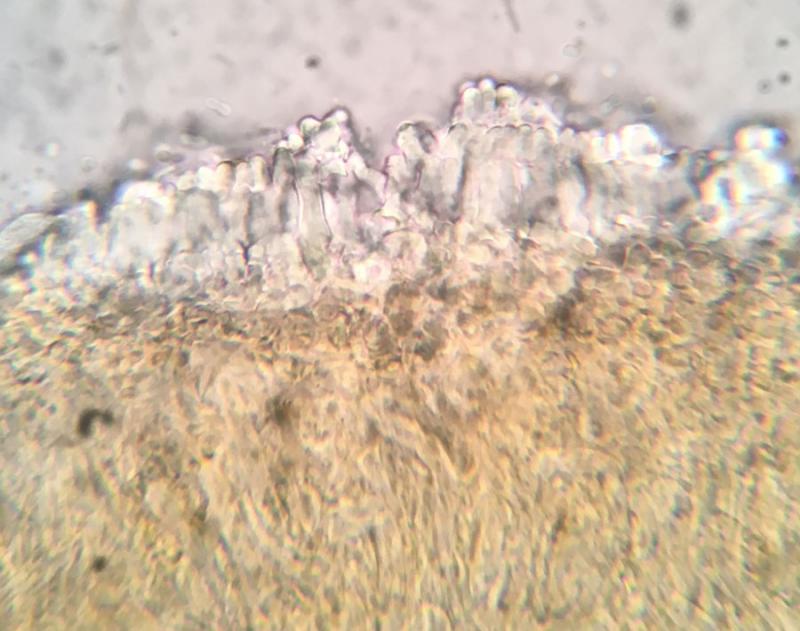
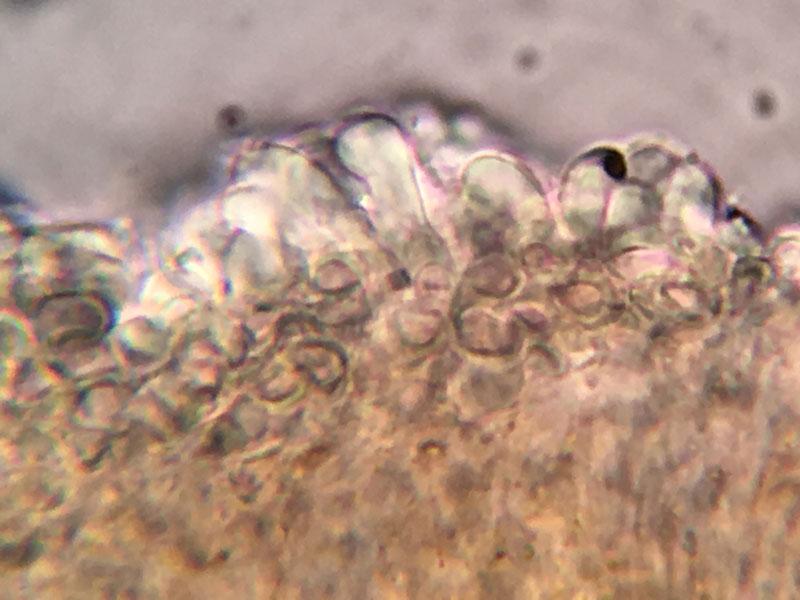
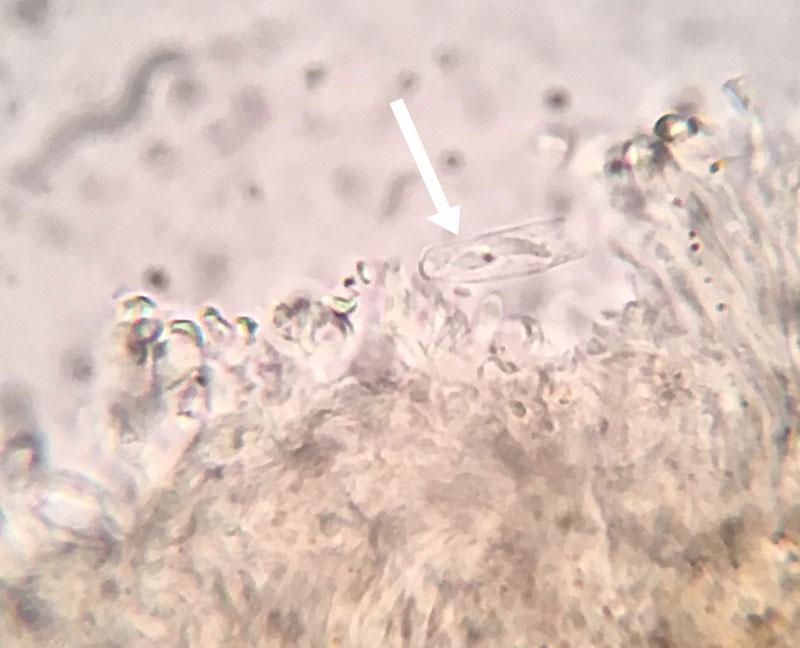
I have found the same Orbilia again. It was not in my original collection location, but in a park in the Bronx about 15 miles from the first location. It's on what I believe to be oak bark this time. The mature apothecia lack any crenulate margin or glassy processes as far as I can tell. The first three photos are all from the large fruiting body and you can see that the spores are slightly helicoid with what may be the SBs near the rounded end.
But, the smaller, less mature apothecia are distinctly crenulate. (The rest of the photos depict the smaller fruiting body pictured 4th.) Glassy processes? What do you think? I wanted to make sure this collection was not a mix of different species. The last photo shows spores inside an ascus of the small fruiting body. I didn't find any free spores, but the spores in ascus look the same.
I can take a closer look tomorrow if need be.
Ethan
Ethan Crenson,
15-04-2022 18:03
Re : Orbilia regalis?
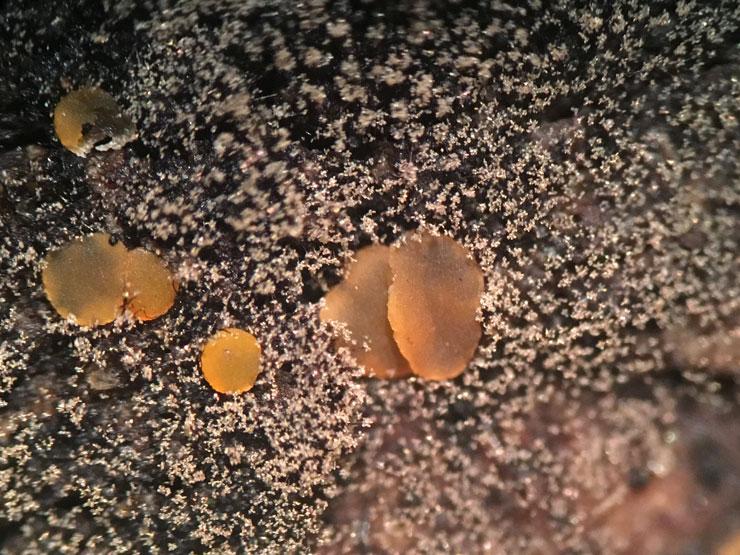
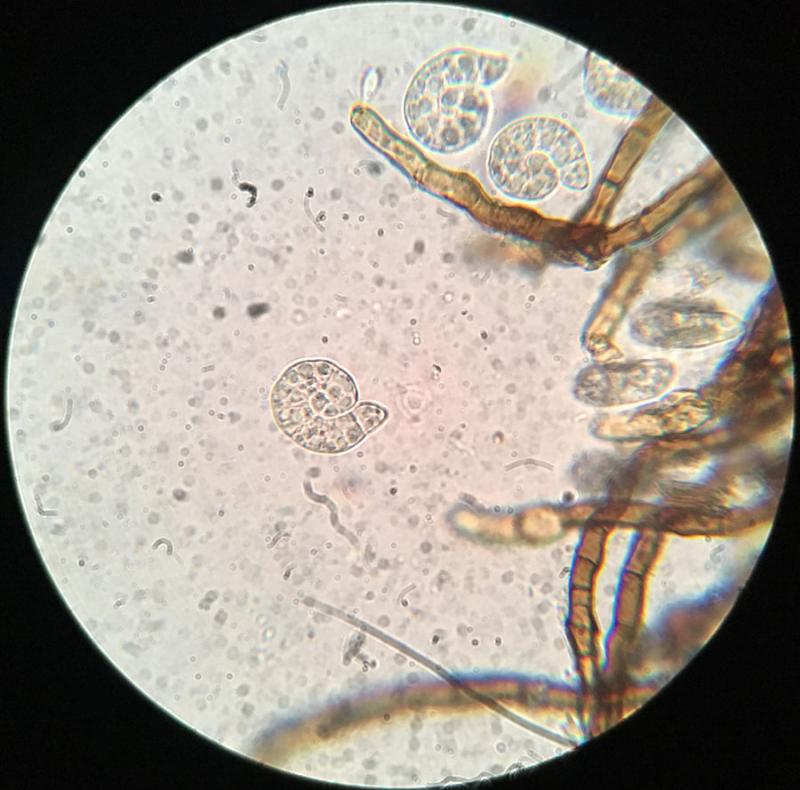
Also, in case this is any help, the apothecia are scattered among a dense growth of an anamorph which could be associated with the Orbilia. Although presumably since the anamorph was not studied by Ellis it will not help much.
Hans-Otto Baral,
15-04-2022 20:09
Re : Orbilia
Something like Helminthosporium - impossible as Orbilia anamorph.
This find is actually the same. Perfect for the glassy processes.
Now I do not know if the sample by Igor Khomenko On a bark from hardwood from 6.XII.2020 is the same or not.