
09-06-2026 18:32
Camille MertensSur morceau de roseau immergé 0,5 - 0,7 mm de dia
08-06-2026 10:16
 Spooren Marco
I don`t have a clou about this fungus,it is not in
08-06-2026 17:00
François BartholomeeusenGood day everyone, On June 5 2026, I collected de
07-06-2026 15:10
 William Slosse
Hello everyone,On 05-06-26, I found following asco
05-06-2026 11:02
Thomas Læssøehttps://svampe.databasen.org/observations/10596691
07-06-2026 12:09
 François Freléchoux
Bonjour, Voici une brève description de ce qui m
07-06-2026 12:43
Steve ClementsBojour. This was a strange find on a stick on my
12-07-2015 00:05
 Nedim Jukic
This one from the same locality as the previous on
06-06-2026 17:44
Steve ClementsBonjour, This disco was on planed wood 3 x 1.5 cm
Hymenoscyphus
William de Jong,
21-11-2021 10:36
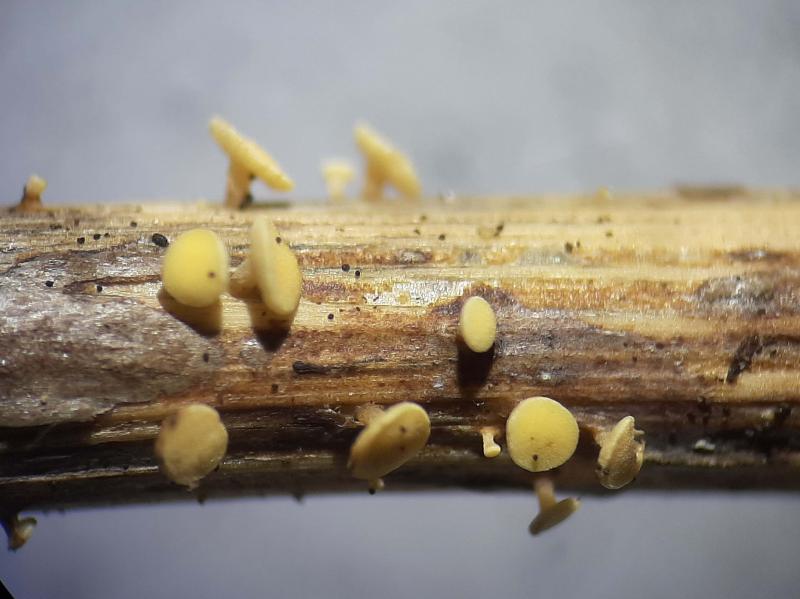
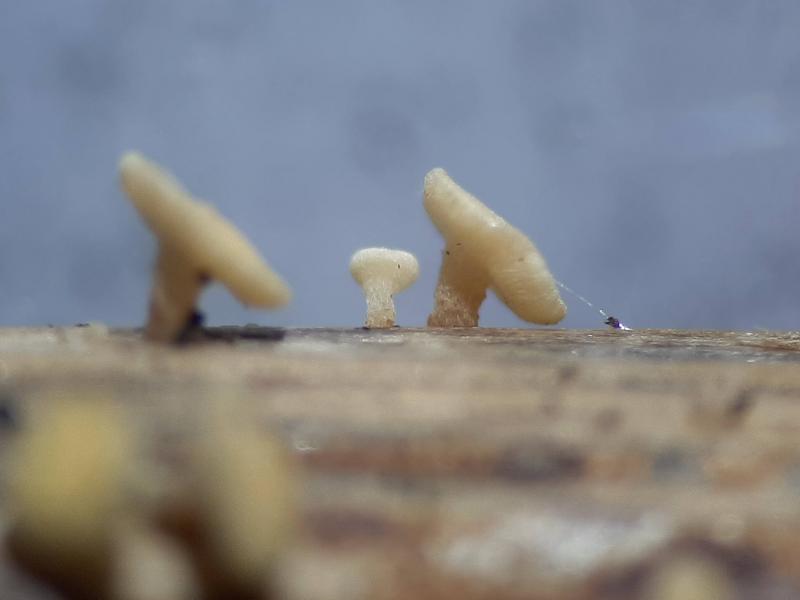
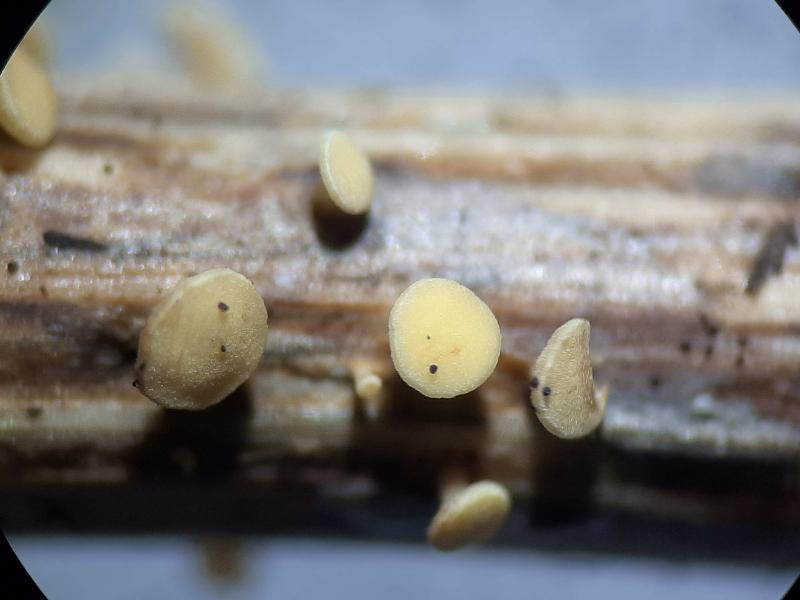
I would like some help in identifying this Hymenoscyphus.
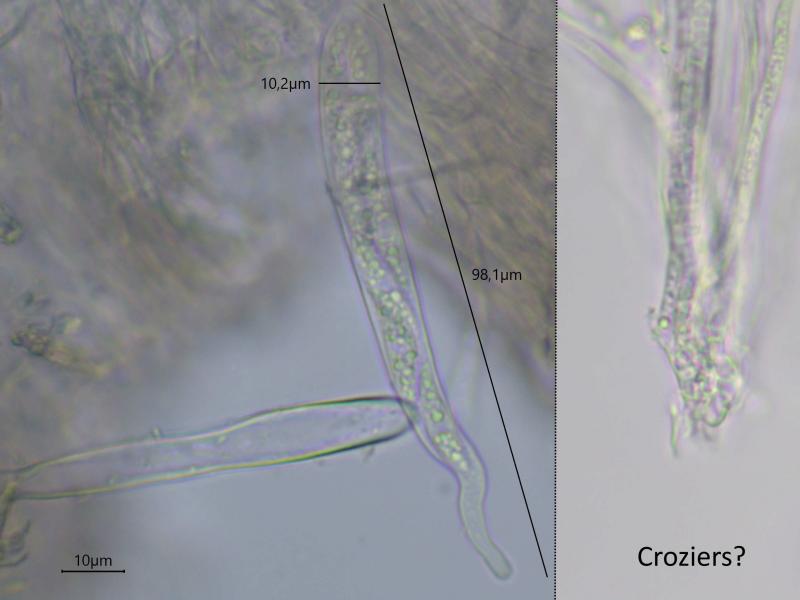
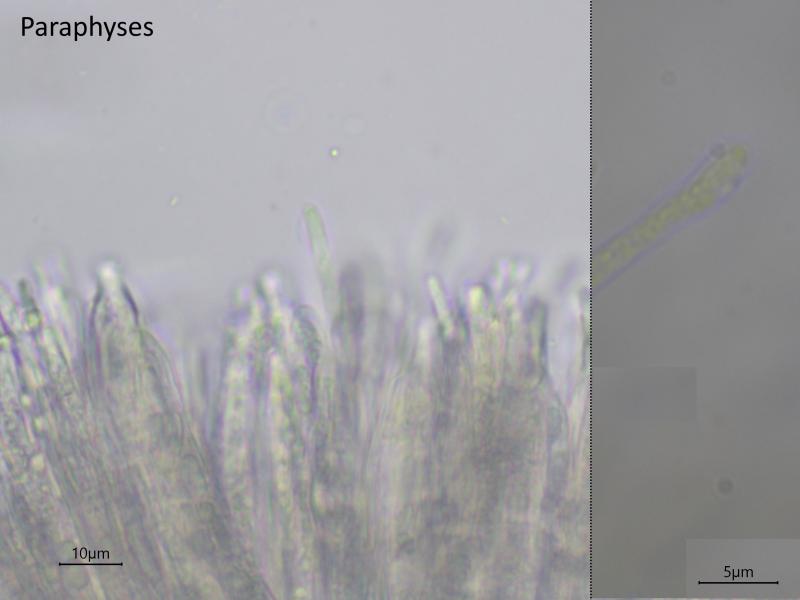
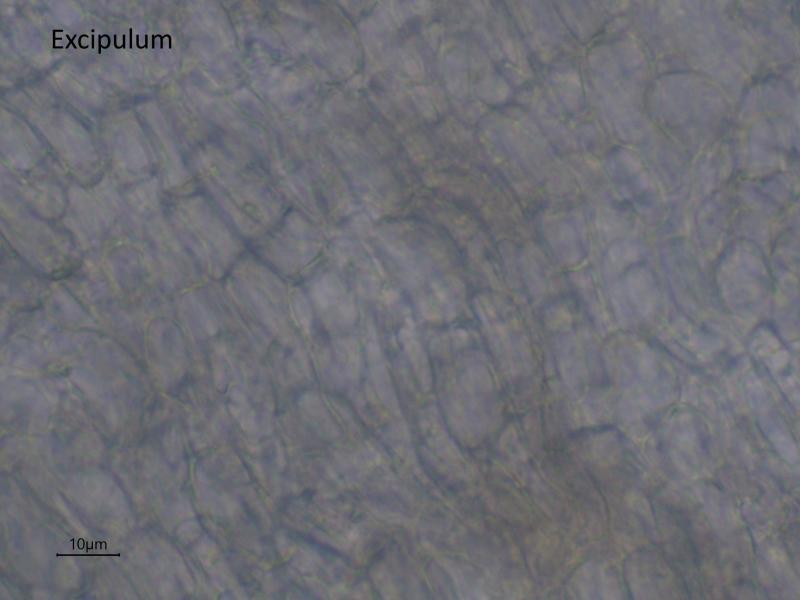
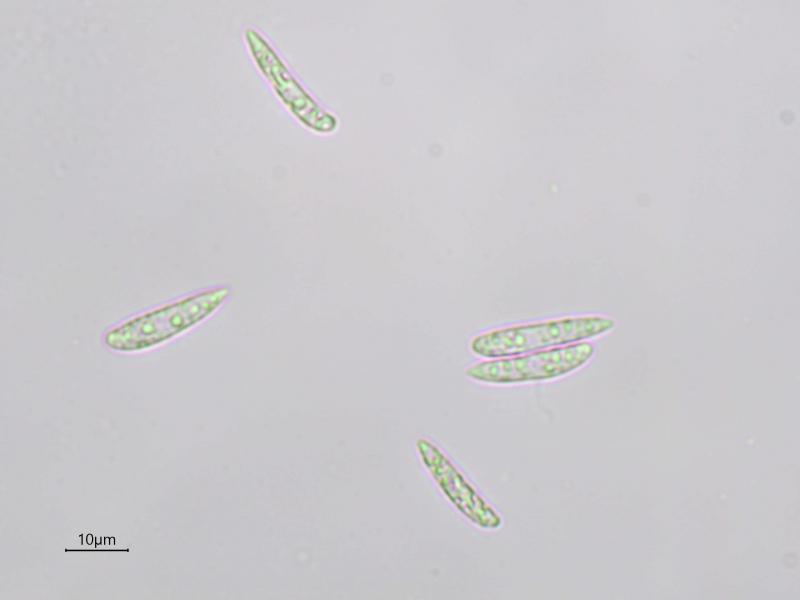
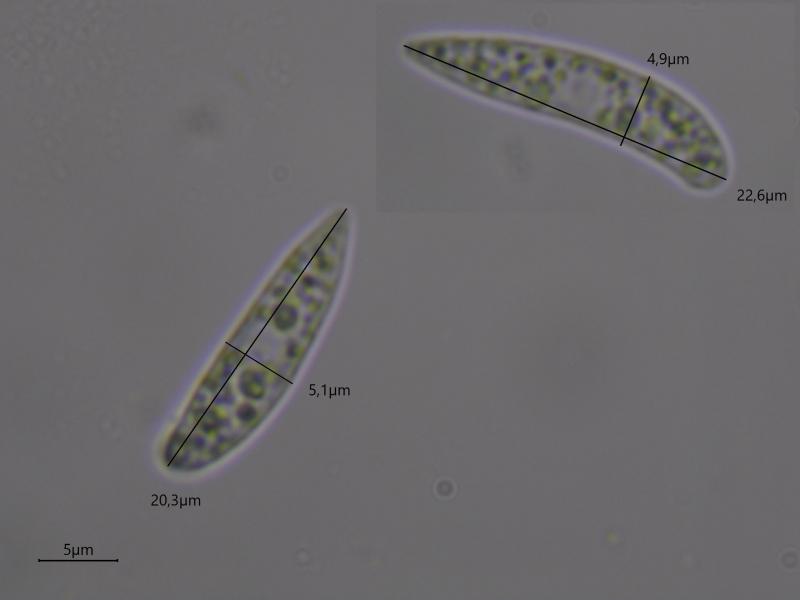
Found it (yesterday) on a half-dead flowering stem of Symphyotrichum (The Netherlands). Apothecia max. 1.5 mm diameter, not reddening. I found croziers I think. Spores with quite some oil content: 20,8-22,6 x 4,7-5,1; no cilia observed.
For other details, see pictures.
Does anyone recognize this Hymenoscyphus?
Thanks in advance.
Best regards,
William
Hans-Otto Baral,
21-11-2021 11:32

Re : Hymenoscyphus
Looks like croziers indeed. What is not clear is the paraphysis content (in vivo). Strongly refractive multiguttulate?
Symphyotrichum is a genus with England-Aster etc. Is the stem herbaceous or woody?
H. virgultorum has similar spores but lacks croziers and grows on woody substrates.
H. fucatus has larger spores with larger LBs.
So I have no idea.
William de Jong,
21-11-2021 13:05
Re : Hymenoscyphus
Thank you very much for your answer Zotto!
It's indeed something like England-Aster - Aster novae-angliae, or a close relative. The lower part of the stem where the Hymenoscypes was growing is definitely more woody than herbaceous. The content of the paraphysis (in vivo) is not strongly refractive multiguttulate.
(In the attached picture in my first post I accidently posted a close-up of one of the paraphysis in Lugol, my apologies.)
Okay, Hymenoscypus sp. it remains. Thanks again for your help.
Best regards, William
It's indeed something like England-Aster - Aster novae-angliae, or a close relative. The lower part of the stem where the Hymenoscypes was growing is definitely more woody than herbaceous. The content of the paraphysis (in vivo) is not strongly refractive multiguttulate.
(In the attached picture in my first post I accidently posted a close-up of one of the paraphysis in Lugol, my apologies.)
Okay, Hymenoscypus sp. it remains. Thanks again for your help.
Best regards, William
Hans-Otto Baral,
21-11-2021 15:27
Re : Hymenoscyphus
The absence or inconspicousness of VBs in the paraphyses would be a rare and remarkable feature and worth to photograph, especially in order to see if they were alive or not. Best in oil immersion.